The production of foie gras is banned in Britain and one of the few benefits of Brexit was that its import from France could also be banned. Both Tory and Labour Governments said they were going to do this but its not clear whether it actually happened.
Foie gras is made by force feeding ducks and geese and is imported from France. Jacob Rees Mogg has long objected to a ban on the grounds of personal choice- his own it would appear.
Speaking about the potential impact of Brexit in the Commons in 2018 he said there be some initial issues and people should ensure their butlers kept the larder well stocked with foie gras and claret. In 2019 again in the Commons he defended Johnson’s hard Brexit deal by claiming it was the Tournedos Rossini of deals, a beef fillet steak topped with a slice of fried foie gras.
Given that Rees Mogg claims he hates garlic and indeed the French in general his love of foie gras, aide from being indefensible is interesting.
It appears however that hard Brexiteer Rees Mogg’s supply of foie gras may be safe. Under the ‘Brexit reset’ a term used to avoid a further round of the Farage riots, foie gras will be able to be imported from France. That is if it ever actually stopped.
Restore Funding cuts to the British Library. No to privatisation
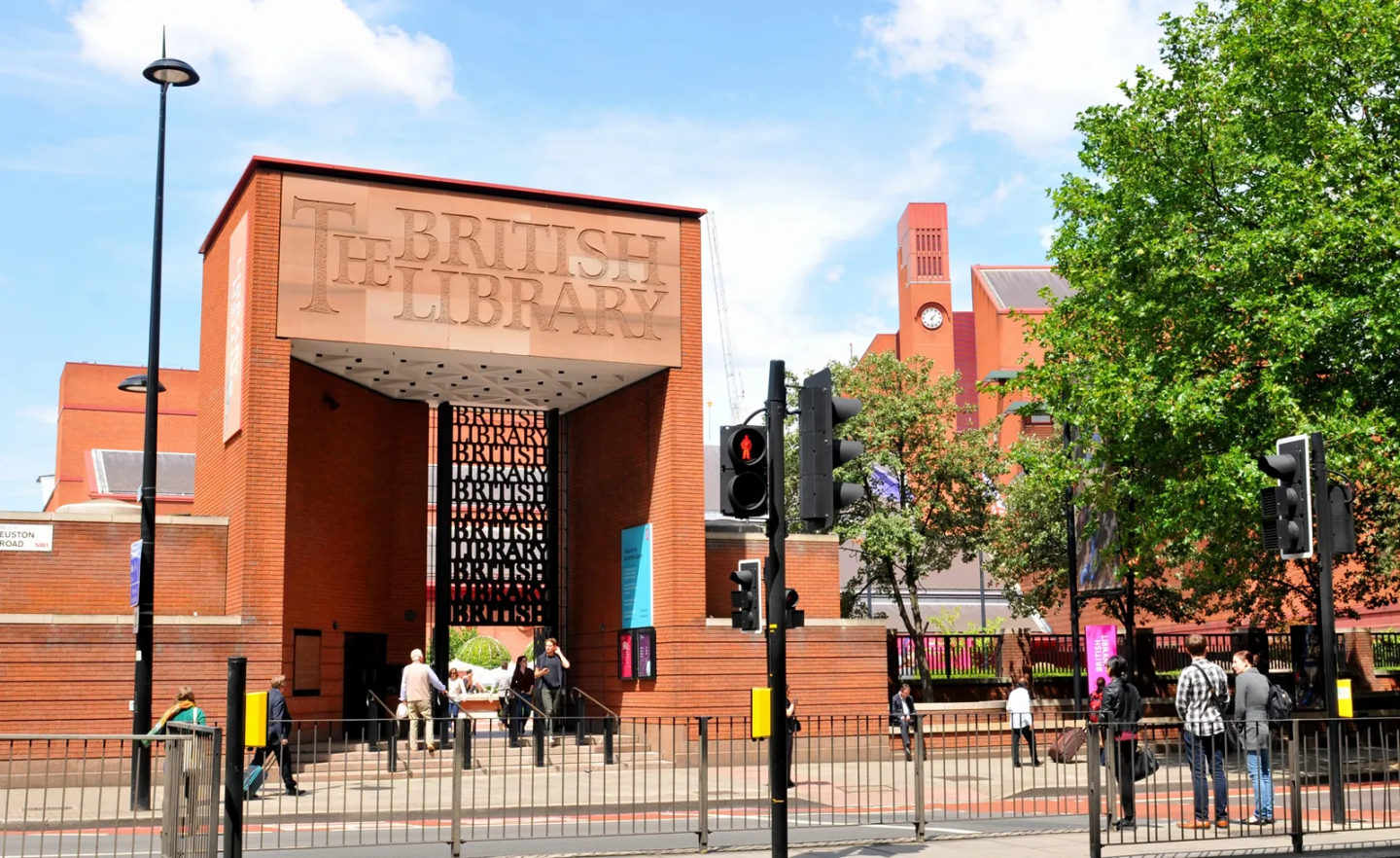
I’ve been a reader at the British Library since 1984 in the days of the old Round Reading Room and I still frequent the Euston Rd building on a regular basis.
Reader’s passes are free and the reading rooms are conducive to reflection.
Like many other British institutions the BL has been starved of resources in some areas. It is now proposing to privatise the security staff who keep the place running as much as the librarians to an anti-union company. It also wants to hive off several reading rooms as paid for spaces, as if there weren’t enough such spaces in central London.
The PCS and Prospect unions have live strike ballots
A few days ago the new Head of the BL Dr Paul Bate e-mailed readers.
The Library is running a financial deficit. Our real-terms government funding has reduced by a third compared to 2010. This year we expect to spend around £7 million more than our total income. Without taking action, our recurring deficit is forecast to grow to over £8 million next year (2027-28) and nearly £11 million the year after
The British Library is a national institution and if there is money for war there also be money for knowledge and the arts
He also revealed some interesting if questionable statistics about Library usage
As online demand increases, in-person visits to our Reading Rooms have dropped. There were around 162,000 Reader visits last year, down from almost 400,000 10 years ago. Over the same time, there has been an 81% drop in the number of physical collections used by those Readers. To put it another way, eight years ago it cost £23 in salary costs per Reader visit, last year it was over £70.
I’m not sure how familiar Dr Bate is with the BL’s collections but the reality is most, books, rare books, manuscripts etc are only available to consult in person. It is no surprise that reader visits are down. This figure covers the COVID years 2020-2022 when Library use was restricted and the period of the cyber attack October 2023-2025 which restricted what items could easily be consulted.
I still use the Library regularly and on a visit in 19th November the Humanities 1 reading room was well populated.
The British Library should be a publicly run, public space and it certainly not be outsourcing Library staff to an anti-union company. A petition is here:
Elon Musk has claimed he is not MAGA even though he admits he funded defeated Republican candidates in the US mid term elections.
Its what the historian of the English Parliament Christopher Hill called the experience of defeat as the regicides of 1649 who executed King Charles 1st saw the monarchy restored in 1660. Few prospered after their hopes of a different world broke down.
Essential reading for Musk even if those who abolished the monarchy in 1649 were on the right side of history and he isn’t
Hard right Reform MP Robert Jenrick has attacked Margaret Thatcher in The S*n.
Jenrick whose opinions differ depending on how the wind is blowing gave his daughter the middle name of Thatcher.
No doubt he is trying to appeal to that section of Reform supporters who hate Thatcher. The problem Jenrick is (amongst many) is that he is a former Tory Minister.
The attack on Thatcher has the whiff of a journey towards fascism
ROBERT Jenrick has said Margaret Thatcher left a “deep scar” on post-industrial cities in Britain – despite naming one of his daughters after her.
The Reform MP admitted the Iron Lady turned the country around but said she did it in a way that left whole communities without an identity. He said the late Tory PM did both “good and bad” in No10. “Margaret Thatcher is as dated a reference to my kids as Winston Churchill was to me when I was growing up, and that doesn’t feel that long ago.”
Thanks to substacker Sam Freedman who posted this story on Blue Sky
References to Alan Milburn in Tony Benn’s Diaries are scathing but need to be seen in the context of the Labour Governments from 1997-2010. Milburn was Health Secretary for a period when PFI was pursued in the NHS, a scheme that gave profits to privateers while the Government carried the risk.
The Blair Governments are remembered for the Iraq War but the minimum wage was also introduced against Tory opposition.
Milburn’s reappearance now inevitably draws attention back to a period that some might think was for the history books more than current politics.
Clyde Chitty reminded me that Alan Milburn used to be on the hard left. He had a bookshop up in the called Days of Hope, which was inevitably nicknamed Haze of Dope, and now he’ he’s an arch Blairite. I believe Blair has presumably done a deal with him and said ‘Look I’m going to win the next Election, and then I’ll give up and then you can takeover. and so Brown has not only been deprived of his responsibilities for running the election, but an alternative promise of the succession has been given
Tony Benn, Diary 10th September 2004
Clyde Chitty was a distinguished academic in the field of education
Alan Milburn was at the Fabian Society Conference. I find the man absolutely impossible to watch. He’d be a wonderful Conservative leader for them., and this idea that New Labour has got anything whatsoever to do with the Labour Party or the trade union movement or the working class movement, is a complete illusion, and it would be better if he was the leader of the Tory Party..
Sport & Politics. Australia lose white ball cricket series to England as things get rough over Sandpapergate.
Australian cricket captain Pat Cummins faced media questions for over an hour in Sydney last Friday morning relating to a new book by former Test cricketer Usman Khawaja on the 2018 South Africa Test series where the Australian team were found guilty of ball tampering by the use of sandpaper.
Khawaja makes two key points. Firstly that the whole team not just a few players knew about the sandpaper. Secondly that racism meant that Tim Paine rather than himself succeeded Steve Smith as captain.
Cummins whose assured performance surely marks him out for a role in public life post cricket backed the Cricket Australia line that only a few players knew about the sandpaper. He noted that the changing rooms in the 2018 series had many rooms and conversations went on between several players rather than as a team (rather like the Traitors Castle it seems).
He did agree however that the culture of the Australian team at the time was an arrogant win at all costs one. He also agreed that while he did not believe that racism stopped Khawaja from being captain there were racist remarks in 2018.
He noted the human impact on players and their families of the issue being discussed again and hopefully Cricket Australia will remember it has a duty of care. He also said that Khawaja was a friend and while he did not agree with everything in the book legal action was not in prospect.
Having looked at the Australian reaction it seems to be that its Khawaja and Warner and now Cameron Bancroft whose banning ended his international career against Cricket Australia and the remainder of the team. My report above suggests that Cummins was prepared to admit arrogance and racist remarks while not deviating from the official line. Clearly Cummins presser has failed to draw a line under sandpapergate. In fact it has amplified the discussion
It may well have helped England who face Australia quite a bit in the next 12 months starting with a 2-1 victory in an ODI series on 18th November the first since 2017/18. The impact on individuals should also be a real concern.
Interesting times, particularly for those who think sport and politics don’t mix
From 1975 to the mid-1980s I lived entirely or partly in the North-East of England. In the second half of the 1970s I was student organiser for the International Socialists (now SWP) in Middlesbrough.
I was an occasional visitor to the Days of Hope bookshop in Westgate Rd in central Newcastle. I was as much drawn to the nearby statue of one of Tyneside’s most well known late nineteenth century figures, Joseph Cowen, as I was to the bookshop. Space and stock was limited but radical and socialist bookshops in the north-east did not exist in abundance. In other words pre-internet days it was the only place you might see radical papers and books.
I vaguely knew one of the original co-owners Bob Clay who became a Labour MP and came to know the author of the account of Days of Hope (below) Martin Spence quite well. Martin was an official at BECTU a union I sat on the Executive of for some years. He is the author of a very good book Capitalism comes to Penge.
Of Alan Milburn I have only vague memories. He was not then particularly well known but I would say that in his time at Days of Hope he served the left far better than anything he has done since
Days of Hope Martin Spence Days of Hope bookshop in Newcastle upon Tyne was part of an upsurge in ‘radical’ publishing and bookselling in the 1970s and 1980s. This upsurge had several distinct currents: alternative, environmental, socialist feminist, radical feminist, anarchist, Marxist. Within this mix, Days of Hope was always clear about its own identity: it was a socialist bookshop, and it emerged from a socialist project. That project was Tyneside Socialist Centre. The Socialist Centre was established around 1975 partly as a network and forum for the left on Tyneside; but also with an ambition to acquire and run a city-centre building, a ‘People’s Palace’, to act as a meeting place, organising focus, and social centre for the left and labour movement. Leading Socialist Centre members included Bob Clay, trade union convenor on Sunderland’s buses; Andy McSmith, journalist on the Newcastle Journal; Jim Murray, trade union convenor at Vickers Elswick engineering works; and Hilary Wainwright, an academic at Durham University. Inevitably some held themselves aloof from this project, notably the Communist Party of Great Britain which had its own bookshop and premises in Newcastle. But participants included many on the Labour Left; trade union activists; socialist feminists; and some Trotskyists including members of the International Marxist Group (IMG) and Socialist Workers Party (SWP). At any time this would have been a sufficiently broad constituency to generate fierce debate and disagreement. But this was the period of minority Labour Government, with Healey’s infamous resort to the IMF, campaigns against the first welfare spending cuts, and a rising tide of industrial disputes culminating in the so-called ‘Winter of Discontent’. So there was perhaps an added edge to the left’s debates in the late 1970s. The Socialist Centre took out a lease on a shop in an area called Cradlewell, in the prosperous suburb of Jesmond, about a mile outside Newcastle city centre. In addition to the shop space this building had a large back-room suitable for meetings, and for a while this became the de facto Socialist Centre, although it was never envisaged as realising the full ambition. In the shop space a socialist bookshop was established, Cradlewell Books. Despite this suburban location, the Cradlewell building became sufficiently well-known as a left-wing haunt to attract the attention of the local fascists, and it suffered a firebomb attack. Some stock was damaged but no-one was hurt. In 1978 a small shop became available at a more central site in Westgate Road, just outside Newcastle’s main shopping area. It had been the 8 Radical Bookselling History – Newsletter Issue 2 – April 2021 booking-office of the former Tyne Theatre, later a Stoll Picture House, now being refurbished as the New Tyne Theatre. There was room for a small bookshop, but no meeting space. This provoked a new round of furious discussions. Some argued that a city-centre bookshop could fly the flag for the Socialist Centre and serve as a step towards the ultimate goal. Others argued that on the contrary, the bookshop itself would soon absorb everyone’s energy, and wider ambitions would be forgotten. And once the decision was taken to move to the new site, an argument erupted about its staffing, and the titles it should stock. In the end it was agreed that the shop’s workers should be properly employed and paid the rate for the job, as laid down by the Wages Council and endorsed by the shopworkers’ union – the fact that there was a debate about this is in itself an interesting reflection on the times. Regarding stock, it was agreed that all the various factions and currents of opinion in the Socialist Centre should submit a list of ‘essential titles’. Given that the new bookshop was no longer at Cradlewell, it needed a new name, and the choice was inspired by a recent Ken Loach TV series: Days of Hope. Perhaps inevitably, some played word-games with the new name and referred to the shop as ‘Haze of Dope’. But the joke palled – not least because the atmosphere of the place, far from being druggy and alternative, was rather puritanical and driven. Legally, it was still a limited company whose directors were leading members of the Socialist Centre. The first two workers employed to run Days of Hope – one a member of the IMG, the other a member of the SWP – had a difficult working relationship with each other, and with the Socialist Centre directors. In early 1979 there was a change of personnel, to one full-time worker – Martin Spence, a local anti-nuclear activist – and two part-timers. Neither of the part-timers lasted long, and from the autumn of 1979 the shop had two full-time workers, Andy McSmith and Martin Spence. Socialist Centre members Bob Clay and Ted Mason were also closely involved in financial management, and these four made up the committee which ran the shop day-to-day. Both sides in the earlier debate, about the wisdom of moving the bookshop to Westgate Road, could claim to have been proved right. Days of Hope was seen as a Socialist Centre initiative, and represented its practical presence in the city centre. But it was also true that simply keeping the bookshop going came to absorb much of the energy of Socialist Centre members. A Bookshop Support Group was established, and members made regular donations to subsidise the workers’ wages, and organised fund-raisers. 9 Radical Bookselling History – Newsletter Issue 2 – April 2021 Uta Clay, Bob Clay’s partner, did a formidable job cajoling and persuading members to take turns on a volunteer rota, sitting on the till to free up the paid workers to focus on other tasks. But despite all this energy going into the bookshop, as late as the autumn of 1981 the Socialist Centre was still capable of organising major political interventions; in October several hundred attended a public meeting with speakers from the Polish independent union Solidarnosc, jointly organised by the Socialist Centre and the Vickers Elswick Shop Stewards Committee. Meanwhile back in the bookshop, it was clear from the start that passing trade and purchases by loyal customers would never be enough to keep the place open. So supportive academics, especially at Newcastle University and Newcastle Polytechnic (as was), were persuaded to keep the bookshop informed of their key texts, and to point their students to the bookshop as the best place to buy them – even, in some cases, taking books to the students and selling them in the classroom on the bookshop’s behalf. Efforts were made to break into library supply, with some success. Local Labour Parties and trade union branches were encouraged to order bookstalls for their meetings. And from 1980, Days of Hope acted as a key resource for the peace movement on Tyneside, providing literature, badges and campaign materials; serving as an information exchange; and becoming a ticket office for buses and trains to rallies and meetings. These were also the most brutal years of the war in Ireland, and the bookshop acted as an outlet in North-east England – perhaps the only such outlet – selling Irish republican literature, including the Provisional Sinn Fein weekly paper An Phoblacht. This provoked occasional nuisance visits from the local National Front, and on one occasion a death-threat against one of the workers. But Days of Hope never suffered the violent attacks experienced by some other radical bookshops. At various times there were serious discussions about moving Days of Hope to other premises, in search of more space and/or a more central location. But on each occasion, once the numbers were crunched, it became evident that the shop was stuck in a vicious circle. The only way it could improve trade was by moving, but its current trading situation was so precarious that it couldn’t afford to move. Throughout its history, Days of Hope lived from hand to mouth, unable to generate a sufficient surplus to move on to bigger or better things. It did however change its legal status. A debate began in 1981 about converting the bookshop into a co-op, but there were different views about 10 Radical Bookselling History – Newsletter Issue 2 – April 2021 the most appropriate form. Some felt that the bookshop was in practice run by a small committed group, and that this reality would be best reflected by a straightforward workers’ co-op. Others felt this would exclude the wider network of volunteers and supporters, and favoured a ‘multi-stakeholder’ or ‘regional’ model which would give them a formal stake in the project. The discussion was at times bitter, and continued through 1982, until eventually the second option was adopted. Days of Hope was established as a regional co-op early in 1983. A fair number of Socialist Centre supporters became members, plus others who had never been in the Socialist Centre but felt a connection with the bookshop. By this time some key participants had changed. In 1982 Bob Clay was selected as the Labour candidate for Sunderland North. He resigned from the bookshop management committee to concentrate on Party work, and was elected to Parliament in 1983. Andy McSmith had also moved on by this time to work in the Labour Party press office in London. He was replaced by Alan Milburn, a local Labour Party and peace movement activist, who now worked alongside Martin Spence. 1984 brought more changes. The year started well with good sales in the early months; the beginning of the Miners’ Strike, with its new mood of political urgency, perhaps contributed to this. Yet again, discussion turned to the possibility of moving to better premises, but yet again, once a detailed analysis was done, it was clear that a move wasn’t affordable. Then, during the summer of 1984 both the shop’s workers left to take up other jobs, Spence to Trade Films in Gateshead, and Milburn to the Trade Union Studies Information Unit in Newcastle. Two new workers were recruited, Steve Peel and Jan Ligema, and for a while sales held up. But from early 1985 they declined, and in April the New Tyne Theatre warned that in the not-too-distant future it would be giving notice to terminate the shop’s lease. It offered alternative accommodation in Thornton Street, just around the corner, but in premises which were entirely unsuitable. The shop limped on, but as ever its precarious financial situation meant that it didn’t have the resources to fund an independent rescue plan. In early 1986 Days of Hope had to vacate the premises in Westgate Road. For lack of any alternative, stock was moved to Thornton Street, but by now the shop’s accountant was insisting that the only responsible thing to do was to cease trading. Faced with little choice, the co-op’s members voted for closure. Days of Hope formally ceased trading on 28th June 1986.