Archive for the ‘Uncategorized’ Category

Articles

Once again on the £10 London pint (it’s not the norm)

In Uncategorized on May 4, 2026 by kmflett

Journalists are often under pressure to file a number of stories each day whether or not they are worth filing. They fuel a ceaseless social media click bait war which where it works drives advertising revenue. A familiar story for example reads ‘three dead in rail crash’. Not great and not in the UK either but you have to click to find out.

So The Independent and quite a few other media outlets have filed the £10 London pint story again. It last appeared in the autumn of 2025. The Evening Standard even sent someone to try an £11 pint of Heineken at a roof top bar in Mayfair. The view looked good..

Of course the usual caveats apply. If you are in a beer and beard bar drinking an 8% double ipa you are probably not drinking a pint of it but if you were it would certainly be comfortably over a tenner. Alternatively if you are in Wetherspoons, even in their Central London pubs where prices are higher, particularly later in the week, you will not be paying a tenner for a pint or anything like it.

The Independent article quotes prices in hotel bars and high end eateries. Beer is expensive here and so is everything else.

The industry defence is that energy costs, business rates, alcohol taxes (compared to supermarkets) and staff costs put pressure on prices (I don’t by the last point btw. Bar staff should be earning at least a living wage and if the business can’t afford that, it might be time to look at the business model)

However a brief reality check.

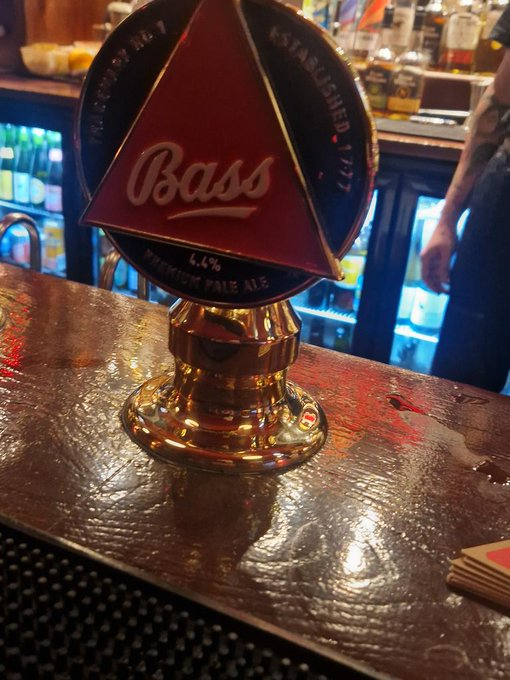
Ive been in London over the last couple of days (where I’m meant to live and actually do a bit of the time). I enjoyed a pint of Bass for £5.40 in Stoke Newington and paid £7 for a pint of Boddingtons bitter in Islington. Pricey for a cask beer but then I was sitting in a cobbled courtyard watching the world go by on Islington Upper St.

Cask beers tend to be cheaper than keg (whether they should be is another matter) so I stuck my head into the venue known as Brewdog Seven Dials (actually Cambridge Circus, ho hum) where a pint of Punk was £7.95. I did not partake obviously but in a now small chain that has a reputation for being pricey in the centre of West End tourist world it was still nowhere near a tenner.

The story is almost assuming one of those London has fallen urban myths where if you venture into a bar in London you’ll be ripped off for a tenner a pint. Mostly you won’t be. There are plenty of independent bars where you can get a pint of cask beer for around a fiver. Keg beer and lager whether independent or global big beer will cost more, perhaps six or seven pounds but certainly not ten.

Is it an issue given a continuing and again increasing cost of living crisis? Yes, it is. If the pub is a community hub for many (including non drinkers) then a close eye from business and Government needs to be kept on it.

.Price of a pint crosses £10 in London for the first time | The Independent
Articles

On the London May Day demonstration. If we stop running they can’t chase us.

In Uncategorized on May 4, 2026 by kmflett

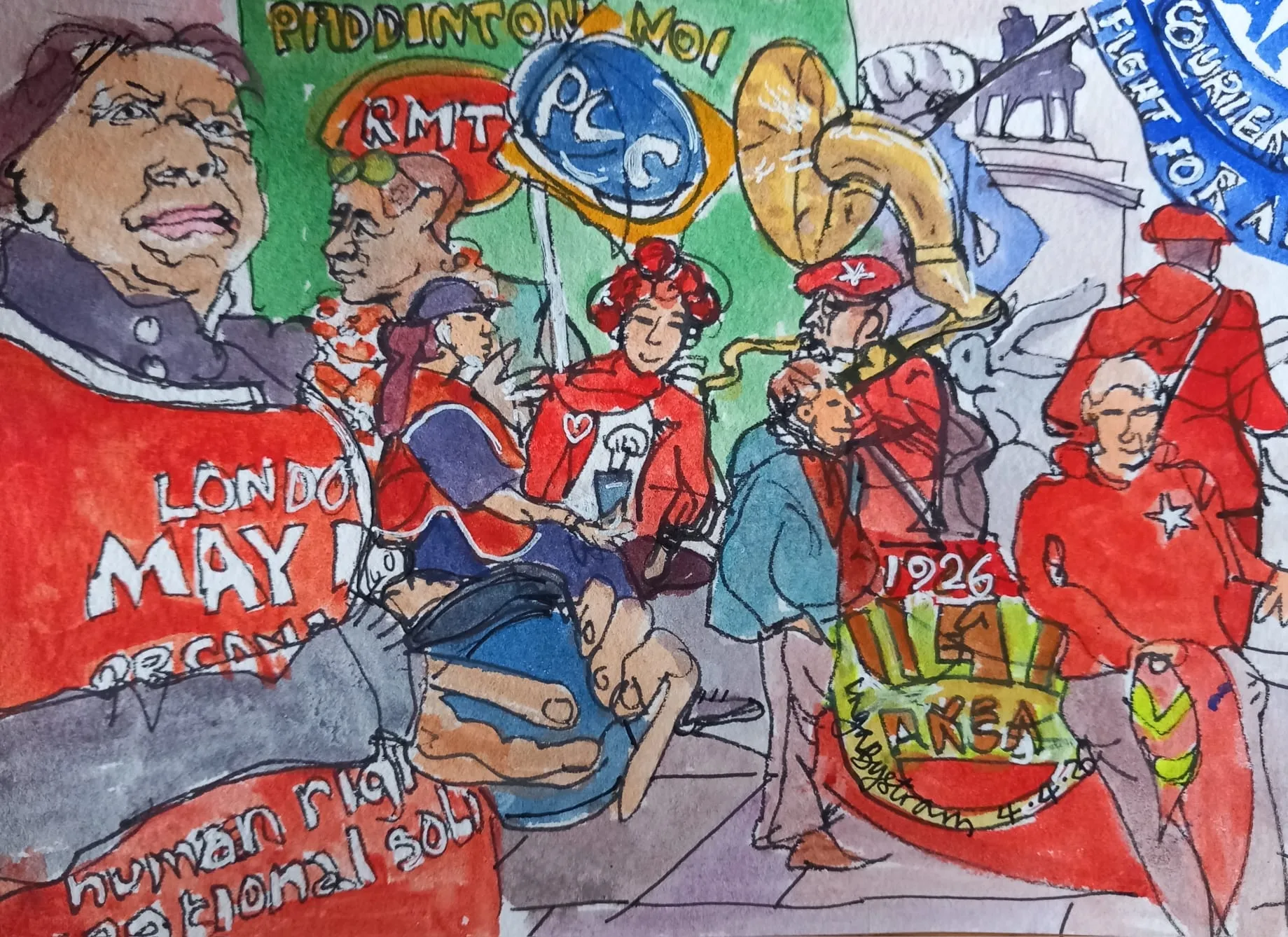
It was my second May Day demonstration of the weekend. I was on the Cardiff rally and march on Saturday and on Monday I was in Trafalgar Square for the 136th London May Day march and rally. The first in 1890 in Hyde Park was attended by Engels although he did not speak.

The demonstration is usually on May Day itself but this year May 4th was chosen as the anniversary of the start of the 1926 General Strike. As ever there was a good and varied turnout with plenty of union and campaign banners. These marches are invariably peaceful and orderly but that didn’t stop the Met turning up in large numbers.

There is increasing official pressure to restrict and ban demonstrations currently, a reflection of both an authoritarian lurch by also a political crisis at the top of society. One way to push back on that is to keep on keepin’ on attendong protests.

The drawing here is by veteran protest artist Inga Bystram

Articles

Socialist History seminars, summer term 2026. The 1926 General Strike

In Uncategorized on May 4, 2026 by kmflett

The 100th anniversary of the General Strike has seen a number books, events and discussions. The focus here is on new research which can bring fresh insights into what the Strike was about, what’s its politics and potential were, and what remains relevant one hundred years on

Monday 18th May 5.30pm on Zoom

Edd Mustill, Britain’s Revolutionary Summer. The General Strike of 1926

Free but booking essential at this link Britain’s Revolutionary Summer. The General Strike of 1926 | Institute of Historical Research

Monday 15th June 5.30pm Adrian Weir, The General Strike and after. Global and local, the Comintern and Hornsey 19202, 1930s

In person, Room N304, third floor, Institute of Historical Research. Free but booking essential at the link below

The General Strike and after. Global and local, the Comintern and Hornsey 1920s-1930s | Institute of Historical Research

Organised by the London Socialist Historians Group

Articles

The Ambridge Socialist: The New Year Conspiracy Crisis worsens

In Uncategorized on May 3, 2026 by kmflett

Ruairi…

The Ambridge Socialist

3rd May

The New Year Conspiracy Crisis worsens

The crisis resulting from Ruairi bottling George at New Year is deepening. Lilian already knows the truth and this week she came very close to telling Adam the truth. Meanwhile looking to do social media work for the Borchester Show, George needs a new drone. Will Brian now honour his promise to fund it, or will George now out  Brian..

Brian: the battle for the succession

Brian continues to struggle over what he thinks will be his legacy. He wants Ruairi to be his heir but also has grasped that he is not someone who can run the farm. Adam is the person who can do it, but he is an even more awkward individual than Brian. He is attempting to put together a family coalition to oust Brian. After his post-Orban visit to Hungary Debbie is on board. Following Brian’s decision to turn part of the farm into a caravan park, so is Kate. Alice however has so far remained loyal to Brian. Obviously there will be trouble ahead.

Bert is back

Bert Horrobin is back again and has been out for a walk. It looks like the BBC is promoting him as the possibly lovable but definitely rogue proletarian character as Eddie Grundy seems to be fading into the background.

Natasha & Tom going for broke

With Helen moving out it appears that Natasha and Tom are struggling to finance Beechwood. There will be trouble ahead here too

Elections on May 7th

It appears there are no Borsetshire Elections on 7th May,  but the Ambridge  Socialist remains an active part of the Borsetshire Community Independents.

Articles

The Times & Zack Polanski: a warning from history. Update

In Uncategorized on May 2, 2026 by kmflett

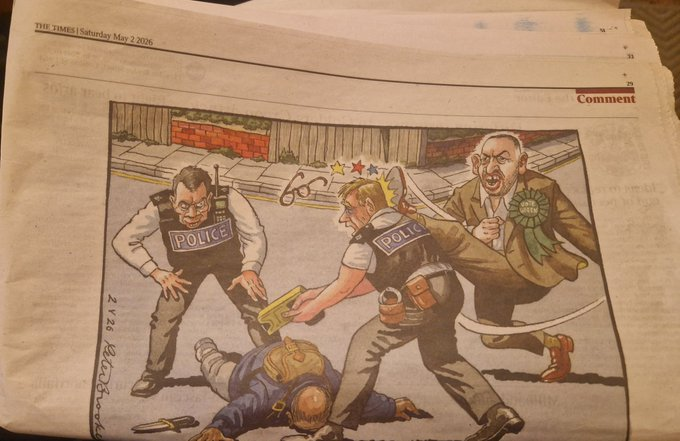
A Times Editorial (2nd May) on Zack Polanski concludes that there is no evidence that he is personally antisemitic. Given that he is the only Jewish leader of a mainstream political party it seems a reasonable point.

Not so reasonable is the cartoon of Polanski published in the same issue which depicts him as a hook nosed Jew.

Here some historical context is needed. There is no reason why Polanski or anyone else should not be caricatured in a cartoon. The hook nose however is associated with Nazi and other fascist propaganda from the 1930s.

Of course other political leaders of recent decades who are Jewish have suffered related treatment. Think of Ed Miliband and the bacon sandwich or some treatment of the former Tory leader Michael Howard.

This should serve to underline that antisemitism has a very long history in British ruling class circles and can and has been used as a way of dividing people on the basis of prejudice and bigotry.

The Green Party have complained to The Times about the cartoon. It will be interesting to see the response. If its that it was unintentional, that won’t do. The antisemitic caricatures and prejudices have deep roots. They need to be recognised and rooted out not repeated.

Zack Polanski told Laura Kuenssberg on 3rd May 2026

Zack Polanski also hit out at the Times over a caricature of him in the newspaper. The Green party has complained to the editor, saying the cartoon depicted Polanski using the antisemitic trope of a “visibly hooked nose”.

Polanski told Laura Kuenssberg: “Jewish communities aren’t safe, and this isn’t an abstract idea for me as a Jewish person.

“In fact, in the last six weeks alone two people have actually been arrested in relation to antisemitic actions towards me and just yesterday the Times newspaper published a pretty vile antisemitic caricature of me and have yet to apologise or withdraw that.”

Articles

After Starmer demands a ban on some protests, the best way to react: join a protest

In Uncategorized on May 2, 2026 by kmflett

Keir Starmer, who is still Prime Minister, who was once a human rights lawyer, has opined that some marches, ones that he does not like, may need to be banned. Its not exactly a new thing for a Labour Government to do but it is unusual.

The best way to react of course is to join a march.

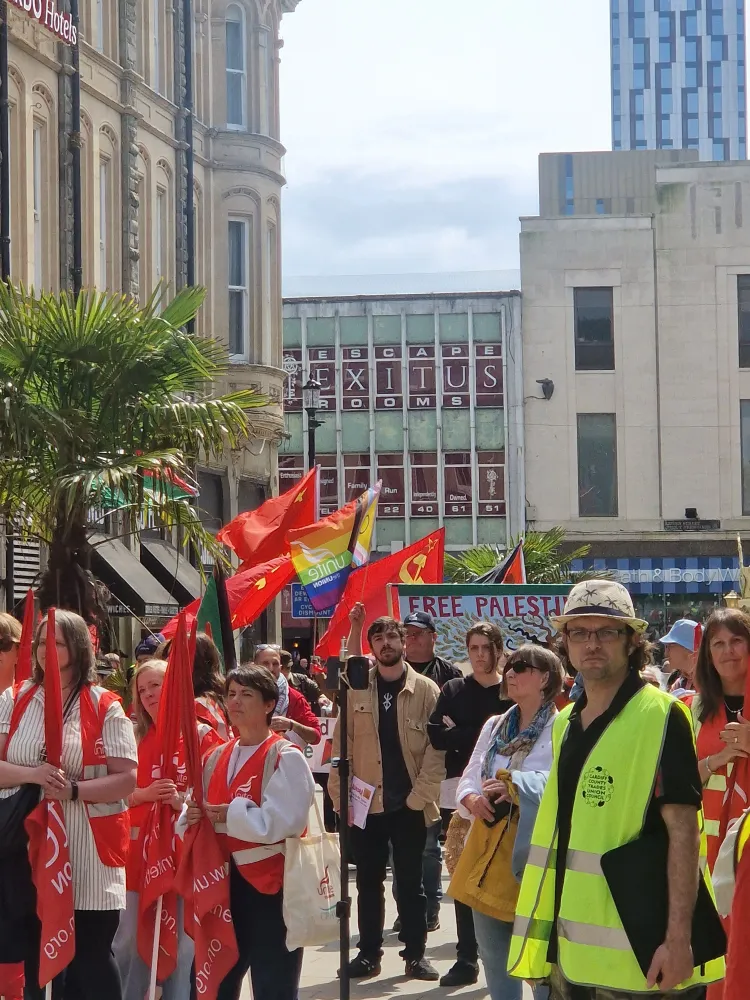
I joined the Cardiff TUC May Day rally and march on Saturday. It was well attended with a range of union and campaign banners. Since internationalism is a key focus of the labour movement Palestine was evident in respect of banners and speeches. Starmer will be relieved that I didn’t hear any phrases spoken that he does not like.

The march was led off by a brass band and the weather was fine. Its election time but while the left was present, the CP, SP and SWP, there was no official sign of Labour, Plaid or the Greens although of course individual members may have been present.

Keepin on Keepin on with protests is the best way to deal with Starmer’s latest authoritarian lurch.

Articles

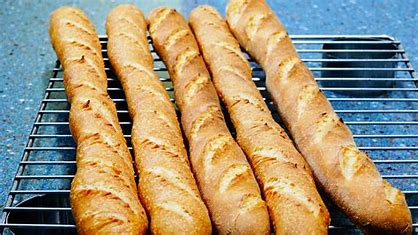
The French May Day. Ban on the selling of baguettes relaxed

In Uncategorized on May 2, 2026 by kmflett

The French May Day. Ban on the selling of baguettes relaxed

Keir Starmer, still the Prime Minister, seems to have been oblivious that May Day exists, even though it is International Workers Day and he is alleged to be a Labour PM.

In France May Day is taken much more seriously

While The Times has a long standing obsession with French food it was the Financial Times that reported that the long standing French ban on bakeries opening on May Day and selling freshly baked baguettes was in fact partially lifted in 2026.

There was a fine of 750 Euros for each worker at work on May Day. The remit included bakeries and the selling of baguettes. Essential activities  are allowed to continue including transport and of course cafes and restaurants.

The Chair of France’s National Bakery Confederation complained about the enforced closure of France’s 34,000 bakeries describing the country as the ‘Land of Bread’.

However this year independent bakeries were allowed to open but not chains.

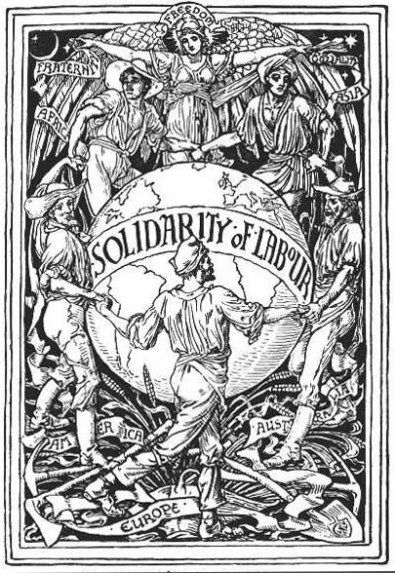
The General Secretary of the CGT union has said that a day off on May 1st is a ‘fundamental right’ noting that the Socialist International met in Paris in 1890 to declare May Day a day off in memory of the 1886 Chicago Martyrs.

Meanwhile Britain will have an official Bank Holiday on May 4th when baguettes will still be available, although not up to French standards clearly.

I’m not sure the Financial Times report should be taken too seriously, it appears the baguette law was not that well enforced anyway, but a tradition of taking May Day seriously remains a good one.

Articles

Starmer’s May Day greetings: ban solidarity marches

In Uncategorized on May 2, 2026 by kmflett

There is always jeopardy when Keir Starmer is allowed out unscripted and the last couple of days have underlined the point.

On May Day, International Workers Day, its usual for a Labour Prime Minister to send greetings.

Checking Starmer’s social media I find no mention of this but rather a claim that Zack Polanski should not be leader of the Green Party. That is a matter for the Green Party not Starmer.

Starmer followed this up by saying that while of course he defends the right to protest some Palestinian solidarity marches may have to be banned. Its a phrasing familiar from many Times Editorials over the years. Of course there is a right to protest, as along as it is not actually exercised.

Starmer then went on to claim that such marches troubled Jewish people. Interestingly the marches have included significant numbers of Jewish people. Hmm. Perhaps for Starmer these are the ‘wrong type’ of Jewish people. For an example of this reactionary thinking see Jonathan Freedland in the Guardian (2nd May).

Unlike Starmer I’m off on a solidarity march

Articles

A month in politics….

In Uncategorized on May 1, 2026 by kmflett

Articles

The State’s attack on the right to protest has a long history

In Uncategorized on May 1, 2026 by kmflett

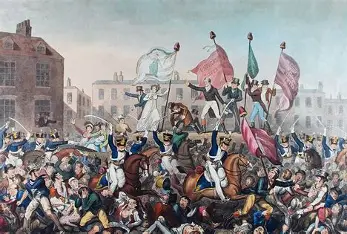
Peterloo Massacre, Manchester, 1819

The State’s attack on the right to protest has a long history

The conviction of Chris Nineham and Ben Jamal on public order charges at Westminster Magistrates Court recently has renewed concerns about the State’s attack on the right to protest.

The charges related to a Palestine demonstration in central London in January 2025. The police didn’t have any credible evidence to explain their actions in Court but that did not stop a Magistrate from convicting.

Along with the unexplained decision by the Met Police to begin again arresting protesters who display placards in respect of Palestine with words that Shabana Mahmood and Keir Starmer don’t want to see it underlines a further authoritarian drift.

John Rees of the Stop the War Coalition has described it as the most sustained legal attack on the right to protest since the 1950s.

The background has been increasing restrictions on protests which has led the Met to police what placards can be displayed on protests, what slogans can be shouted and what assembly points and routes can be used.

The police force in its modern form has not always existed. The decision to professionalise and centralise the police in the mid-nineteenth century was resisted by Chartists, trade unionists and some impact was made. The police remain largely unarmed for example.

The concern however was that the force would increasingly be used to enforce the policies of the State, and that meant intervening on the side of the rich and powerful and not just when it came to protest either.

The Victorian socialist William Morris noted  ‘the propertied classes, who reacted to the rumour that there were now socialist agitators in the streets (making speeches against their property!) with seemly terror. In general the police were impartial, attempting to sweep off the streets with an equable hand street-traders, beggars, prostitutes, street-entertainers, pickets, children playing football and free-thinking and socialist speakers alike’ Very often as in 2026 the pretext was a complaint from a trader or member of the public that they had been impeded in whatever it was they were doing.

The template had been set with Peterloo in Manchester on 16th August 1819 when the Yeomanry, businessmen on horseback, attacked a demonstration for the vote and killed and injured numbers of people.

It was not something the State decided, particularly in the light of the protests that followed, that it would be sensible to repeat. The rights of the ‘Freeborn Englishman’ were to be respected including the right to political protest, although not the vote. This informal agreement did not extend to industrial disputes and its boundaries were frequently tested.

The testing has tended to occur at key moments when the State feels it is being challenged. Peterloo with the right of mass assembly and the vote was one. The current Palestine protests are clearly another. Attempts to ban them are once again happening with ‘hate marches’ featuring often from those who have links in one way or another with the current Israeli Government. A Government which media commentary seems to have forgotten is a key player in current military offensives in Iran and Lebanon.

 A third can be located in 1960-62 when the direct action focused Committee of 100 broke away from CND. It held mass sit downs in Trafalgar Square, the biggest of which saw 1,314 arrests. It then moved to protests are military bases which mobilised both thousands of protesters and thousands of police and soldiers. The State response was ramped up with charges escalating from breach of the peace to conspiracy and incitement. Some substantial jail terms were handed out.

A ‘democratic liberal’ society’ is meant to be one where peaceful and non-violent protest is regarded as normal.  However when the State feels challenged this has not always been the case which is why the Chartists had the slogan, peaceably if we can, forcibly if we must. If democratic protest is frustrated by authority history suggests more robust revolts may follow.

An earlier version of this post appeared in the Morning Star