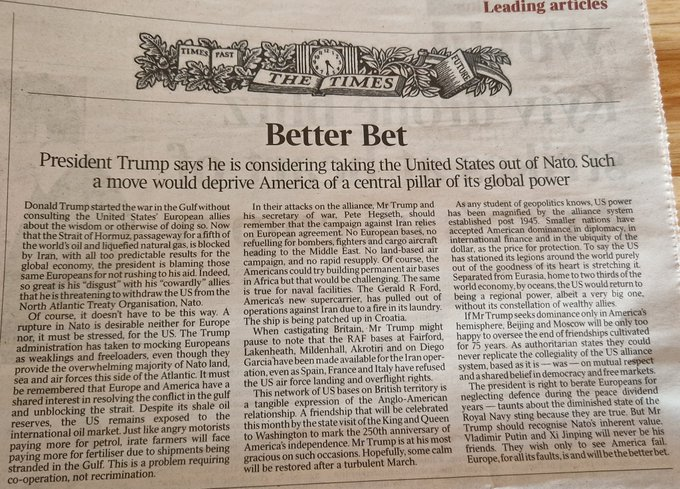
The Times Editorial on 2nd April 2026 is interesting not because those who oppose Trump and Netanyahu’s warmongering will find anything to support but because it reflects the cracks in imperial politics.
While some of the hard right media- the Mail etc- are backing Trump, The Times notes that without the European part of NATO the US’s position as a global power is at best diminished. It is coruscating about Trump himself.
As Marx noted the ruling class is a band of warring brothers, which leaves space for those opposed to imperial projects to push on,
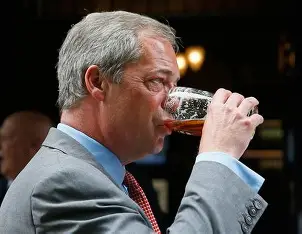
Tosspot, a Medieval term for a drunkard, referenced by Shakespeare in the final passage of Twelfth Night, was an important figure in popular- that is non-religious- Easter traditions.
Easter saw versions of the Mystery Plays where St George slayed various enemies, while the figure of Tosspot laughed at them.
Another Easter tradition saw groups of less well-off usually younger men, collect money for the Easter feasts that ended Lent. They went from house to house and from village to village collecting funds. The figure who actually collected the money was Tosspot.
Easter is the most important of the Christian religious periods but it also has traditions which are rooted in very different popular pursuits.
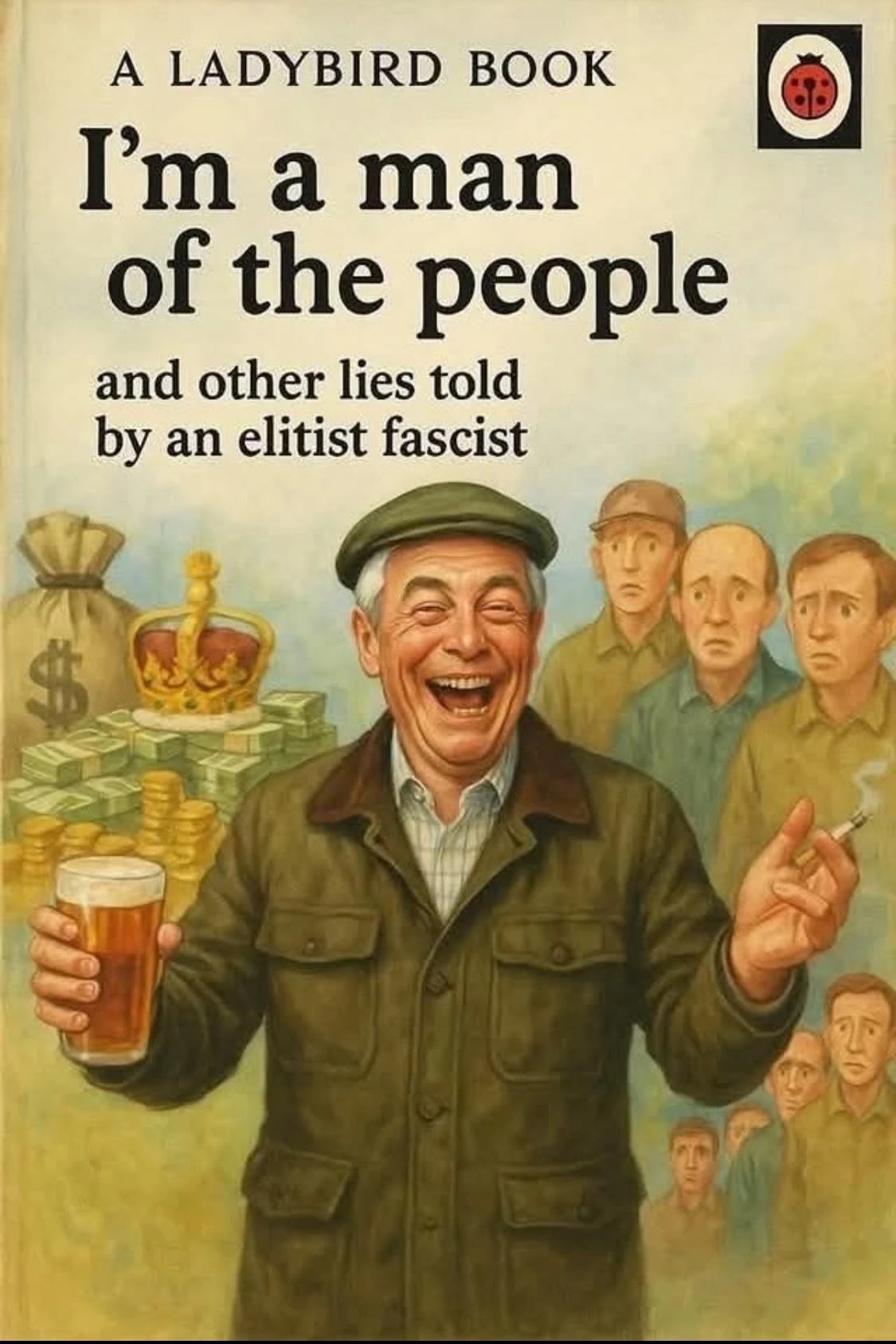
Don’t expect to hear about these traditions from the self appointed guardians of British culture even if a discussion on Old Tosspot with Nigel Farage and others on GBNews would be highly appropriate
Contact BLF Organiser Keith Flett @keithbeard.bsky.social
Michael Rosen, Michael Sheen, Pearce Quigley & Mark Chapman set to split hairs in Beard of Spring 2026 final vote
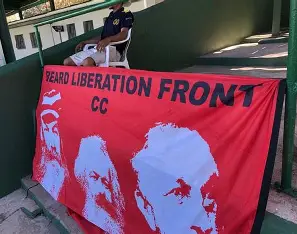
The Beard Liberation Front, the informal network of beard wearers, has said that actor Pearce Quigley, author Michael Rosen, actor Michael Sheen, & broadcaster Mark Chapman are set to split hairs for the coveted title of Beard of Spring 2026
The list comprises a range of people who have worn a beard during the first quarter of the year, not necessarily full-time, and whose facial hair has had a positive public impact.
BLF Organiser Keith Flett said, the two preliminary Close Shave rounds of voting were a real follicle fight and the Beard Off Final will certainly be a close shave
There were two Close Shave Rounds with the highest and second placed from both going to a Final Beard Off vote. The winner will be announced on Easter Saturday.
Michael Rosen, author through to the Beard Off Final
Michael Sheen, actor through to Beard Off Final
Joe Wilkinson, comedian
Emmanuel Gregoire, Mayor of Paris
Zack Polanski, politician
Mark Chapman, broadcaster through to Beard Off Final
Contact LSHG Convenor Keith Flett @keithbeard.bsky.social
Historians say the right to protest on Palestine is increasingly threatened after Ben Jamal & Chirs Nineham verdicts.
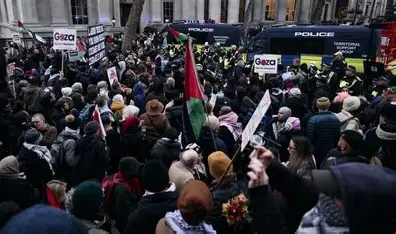
The London Socialist Historians Group, the long established group of research historians, has said there are serious concerns about the democratic right to protest after Chris Nineham of the Stop the War Coalition and Ben Jamal of the Palestine Solidarity Campaign were found guilty of public order offences by a judge at Westminster Magistrates Court on April 1st. The verdict will be appealed.
The charges arose from a Palestine solidarity march on January 18th 2025 where police tried to restrict access to Trafalgar Square and place other highly questionable restrictions on the march. The march was entirely peaceful
There remains an urgent need to protect the right to protest from an ever more authoritarian Government. As the Metropolitan Police have reminded us there is no actual right to march. The ability to do so can only be protected in practice.
The lobby to ban marches remain active and it is notable that Lord Walney again supported a ban on the Al Quds march in London several weeks ago. He unveiled a long delayed report on protest commissioned by the previous Tory Government at the House of Commons in 2024 which was chaired by Lord Mandelson.
Walney (Times 12th March) followed this by a call for a change to the law to allow for a ban even on static protests, gatherings and meetings.
It is an echo of the Six Acts passed after the Peterloo Massacre in August 1819 and its motivation is likely to be similar. The Government could not understand what had led 60,000 people to gather in central Manchester to demand the vote and did not know how to react. On the day it responded with violence and 18 people were killed and many more injured. With the Six Acts it responded by significantly curtailing or banning the right to meet and protest.
The same is true with the protests for Palestine that have developed after October 2023. The Government cannot understand why such large numbers continue to support them and struggles to respond. Marches have been subject to restrictions, several organisers are currently on trial after police attacked one march in Trafalgar Square and Palestine Action remains banned pending a Government appeal.
The historians say there is a long history of fighting for and defending the right to protest
After Peterloo in Manchester on 16th August 1819 where a demonstration for the vote was broken up by soldiers with many protesters left dead and injured Governments have tended to the view that allowing democratic protest is better than provoking confrontation. However that has never been a settled view and from time to time demonstrations have been banned.
On 6th May 1867 a mass protest for the vote in Hyde Park was banned and the Government called in troops. However the demonstration was so large that they were overwhelmed. The Home Secretary Walpole resigned and a Second Reform Act extending the Suffrage was passed.
Socialist Historians Convenor Dr Keith Flett noted, the right to protest requires continued vigilance and exercise against authoritarian Governments whether Tory or Labour. The Six Acts which were far more draconian than even a Farage Government could dream up were eventually repealed in full, as democratic protests found ways to make their impact.
Beard Liberation Front to wind down campaign after success achieved
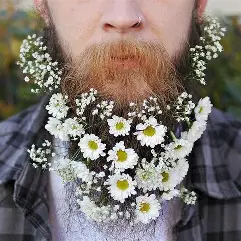
The Beard Liberation Front, the informal network of beard wearers, is set to wind down it 30 year campaign to end discrimination against the hirsute.
The campaigners say that while there remains some prejudice against the hirsute, in reality compared to thirty years ago, beards can be found in every sphere of life, from the workplace and sport to the media.
Winding down the BLF’s activities will take place over the next year, although the annual Beard of the Year vote will remain.
BLF Organiser Keith Flett said, our campaign against beardism, discrimination against the hirsute has had some real success over three decades. We feel it’s time to acknowledge that and move on
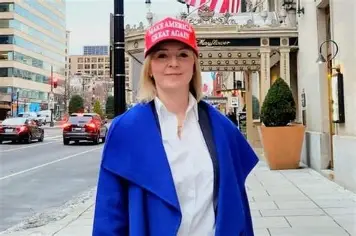
Liz Truss has been speaking at the Conservative Political Action Conference in Texas. The Conference has been a support group for MAGA but in 2026 neither Trump or Vance were to be seen.
Truss spoke in a small space away from the main conference stage and proclaimed her plan to launch MEGA in London in July.
The Guardian subsequently reported that Badenoch, Farage and Rees Mogg had all said they would be steering clear.
Perhaps MEGA, is Truss’s plan to unite not the hard right but the far right…
“They were careless people, Tom and Daisy- they smashed up things and creatures and then retreated back into their money or their vast carelessness or whatever it was that kept them together, and let other people clean up the mess they had made.”
Workers control, and there are few breweries that effectively do that- Abbeydale in Sheffield for example-might have seen the Brewdog story turnout very differently.
However below are six steps that might have given Brewdog a rather better ending than Administration and a cut-price sale with 484 job losses.
Its an extract to a longer analysis of Brewdog published at Culture Matters (link below)
So could BrewDog’s craft beer project have been done differently? That is the question any socialist like myself, impressed with the early BrewDog and then increasingly dismayed by it until I swerved the beers and bars nearly altogether, needs to consider.
The answer is an unequivocal yes. Firstly, Martin Dickie and James Watt (or those who might be tempted to do something similar in future) should have recognised their limitations. Dickie was a great brewer, while Watt could do publicity stunts that wound up Big Beer. Neither had any experience of running a business, or of managing a workforce. Professional assistance should have been sought.
Secondly, BrewDog should have recognised a trade union, in this case Unite the Union. Of course, Dickie and Watt were not used to dealing with a union, but again getting advice would have told them why it was important. A recognised union is not just about pay and conditions (and occasional strikes) although these are important. It can make sure that grievances are professionally handled and that issues with the business are raised. It may be that this is uncomfortable, but an independent voice would have saved BrewDog a serious amount of the trouble it stumbled into.
Thirdly, it should have resisted the siren call of capital to accumulate and expand. It’s not easy as Camden, Beavertown and other once independent craft brewers, now just another part of Big Beer, demonstrate, but it can be done. Kernel in London is an excellent example.
Fourthly, it should have understood that it needed a business model that was not the same as Big Beer but distinct from it. It was a Scottish-based brewer and provenance and community focus are a key part of independent beer. Expansion first to the UK and the across the globe was not only a mistake, but against what made craft beer different.
Fifthly, while its crowdfunding Equity for Punks schemes were not in most ways different to many other brewers, the idea that a stock market float would lead to financial gain for EFP holders should not have happened. Craft beer was meant to be focused on the beer, not the business. Of course, making sure the business was run properly and indeed profitably was important. Endless attempts to expand and in particular the private equity TSG deal were not, as became clear in 2026, the way forward.
Finally, BrewDog could have been run as a co-operative with both workers and Equity For Punks shareholders having a say. That might have fitted the original BrewDog culture of 2007, and it’s a model that might work for others in future. It would not have worked in 2026 however, since BrewDog was effectively bankrupt when sold to Tilray.


 Kmflett's Blog