Articles

Their Lords of Misrule & Ours

In Uncategorized on December 28, 2017 by kmflett

Their Lords of Misrule & Ours
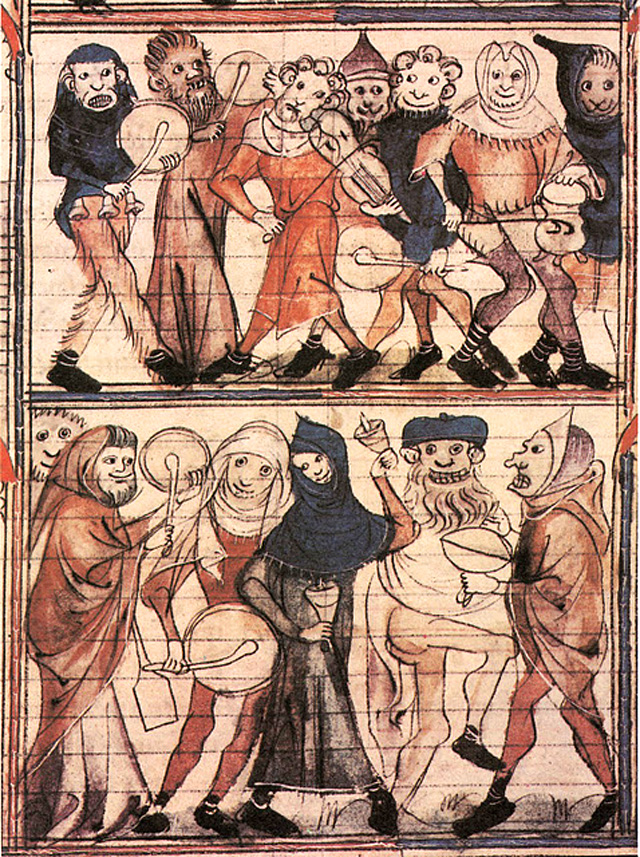
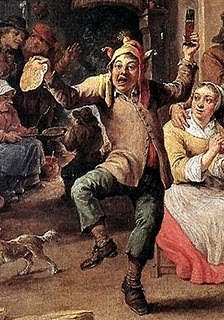
Lords of Misrule (occasionally also women, but research here is sparse) are a feature of various moments of the traditional calendar and certainly the twelve days of Christmas from 26th December.

Much historiography focuses on the Lord of Misrule as a figure ‘elected’ in Royal Household and the Inns of Court as a sort of ‘world turned upside down’ figure who subverts traditional authority. At this level the Lord of Misrule is largely a figure of mockery and fun, a way of releasing tensions within authority structures.

William Hone in his Sports and Pastimes of the English People (1833) quotes Stow ‘At the feast of Christmas in the King’s Court there was appointed a Lord of Misrule, or master of merry disports. The same merry fellow made his appearance at the house of every nobleman and person of distinction.’.

The ‘taking the piss’ out of authority was real enough but it was with licence.

The tradition however was not confined to the upper reaches of society but was also found amongst the lower orders. Philippe Stubbs cover this in his Anatomie of Abuses (1583). In this extract he complains that Lords of Misrule disrupted Church services and this was certainly not approved of:

Thus al things fet in order, then haue they their Hobby-

horfes, 6 dragons & other Antiques, togither with their baudie Pipers

and thundering Drummers to ftrike 7 vp the deuils daunce withall.

then, marc he thefe 8 heathen company towards the Church 9 and

Church-yard, their pipers pipeing, their drummers thundring, their

flumps dauwcing, their bels iyngling, their handkerchefs fwinging 10

about their heds like madmen, their hobbie horfes and other monitors

fkirmiming amongft the route 11 : & in this forte they go to the

Church 12 (I fay) & into the Church, 12 (though the Minifter be at praier

or preaching), dancing & fwinging [t]heir ha/zdkercheifs 13 ouer their

heds in the Church, like deuils incarnate, with fuch a corcfufe 14 noife,

Natalie Zemon Davis in her 1971 article (Past and Present 50) ‘The Reasons of Misrule: Youth Groups and Charivaris in Sixteenth-Century France’, argues that in France the numerous Lords of Misrule in the sixteenth century were very largely comprised of unmarried young men. Their mockery of  authority was, she argues, primarily a way of providing a socialisation process where those involved went on in later years to become the figures of authority they had earlier mocked.

Of course sometimes the mockery got out of hand in a way that was much rarer in Royal Households and the Inns of Courts.

Perhaps the difference between their Lords of Misrule and ours was that the latter could move from playing a role in social control towards subverting it.


Articles

Brewdog’s Essex Rd N1 site: there could be trouble ahead (again)

In Uncategorized on December 28, 2017 by kmflett

There could be trouble ahead (again). Update on Brewdog’s Essex Rd N1 site

The Brewdog site in Essex Rd Islington, just a few minutes walk from Islington Green (but arguably in the wrong direction) has not been blessed with success.

It was originally a beer and hotdog outlet, DogEatDog. I thought it was OK but it didn’t work, and it was shut and briefly replaced by the Punk Kitchen. The idea here was to host month long street food pop ups but it lasted only a couple of months and closed towards the end of 2016.

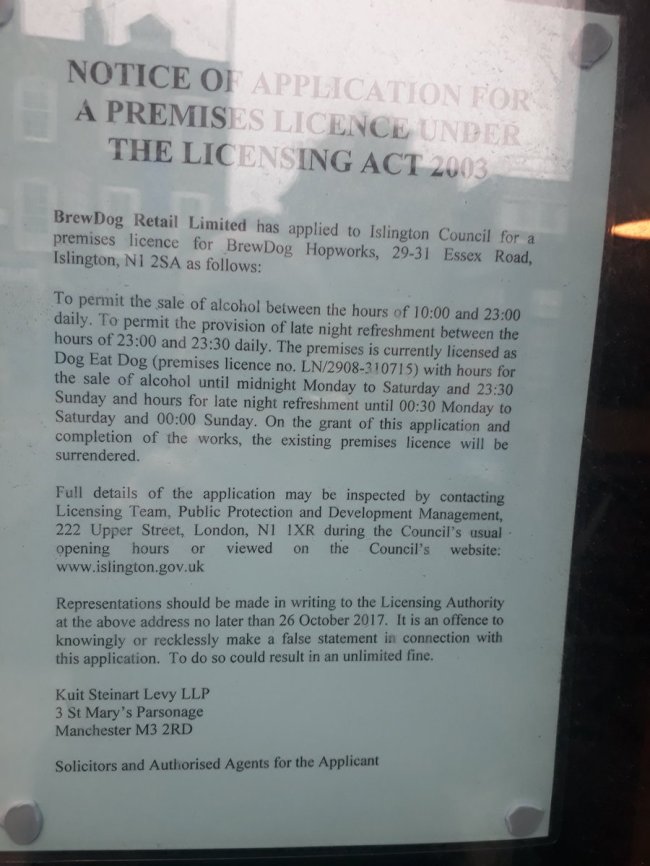
This year the premises has been empty and, reportedly, on the market. That may not have worked either as Brewdog submitted a licensing application in the Autumn for a Hopworks outlet.

The Hopworks concept revolves around installing small brew kits (there isn’t a huge space to do this at the Essex Rd site) where people brew their own beer with the help of Brewdog operatives.

The existing Hopworks outlet in Scotland also has a bar, which appears to be the plan here too.

Clearly as the report from the Islington Gazette (link below) suggests there have been some issues and the licensing application is now due to be heard on 4th January.

There have obviously been objections from residents about the noise from the premises. It must be said that Essex Rd and the area in general is a very busy urban space so residents must be familiar with some noise. The issue of course, as elsewhere, is noise occurring late at night when people want to sleep (particularly if they need to be up early for work).

Brewdog appear to have agreed to reinstate sound proofing. The return of benches outside are more of a puzzle. Who wants to sit on the pavement by traffic clogged Essex Rd I’m not sure, but I’d suggest  a pollution mask.

Anyway hopefully issues can be sorted and the project can proceed.

http://www.islingtongazette.co.uk/news/brewdog-wants-to-open-educational-bar-in-essex-road-where-customers-can-make-their-own-beer-1-5335194


Articles

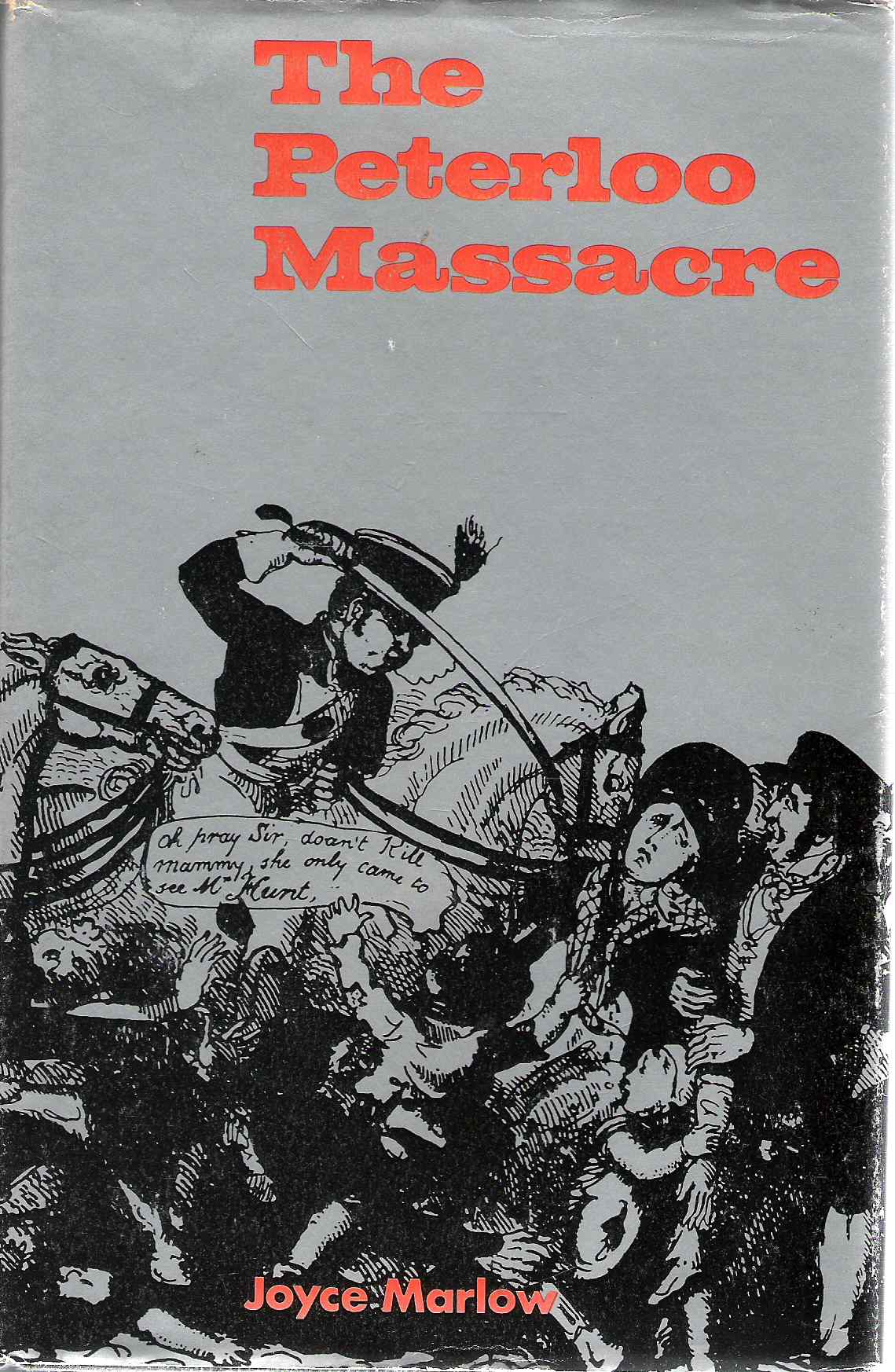
Joyce Marlow 1930-2017: historian of Peterloo

In Uncategorized on December 27, 2017 by kmflett

Joyce Marlow 1930-2017: historian of Peterloo

Joyce Marlow, the actress, historian and author has died aged 87.

Her Guardian obituary is here:

https://www.theguardian.com/books/2017/dec/20/joyce-marlow-obituary

Her own website has much a fuller account of a fascinating life:

http://www.joycemarlow.co.uk/

I note her passing here because Joyce Marlow wrote popular histories of Peterloo and the Tolpuddle Martyrs in the late 1960s and 1970s at a period when such books could find their way into cheap paperback editions, and on to the shelves of bookshops (rather more widespread than they are now).

Marlow’s own account of how she wrote the book on Peterloo and its impact is below:

Insomuch as I had a breakthrough book, The Peterloo Massacre was it.  I’m not going into details but I wrote it during a period that led to my taking an overdose and having my stomach pumped out.   Ron Whiting who’d had his own problems, stood by me.   His problems included Whiting and Wheaton being swallowed up by the monstrous Robert Maxwell.

Ron then formed Rapp and Whiting backed by the rich maverick Georg Rapp.   To meet the August deadline of the 150th anniversary of the 1819 “massacre” on St Peter’s Fields in Manchester, Ron and I did the copy editing of “Peterloo” over the telephone with a half-hour break for lunch!   The book was widely and well reviewed and went into book club and paperback editions.  To my everlasting regret my mother died before publication but my father was duly proud.

I can’t now recall how it came about, but Granada tv did a programme about “Peterloo”, produced by Brian Trueman, directed by Barry Clayton who’d studied at the prestigious Polish film school.   A group of actors, plus me,  filmed on the moors outside Manchester, they in costume enacting various scenes, me as commentator.   The film was shot in colour.   Unfortunately Granada and the unions were having a stand-off about rates for colour so it wasn’t  broadcast for months, then at some unearthly hour like midnight.   I wonder if there’s a copy somewhere in the archvies?   It would be interesting to see after all these years.

I also  appeared on the BBC’s “Late Night Review”.   I had to write my own script about “Peterloo” which was nerve-racking, before being interviewed by Joan Bakewell which was fun.


Articles

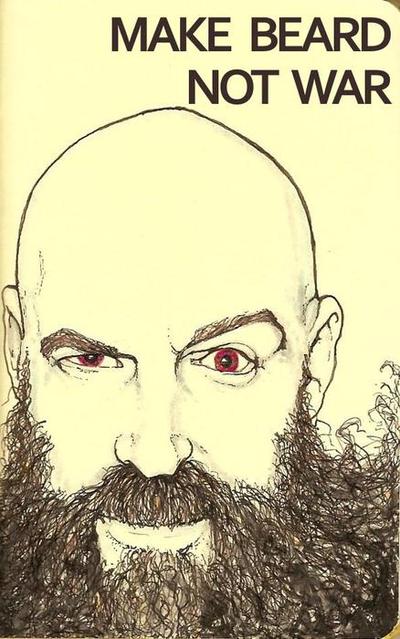
Votes have been verified in the Beard of the Year poll. The winner will be revealed on 29th December

In Uncategorized on December 27, 2017 by kmflett

Beard Liberation Front

Media Release 27th December

Contact Keith Flett 07803 167266

Votes have been verified in the Beard of Year poll. The winner will be revealed on 29th December.

The vote for Beard of the Year closed on 24th December and following the Xmas break, BLF organisers have checked through the votes cast to look in-particular for any that were promoted by electronic intervention rather than individual voting.

The campaigners say that the poll had a high a level of security and repeat voting was blocked by both cookie and IP address. People trying to vote more than once (& failing) accounted for a significant discrepancy between visits to the poll and lower numbers of votes cast on several days.

There were 23,600 votes and there was worldwide interest in the poll which in the final week saw Prince Harry and Labour leader Jeremy Corbyn splitting hairs.

While Corbyn has won the separate poll for Parliamentary Beard of the Year seven times he has only achieved victory in the Beard of the Year vote once, back in 2001. Prince Harry would be the first ever member of the British Royal Family to win.

BLF Organiser Keith Flett said, while we are confident that the vote was fair, we cannot of course absolutely guarantee that every last vote was cast fairly in a poll of this kind. However the margin of victory is ultimately significant enough to have provided a clear winner and the Beard of the Year 2017 will be announced on Friday.

_________________________________________________________________________________

Recent Beard of the Year winners

2016 Tim O’Rourke (Howling Hops brewer)

2015 Bryan Spooner (Weird Beard brewer)

2014 Conchita Wurst (singer)

2013 Gareth Malone (Chorister)

2012 Robin Lustig (Broadcaster)

2011 Jay Rayner (critic)

2010 Ai Wei Wei (artist)

The Beard of the Year Award is about people who have consistently had beards over the year and who have promoted a broadly positive image of the hirsute in public life.

Beard of Year 2017 shortlist was:

James O’Brien. Broadcaster and Beard of Autumn 2017

Jeremy Corbyn, politician

Michael Rosen, Hirsute Broadcaster 2017

Prince Harry, Royal

Gary Lineker, broadcaster

Moeen Ali, cricketer

Harry Kane, footballer

Billy Bragg, musician

Hefin David, politician, Beard of Summer 2017

Colin Kaepernick, NFL player

Sir Mo Farah, athlete

Articles

Historians say more robust action required to stop Government papers being ‘lost’

In Uncategorized on December 27, 2017 by kmflett

London Socialist Historians Group

Press release 26th December

Contact Keith Flett 07803 167266

Historians say more robust action required to stop Government papers being ‘lost’

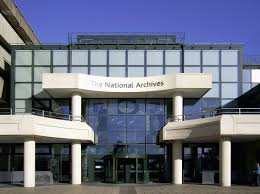
The London Socialist Historians Group which organises the socialist history seminar at the Institute of Historical Research has said that the disclosure, ahead of the traditional release of Government papers at New Year, that numbers of sensitive documents have disappeared, presumed lost or misplaced, requires robust action.

The news has rightly led to demands that the missing papers which appear to cover some of the more controversial episodes in recent British history be searched for:

https://www.theguardian.com/uk-news/2017/dec/26/uk-government-urged-to-search-for-national-archives-papers?CMP=twt_gu

The official story is that papers transferred to civil servants from the National Archives are misplaced and not returned.

The historians say that in a few cases there may be genuine national security reasons for withholding papers from public release. However these reasons cannot and should not extend to papers that are simply embarrassing or awkward for the Government of the day or its predecessors.

The LSHG is now making a call, in the light of these developments, for an independent commission covering historians, archivists, civil servants and other interested parties, to review the whole question of how official documents are kept, particularly as we move from the days of paper to electronic copies

London Socialist Historians organiser Dr Keith Flett said, the current situation with papers apparently lost is bad enough, but in every case we are still talking about paper copies. In future a considerable amount of important documentation relating to the UK’s history will be held electronically and the temptation to edit it or delete it entirely must be looked at addressed and a framework put in place to make sure there is a continuing and reliable supply of official document to researchers.

http://londonsocialisthistorians.blogspot.co.uk/

 Guardian 27th December

You report that official government papers continue to disappear from the national archives rather than being released for scrutiny by researchers and the public (26 December). Not withheld because of any genuine issue of national security but because release of the contents would be embarrassing or irritating to those in power. Hopefully, a new Labour government will not just concur with existing policy. It is time to set up an independent commission on how official documents are kept and made available to the public, particularly as our digital age makes it even easier simply to delete awkward material.
Dr Keith Flett
London Socialist Historians Group

Articles

Joe Grundy voted Borsetshire Businessman of the Year: Report

In Uncategorized on December 26, 2017 by kmflett

The Ambridge Socialist

Boxing Day edition

Joe Grundy Voted Borsetshire Businessman of the Year

While Brian Aldridge may have been named Borsetshire Businessman of the Year (Justin Elliott turned it down) the Ambridge Socialist prefers a more open and democratic way of doing things.

In the pre-Xmas period we ran a poll to find the real Borsetshire Businessman of the Year.

We ruled out Justin Elliott firstly on the basis that he clearly doesn’t want the title (for probably doubtful reasons) and secondly because he does most of his business elsewhere.

We did include Brian Aldridge, who after all is chair of Borsetshire Land.

We also included Toby Fairbrother as a representative of the aspiring but so far fairly useless young entrepreneurs of Ambridge. Josh Archer might have made it but we were looking for a successful businessman and we didn’t want to fill up the poll with losers.

Of course either or both Josh and Toby might go on to be very successful. Time will tell.

This left us with a third choice to make, someone who represented traditional business in Ambridge and its environs. We decided on Joe Grundy. Joe has set up and run (with Eddie) a successful cider business, on which like all the best businessmen he pays no tax. He also runs as a private-members club, a cider barn. At Xmas he markets turkeys which this year sold out helped by the offer of a free sample of Grundy’s latest craft cider, Tumble Tussocks.

Its true, as far as we can see, that Grundy does not turn a great profit, but he covers costs and has run sustainable businesses in Ambridge for many years.

We could of course have included Borsetshire businesswomen but unfortunately this year no example stood out. Shula’s Riding Stables have had issues and while Jolene has done an excellent job keeping The Bull going after the Great Flood it remains underwritten in part by finance from David Archer.

The poll results were as follows:

Joe Grundy 58%

Brian Aldridge 26%

Toby Fairbrother, not very many


Articles

Lords of Misrule: a post-Christmas youth rebellion?

In Uncategorized on December 26, 2017 by kmflett

As time allows I’ve been continuing to delve (research wise) into the Lords of Misrule that appear at various times in the traditional calendar but certainly in the twelve days of Christmas after 25th December.

There is interesting discussion in correspondence between the US historian Natalie Zemon Davis and the late EP Thompson in 1971/2 which surfaced earlier this year (Past and Present May 2017).

This refers back to an article Davis wrote in Past and Present 50 (1971) the Reasons for Misrule.

Here she argues that the Lords of Misrule elected on 26th December were categorised by age and gender, that is they were young men.

She writes in a footnote about English examples:

The Lords of Misrule seem to be an example of youth officers..not the Lords of Misrule elected at the Christmas revels at Gray’s Inn or at Court but the ‘wildheads of the parish’ (described in 1585 by Philipp Stubbs in his Anatomie of Abuses) who elect a captain of mischief called ‘my Lord of Misrule’ and who go about with hobby horses and pipers and drummers..’

Was this subversive of the existing order, a real rebellion or a licensed way of ‘letting off steam’ at a time of year when little rural work could be done?

Work still in progress.

Articles

Sun attack on Prince Harry comes too late to influence Beard of Year poll

In Uncategorized on December 26, 2017 by kmflett

Beard Liberation Front

Media Release 26th December

Contact Keith Flett 07803 167266

Sun attack on Prince Harry comes too late to influence Beard of Year poll

The Beard Liberation Front, the informal network of beard wearers, has said the attack by Rupert Murdoch’s Sun paper on Prince Harry for reportedly planning to invite former US President Obama to his wedding and snub Murdoch’s close friend President Trump has come too late to influence the Beard of the Year poll.

The vote for the Beard of the Year 2017 closed on 24th December. The winner will be announced on 29th December.

The campaigners say that there were over 23,000 votes and there was worldwide interest in the poll which in the final week saw Prince Harry and Labour leader Jeremy Corbyn splitting hairs.

While Corbyn has won the separate poll for Parliamentary Beard of the Year seven times he has only achieved victory in the Beard of the Year vote once, back in 2001. Prince Harry would be the first ever member of the British Royal Family to win.

The Sun ‘report’ is almost certainly derived from the fact that Prince Harry’s interview with Obama is due to be broadcast on Radio 4’s Today programme on 27th December.

BLF Organiser Keith Flett said, whatever the intention of the Sun story it would certainly have boosted Prince Harry’s Beard of the Year chances were it not for the fact that the poll has closed. Sun journalists need to pay more attention to reality.

_________________________________________________________________________________

Recent Beard of the Year winners

2016 Tim O’Rourke (Howling Hops brewer)

2015 Bryan Spooner (Weird Beard brewer)

2014 Conchita Wurst (singer)

2013 Gareth Malone (Chorister)

2012 Robin Lustig (Broadcaster)

2011 Jay Rayner (critic)

2010 Ai Wei Wei (artist)

The Beard of the Year Award is about people who have consistently had beards over the year and who have promoted a broadly positive image of the hirsute in public life.

Beard of Year 2017 shortlist was:

James O’Brien. Broadcaster and Beard of Autumn 2017

Jeremy Corbyn, politician

Michael Rosen, Hirsute Broadcaster 2017

Prince Harry, Royal

Gary Lineker, broadcaster

Moeen Ali, cricketer

Harry Kane, footballer

Billy Bragg, musician

Hefin David, politician, Beard of Summer 2017

Colin Kaepernick, NFL player

Sir Mo Farah, athlete

Articles

The Royal Family: 1848-2018

In Uncategorized on December 25, 2017 by kmflett

The left & Royal occasions: a long history

BBC

Christmas is invariably a big Royal occasion. There is the Christmas Day Queen’s Speech, and the appearance at Church in Sandringham on one of the Royal Estates.

This year of course there is added interest because of the engagement of Meghan Markle and Prince Harry and their wedding on Cup Final Day 2018.

2018 is also the 170th anniversary of 1848 when monarchs feared for their crowns across Europe, even in Britain where on April 10th 1848 Queen Victoria retreated to the Isle of Wight as the Chartists marched for democracy in London

The left, being supporters of democracy and elections, have never been great enthusiasts for unelected rulers, particularly, as many have done historically, when they have claimed a ‘divine right’ to rule.

Yet in Britain republicanism, the idea that there should be an elected Head of State, has been a minority trend if one is to compare it for example to French Republicanism which had a revolution in 1789 to remove the King permanently.

It’s true of course that on 30th January 1649 King Charles 1st lost his head in Whitehall, and a Commonwealth was in place until 1660. At that date the monarchy was restored although the events of 1649 have a place in radical history and thought to this day.

Republicanism in Britain in addition has not always associated been with the left. One need only look at President Trump to understand why in the present moment this might be.

Rather the majority trend on the left has been to have a distaste for the patronage, privilege and forelock tugging that goes with Royalty, but to be clear that politically there are other priorities.

It is this anti-monarchism, identified by Antony Taylor, an academic who has provided perhaps the best modern template for the study of opposition to Royalty, that has been the dominant trend in British republicanism. The monarchy is not liked but it is specific instances of excess and extravagance that are the focus of protest.

It’s in this general context that the forthcoming marriage of the actress Meghan Markle and Prince Harry should be seen.

There are complications. Harry is of course a child of the late Princess Diana whose life and particularly death, did much to highlight 20 years ago how out of touch with the modern world the Royal Family had become.

Blair tried to fashion Diana as the ‘People’s Princess’ though it is difficult to see any lasting impact of a campaign that made a considerable mark at the time.

Prince Harry however has noted that Donald Trump will not be getting an invite to the wedding as a he is a threat to human rights. This seems to go somewhat further than Theresa May has managed but it leaves us with a wider issue and one that was central nineteenth century protests at Royal occasions.

These protests centred on what William Cobbett had called ‘Old Corruption’. That is a political culture of deference, patronage and forelock tugging where those who held ultimate power in society- Britain remains a constitutional monarchy not a Parliamentary democracy-do so by virtue of an accident birth rather than on merit or electoral choice.

Royal occasions in the second half of the nineteenth century, when Queen Victoria was on the throne, such as weddings and Jubilees, provoked significant protest.

There were a number of underlying motivations for such protests- not all progressive, there was an element of anti-German xenophobia- but a key one was the cost.

Expenditure on Royal pomp and ceremony was contrasted with the large numbers in society who lived in absolute poverty. The radical Reynolds’s Newspaper became the biggest selling Sunday paper of the time centrally based on virulently attacking the Royal Family and its aristocratic hangers on.

Expenditure on things like the Royal Yacht and the Royal train were particular targets outside of specific ceremonial occasions even at that time.

The Spring 2018 wedding of Meghan and Harry will no doubt be seen by numbers in this familiar context. Austerity Britain and Universal Credit versus a pageant of the rich with expenditure being no object

An earlier version of this post appeared in the Morning Star


Articles

Christmas Day Riots

In Uncategorized on December 25, 2017 by kmflett

Christmas Day riots

As is (hopefully) fairly well known Cromwell attempted to ban Christmas, a law of June 10th 1647 forbade its celebration. He was not entirely successful but he had his reasons. Christmas was associated with Catholicism, and in effect the ‘old’ ruling orders, while Cromwell represented the Puritan ascendancy that disliked the traditions and ideas of the Catholic church.

The Puritans were also concerned, at an official level and certainly amongst local ‘activists’ that Christmas was a time of dissolute behaviour which they felt was ungodly.

Cromwell was certainly not totally successful in banning Christmas activities, partly because the less well off in society liked to mark the occasion, if and where they could, their lives being quite tough enough at other times, and also because celebration was associated with the Royalist cause and in the 1650s a symbol of attempts to overthrow the Commonwealth.

Certainly at Christmas 1647 a number of Church Ministers were jailed for attempting to mark the occasion.

Down below Christmas 1647 saw a number of riots in defence of celebrating the day.

Mark Stoyle has written in History Today about some of those that were recorded;

On 25 December 1647, there was further trouble at Bury, while pro-Christmas riots also took place at Norwich and Ipswich. During the course of the Ipswich riot, a protestor named ‘Christmas’ was reported to have been slain – a fatality which could be regarded as richly symbolic, of course, of the way that parliament had ‘killed’ Christmas itself.

In London, a crowd of apprentices assembled at Cornhill on Christmas Day, and there “in despite of authority, they set up Holly and Ivy” on the pinnacles of the public water conduit. When the lord mayor despatched some officers “to pull down these gawds,” the apprentices resisted them, forcing the mayor to rush to the scene with a party of soldiers and to break up the demonstration by force.

The worst disturbances of all took place at Canterbury, where a crowd of protestors first smashed up the shops which had been opened on Christmas Day and then went on to seize control of the entire city.

There is some interesting new-ish research on this here:

http://roy25booth.blogspot.co.uk/2009/12/riotous-christmas-at-canterbury-1647.html

As with the Gordon Riots in London in the 1780s we need to be careful in applying modern labels of ‘reactionary’ or ‘progressive’ to such events. They may well have been Royalist influenced, and hence in the context of the 1640s counter-revolutionary, but once they were in progress they became a force that could challenge the existing order, whoever was in charge of it.

With that caution in mind the pro-Christmas riot remains an interesting thought in the context of the modern commercial Christmas