Articles

Chelsea Flower Show: we back Corbyn on allotments

In Uncategorized on May 25, 2017 by kmflett

The Socialist Gardener

Press Release       25th May contact Keith Flett 07803 167266

CHELSEA FLOWER SHOW: WE BACK CORBYN ON ALLOTMENTS

The Socialist Gardener, the occasional organ of socialist gardeners, has urged people to look beyond the Chelsea Flower Show, describing it as tending too much towards a celebration of gardening for the wealthy rather than developing interest in matters horticultural.

Instead it suggests instead that people focus on allotments, and growing their own vegetables as a practical way to overcome austerity

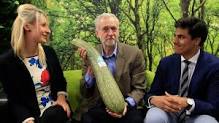
Jeremy Corbyn’s leadership of the Labour Party has provoked new interest in allotments as the Labour leader has long had one in North London.

While the Chelsea Flower Show raises money for charity and showcases some important developments in horticulture, the campaigners say that it remains to a significant degree part of the London social season for the haves rather than the have nots.

The campaigners say the fact that Rupert Murdoch attended the pre-opening events in 2016 underlines the point

Editor of the Socialist Gardener Keith Flett said, ‘The RHS does useful work around the UK but at Chelsea gardening can be a way for those who still have any money after years of austerity to show off. A day ticket for an ordinary member of the public now costs £100.

He continued, meanwhile public parks are being neglected and spending on them drastically cut back. It’s time for a move towards people’s gardening. We say tax the rich gardeners and use the money for parks and allotments.

The 2017 Manifesto for a Socialist Garden

We demand that the new Government launches a massive programme of investment in public parks and provision for allotments so that all may enjoy the pleasure of gardens and gardening

We believe in the right to roam over the gardens of the rich

We support the nationalisation of the land and the creation of public parks and gardens as a matter of priority

We believe that real gardeners should eschew the use of garden centres. If you need a new plant, simply liberate it from the garden of a wealthy neighbour.

We support the hop family as the ultimate in grass roots garden plants

Articles

UKIP to launch ‘manifesto’. What will it say about beards

In Uncategorized on May 24, 2017 by kmflett

Beard Liberation Front

25th May

r

The self styled far right ‘political party’ UKIP that claims to be participating in the 2017 General Election is set to launch its ‘manifesto’ on Thursday. Its thought it will take the form of a handy perforated roll but a key question is what it will say on beards.

Paul Nuttall who in the absence of anyone else at all wanting the role is ‘leader’ of UKIP has sported a beard in recent times, breaking with the traditional image of the pencil brush moustache.

The key issue is whether UKIP in its ‘manifesto’ will claim to be beard friendly

Articles

Troops on the streets and the Freeborn Englishman

In Uncategorized on May 24, 2017 by kmflett

GIGN

The decision to raise the security threat level to critical and deploy troops on the streets, aside from receiving the applause of The Sun, is perhaps understandable in the light of the awful bomb in Manchester. If there is a threat of more that needs to be fully addressed and stopped.

Paul Mason the Momentum activist and journalist has called on social media for a longer term setting up of an equivalent to the French paramilitary police the GIGN. It is perhaps not the most obvious argument for someone on the left but as Mason is also a convert to NATO perhaps we can understand something about where he is coming from.

Nevertheless while both Britain and France are democracies the latter is noticeably more authoritarian in terms of how the State behaves than the UK. This is not a matter particularly of some quirk of the British or English character but the concrete result of battles the left and the labour movement have fought over two centuries.

E.P Thompson in the Making of the English Working Class described the Freeborn Englishman:

freedom from absolutism (the constitutional monarchy), freedom from arbitary arrest, trial by jury, equality before the law, the freedom of the home from arbitary entrance and search, some limited liberty of thought, of speech and of conscience, the vicarious participation in liberty..afforded by the right of parliamentary opposition and by elections and election tumults.. as well as freedom to travel, trade, and sell one’s own labour.

He was not automatically a figure of the left but what he did not like in particular was the arbitrary use of State power. That seems to me why a permanent GIGN equivalent is not something the left can support

Articles

Will Theresa May order policy chief Nick Timothy to u-turn on his beard?

In Uncategorized on May 22, 2017 by kmflett

Beard Liberation Front

22nd May

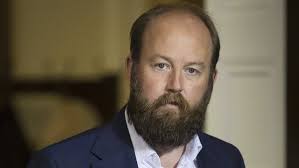
The Beard Liberation Front, the informal network of beard wearers, has said there are concerns that after Theresa May’s partial u-turn on social care that she may now order policy chief Nick Timothy to shave his organic beard to counter pogonophobic concerns that he is hiding further u-turns in it.

BLF Organiser Keith Flett, with Jeremy Corbyn’s beard what you see is what you get, but is the same true for Nick Timothy?

Articles

Historians urge people to remember the Chartists & Suffragettes & register to vote

In Uncategorized on May 22, 2017 by kmflett

London Socialist Historians

22nd May

Contact Keith Flett 07803 167266

The London Socialist Historians Group that organises the socialist history seminar at the Institute of Historical Research has urged people to register to vote in the June 8th Election.

The deadline is midnight on 22nd May

The historians says that the vote-universal suffrage- had to be fought for from the Chartists in the 1830s and 1840s right through to the Suffragettes before and after World War One.

All women and men over 21 (later 18) didnt get the vote until the Equal Franchise Act 1928.

2017 marks the 150th anniversary of the 1867 Reform Act which was the first to significantly extend the vote to working men. This was achieved after mass demonstrations by the Reform League.

LSHG convenor Keith Flett said, the right to vote had to be fought for. Registering to use it is a democratic duty

Articles

The Ambridge Socialist: new Ambridge gin crisis

In Uncategorized on May 21, 2017 by kmflett

The Ambridge Socialist

65 Years of the class struggle in Borsetshire

21st May

Ambridge Gin crisis

With both Kenton and Toby involved it was obvious that not too long would pass before there was an Ambridge gin crisis. Kenton has invested in Toby’s gin distilling, instead of paying back David the loan he had from him to keep The Bull going. Toby however has f**ked up the latest batch of Scruff’s gin meaning there is a shortfall in supply. No one is happy, as is usual in Ambridge

Labour gaining on the Tories in South Borsetshire

The latest poll conducted for the Ambridge Socialist on how people will vote in South Borsetshire on June 8th shows the following:

Bufton Tufton (Tory) 41%

Jeremy Fox (Labour) 35%

Tim Spliffing (LibDem) 9%

Worzel Gummidge (Green) 5%

A.Hilter (UKIP) 2%

Can Miranda & Justin agree a divorce settlement?

Negotiations are underway between Miranda and Justin on a divorce settlement. Horses have loomed large, but Justin is happy for Miranda to have his ski-lodge. The next stage is for Miranda to meet Matt Crawford.

In Other News

Matt has returned some trinkets he stole from Lillian. Who he stole them from this time has not been disclosed

Harrison has held a road safety session in the Village Hall. He may have more success with the cricket team


Articles

Jeremy Corbyn & the sound of the crowd

In Uncategorized on May 21, 2017 by kmflett

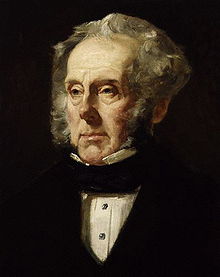
Lord Palmerston

If you frequent social media you’ll have seen clips of Jeremy Corbyn addressing a large crowd at a Libertines gig at Tranmere FC on Saturday. He was not there to sing his version of Forever Young but to make a brief Election speech. The reaction of the crowd seemed to be positive.

The usual cynics have noted that Michael Foot addressed a crowd of 100,000 at the Durham Miners Gala in 1982 and still resoundingly lost the 1983 General Election. Up to a point Lord Copper. A labour movement crowd is not the same, either in terms of political composition or age as those attending a rock concert.

The reception Corbyn got does suggest he is genuinely popular. But the cynics have a point.

Being popular and winning an Election are not the same thing.

In the nineteenth century before universal suffrage and indeed the secret ballot winning the popular vote and winning the Election were two distinct things.

For example at Tiverton in 1847 the Chartist George Julian Harney stood against the Foreign Secretary Lord Palmerston in a two member seat. Harney had serious criticisms of Palmerston’s imperial foreign policy.

On the day that nominations were called for, a large crowd gathered and Harney and Palmerston made speeches, apparently lasting 7 hours. This was politics as an entertainment before the TV age. At the end Harney won the popular vote on a show of hands and withdrew.

On a restricted franchise- just 275 votes were cast the following day- he had no chance of winning.

These days of course the unenfranchised crowd of 1847 has the right to vote- not least thanks to the efforts of Harney and his successors- if they are registered. According to the BBC around 2 million people have done so in recent weeks.

The reception of Corbyn at the Libertines gig may be more important than the cynics think.

Articles

E P Thompson & the Partisan Coffee House

In Uncategorized on May 20, 2017 by kmflett

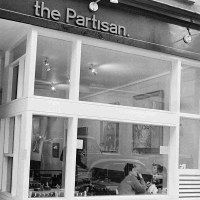
Noting the 10th anniversary of the death of Stuart Hall, someone associated with the Partisan Coffee House but also as part of a much wider project which is exploring the relevance of EP Thompson’s historical writing, and to some extent his wider politics, for the twenty-first century, Ive been pondering what relationship he had to one of the first new left projects- the Partisan Coffee House in Soho.

The Partisan was open from 1958 until 1963, the year Thompson’s Making of the English Working Class was published.

That book focused to a considerable extent on research into the West Riding, Thompson living in Siddal, Halifax at the time.

Given that he was employed as an adult education lecturer working out from Leeds University clearly Thompson’s ability to ‘hang out’ at the Partisan would have been very limited.

The wider point is whether in any case he would have wanted to.

Thompson was determinedly provincial, best summed up in his essay Homage to Tom Maguire, which began by noting that the real labour movement was to be found not in London Head Offices but in grassroots locations outside of the Capital.

Nevertheless an exhibition on the Partisan at Four Corners in Roman Rd E2 in 2017 displayed a greetings telegram from Halifax addressed to Raph Samuel which reads ‘congratulations to all and to you in particular on opening from northern new reasoners’.

It seems likely that this came from Thompson and he certainly spoke at least one meeting associated with the Partisan (though not held at the coffee house as it wasnt large enough for the numbers attending).

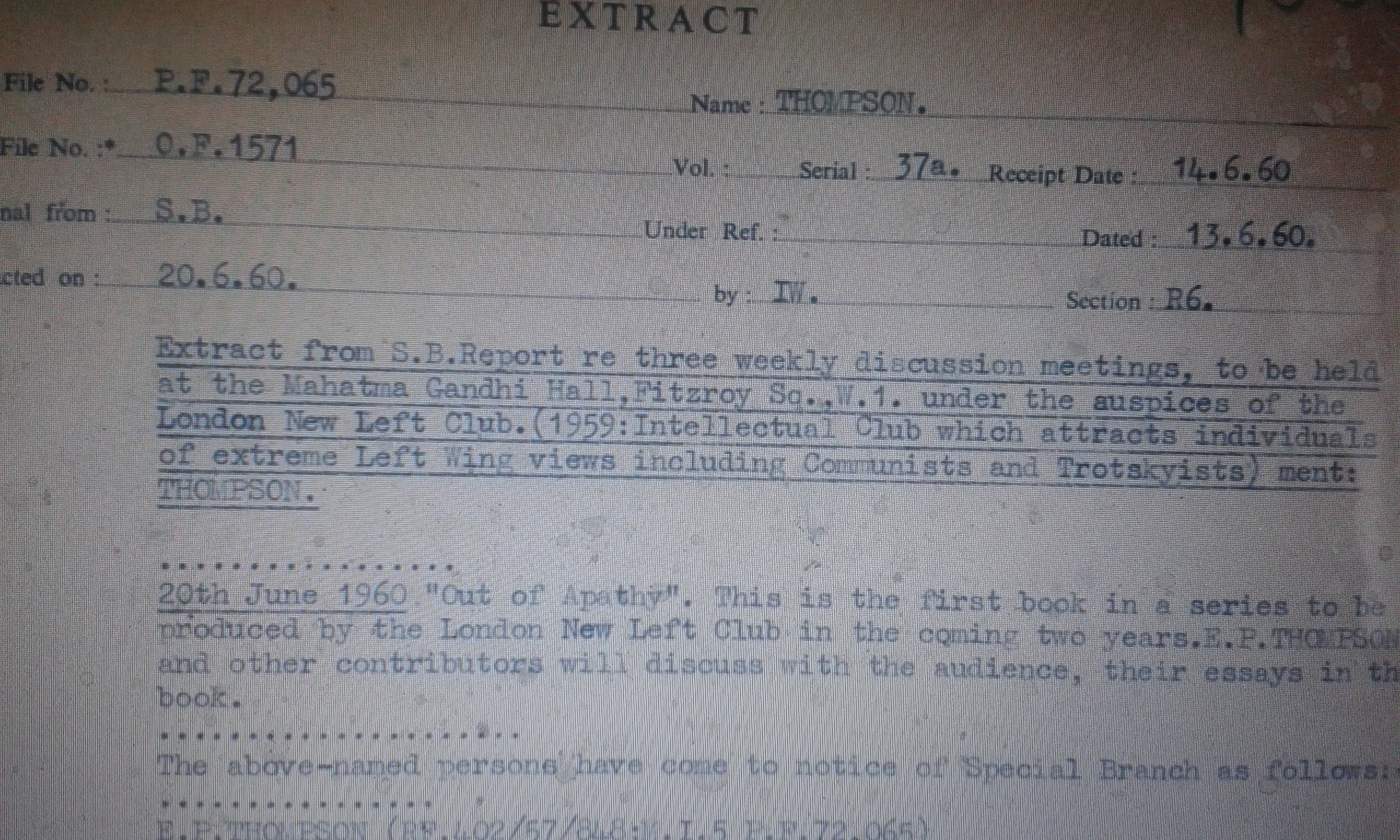
Perhaps Thompson was happy to salute the Partisan from afar. MI5’s view from Thompson’s file is here:

Articles

Has Nick Timothy made the Tories Beard Friendly?

In Uncategorized on May 20, 2017 by kmflett

Has Nick Timothy made the Tories Beard Friendly?

The last Prime Minister with a beard was Lord Salisbury (left office in 1902) and he was a Tory. Unless you are a supporter of the Beard Liberation Front you may not be aware of that point, the Tories themselves don’t make much of it.

Indeed the Tories have been for many years the party par excellence of the clean shaven suit wearer. There have been honourable exceptions including the former MP for Uxbridge and Government Chief Whip John Randall who is a good friend of the BLF.

The Tories have not survived for so long and been in Office so frequently without an ability to note and adapt to changing times (within their overall framework of promoting a capitalist economy).

In recent times they have sprouted more facial hair until the hirsute Stephen Crabb became the first Tory Cabinet Minister with a beard for a century or so. However he is currently taking a break from the political frontline

Theresa May in winning the race to be Tory Prime Minister appointed as a joint Chief of Staff the magnificently bearded Nick Timothy.

Mr Timothy has brought Tory Beard Power to 10 Downing St for the first time for many years, but the key issue during a General Election campaign has Timothy, described as May’s ‘bearded honcho’ by Private Eye, been able to overcome decades of clean shaven reaction and make the Tory Party beard friendly?


Articles

The Price of a Pint, the Assize of Ale & the moral economy of beer

In Uncategorized on May 20, 2017 by kmflett

The Price of a Pint,the Assize of Ale & the moral economy of beer
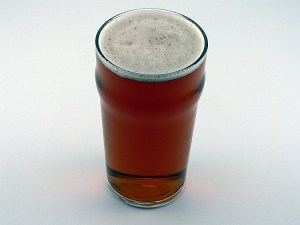
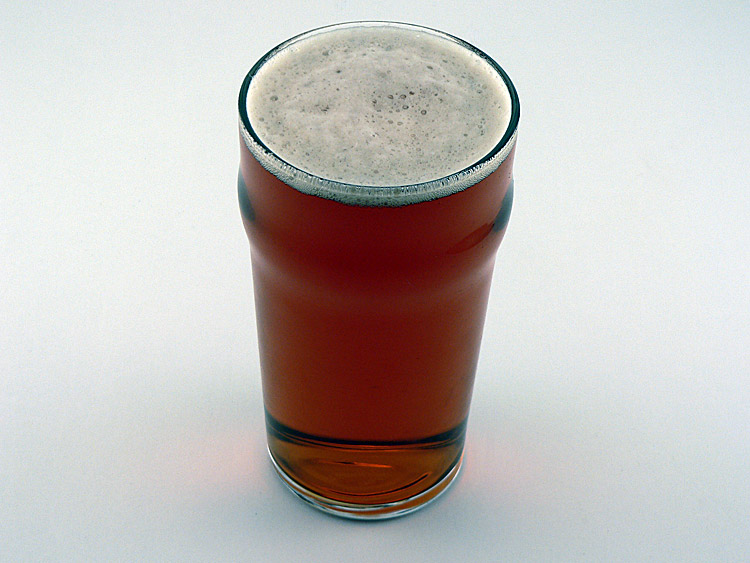
The Campaign for Real Ale (CAMRA) pressed Chancellor Philip Hammond to cut duty on beer by 1p a pint in his March Budget in a further bid to keep the price of a pint down. Beer duty has been frozen for a while. Hammond, whose image is not exactly a man of the people, in fact reverted to the more usual device of raising beer prices by RPI inflation. If you’ve been for a beer recently in a pub you’ll probably have noticed that adding 10p a pint or so.

Mr Hammond aside there is a general recognition of the contribution to employment and the economy that beer and the selling of beer in pubs makes and the impact of undercutting in supermarkets of beer prices.

To illustrate that point, I can buy a can of Stone IPA, brewed in Berlin at 6.9% (they are a US brewery but a German base ensures the beer is fresh in Europe) in Marks and Spencers for £2.49. Were I to buy that in a pub it would cost up to double the price.

The price of beer has been a significant issue in the history of Britain. Until the beginning of the 1800s the cost of a pint of beer was set by law and governed by an Assize of Ale. The law took account of the price of raw materials such as malted barley and allowed different prices for beers of superior quality. It was enforced by ale tasters or ale conners who had the difficult task of tasting beer from brewers. They checked particularly for beer quality and price.

Brewers who transgressed were subject to fines and ultimately if probably rather rarely to physical punishment. The holding of Assizes of Ale was patchy but the principle was underwritten by the idea of what E.P. Thompson called a moral economy. Beer was a staple of the poor person’s diet in pre-industrial England along with bread, which was also subject to price control by an Assize. Water was not safe to drink and lower strength or table beer was the standard liquid consumption.

In the two hundred years or so since the rise of market capitalism and the decline of the Assize of Ale the price of a pint has continued to be a key issue. The State has occasionally intervened directly but more frequently consumer pressure was the important thing. Beer in the public bar, frequented by working people, was less expensive and working men’s clubs (women were allowed in at weekends as guests) also sold beer cheaply.

After World War One the Government did set up a State brewery in Carlisle with associated pubs that sold beer at a regulated price and strength. It was eventually sold to Theakstons. It was though a successful experiment that might be a template for a time when the untrammelled market does not rule all.

In 2017 however CAMRA’s move to slightly reduce the price of a pint of cask beer is part of a much wider debate about what a realistic price for beer should be. The point that the same version of a beer in keg or keykeg and cask can vary a good bit in price (in favour of the former) has reached the letters page of The Guardian.

The assumption is that because ‘craft’ keg beer is often a fair bit pricier than cask beer then brewers must be ripping drinkers off when it comes to keg prices. No doubt some are. It would hardly be a capitalist market place if this wasn’t happening to some extent.

Yet it is far from the real story about beer prices. Obviously for those on a limited income, pensioners, those in low paid jobs or unemployed a cheap pint is important. The alternative is to suggest that only the well to do should drink beer. This important point is far too easily overlooked. Wetherspoons can be criticised for squeezing brewers profit margins to the bone but if it means someone with little money can afford a pint it is not wholly bad, at least for the drinker.

2017 started with a flurry of blog posts from well known ‘craft’ brewers about beer prices and in particular cask beer prices. Wetherspoons aside there is a race to the bottom in some areas of the cask beer market. Poorly made beer is sold to pubs at discount rates to undercut competition. The pubs themselves may or, as frequently, may not pass the cheaper cost on to customers in terms of the price of a pint. It does make business life tough for those brewing good quality cask beer.

The well-regarded Manchester brewery Cloudwater announced that it was stopping production of cask beer and focusing instead on keg and can production. It is a relatively small brewery and it made business sense for them to do so. Some of the underlying reasons however led into the price of a pint debate. Making beer for casking or kegging involved the same amount of effort and the same cost of ingredients. The work required to put a beer into cask and despatch it is arguably a bit more than that needed to produce it in keg format and certainly in cans. Yet the expectation is that the cask version should be priced lower than the keg, even though the keg price is the one that accurately reflects the cost of production.

Other rather larger brewers such as Siren in Berkshire and Tiny Rebel in Newport- now a regional sized brewer- confirmed their commitment to cask however. There are several reasons for this. Firstly in many cases the market is for cask beer not keg craft beer. Think pints of relatively low strength bitter rather than a half or a third of a pint of a high strength hoppy beer. Secondly because as Siren underlined it depends how you do the accounting and what you want to achieve. They look at their profit/loss on brewing across all formats from cask to keg and bottle. The margins on cask are very tight but balance out across the whole production. They were clear why they do that too. For them cask beer reaches areas of the pub market that their keg isn’t going to. New drinkers are introduced to their beer, and if they like it, may then start to seek out the breweries other products.

In short the price of a pint is a matter of as much complexity as it was when the Assizes of Ale sat in judgement on such matters. An attempt to impose a moral economy of beer as opposed to a political economy where profit dominates all is surely in tune with the mood of the times. Profit should not dominate the quality of the beer produced and the price people have to pay for it, even if we accept that if brewers don’t make money they certainly won’t produce beer until we manage to move to a socialist economic order.

With the Assize of Ale if the quality and price of beer were not to the standard expected, remedial action followed. It was a way of controlling the market that took account of the market but didn’t allow brewers to take advantage of it or drinkers to suffer because of it. Putting people before profit when it comes to a staple like beer is as important to the daily lives of many as making sure companies pay their taxes.

Perhaps it is time to bring back the Assize of Ale.

This post appears on the Culture Matters website

http://www.culturematters.org.uk/