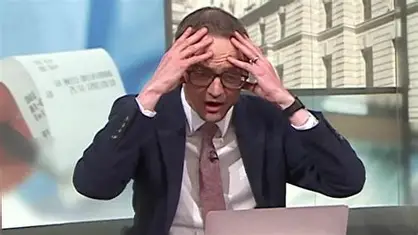
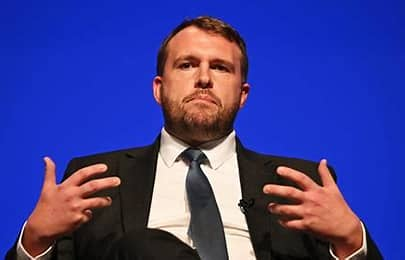
Chris Mason, a BBC journalist of the Robbie Gibb era
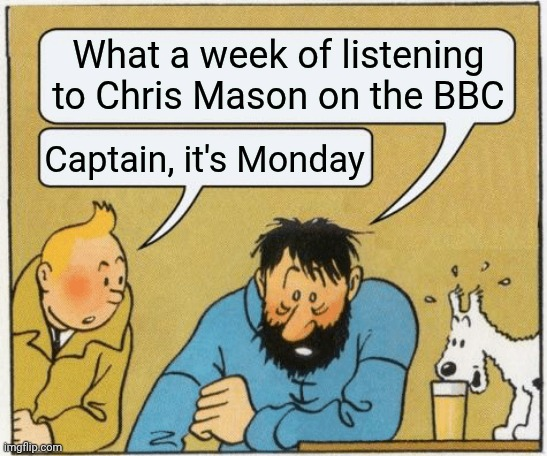
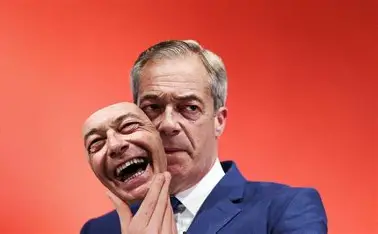
The BBC’s political correspondent Chris Mason’s report of the 2025 Reform UK conference held at the Birmingham NEC earlier in September marked him out as a Farage Fanboy. So much so that a satirical take on it made it into the pages of Private Eye
Robbie Gibb, a Boris Johnson appointment to the BBC Board, praised Mason in a recent appearance before the Commons, Media, Culture and Sport Committee.
Mason is styled as the BBC’s Political Editor. What exactly the job description is, is not clear. On 1st December Mason decided he would pronounce that in his view Rachel Reeves was not telling the truth on a key point around the Budget. Whatever her qualities Reeves like a number of the Government is not the sharpest political operator so perhaps she indeed make a mistake, tried to her wider Treasury rules mindset (which btw kept the bond market quiet). However do we need to know Mason’s personal view? Would he perhaps be better off with his own chat show on GB News?
Mason has been around for a while and Rishi Sunak’s Chief Whip Simon Hart had lunch with him at the Cinammon Club in May 2021 (before he was Chief Whip) and noted that he was ‘penetrating but engaging’. This of course was before Robbie Gibb made his influence count.
The left by numbers. From the Independent Labour Party to Your Party
Size isn’t everything. As a (now retired) trade union General Secretary once told me strike ballots were one thing but if there was a small well organised group of workers who wanted to do something and would make an impact that might work as well.
The membership of Your Party which held its founding conference in Liverpool at the weekend is reported to be 55,000. According to The Times (December 1st) 22,000 of those are verified (you had to be verified to attend the conference in person or on-line) and 9,000 joined on-line and 2,500 in person. The figures presumably came from the current Your Party centre but believe anything in the Murdoch media at your peril.
For comparison the Communist Party of Great Britain reached 55,000 members in 1942 when Russia joined the Allies in the Second World War.
The Independent Labour Party does not seem to have reached anywhere near that figure. My researches are work in progress here (David Howell’s history of the early ILP being a good guide) but the peak figure I’ve found was 9,556 in 1905/6. This was based on certified membership fees to the ILP centre. However Howell notes that while Keir Hardie once claimed in a rhetorical flourish that there were 50,000 members it was true that supporters didn’t always pay their subs, or had the money to. In addition members of labour and socialist clubs may well have seen themselves as or been members locally
The Green Party currently has 170,000 members, but the question might reasonably be asked how many are active in the way most of the organisations I’ve referenced above are, at least on occasion.
The Your Party conference also occasioned discussion, not all of it in temperate and comradely tones, about far left groups. Membership numbers are not disclosed (though no doubt the State when interested finds out-see the Spycops Inquiry) but they are much smaller than any of the above. On the other hand many are in way or another active. Reference my first paragraph above…
Jonathan Gullis decides to vote against us after changing his mind three times and giving me a personal assurance he will support us. I find Jonathan harder to dislike than some in the Whips Office do, despite his best efforts to piss me off. It’s like owning a Labrador that can’t stop stealing from the table. He knows he will get in trouble but does it anyway
Rishi Sunak’s Chief Whip Simon Hart 21st March 2023 (UnGovernable, 2024)
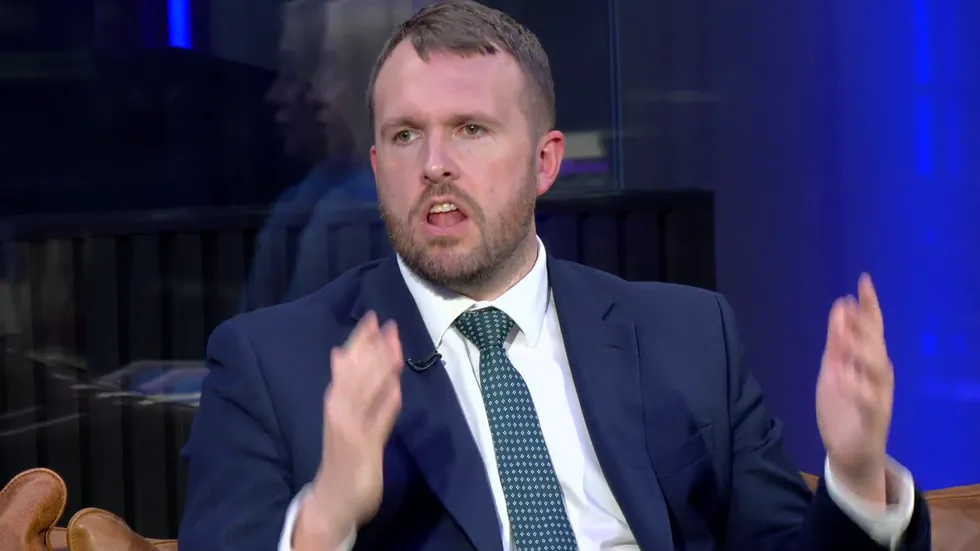
The long mooted defection of former hard right Tory MP Jonathan Gullis to Reform has finally taken place.
Gullis had complained that since his defeat in the July 2024 Election he has been unable to find a full-time job because his reputation proceeded him. However he is now thought to have a consultancy with a right-wing think tank
Gullis ended up as a Tory Deputy Chair a position previously held by Lee 30p Anderson. Anderson defected from the Tories to become Reform’s first MP and has now warned that out of 120 Tory MPs only 30 or so would be suitable for Reform.
What reputational damage might occur by Gullis moving to Reform, and to whom, is a highly debatable point
Nigel Farage has referred Rachel Reeves to Parliament’s Ethic Advisor Sir Laurie Magnus over claims she knew about the Office of Budget Responsibility updated guidance on the UK’s economic prospects before the Budget but did not disclose it. Don’t hold the front page unless its the Mail or Telegraph
A Daily Excess report is here
Nigel Farage has called for an inquiry into Rachel Reeves’s pre-budget claims to assess if the Chancellor misled the public over the nation’s finances. The Reform UK leader urged the Prime Minister’s independent standards adviser to look into potential breaches of the ministerial code after the Chancellor’s claims in the lead up to the budget about the nation’s productivity.
Farage’s 968 word letter to Magnus which obviously was not his own work begs the question of whether he understands what the word ‘ethics’ means or if he had to look it up in a Dictionary or perhaps contact his mate Donald Trump for advice
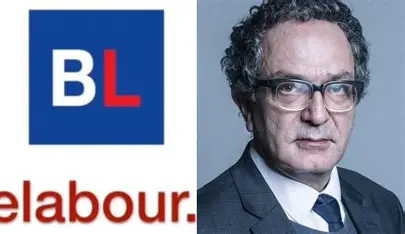
Thanks to Ethan Croft in the New Statesman for the alert. Blue Labour, proprietor’s Lord Glasman and Jonathan Rutherford is now a limited company registered at Companies House
The Liverpool Conference of Your Party had some lively debates, echoing real issues in the movement, and also for socialist historians of discussions long past. The founding conference of the Independent Labour Party in 1893 determined that socialism would not be included in their constitution. Your Party decided it would 132 years on.
The Your Party conference saw some administrative exclusions of delegates by persons unknown, mostly it seems because they were also members of another organisation. These discussions can be found on social media but historically it is an unusual thing to occur
The current period post the 2008 crash and Brexit is one of political turmoil in Britain but that is reflected across Europe and beyond in terms of the impact on the left.
The years from 1890 to 1930 saw a similar turmoil in Britain, though for different reasons. By 1918 most men and women had the right to vote. The great industrial unrest of 1910-12 saw the development of a new working class. The imperialist war of 1914-19 impacted on that and new left emerged with the foundation of the Communist Party in 1920, the first Labour Government in 1924 and the 1926 General Strike.
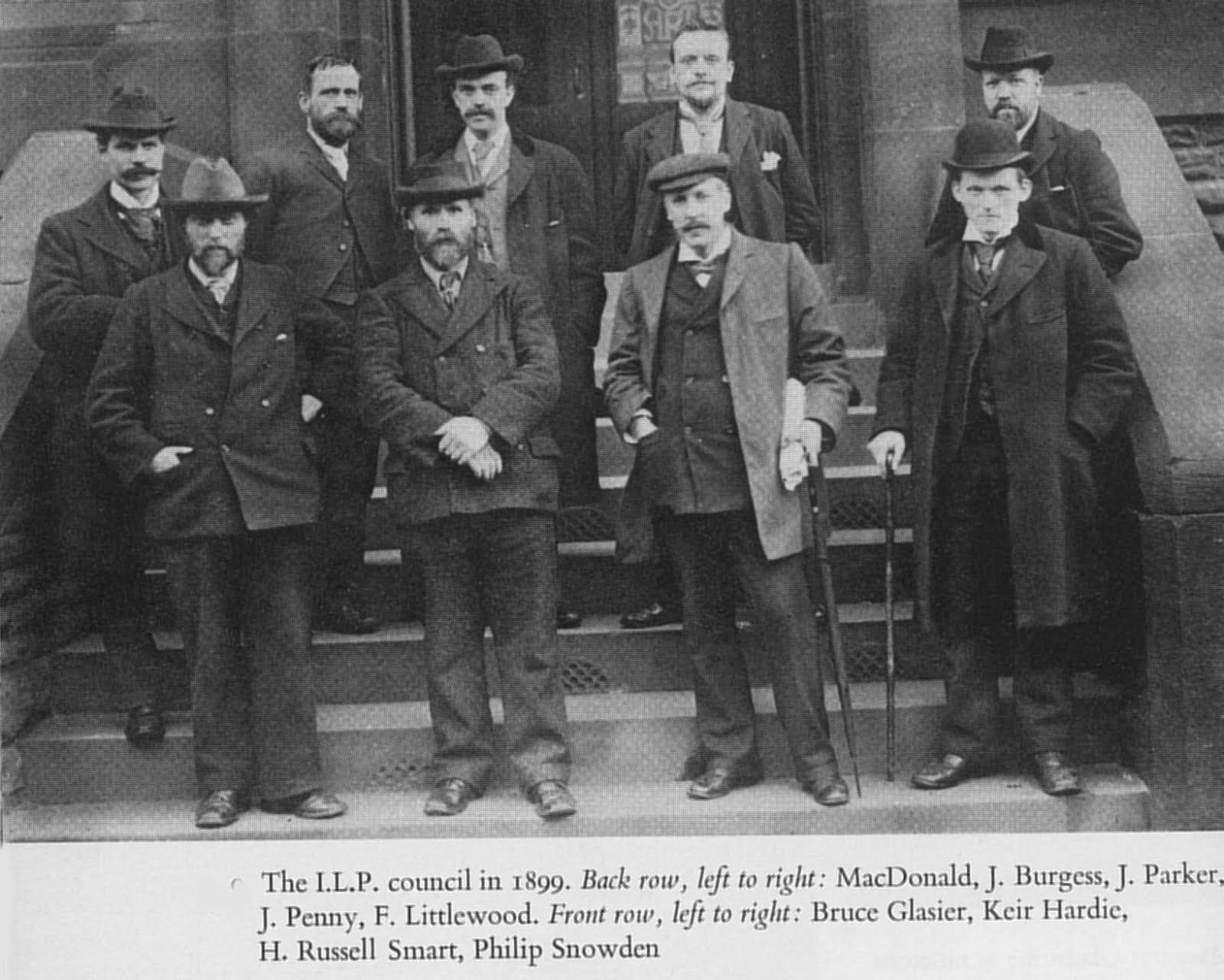
Politically the Independent Labour Party founded in 1893 did not include the Marxist Social Democratic Federation or the Fabians, both of whom had been involved in the discussions but withdrew. The SDF did then look at uniting with the ILP but it was determined this would not work. The two organisations did however at least try to avoid electoral conflicts.
The question changed just seven years later when the issue was finding a way to protect unions and union officials from employers legal attacks.
The Labour Representation Committee was formed at a conference held in Farringdon St, central London, on 26 & 27th February 1900. Its aim was to secure Parliamentary representation for the interests of working people, that is ‘labour’ but in practice union HQs. It was not to obtain a majority Labour Government. Such a matter was un-thought of at the time.
It included the ILP, the SDF, the Fabians and union officials who had in the main been Liberals, hence the term Lib-Lab was used.
The building still stands (much modernised)and the Memorial Hall is marked by a plaque. I covered the offices it now accommodates as a union officer for many years.
In 1906 29 MPs were elected under the LRC banner and the Parliamentary Labour Party was formed. The vote for who should lead it was tied on the first round and on a subsequent vote Independent Labour Party member Keir Hardie just edged ahead.
Naturally there was a good deal of interest in who the 29 Labour members were.
Many were from Lancashire- where the Liberal vote had been weak but anti-Tory feeling still strong. There were also trade union officials and leaders with a minority being ILP socialists like Keir Hardie, Ramsay MacDonald and Philip Snowden,
There were no women- female suffrage did not yet exist. The split between moustaches and beards in the ranks of the LRC MPs was more or less even with Philip Snowden clean shaven.
There is a lot of detailed labour history here, which is not the purpose of this post. The SDF largely absented itself from the LRC and became the British Socialist Party.
The Labour Party as we now know it did not exist until 1918 when Sidney Webb wrote the Constitution which mostly still stands (Clause 4 was amended in the New Labour years). Until then it was not possible to be an individual member. Much of the electoral work was organised by the ILP which remained an affiliated organisation until the early 1930s.
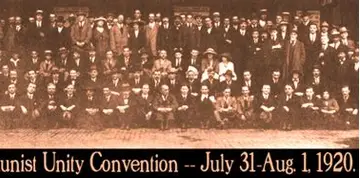
After the formation of the Communist Party in 1920-a key impetus being the 1917 Russian Revolution- the question of how broad Labour was remained open. While applications from the CPGB to join Labour were rebuffed there were on occasions joint Labour and Communist candidates at elections. Saklatvala was elected as an MP for Battersea on this basis in 1922. However by the late 1920s the possibility of Communists being part of a Labour Broad Church was closed off.
The point I am making here, I hope, was the political turmoil of the 40 years from 1890 to 1930 (more turmoil was of course to come after that) saw left-wing organisations formed, reconfigured and founded to fit the political needs of the time. It was unavoidably messy and sharp arguments and differences existed (for example on opposition to the First World War, and whether Parliament was an effective vehicle for socialist advance- see Lenin, Left Wing Communism). However the kind of administrative measures seen in Liverpool this weekend were not central to how matters played out.
Why? Because the left politics did have a considerable sometimes mass working class constituency who were looking for ways to improve and change the world. That acted as corrective on sectarian squabbles, even though they certainly existed.
Of course within this was a constant interplay between reformist and revolutionary politics. The formation of the CPGB marked a distinctive break except that for almost ten years from 1920 the theory and sometimes the practice was to work also within the wider reformist current. I should perhaps underline that the above is schematic and designed in part to provide context to discussion about dual membership in Your Party. There is a lot of history here. Walter Kendall’s book on the period before the formation of the CPGB, long out of print, has recently been republished. I didn’t agree and still don’t with some of the key points but as a lengthy introduction to the complexities of left politics in a key period in British labour history it is well worth reading.
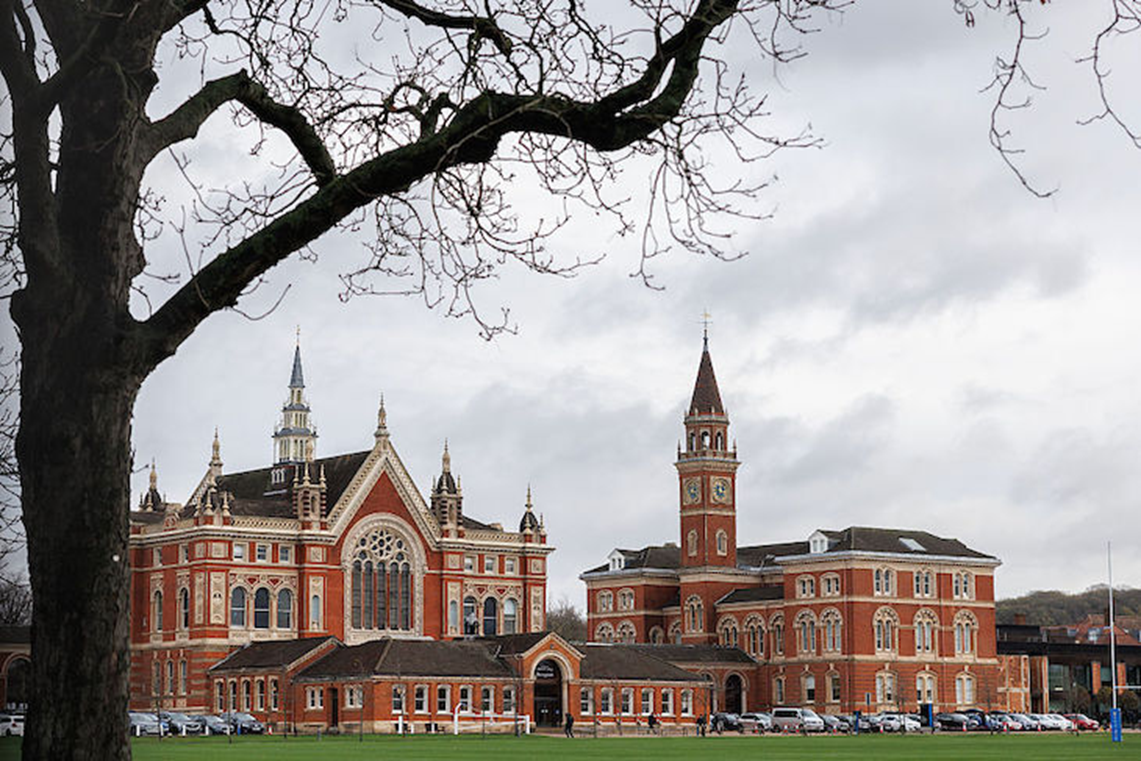
The Spectator, edited by Michael Gove and owned in the same stable as GB News is an unlikely place to find a call for Farage to say sorry about allegations of racism and anti-Semitism when he was at Dulwich College.
That however is exactly what an article by Jonathan Sacerdoti does (28th November). Perhaps the core of why the Spectator thinks it still matters is here:
Above all, the suggestion that racist ideas may have appealed to him as an adolescent reinforces a particular anxiety that already exists among some voters. They worry that his present-day arguments about immigration, which many regard as legitimate questions of policy and national capacity, might instead be rooted in something darker. It is this recurring unease, rather than the specifics of events half a century old, that troubles parts of the electorate who are otherwise sympathetic to Reform’s platform.
However for Farage sorry still seems to be the hardest word
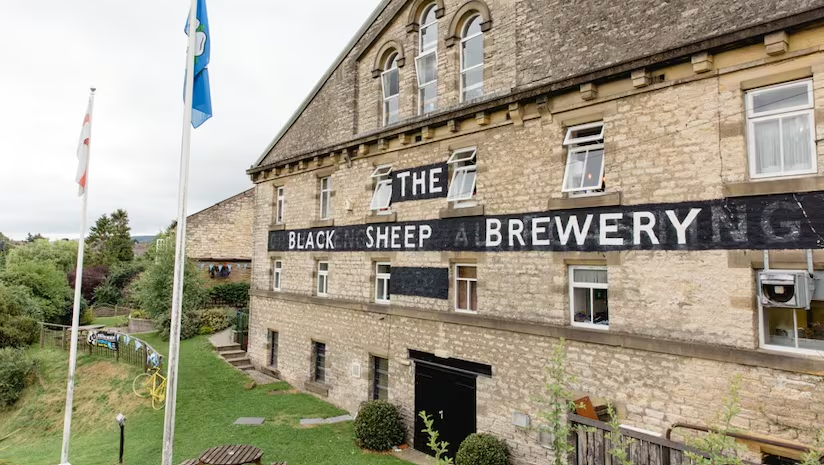
Keystone the private equity group which owns a number of brewery brands as well as Black Sheep at Masham, North Brewing in Leeds and Purity in Warwickshire has served notice of intent to file for administration. The story was broken by James Beeson in The Grocer.
The notice of intent process allows time for a restructure or sale. If neither works then administration is a likely next step. At the moment the brewing businesses and jobs are protected and continuing as normal.
While a cost of living crisis and an unhelpful Budget, as highlighted by CAMRA, are shorter term issues the underlying problem is arguably that Keystone are a private equity outfit that lack experience of the brewing and hospitality business.
James Beeson in The Grocer notes that a sale would be problematic in the current climate.
Black Sheep filed for administration in 2023 before being acquired by Keystone and Purity and North Brewing are also functioning breweries. The remainder of Keystone’s portfolio are essentially brands of closed breweries around England that are currently brewed at Masham