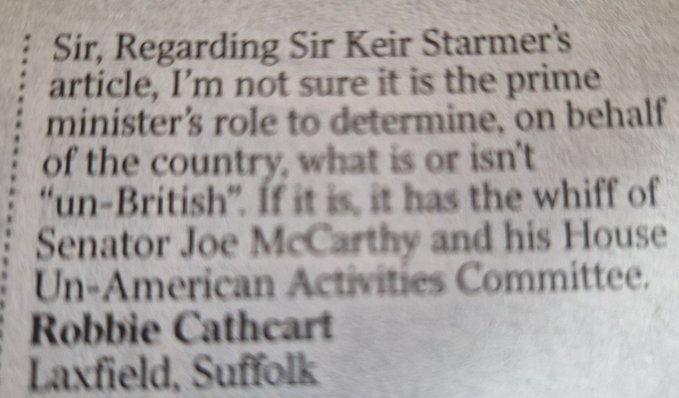
This letter appears in The Times, 8th October. Times letter writers in 2025 often appear to the left of the paper’s Editorial line (which is not to say they are on the left).
E P Thompson in his collection Writing By Candlelight saw Times letter writers as a benchmark of provincial opinion. On recent showings the political tectonic plates are going in the opposite direction to authoritarian politicians.
Green Party Conference judged the most Beard Friendly of Autumn 2025
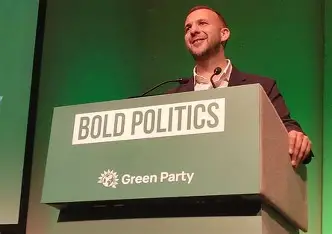
The Beard Liberation Front, the informal network of beard wearers, has said that with the conclusion of the Conservative Party Conference in Manchester, the Green Party is a has been named the most Beard Friendly of the Autumn Conference Season.
The campaigners say it has overall been a disappointing Conference Season, hirsute wise although on a more positive note gender and ethnicity balance was noticeably improved at the Liberal Democrat and Labour Conferences.
Liberal Democrat Conference stereotypically the home of beard and sandal wearers, had comparatively few this year. Labour Conference seemed to be in the grip of Clean Shaven Starmerism, with very beard wearers making it to the speakers rostrum.
The Green Party with its new hirsute leader Jack Polanksi set the benchmark for the 2025 Conference Season, beards wise.
Reform at the NEC did have some beard wearers, but the BLF cautions that they are hiding reactionary views behind their beards.
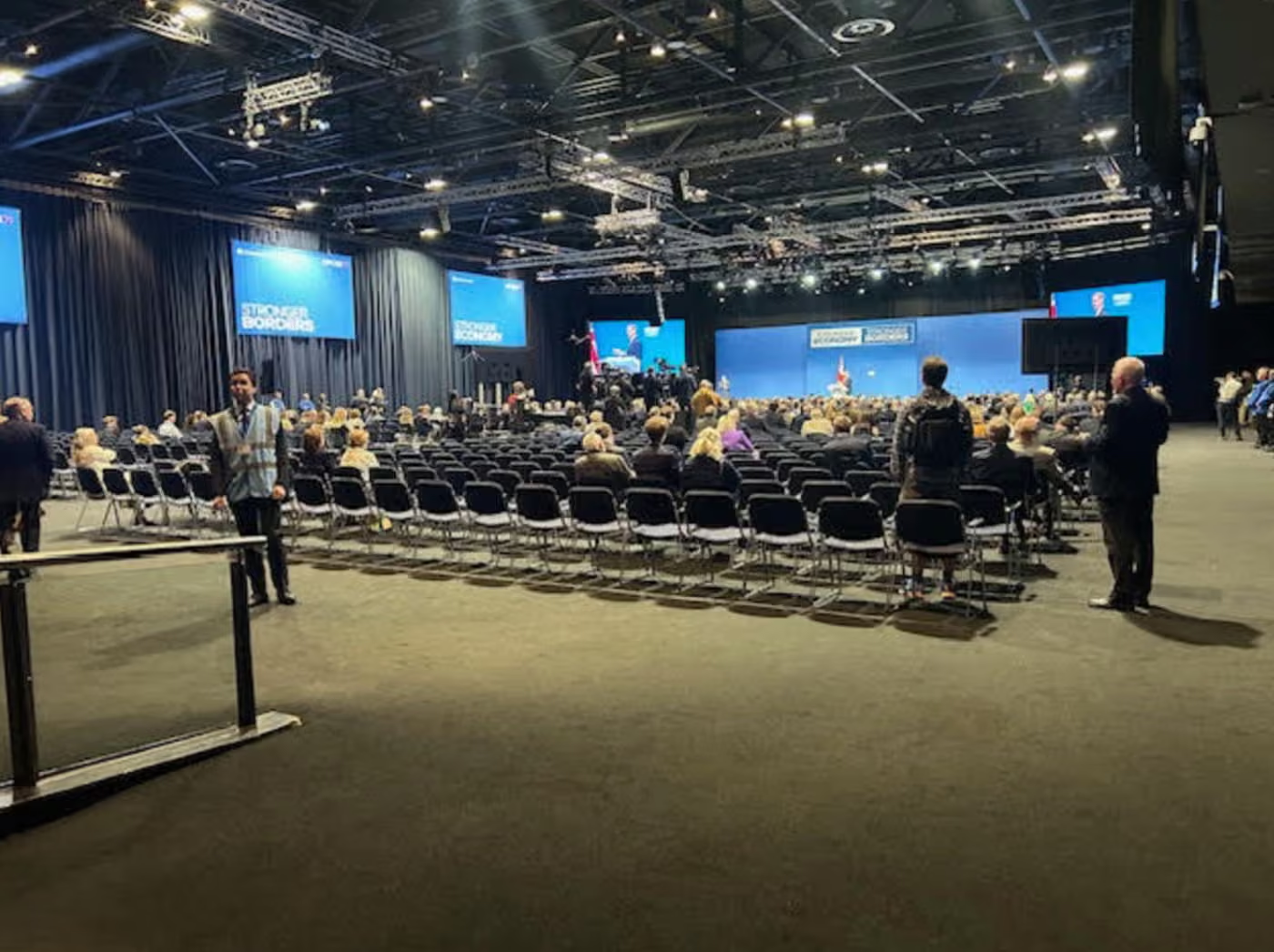
When it came to the Tory Conference it proved difficult to find enough delegates to judge if there was any significant level of beard wearing
BLF Organiser Keith Flett said, we congratulate the Green Party on staging the most beard friendly of the autumn conferences. Other parties should take heed. Beard wearers have votes and are not inclined to use them for clean shaven politics
Brewdog plan to cut more jobs at their Scottish HQ, based on a leaked memo from their CEO.
Despite often promising a public listing Brewdog remain a private concern, effectively owned by private equity outfit TSG. Transparency is not required therefore, and the details of how many jobs are going is unknown.
Their recent 2024 accounts revealed that several hundred jobs were cut in the last year. Staff numbers have decreased from 2,618 in 2023 to 2,411 in 2024 with the wage bill reaching £76m.
Brewdog’s CEO said in the memo , using outdated management speak, that the plan was to ‘right size’ the Company, meaning job cuts. The modern usage is ‘transformation’.
It seems clear however that the cuts will be at the Ellon HQ and brewery.
Brewdog has consistently refused to recognise Unite which certainly has membership at the brewer. Usually announcements of job cuts carry a statement that there will be a search to see if any alternative jobs are available to avoid redundancy (an employment law requirement) and that there will be a period of consultation with those impacted (again a legal requirement). In fact the statement mentions neither.
Workers can challenge job cuts by suggesting how cost cuts can be achieved while jobs are maintained. Again this is a legal requirement but not one Brewdog are likely to pay much attention to unless individuals are union members (where they are entitled to representation, again by law).
Since it seems very unlikely that enhanced redundancy terms are of offer, statutory terms are likely to apply.
The maximum statutory redundancy payout is capped at £21,570 (plus notice) and people will need to have worked for at least 2 years to qualify. The maximum payout takes account of 20 years service only, although no one at Brewdog will have reached that or, likely, anywhere near it. In practice workers will get one week’s pay for each year worked. In other words for most impacted not very much.
Solidarity with Brewdog workers and a reminder of where the flagship craft brewery has ended up
E.P Thompson in the Making of the English Working Class records that when a perjurer was placed in the pillory in the 1790s the London crowd pelted him with eggs. Yet when a political radical suffered the same fate a few days later the crowd brought him glasses of wine to drink. Throwing rotten fruit and vegetables and even dead cats was a common form of protest.
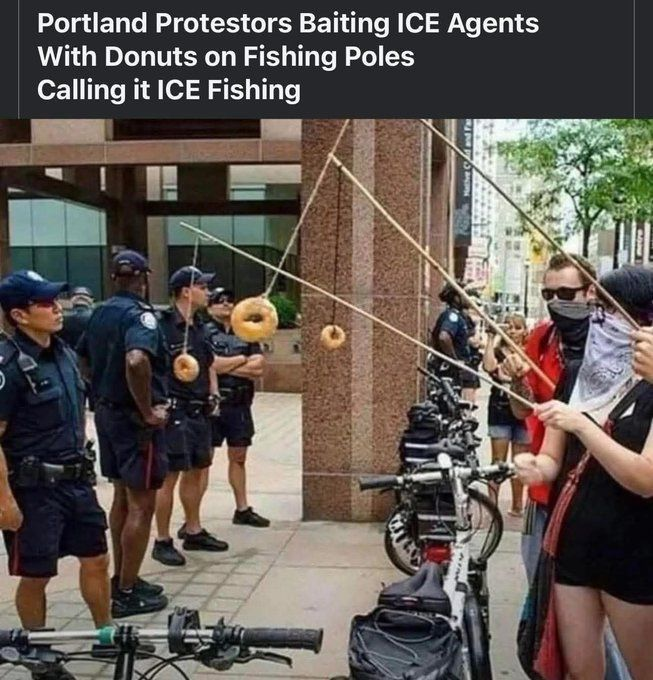
Street protest often involves an element of theatre. I can’t vouchsafe that the image above is genuine (I found it on social media on 7th October) but its certainly imaginative. It must surely difficult for ICE, a paramilitary police force in the US that Kemi Badenoch wants in the UK, to arrest someone for offering them a donut hung on a fishing rod.
As a protest it ridicules the police, and while that is not going to stop an authoritarian lurch, it is still a form of resistance.
Apologies that the sound quality is not quite at the usual standard. There were some technical issues with Geoff Brown being in the US & the seminar being UK based!
Summary of the seminar- Keith Flett
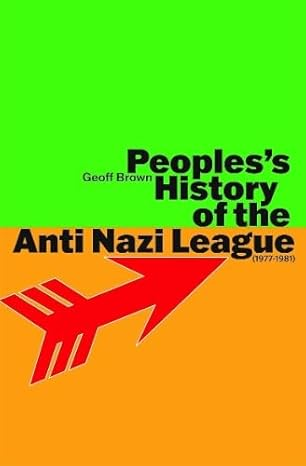
Geoff Brown began by situating the book in the tradition of Howard Zinn’s People’s History of the US. The discussion ranged from those who had been active in the ANL during the period covered by the book and those who, active anti-fascists and anti-racists, who were more recently part of the movement.
Points included that while it was clear that there the far right are identifiably fascist calling them Nazis is perhaps less effective than it was in the 1970s. There was also the question of how far the work of the ANL and RAR in stopping the National Front and later the BNP also led to wider anti-racist work and a focus on immigration controls and racist police. It was also noted that the work of marginalising the NF and the BNP meant that the far right in 2025 still existed but has not been able to form a united fascist group
Geoff Brown’s summary of the book
Written as a total history, from below and from above, using interviews, archives and private collections, the book covers the prehistory of the ANL, its formation as a united front, the ANL’s relationship to its sister organisation, Rock against Racism, the origins and impact of the April 1978 Carnival against the Nazis, turning the ANL into a mass organisation with a presence in schools, colleges, workplaces, unions, challenging every manifestation of a fascist presence. This included the campaign to reduce the fascist profile in the media, ‘the Battle of Brick Lane’, the struggle to win significant Jewish support, the general election of 1979, concluding with the Leeds Carnival against Racism and the anti police riots of July 1981.
Historically the Government telling people what they can and cannot protest about is UnBritish
Both Keir Starmer and Shabana Mahmood’s have called peaceful protests on Palestine ‘UnBritish’. Given that 10 years ago both were participating in similar protests some might be inclined to call out a political hypocrisy.
There is, historically speaking, no such thing as an ‘UnBritish’ protest. The UnBritish thing is for the Government to think it can tell people what they can or cannot protest about
E P Thompson in the Making of the English Working Class discussed the ‘Freeborn Englishman’ the archetypal British patriot. He was referring to the early nineteenth century and the ‘man’ is related to historical evidence and documentation. Even so work on the ‘Freeborn Englishwoman’ is long overdue.
Thompson makes the point that the English patriot can be on the political left or the political right depending on the specific times and context.
He identified some key characteristics. The first he noted is ‘freedom from foreign domination’ which in a modern context was a feature of the EU Referendum campaign, whether genuinely so or not.
Many others relate not to economic or social liberty but political liberty. These included, freedom from arbitrary arrest, trial by jury, equality before the law and freedom from the home being arbitrarily entered by the authorities.
Thompson also indicated the notion of some specific political freedoms around elections, free thought and speech and Parliamentary opposition.
The bottom line however was what Thompson called a ‘moral consensus’ of limits beyond which the patriotic Englishman would not be pushed. In short the Freeborn Englishman wanted the right to be ‘left alone’.
Starmer and Mahmood’s plan is in short not to leave people alone, free to speak out. The Tories who blather on about ‘free speech’ are on exactly the same page but even more forcibly.
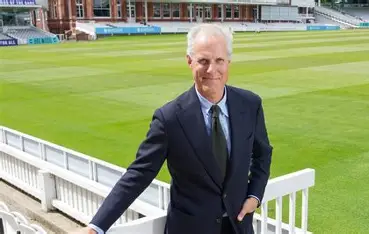
New President of the MCC Ed Smith quoted in the Times (6th Oct) on JK Galbraith on forecasters ‘those who don’t know & those who don’t know they don’t know’. He is talking about the relationship between County Cricket & The Hundred…
Ed Smith was talking to Michael Atherton & the word I think is obfuscation.
Smith a former England cricket selector and Test Match Special broadcaster played three Tests for England and has written for the New Statesman