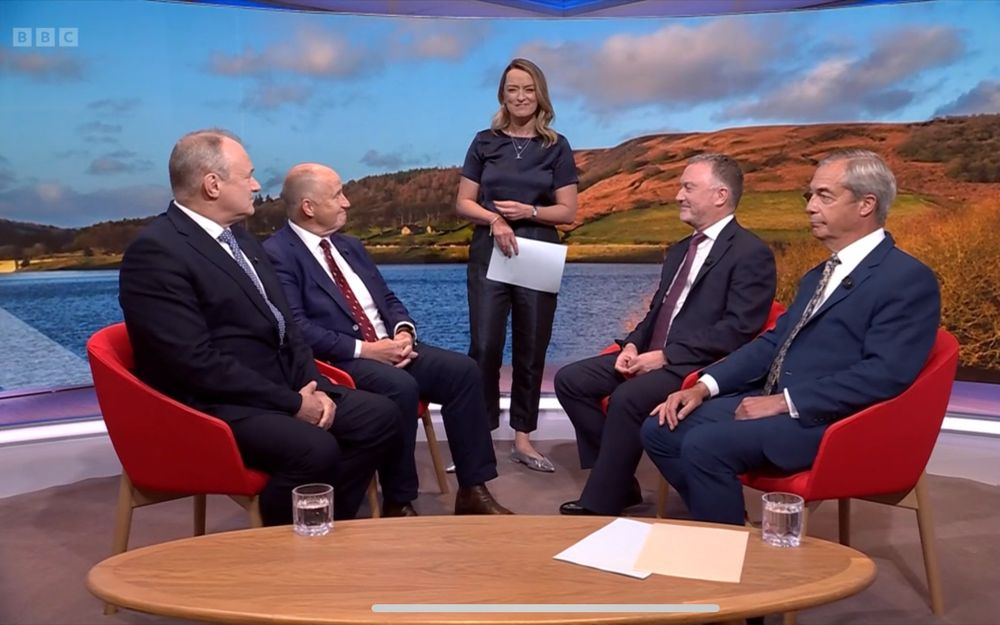
What better way to begin Sunday then checking the thoughts of middle aged white men in suits?
They are
Steve Reed
Nigel Fartage
Kevin Hollinrake
Ed Davey

What better way to begin Sunday then checking the thoughts of middle aged white men in suits?
They are
Steve Reed
Nigel Fartage
Kevin Hollinrake
Ed Davey

DeChambeau wastes time on day one by missing the ball entirely. He did better in subsequent rounds
The third cricket Test between England and India at Edgbaston was characterised in part by issues around slow over rates. This partly related to the number of times the Dukes cricket ball went out of shape and had to be changed but also in the case of England due to a primarily seam attack where overs take longer to bowl. England were fined as they often are.
A similar issue has now arisen in the Open Golf at Royal Portrush. Bryson DeChambeau (Trump’s favourite golfer) was warned over slow play. To be fair he had a point, namely that it is the overall time a round of 18 holes should take rather than whether a pair of golfers are a few minutes over the schedule playing a hole
Even so it suggests that sport and Gradgrindian time and motion studies are colliding
“Everybody plays a different style of game and that’s just the way it is. I wish it was just a new system. I think it would be more fair towards everybody. If somebody is playing slower, the guy can go up to him and say: ‘Hey, man, you’re over par with your time.’ All you do is you just time them for every single shot. He gets there and puts the bag down, and how long it takes him to hit that shot and how long it takes him to walk to the green. It’s not rocket science.” Bryson DeChambeau
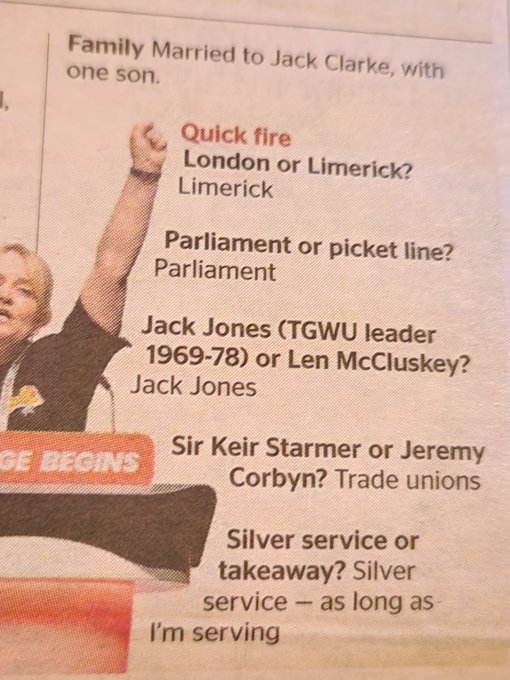
This brief Q&A appeared as part of a double page interview with Sharon Graham in the Times on 19th July. The interview was sympathetic perhaps surprisingly so given how hostile the Murdoch media is to unions. One possible Murdochian motivation is that as GS of Unite, Graham is causing some issues for Starmer Labour.
The interview has been widely reported. Graham describes herself as a ‘workerist’. She has a well known organising background and when elected as GS promoted this over specific influence on Labour politics. That hasnt actually been the case but one should always regard the actions of a GS with a degree of healthy scepticism. In reality Graham as pressed Labour on employment rights but not on the genocide in Palestine. Unite represents defence workers but allowing for that matters could have been more deftly handled. For example by arguing that highly skilled workers would be more usefully employed on other important projects than weaponry.
The most interesting Graham answer is that Parliament is preferred over Picket Line. An odd answer for a ‘workerist’ or a sign that the GS has political ambitions- not particularly on the hard left one might speculate
The questionnaire is a rather Victorian thing. They were certainly popular in mid and late Victorian England and one Marx answered has survived.
| uestion | Answer in 1865 | in Jenny’s album | |
| The Quality you like best | Simplicity | ||
| In man | Strength | ||
| In Woman | Weakness | ||
| Your chief characteristic | Singleness of purpose | ||
| Your favourite occupation | Glancing at Netchen | Bookworming | |
| The vice you hate most | Servility | ||
| The vice you excuse most | Gullibility | ||
| Your idea of happiness | To fight | ||
| Your idea of misery | To submit | ||
| Your aversion | Martin Tupper | Martin Tupper, violet powder | |
| Your hero | Spartacus, Keppler | ||
| Your heroine | Gretchen | ||
| The poet you like best | Aeschylus, Shakespeare | Dante, Aeschylus, Shakespeare, Goethe | |
| The prose writer you like best | Diderot | Diderot, Lessing, Hegel, Balsac | |
| Your favourite flower | Daphne | Laurel | |
| Your favourite dish | Fish | ||
| Your Maxim | Nihil humani a me alienum puto [Nothing human is alien to me] | ||
| Your motto | De omnibus dubitandum [doubt everything] | ||
| Your favourite colour | Red | ||
| Your favourite Colour of eyes & hair | Black | ||
| Your favourite Names | Jenny, Laura | ||
Arrests of people protesting about genocide won’t stop the protests, anymore than State action to stop freedom of the press in the 1820s did
For third week running police have arrested numbers of people protesting largely under a Defend Our Juries basis for mentioning words about Palestine that Yvette Cooper the Home Secretary thinks should not be mentioned.
It’s clear except clearly to Cooper who was not paying attention in history lessons that more protesters will step forward. There is a well-known precedent in British history.
Around the period of Peterloo in 1819 the (Tory) Government was determined to crack down on radical opinion and calls for democratic rights. Prosecutions for seditious libel were common and the taxes on knowledge(levied on newspapers) saw the rise of an unstamped, illegal press. Many who published it went to jail, but that didn’t stop publication.
One of the best known was the freethinker Richard Carlile. In the early 1820s he ran a radical bookshop in Fleet Street known as the Temple of Reason. Carlile was frequently jailed but he had an important principle: THE SHOP IN FLEET STREET WILL NOT BE CLOSED AS A MATTER OF COURSE’
It wasn’t. Before the Government gave in 150 volunteers, shopmen, printers, newsvendors, had been jailed and served over 200 years of imprisonment between them.
Whose were these people? E P Thompson noted in the Making of the English Working Class:
The men and women who came forward were, in nearly every case, entirely unknown to Carlile. They simply came out of London; or arrived on the coach from Lincolnshire, Dorset, Liverpool and Leeds. They came out of a culture.
Interestingly though Thompson was also clear that while those who broke the law and fought for press freedom were part of the rise of a radical working class movement, they themselves were not usually workers, with the power to organise and challenge capital at the point of production, but artisans.
However the reading culture they promoted and developed fed into the rising working class movement and was one of the motors for Chartism from the later 1830s.
Perhaps the protests on mentioning words that must not be mentioned won’t change the world but they might help create a movement that does
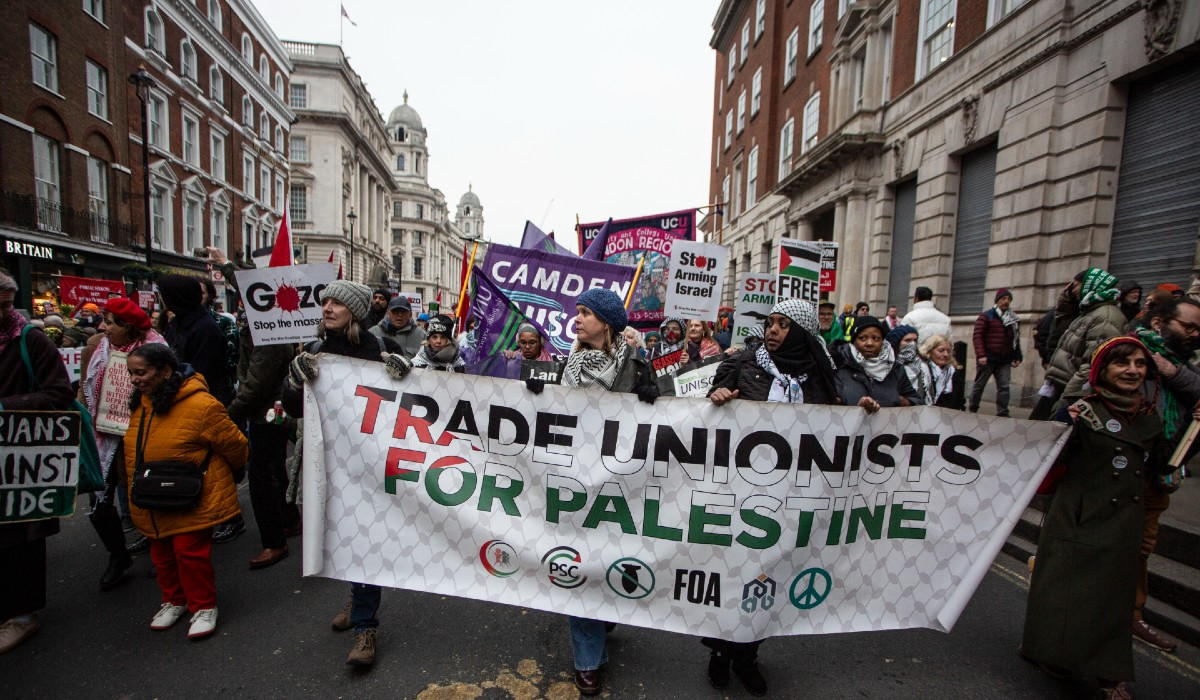
From Peterloo to Palestine: don’t criticise what you can’t understand.
The Government is cracking down on dissent and trying to criminalise it. Whether its investigating Bob Vylan and Kneecap for alleged criminal offences at Glastonbury, prosecuting some of those involved with a January 18th 2025 central London march on Palestine and now banning the peaceful direct action campaigners Palestine Action as ‘terrorists’.
Whatever words Labour politicians may use the aim is clearly to delegitimise opposition to Israel’s genocide in Gaza and to make people fearful of the consequences of protesting.
It’s not a unique situation. In fact the template was set by a peaceful protest for the vote in central Manchester on 16th August 1819. It was not peaceful on the side of the State however as the yeomanry, men on horseback, cut down, killed and injured protesters.
The reason, in hindsight, is clear. While the Government was used to gatherings of people for fairs and other social events it was faced with a mass political demonstration. There was no conception as to what might happen, but the fear was of violence and revolt.
The chair of the bench that committed the sole speaker at Peterloo, Henry Hunt, for trial said: ‘assembled, with such insignia and in such a manner, with the black flag, the bloody dagger with ‘equal representation or death’.. they came in a threatening manner, they came under the banners of death, thereby showing they meant to overturn the Government.
Except the Peterloo protesters were not a death cult, they simply wanted the democratic right to vote. The banners and words were rhetoric not an intent of revolution.
The Government then went further
One of the Six Acts, which were actually formally passed in December 1819, was the Seditious Meetings Act.
Under the Act all meetings of more than 50 people- in reality no more than 49 persons- were allowed. This included any meeting: “for the purpose…of deliberating upon any public grievance, or upon any matter or thing relating to any trade, manufacture, business, or profession, or upon any matter in church or state,”.
The only exception were meetings called by an ‘authorised official’. In addition a meeting of people in one specific area could be called provided permission was given by a Justice of the Peace. He of course required six days-notice. At such meetings no banners, flags or emblems of any sort were allowed.
While the Act was repealed in 1824 a related limit of no more than 49 delegates at any representative gathering remained in place through the Chartist period up to 1848.
In order to try and avoid official interference in protest meetings, these were often held out of town in remote rural spots well away from the reach of the authorities.
The pattern of the Government cracking down on something it can’t comprehend and doesn’t want to engage with, is repeated in 2025. A Times Editorial after Glastonbury, noting that the crowd for Bob Vylan had joined in with the cry to ‘kill the IDF; suggested that clearly most of them did not understand what they were apparently agreeing with. Why, in the view of the Times, would people want to see the end of an armed force that was busy pursuing a genocide. It could not understand.
The popular movements that developed after Peterloo from trade unionism to Chartism, were successful in reclaiming the ability to democratically organise and protest. The Government continued to attack industrial disputes but it was exceptional for a political demonstration to be attacked
That surely is a lesson for today- to keep on keepin on’, having in mind the words of the other Dylan- Bob- who sang in the Times They Are Changin’, don’t criticise what you can’t understand
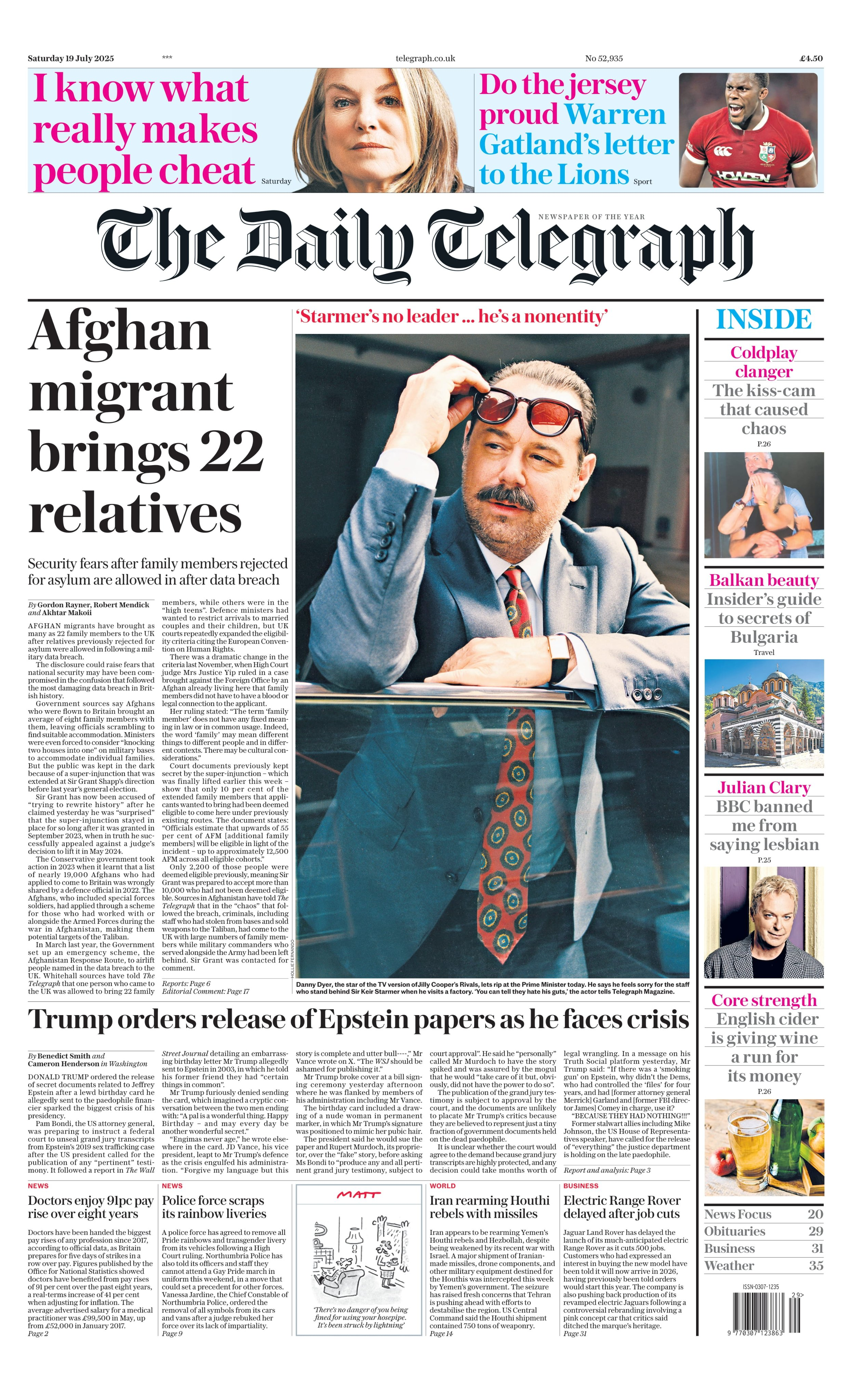
The Telegraph in 2025 is almost entirely a viewspaper. It publishes little actual ‘straight’ news. The views range from hard to far right and the paper Editorially is clearly struggling about whether to back Farage (who writes for it) or stick with the Tories. Its remaining readership, primarily one suspects of at least my age (68) may have a similar dilemma.
As the late socialist historian John Saville used to underline, when it comes to understanding class war and class struggle its important to have a total view-covering both sides as it were. The Telegraph is full of culture wars and outrage but rest assured before long these are the issues you’ll be hearing about on the BBC News and reading about in the Guardian.
As I said to the owner of my local beer and beard bar the other day the good news is that twice a day the Telegraph will e-mail you the headlines and brief summaries of all their latest rantings, for free.
I’ve extracted a couple of headlines from 19th July 2025. Suella Braverman has forgotten she was a leading Minister in the last Tory Government she is condemning, while Old Etonian William Sitwell tells us there’s nothing wrong with being a bit racist…
Those responsible must be held accountable, and the system that enabled this cover-up has to be dismantled
John Torode typified the atmosphere on set and his sacking is achingly sad
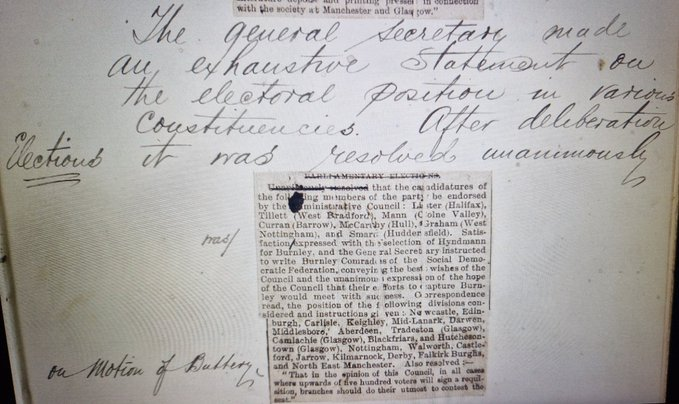
The Independent Labour Party was founded in Bradford in 1893. The LSE have now digitised the minute book of the ILP’s National Administrative Council (NAC) and these are available free to read and search on-line.
Above is an extract from the NAC meeting of November 1893 where the benchmark for whether it was appropriate to stand an election candidate is laid out.
Points of interest include the welcome for the Social Democratic Federation candidacy in Burnley. The SDF had declined to be part of the ILP at the founding conference in January 1893 after a federal structure was rejected. In addition at the bottom of the statement is a clear guide that if upwards of 500 voters signed a requisition for a candidate to stand in specific seats then an effort should be made to do so.
The minutes are in impeccably clear hand writing (although previous research on ILP branch minutes suggests they may not include quite all that took place..). Also of note is a tendency for meetings of the NAC to adjourn for luncheon

Donald Trump has threatened to sue Rupert Murdoch over a report in the Wall Street Journal that he sent a ‘bawdy’ note sent to Jeffrey Epstein in 2003. Trump claims the note is not genuine. There should be an easy way to check. Is it written in crayon?
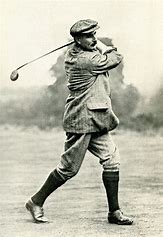
Eric Hobsbawm on golf & the rise of the bourgeoise
As far as I can ascertain Eric Hobsbawm was not a golfer. He was however interested in golf as an indicator of class and gives a number of examples in the Age of Empire
Golf clubs were to play an equally important role in the (Anglo Saxon)masculine world of middle-class professional men and businessmen. The social potential of this game played on large, expensively constructed and maintained pieces of real estate by members of clubs designed to exclude socially and financially unacceptable outsiders struck the new middle classes like a sudden revelation
Age of Empire P277
Beard Liberation Front
18th July
Beard Taxes have never worked
The Beard Liberation Front the informal network of beard wearers has said that the idea of a beard tax, which has gained attention again thanks to a letter in the Guardian on 18th July 2025 would cost far more to enforce and collect than they would ever raise.
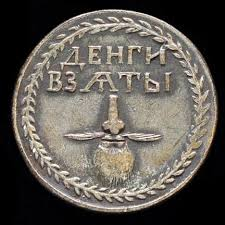
While history records several beard taxes including Peter the Great these were aimed at the rich and powerful in society. The lower orders had insufficient money historically to pay any direct taxes.
A modern beard tax would require a Beard Inspectorate to enforce tax payment and just to check on beards in Dalston and Shoreditch in East London alone would be likely to outweigh proceeds from the tax.
BLF Organiser Keith Flett said, we have long believed that a shaving tax on all items relating to shaving would raise more money and it would also be climate friendly.
Don’t tell Rachel Reeves, but Peter the Great taxed beards (Letters, 15 July) and the amount depended on the length.
Chris Walters
Buxton, Derbyshire
View more by category: Uncategorized (14,107). .


