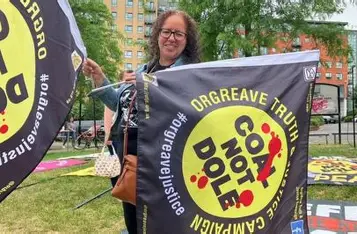
Government papers stored at the National Archives are sometimes withheld or weeded, but are an essential tool for research historians. It is disturbing to read that Northumbria police have destroyed files relating to Orgreave. This may have conformed with a document retention process, but Sherlock Holmes will not be required to work out why it happened just before the election of a government committed to an inquiry into the events that took place at Orgreave.
Perhaps the home secretary could ensure that no further police files are destroyed before the inquiry takes place, if necessary by requiring copies to be lodged with the civil servants responsible for setting it up. A democratic society needs an accurate record of its history, even if it may be an uncomfortable one for some. Dr Keith Flett London Socialist Historians Group
It’s good to see that the official inquiry has at last been announced, 40 years on. A tribute to the tenacity of Orgreave campaigners. An immediate first step must be to identify and secure all potential records and documentation relevant to the inquirry
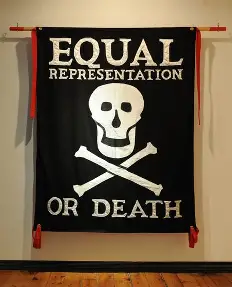
2nd July 2025 marked the 97th anniversary of the Equal Franchise Act which finally gave all women over 21 the vote. It was a right hard won both by mass demonstrations and direct action tactics that saw Suffragettes imprisoned and tortured in the old Holloway Prison.
The 267 Female MPs in 2025 wore a sash on 2nd July to mark the occasion, the sash of honour as it were going to the Mother of the House Diane Abbott.
Later in the day MPs voted to ban Palestine Action, who focus on the kind of direct action tactics that the Suffragettes did. Of the 26 MPs who voted against Diane Abbott was one suggesting a better grasp of British history than many MPs appear to have
Only banner survives from Peterloo the demonstration for the vote in Manchester on August 16th 1819, and its not the one above which is a re-creation.
Its existence is mentioned in E P Thompson’s Making of the English Working Class. He notes that it was specifically mentioned by a Magistrate when committing Henry Hunt the only speaker at Peterloo for trial.
The authorities expected a violent protest, in fact it was entirely peaceful until the Manchester Yeomanry rode into the crowd cutting down and killing and injuring numbers of protesters.
Some of the imagery suggested the potential for violence, but as Thompson notes it was the power of mass protest that was the majority path taken. Whether the authorities really and fully appreciated the difference is a more complex point.
The smell of the far right from Down In The Tube Station At Midnight to Trump’s White House
The Jam’s anti-racist song Down In The Tube contained a couple of lines on the smell of the far right
They smelt of pubs and Wormwood Scrubs And too many right wing meetings
Fast forward 45 years and Donald Trump has announced the launch of MAGA cologne.. Fight, Fight, Fight is $199 a bottle while Trump 45 costs $249.
This is a grift Nigel Farage has yet to promote but there must be potential for a cigarettes and alcohol cologne, the authentic smell of Wetherspoons man
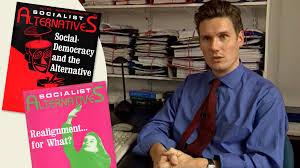
Keir Starmer has resigned as PM. In the 1980s he believed in something (recording of seminar on his Socialist Alternatives period)
As Prime Minister its often suggested that he has no particular political beliefs. Views on that may vary but in the 1980s he saw himself as a red-green socialist as part of the Socialist Alternatives project. On 20th May 2024 the London Socialist Historians Group held a seminar with the Editor of Socialist Alternatives Benjamin Schoendorff
Benjamin Schoendorff The Socialist Alternatives experiment: an 1980s attempt to search for a new revolutionary subject
The then Editor of Socialist Alternatives Benjamin Schoendorff looks at what the 1980s project was trying to achieve and reflects on the input of one of its most well-known contributors, Keir Starmer
The struggle for workers control means.. effective defense of the unions, supporting national and local pickets and a principled advocacy of solidarity action.
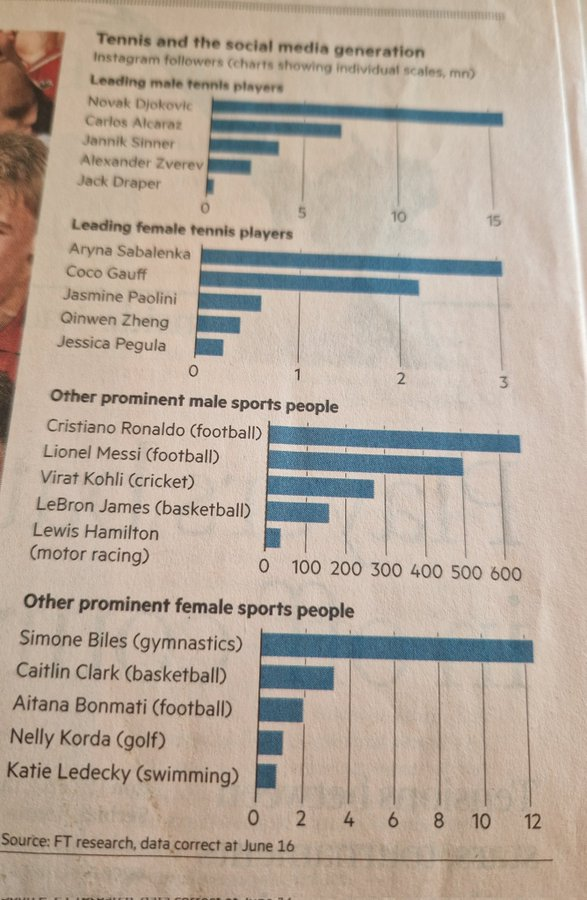
If you are watching Wimbledon you may have favourite players who you follow the progress of (or not). Of course it is still about winning but in 2025 its also about something else- social media following.
The phenomenon can be seen in Indian Premier League cricket where interest is not just in games or who wins but when key players like Virat Kohli are on the field of player.
Likewise with tennis players like Alcaraz and Sabalenka who have huge followings on Insta.
It doesn’t stop there because with short clips on Youtube and TikTok giving some details of the personal lives of the players, it is building a personal sports brand that goes far beyond winning specific sporting contests.
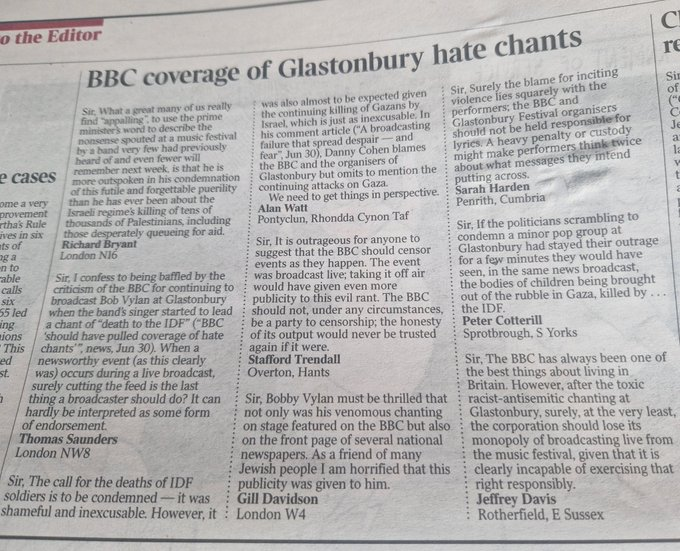
The Times letters page saw the official narrative of Glastonbury, the BBC & Palestine losing the dressing room.
Of the letters published (1st July) three back the official narrative. The rest do not either underlining that Palestine and what Israel is doing in Gaza or the BBC’s right to broadcast without censorship, being the theme.
In Writing By Candlelight E P Thompson argued that Times letter writers mostly represented the reactionary views of provincial England (where he himself lived). Clearly as the other Dylan noted, the times are changing
Quite what the Government’s welfare bill now amounts to after the Commons debate on 1st July will no doubt be reviewed. It is not however a measure designed to provide more money to the most badly off and disadvantaged in society. That money is being spent on arms.
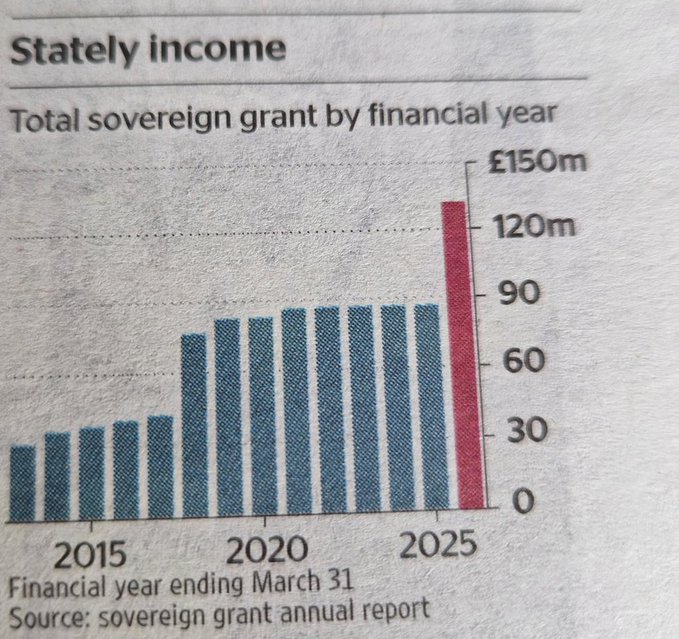
One other section of society- the most well off, the Royal Family is also receiving a hike in funding.
Last year the sovereign grant was £86.3m. For 2025 and 2026 is set at £132.1m. A good deal of the extra funding is about financing the apparently never ending refurbishment of Buckingham Palace. Unlike the Queen, King Charlie does not like the building or live there which begs the question why it is not leased to Wetherspoons for a bar and hotel…
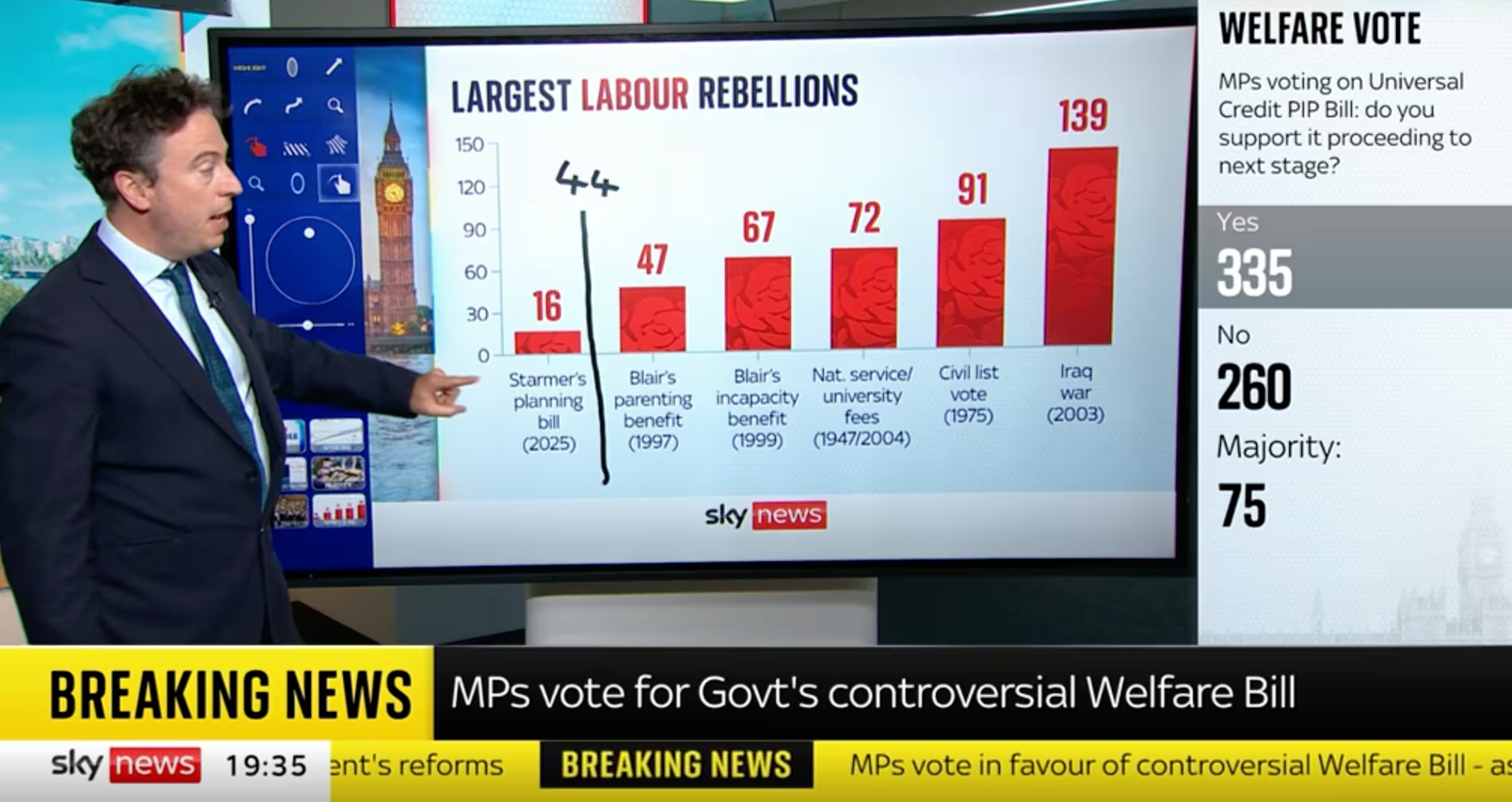
The Government’s Welfare Bill passed a vote in the Commons on 1st July with over 40 Labour MPs voting against. What the amended Bill really now amounts to will no doubt be much examined.
The media’s focus on MPs while expected does not tell the true story. The rebellion was a result of pressure from without of Parliament by disability and welfare campaigners and trade unions, as well as some local Labour Party groups.
It is an important point about where the focus for shifting the agenda of Starmer will come from, not from inside Parliament but outside of it.
In nineteenth century Britain there was no independent working class political representation in Parliament, although individual MPs who represented workers interests such as the Chartist leader Feargus O’Connor were occasionally elected even on the very limited franchise then used.
Rather there were two bourgeois parties, the Tories and the Whigs (from 1859 the Liberals). However significant political change did occur. The suffrage was extended to include rather more working men in 1867 and 1884. Trade Unionism was given a legal status and the right to strike guaranteed in the late 1860s and early 1870s.
These changes which went through Parliament were achieved by what is known as pressure from without.
The term has an interesting history. It was the title of a 1974 volume edited by the feminist and socialist historian Patricia Hollis. She went on to become Junior Minister in the Blair Governments. The book clearly represented an historical intervention into what was an earlier period of working class upsurge against a right-wing Tory Government with policies similar to the present one.
Reviewing the book Dorothy Thompson was critical, arguing that its chapters failed to address the range of activities that made up pressure from without.
The Anti-Corn Law League, run by Manchester industrialists, was perhaps the prototype for modern campaigns. Well organised with membership cards, regular publicity and lobbying of Parliament it succeeded in getting the Corn Laws scrapped. That reduced the price of bread. This allowed its core support of business owners to reduce wages, something working class members of the League, of which there were numbers, no doubt reflected on.
A rather different form of pressure from without, aimed at the very types who ran the Anti Corn Law League was what some historians have called ‘collective bargaining by riot’. Here organised crowds, or mobs as the media still call them, gathered to pressure those who sold essentials like bread and beer to do so at affordable prices. Actual riots were rare. The pressure of the crowd was usually sufficient.
A combination of the efficient organisation and lobbying of the ACCL and the mobilisation of the protest crowd suggests pressure from without can still work today