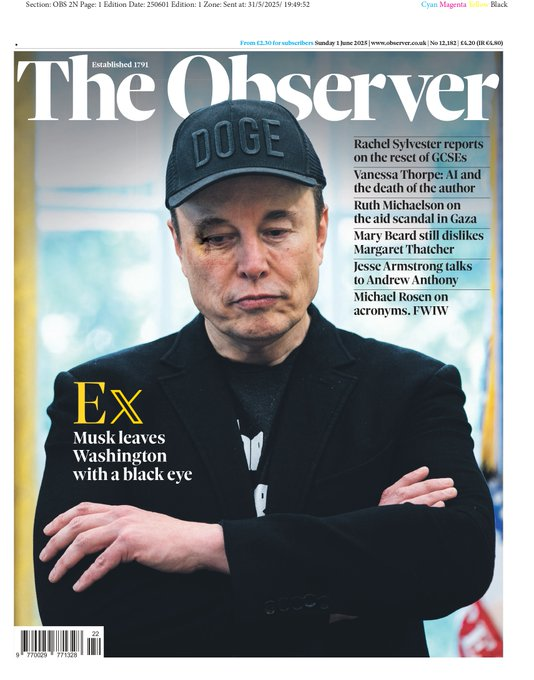
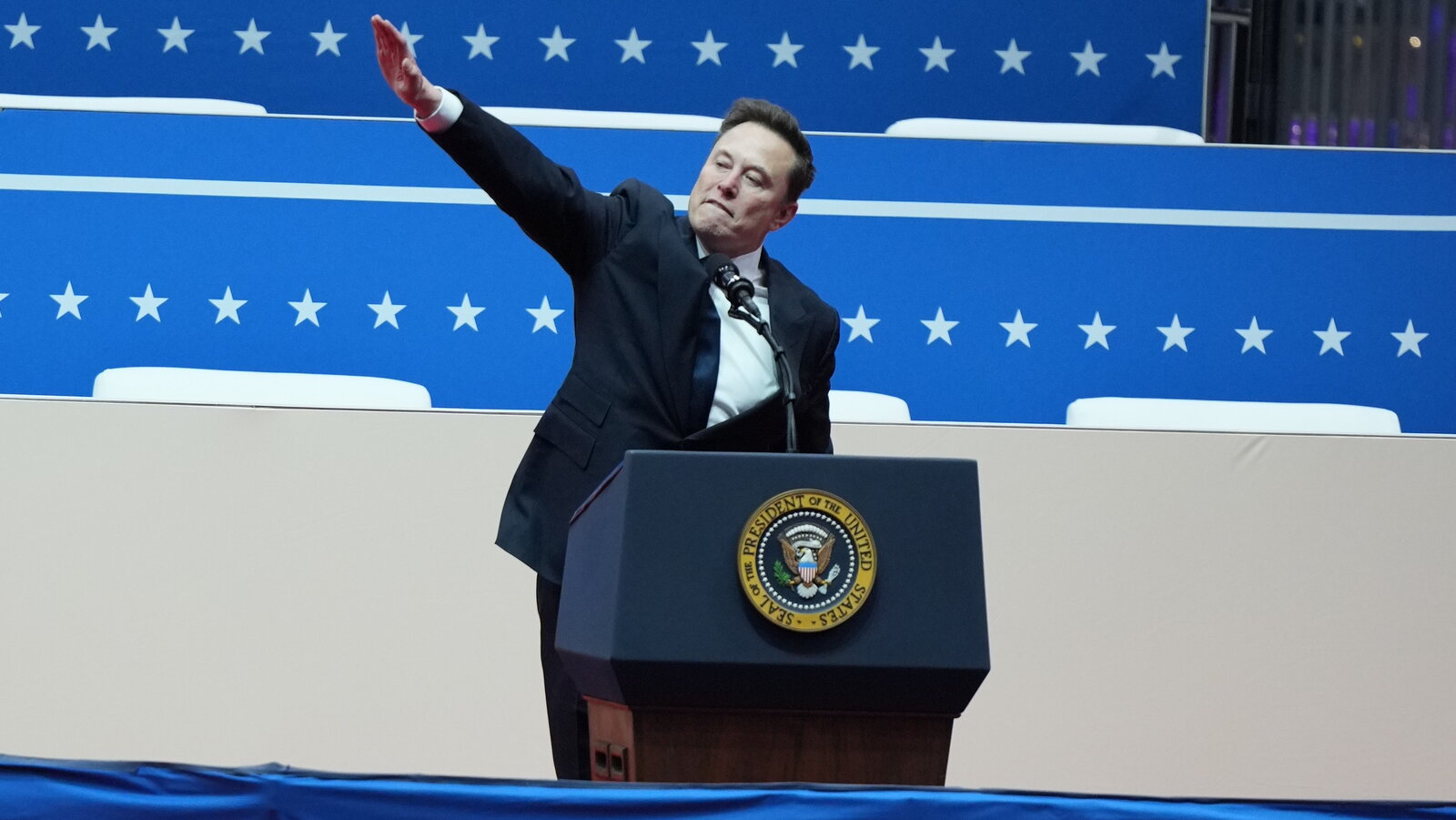
The drugs don’t work is a song by the Verve. Musk is probably not familiar but its to the point
At least Nigel Farage sticks (or appears to stick) to cigarettes & alcohol.

The drugs don’t work is a song by the Verve. Musk is probably not familiar but its to the point
At least Nigel Farage sticks (or appears to stick) to cigarettes & alcohol.
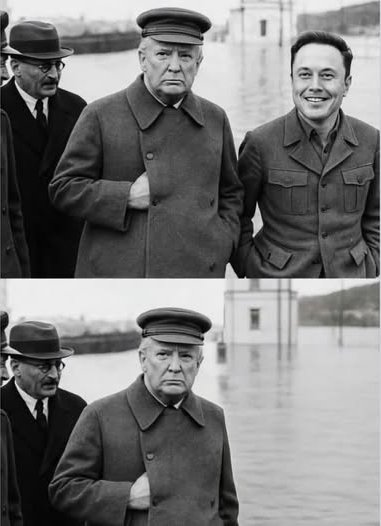
Some may be familiar with the 1997 book by the late David King, The Commissar vanishes. It looked at how various people disappeared from official photographs as they were purged by Stalin, particularly if they were to be found in an image adjacent to Stalin.
The above is via Rick Halpern on FB and reflects the distinct possibility that after his ‘departure’ from the White House on 30th May Elon Musk may also shortly vanish from official records.
The split between Trump and Musk is now public.
US President Donald Trump says he was “very surprised” and “disappointed” with former ally Elon Musk’s criticisms of his centrepiece budget bill.
“Elon and I had a great relationship. I don’t know if we will anymore,” Trump told reporters in the White House on Thursday.
As Marx noted, the ruling class is a band of warring brothers
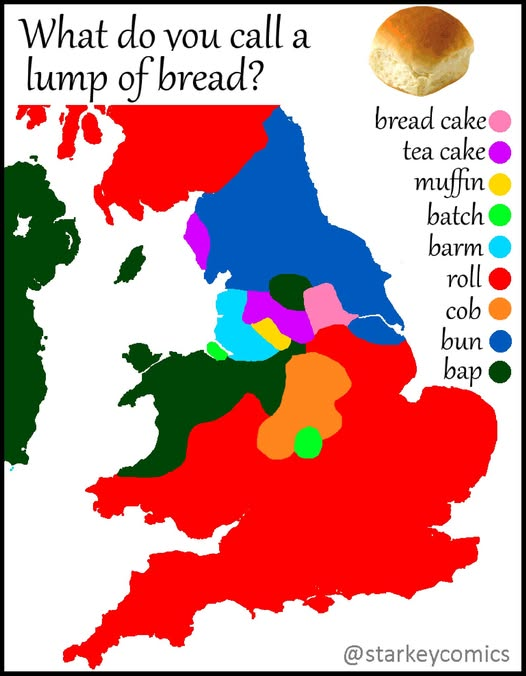
*the quotation is from E P Thompson’s Making of the English Working Class (1963). He notes that until the 1840s protests and riots over bread prices were common.
The graphic above- which may or may not be accurate(!)- reflects I suspect even now those struggles over the price of bread.
The price of bread was an issue at Peterloo in August 1819 (as well as the vote of course) and the Liberal led Anti-Corn Law League made it a national campaign in the 1840s. But campaigns around bread prices were local and regional and the name given to the thing being argued about reflects that. A name determined not by a giant bread company with a London HQ but locally on the ground around the country
Update
Thanks to Emma Cole for alerting me to this well researched article in Pellicle by Katie Mather on how the name for bread rolls, baps etc etc is socially and culturally determined
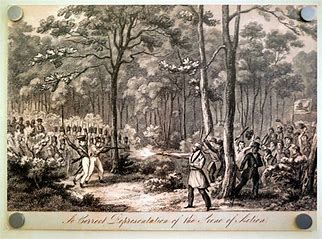
It is 188 years since the last armed battle on English soil.
At Bossenden Wood in Kent on 31st May 1838 troops of the 45th foot regiment engaged the followers of ‘Sir William Courtenay’. At the end of the battle an army officer, Courtenay and up to a dozen of his followers were dead.
To give a sense of the scale of this battle, EP Thompson described it as ‘perhaps the most desperate battle on English soil since 1745’ with a death toll, similar to, or perhaps higher than that of Peterloo in 1819.
Just weeks earlier the six demands of the Peoples’ Charter had been launched in London leading to a mass movement which aimed to secure political rights for working men. This political engagement was, very largely, over time, successful.
Yet the events in Bossenden Wood a few weeks later should not be easily dismissed because they were the path not taken which ended in failure and death.
Courtenay, real name J N Tom, by profession a wine merchant, had been a follower of the radical Thomas Spence and was perhaps broadly in the tradition of the millenarian Joanna Southcott.
He had come to Canterbury in 1832 and ended up in jail and then an asylum
On release, EP Thompson notes, that Courtenay lived in the homes of peasants in villages around Canterbury.
Just a few years after the Captain Swing riots and the Tolpuddle Martyrs, these were tough times for agricultural labourers, paid little to do back breaking work.
Courtenay find a ready audience for his radical and millenarian ideas.
In particular he denounced the 1834 Poor Law Act which ushered in the era of the Workhouse.
But his preferred method of opposing it was far from the political agitation of the People’s Charter.
In May 1838 Courtenay began to tour around Kent villages on horseback armed with pistols and a sword leading between fifty and a hundred labourers armed, Thompson notes, with bludgeons.
He must have been something of a spectacle riding with a loaf of bread on a pole under a blue and white flag with a rampant lion.
He read to his followers from the Bible, in particular James Chapter V stating:
‘go to now, ye rich men, weep and howl for your miseries that shall come upon you’.
A police officer was sent to arrest him and was promptly killed.
At this point Courtenay and a group of followers went to Bossenden Wood, where in due course battle was joined with an army unit of 100 soldiers.
The battle was an unequal one. The army had guns. The labourers did not.
However army Lieutenant Boswell Bennett was shot and killed by Courtenay before he himself was shot dead. On 2nd June in Canterbury a verdict of justifiable homicide was returned.
As EP Thompson notes while the existence of those who fought at Bossenden Wood was ‘filled with poverty and oppression’ their mental world was ‘filled with violent images from hell-fire and Revelation’
The millennarial strategy of Courtenay seems a world apart from that of the People’s Charter but it as well to remember that both appealed to very similar audiences.
When it came to the Government the distinction was hardly made at all.
When the Chartists attempted to lead an armed revolution at Newport in November 1839, the crack regiment of the British Army was despatched and in another unequal battle it shot down and killed numbers of Chartists in the centre of Newport.
That regiment was the 45th foot that had also shot down Courtenay and his followers at Bossenden Wood 18 months earlier.
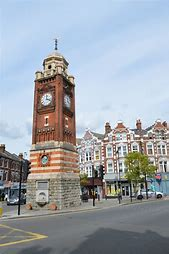
Haringey Trades Council
15th June 2011
Contact Keith Flett @keithbeard@bsky.social.com
BOB DYLAN REFUSED FREEDOM OF HARINGEY AS HE PLAYS FEIS
Haringey Trades Council has called on Haringey Councillors to review a decision not to give Bob Dylan the Freedom of the Borough of Haringey to mark his 70th birthday on 24th May 2011 and his latest appearance in the Borough when he plays the Feis at Finsbury Park on Saturday 18th June
Dylan has had a long association with the Borough through his links with Eurythmics guitarist Dave Stewart and at one stage was reputed to be thinking of re-locating to Crouch End.
Keith Flett Haringey TUC Chair said ‘All the four instances of the Freedom of Haringey are entirely appropriate but Dylan is no less so. He has a long association with Haringey,and not only would the Freedom of the Borough recognise that, it would also put the Borough on the map for Dylan fans. We are calling on Councillors to re-think the decision.
2025 update the above reflected Bob Dylan’s association with Haringey in particular Crouch End and Muswell Hill in North London.
I remain a delegate to Haringey TUC and Honorary President
“They were careless people — they smashed up things and creatures and then retreated back into their money or their vast carelessness, or whatever it was that kept them together, and let other people clean up the mess they had made.”
F Scott Fitzgerald, the Great Gatsby
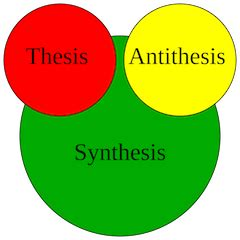
Engels to Marx London 30th May 1873
By 1873 Engels had retired as a Manchester businessman and was living in North London.
The House of Commons had risen for Whitsun on 27th May returning the following Thursday (5th June).
Engels was writing hence just before the start of Whitsun Week. Marx was in Manchester and visiting the seaside at Southport and then taking the waters at Buxton
Dear Moor,
This morning in bed the following dialectical points about the
natural sciences came into my head…..
1. T h e simplest form of motion is change of place (within time,
to do old Hegel a favour)—mechanical motion.
a) There is no such thing as the motion of a single body, but
relatively speaking one can talk of a falling body in such terms.
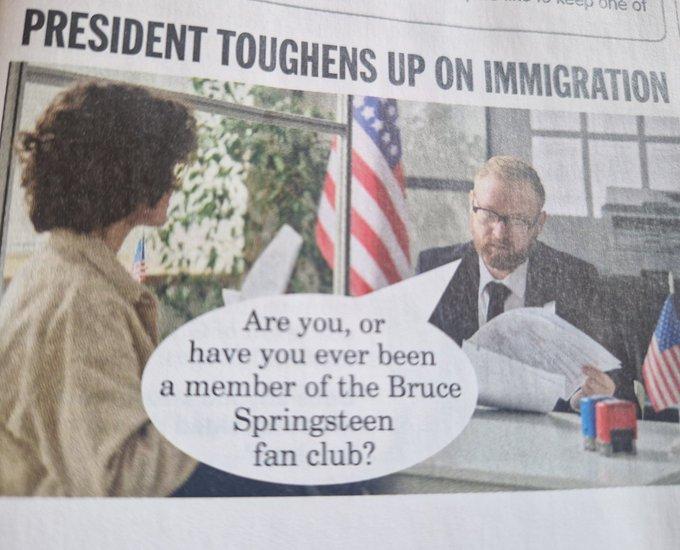
From Private Eye
The alternative Private Eye front cover (issue 1650) is of course a humorous (its to be hoped) take on Senator McCarthy’s witch hunt against Communists.
Springsteen robustly attacked Trump at his second Anfield concert on 7th June. An earlier concert in Manchester had elicited a typically rambling and incoherent response from the Orange Felon. However he does not appear to have applied for asylum in the UK. Yet.
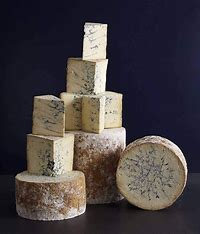
The politics of cheese
A poll commissioned by Paris based Academie Phormos reportedly an association of eminent cheese lovers has found that 9% of supporters of socialist politician Jean-Luc Melenchon do not eat cheese and this rises for those who back Green leader Yannick Jadot to 13%.
Meanwhile only 4% of those who support far right leader Marine Le Pen don’t eat cheese.
According to the Academie French cheese is a tradition and therefore patriotic French people eat cheese. They go on to suggest that in the UK this will mean that Stilton is a right-wing cheese.
The survey of 1,014 people has a lot more detail and findings of interest.
However it doesn’t seem likely that Stilton is particularly associated with the British right. Churchill’s favourite cheese was Gruyere and while Liz Truss has promoted various cheeses they did not include Stilton.
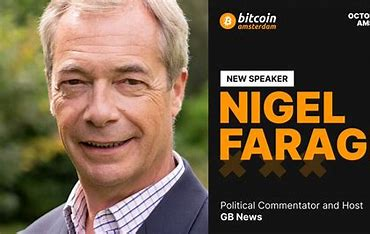
After speaking at a Bit Coin conference in Las Vegas Farage has said that Reform the political business which he controls will now accept donations in Bit Coin.
One hopes (without great hope) that the Electoral Commission will be keeping an eye. The obvious conclusion is that Farage is opening a new grift to build up his Brit Coin holdings
View more by category: Uncategorized (14,111). .


