The latest ONS data shows food price inflation rising from 2.6% to 2.8% year on year. Its not as high as a couple of years ago but anyone who shops in a supermarket will have noticed the increase (this apparently does not include most journalists who need prompts such as the ONS stats).
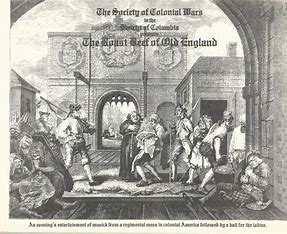
The nineteenth century song The Roast Beef of Old England was not so much a song of praise to meat as a political jibe at the reality for some that the industrial revolution from the late eighteenth century may have brought profit for employers but not good wages for workers.
As E P Thompson discussed at length in the Making of the English Working Class, the standard of living issue (which he regarded as the least satisfactory part of the book) is complex. Some industrial workers, perhaps particularly in London did see an improvement in diet. For many others even poor quality meat was for special occasions only.
The situation may not be so different in 2025.
Vegetarians and Vegans will have their own food cost issues but for occasional meat eaters like myself (a steak perhaps every two or three weeks) the increase in cost is noticeable. Steak is even now expensive in cost cutting supermarkets such as Aldi and Lidl
According to SIBA the number of breweries has declined by100 or so over the last year down to 1,715. The reasons are well known enough. The cost of living crisis continues, as do pandemic debts and business rates remain largely unreformed. You might (if you were an employer) mention increased NI and Living Wage rates and I might say as a trade unionist that if a business is not profitable enough to absorb such costs, it might question if its really a going concern. After all an increase in the living wage increases money in people’s pocket (as it were) perhaps giving them a little more to spend in a bar or taproom.
Anyway while all these are issues accountants Hacker Young have a different thought. They have looked at the breweries that have become insolvent (and filed as such) in the last year including Hackney and Fourpure and identified 43 of them.
According to Hacker Young the ‘craft beer boom’ was one of the most exciting recent developments in hospitality. It attracted ‘too many entrepreneurs’ who then struggled to turn a profit.
Its not that there were too many breweries as such, or even lack of demand for the beer. The problem was that in order to develop the breweries needed investment and it did not provide the expected returns.
As often profit trumped people, including those who worked at the insolvent breweries.
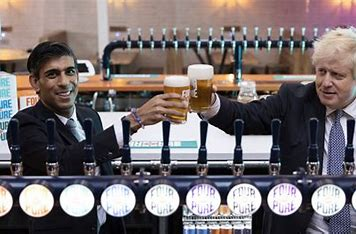
The picture shows Boris Johnson and Rishi Sunak at Fourpure in 2021. It then had a tap room in Bermondsey which shut in 2024. The brand is currently owned by private equity hospitality group Keystone and if the beers are being brewed, its at Black Sheep, Masham
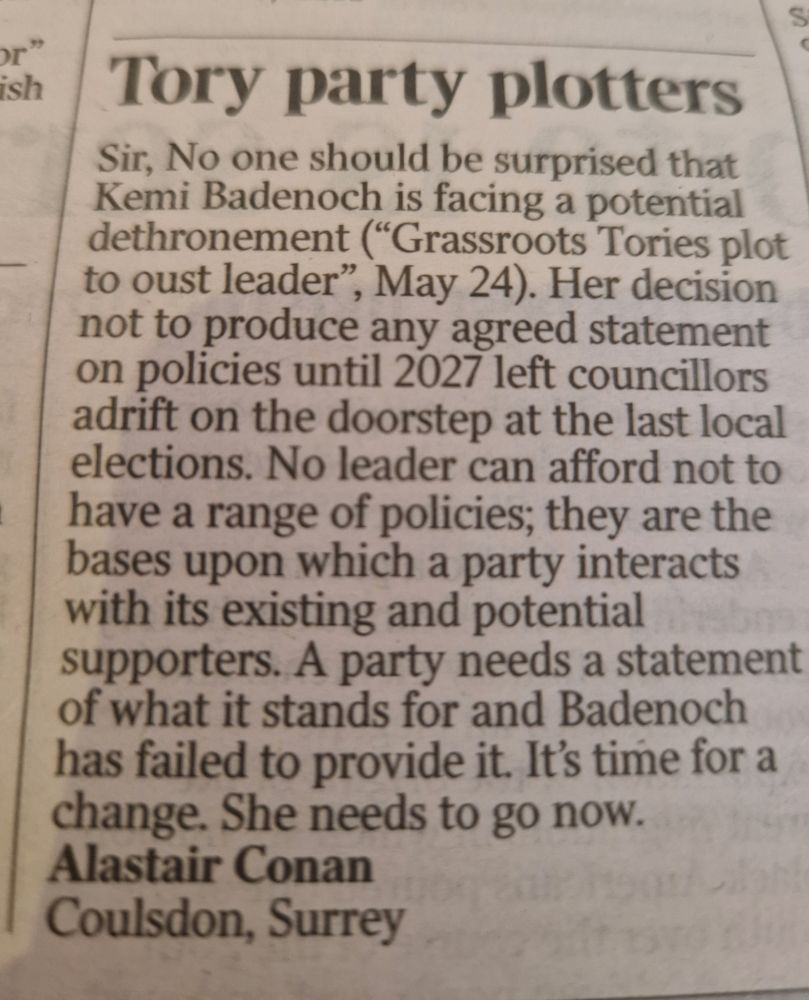
The late socialist historian E P Thompson, who lived for many years on the outskirts of Worcester, noted in his collection Sir, Writing By Candlelight, that Times letter writers were a reliable guide to reactionary and usually provincial opinion (Thompson was not a huge fan of London).
The Times (26th May 2025)carries a letter from Surrey calling for Tory leader Kemi Badenoch to go. It will be interesting to see what follows.
The Times (25 & 26 May) has reported that Tory Councillors are considering a similar call (something that finished Theresa May’s leadership) while Tory MPs can’t officially call for a leadership vote until November 2025 under new rules.
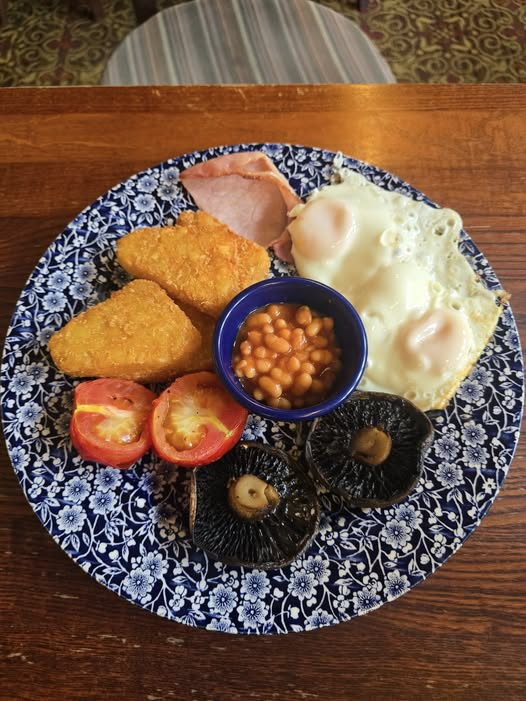
Wetherspoons, the Great British Breakfast & baked beans in ramekins
There are still complaints about Wetherspoons decision to stop serving steaks and grills (including gammon) from 14th May.
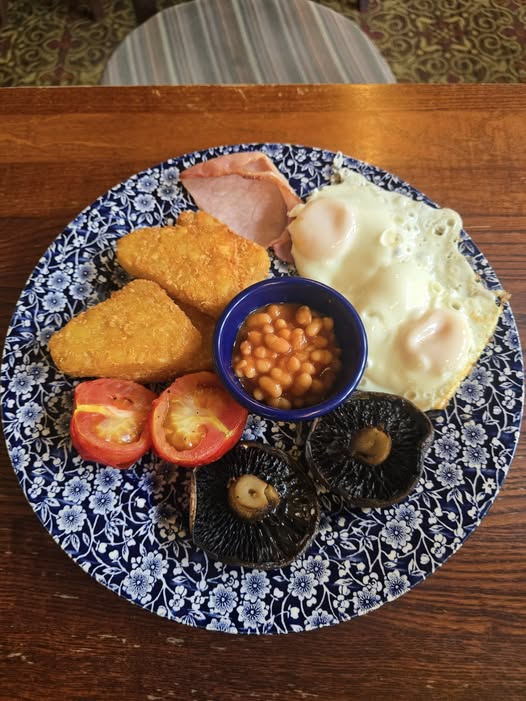
Now however a new issue has arisen. The question of how baked beans are served (primarily in Spoons breakfasts which are available until noon). It’s about whether they should be served in ramekins or not.
Previously Tim Martin has said that it was one of the most debated issues at Wetherspoons HQ. According to Martin if the beans are served on the plate they go cold, but if they are in a ramekin they can be too hot.
However since the introduction of a new menu it appears that ramekins are now de rigour.
Does this matter? Spoons have nearly 800 pubs. Some comment on the always interesting ‘We Love Wetherspoons’ Meta site suggests it’s all about portion control.
When I posted an earlier version of this I was rather surprised by the interest. Leaving aside the humourists at the Daily Mash, who think serving beans in ramekins signals the downfall of civilisation, the reality is that breakfast at Spoons has become something of an institution (for clarity I usually prefer a banana).
The greasy spoon cafe is still with us but Wetherspoons has just under 800 pubs which open for breakfast from 8am to Noon. As usual in Spoons prices are modest. A small breakfast- sausage, bacon, egg etc costs under £3 in most pubs. Bottomless coffee is around £1.50 and is drinkable.
You can of course have a beer, but Tim Martin has noted recently that the most popular item on the Spoons menu is the fairly recently introduced tea and toast.
For those still focused on the beans in a ramekin issue each serving has 126 calories.
I note all this not because I am in 2025 a huge fan of Wetherspoons but because when media analysis about how atomised and alienated Britain is, I think of Spoons and query it. Of course Farage is often pictured in Spoons clutching a pint of beer. I dislike the man and hate his politics (I used to work with similar in the City of London in the late 1970s and 80s and you don’t forget) but he is an astute vibes reader. Farage likes fine wines (not available in Spoons- the wine is well chosen but not top notch) but knows that being spotted in Spoons sends a message that he is not the very wealthy grifter which he is but actually just an ordinary bloke.
Some boycott Spoons due to the Brexity views of Tim Martin and I visit only occasionally myself (I do boycott Brewdog) but even if you only glance through a window you’ll see that much human life is to be found there in. The left shouldn’t be ignoring them, although the ramekin question is a detail
*The Address has caused a tremendous hullaballoo here in London. First they tried to ignore it, but it was not possible. On Wednesday the 14th, The Evening Standard published a denuncia- tion, on the 15th The Daily News had an excerpt that then went through most other papers. Then The Echo, Spectator on Saturday, Graphic, Pall Mall Gazette, Telegraph—with leading articles, and that was it. On Monday The Times followed with a really lousy LEADER, then the Standard once more, yesterday The Times again, and the whole of London spoke only of us.227 All wailing
Marx writing to Liebknecht (22nd June 1871) on the reaction of the London press to the Civil War in France (On the Paris Commune)
Lousy Leaders being a Times tradition that Rupert Murdoch (and Editor Tony Gallagher) honour more than 150 years on
Eric Hobsbawm on the rise of the working class holiday in the 1880s & the Late May(Whitsun) Holiday
In his book Worlds of Labour Eric Hobsbawm has a chapter on the making of the working class 1870-1914, an echo of E P Thompson’s book on the Making of the English Working Class which covered a period up to the later 1830s. Hobsbawm’s point is that the working class was made not in the 1830s but the 1880s.
Hobsbawm identifies the 1880s as the decade which saw the rise of distinctive working class leisure. One example was football matches, and the professionalisation and proletarianization of the game exemplified by Blackburn beating the Old Etonians (1883 FA Cup Final 2-1).
Another indicator was the rise of the working class holiday. Hobsbawm quotes Herapath’s Railway Journal of 1884 which looked at holiday traffic:
Year by Year the holiday traffic at Easter, Whitsun and August is growing in importance. Its dimensions have not yet swelled so far as to seriously affect dividends, but it is easy to forsee a time when this will this will be the case…
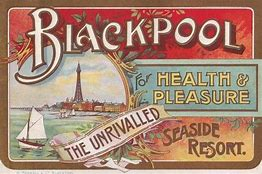
Hobsbawm cites the example of Blackpool where the Winter Gardens were started in 1878 and the Tower was in place by 1889.
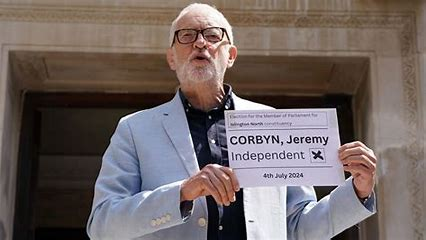
77th Birthday Greetings to Jeremy Corbyn, key opponent of Clean Shaven Starmerism
The Beard Liberation Front, the informal network of beard wearers has sent birthday greetings to veteran supporter Jeremy Corbyn who is 77 on 26th May.
Corbyn has won the Parliamentary Beard of the Year Award a record 10 times.
The campaigners say that his beard, an ever present feature of his politics, demonstrates how radical facial hair can be sustainable over many decades.
Jeremy Corbyn was first elected MP for Islington North in 1983 when he had a full socialist backbench beard.
By the early 2000s this had been tempered by many years of campaigning, the mid-period Corbyn.
He was Labour leader between 2015 and 2020 and here the beard became a central part of his leadership, the mature-period Corbyn.
Now in the post-2020 era the beard adds gravitas to late-period Corbyn
In 2025 a new phase opened, the independent-beard period Corbyn. He has become a leading opponent of clean shaven Starmerism
BLF Organiser Keith Flett said, there is much to learn from the ages of Jeremy Corbyn’s beard and its sustainability over many decades. His beard has easily been the most impactful in UK politics over more than 50 years. We wish him and his beard a very happy birthday.
The Beard Liberation Front, the informal network of beard wearers, has said that Gary Lineker, has joined the Beard Hall of Fame, as he steps down as a BBC football commentator
The Beard Hall of Fame is a virtual construct reserved for beard wearers who have had a significant and sustained impact in the public sphere.
Entries are quite rare, often no more than one or two beard wearers a year.
Lineker joins others such as Michael Rosen, Spike Milligan, Brian Blessed, Frank Dobson, Sir Mo Farah, Kofi Annan and Alexei Sayle in the Beard Hall of Fame.
BLF Organiser Keith Flett said, Gary Lineker’s beard could never be called organic on the Roy Keane scale, but it is stylish and helps to promote a positive image of hirsuteness in the public eye.
The murder of George Floyd 5 years on. Taking the Knee, inventing & reinventing traditions
It is five years, 25th May 2020, since George Floyd was murdered by a police officer.
His death sparked a powerful black lives matter movement, and reinvented a tradition
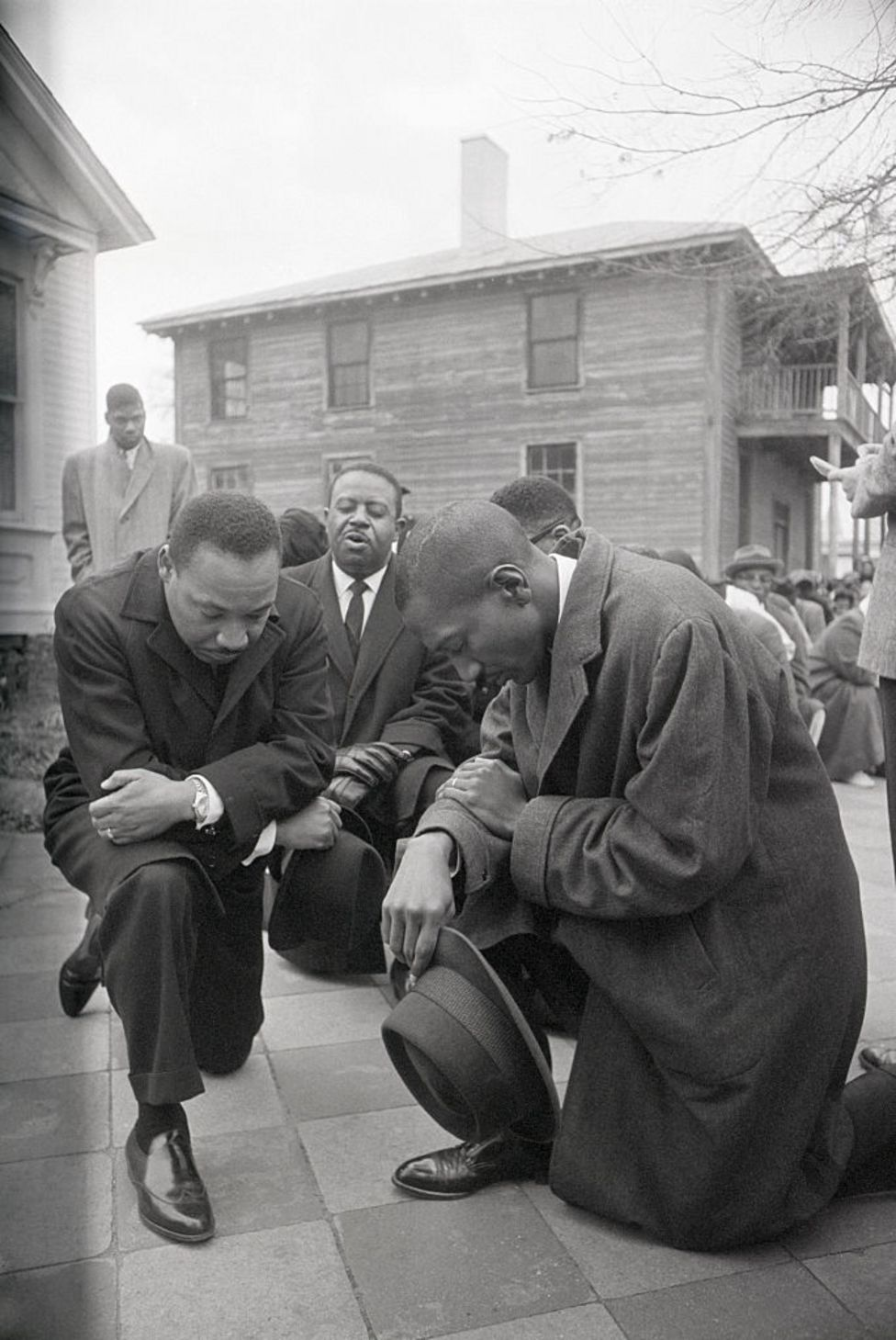
Taking the knee is quite a recent protest tradition. Its modern origin can be traced back to Martin Luther King who in 1965 with others took the knee after he was arrested for protesting on voting rights.
It gained support in the US often involving sports players kneeling rather than standing for the US national anthem:
It had not previously been much taken up in the UK not least because in most contexts there isn’t much concern if people don’t stand up for God Save the King or mumble their way through the words at sporting events.
After the murder of George Floyd taking knee has become a symbol of standing racism and injustice.
In that sense, as the seminal work on tradition by George Rude and Terence Ranger argued a tradition has been invented, and all the best traditions are invented.
That said there is an historical precedent.
January 1819 at the Manchester Theatre Royal, soldiers attacked Henry Hunt supporters who refused to uncover, take off their white hats for God Save The King, just months before the Peterloo Massacre took place in August 1819 where Hunt was the speaker.
That’s one of the issues with inventing traditions of protest. If you look hard enough you can often find someone has done something similar before but it wasn’t carried on. Hopefully this time it will be until justice prevails. There is still a lot of work to do
There are still complaints about Wetherspoons decision to stop serving steaks and grills (including gammon) from 14th May.
Now however a new issue has arisen. The question of how baked beans are served (primarily in Spoons breakfasts which are available until noon). Its about whether they should be served in ramekins or not.
Previously Tim Martin has said that it was one of the most debated issues at Wetherspoons HQ. According to Martin if the beans are served on the plate they go cold, but if they are in a ramekin they can be too hot.
However since the introduction of a new menu it appears that ramekins are now de rigeur.
Does this matter? Spoons have nearly 800 pubs. Some comment on the always interesting ‘We Love Wetherspoons’ Meta site suggests its all about portion control.
Some boycott Spoons due to the Brexity views of Tim Martin and I visit only occasionally myself (I do boycott Brewdog) but even if you only glance through a window you’ll see that much human life is to be found there in. The left shouldn’t be ignoring them, although the ramekin question is a detail