With a record number of Tory MPs standing down at the Election some at least will be looking for a new job. They are mostly employed for their contacts and knowledge of Government (although there are limits on how this can be used- Boris Johnson gets a free pass)rather than to actually do something.
The Times (27th May) dredged up some examples
Dominic Raab: senior strategic advisory to a private equity outfit £118K pa
George Eustice: set up a consultancy. So far paid £34K for 168 hours work
Brandon Lewis: role at a private equity firm set up by Russian oligarchs £250K pa
Historically political defections in Britain have tended to go from left to right. Beyond individual renegades there are two significant markers, Ramsay MacDonald’s decision to split Labour and form a National Government in 1931 and the departure of right-wing Labour MPs to the SDP in the early 1980s.
The 1930s also offered two further examples of significant splits. The first was Oswald Mosley’s New Party which led to fascism. The second was the ILP which tried to re-create an independent socialist presence outside of Labour but was unable to do so
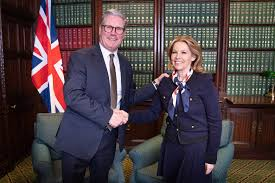
Keir Starmer seems to have reversed the process, welcoming three Tory MPs to Labour, the latest being the hard right-winger Natalie Elphicke. However before Blair won in 1997 two Tory MPs Alan Howarth and Shaun Woodward had defected to Labour
Elphicke’s controversial move has reopened a discussion about whether the Labour Party is a Broad Church and if so what kind of one. Even Lord Kinnock has note that there are limits
When the Labour Representation Committee was formed in 1900 it certainly was a broad church. The plan was to secure Parliamentary representation for working class interests. It was composed of trade union officers- many of whom had supported the Liberals, the ethical socialists of the ILP, the Marxists of the SDF and the Fabians. The SDF mostly dropped out and by 1918 the Sidney and Beatrice Webb had drawn up a Labour Party constitution that allowed for individual membership and local party organisation.
However after the formation of the Communist Party in 1920 the question of how broad Labour was remained open. While applications from the CPGB to join Labour were rebuffed there were on occasions joint Labour and Communist candidates at elections. Saklatvala was elected as an MP for Battersea on this basis in 1922. However by the late 1920s the possibility of Communists being part of a Labour Broad Church was closed off.
The decades that followed saw the policing of the boundaries of Labour to the left. In the late 1930s Nye Bevan and Stafford Cripps were temporarily excluded for pursuing a united front against fascism. In the early 1960s Michael Foot lost the Labour Whip on the issue of nuclear disarmanent.
In recent decades the boundaries of the Broad Church have continued to be flexible and disputed. A new left around Jeremy Corbyn, Diane Abbott, John McDonnell and others built considerable influence and were tolerated by New Labour,but not in the main by Starmer who has constructed a narrow church. He told the Observer on 6th May that everyone was welcome, but self evidently only if they are singing from precisely the same hymn sheet as Starmer himself.
This poses a long considered alternative question. If the Labour Broad Church is not that broad can another one be built. While this applies to a wider socialist movement, the focus has often been on Parliamentary success for candidates of a socialist and left wing persausion.
WIllie Gallacher was Communist MP for West Fife between 1935 and 1950. Decades later George Galloway, himself excluded from Labour, was elected as a Respect MP for Bethnal Green in 2005. Caroline Lucas has sat as the Green MP for Brighton Pavilion since 2010.
The benchmark for those standing in an election to the left of Labour as historically been not just a hope of electoral success but that the process of being a candidate helps to build the wider movement. From time to time the question becomes whether that might see an alternative to the Labour Party appear.
It is certainly a question that Keir Starmer’s Great Moving Right Show provokes, even if an answer will take time to appear.
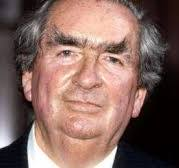
Denis Healey 1917-2015: when the Labour right were serious political figures
Denis Healey died aged 98 in 2015 and attracted praise as a titan of the labour movement, from Jeremy Corbyn as then Labour leader of course but also David Cameron then PM.
Healey who had addressed the 1945 Labour conference as Major in uniform (having recently left the Communist Party) was a figure of the Labour right, but a serious one. Not for him splits to join the SDP or talk that Labour at this or that period was finished.
As a labour movement activist since the 1970s I disagreed with much of what Healey did, particular the IMF cuts period from 1976. He saw it as essential. My view now as then was that the longer term needed to be thought about. If the left did not present a coherent alternative to market economics, however compelling they might have seemed at the moment, things weren’t likely to go well. And mostly unfortunately, think Mrs Thatcher, they didn’t. Healey was not to blame for that but a logic of political positions was being established in the 1970s crisis.
Tony Benn’s Diaries contain a rich vein of anecdotes about. The point is that he was not a god, but a politician very much of his times and needs to be understood as such.
As for an epitaph and lessons for the future, perhaps the point is that as Hendrix after Dylan noted ‘there are many here among us that feel that life is but a joke, but you and I we’ve been through that and that is not our fate’.
Healey was a serious politician who deserves to be taken seriously, but not uncritically
In comparison to the Starmerite right of 2024 he not only had impressive eyebrows but also what he called ‘hinterland’. A figure of the right who strongly opposed the left but also recognisably a human being beyond politics
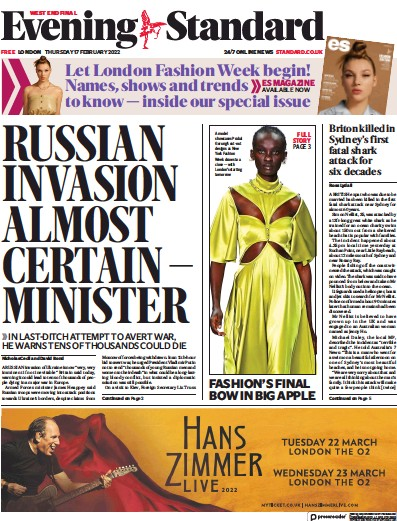
The London Evening Standard is to cease daily print production and go weekly.
As anyone who has picked up a copy recently will have noticed the news is no surprise. It is very thin paper compared to earlier decades. The pandemic and working from home have clearly played a part, but so also has an obvious lack of advertising. Given in recent times the Standard has been free this was perhaps key in the decision.
I don’t propose a history of London papers but 50 years ago there was the right-wing Evening News and the rather more liberal Evening Standard, both paid for papers. The News closed and Robert Maxwell briefly launched the Daily News.
The Standard might be called a paper of the centre-right. That hardly reflects London but it does or perhaps more accurately did reflect the perspectives of the Home Counties commuters who were probably its main readership.
It was never great on London specific news except at the very top near national level. That gap in the past was filled by local papers but many of them have gone too.
Social media and the web now fill some of the space where print was. Issues abound around Editorial control and for historians preservation for posterity.
Letter writers will also mourn. The Standard publishes very few letters now but when it had a Letters Page Fletters were certainly written, despatched and printed…
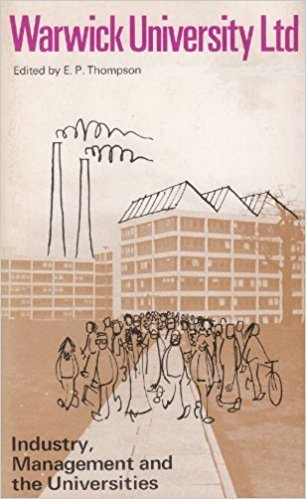
The theory and practice of the Business University have been around a long time. E P Thompson’s Warwick University Ltd (1970) is now a classic foundation text.
Sunak’s latest Election plan to abolish ‘low value degrees’ fits well with his status as the richest MP in Parliament. His idea is that the only reason to go to University is to enhance career prospects and hence salary.
Many myself included believe in a different principle-that of a liberal education. That is in gaining and exploring ideas and knowledge because it generally enhances the sum of humanity. My first degree did allow me to get a position in the civil service back in the day (subject of the degree was irrelevant). My PhD is probably essential for convening the socialist history seminar at the Institute of Historical Research. It has no relevance of note to my actual paid employment.
If I had to name a low value degree it would be PPE. It is of course high value in Sunak’s world because it can lead to a good and well paid job. Much of the knowledge it imparts does not in many cases seem to add to the general enlightment of humanity. It fails the liberal education test in many cases
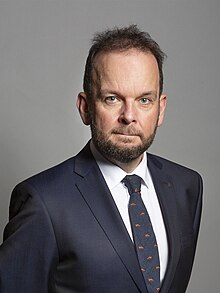
The Beard Liberation Front, the informal network of beard wearers, has said Tory MP for Bury North and Tory Deputy Chair James Daly is not welcome as a supporter.
The BLF is not party political and welcomes all who promote a positive image of the hirsute in the public eye.
However James Daly has fallen far short of this basic requirement. He made allegations to the police about Labour Deputy Leader Angela Rayner which he was unable to quantify. Now after a police inquiry using valuable resources it has been announced that Ms Rayner has no case to answer.
BLF Organiser Keith Flett said, the General Election campaign is now underway. Frankly the Tories need all and any votes they can get. Mr Daly’s actions over a sustained period are hardly those to persaude the hirsute vote that the Tories are beard friendly
Karim Khan, the Chief Prosecutor of the International Criminal Court is a British lawyer and firmly an Establishment figure, even if Dominic Raab initially refused to back him for the role, until everyone else had.
Even so he has a job to do and he has clearly noticed that the activities of Israel since October 2023 have made it increasingly difficult to do so. He has asked for an arrest warrant to be issued for Netanyahu and consulted a wide range of legal expertise before doing so.
In an interview with the Sunday Times (26th May) he underlined why the Rules Based International Order is in trouble: ..the world is looking at this situation. In Latin America, Africa and Asia they are seeing this as a crystallising point. Are powerful states sincere when they say there’s a body of law or is this rules-based system all simply a tool of NATO and a post-colonial with no real intention of applying law equally
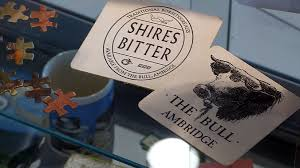
The Ambridge Socialist is pleased to see an uptick in sales of cask Shires bitter being drunk in one of Britain’s most well known pubs, the Bull Ambridge
Shires is produced in Borchester and is a classic Best Bitter with a superb balance of malt and hops.
Recently Bull regulars noted for not drinking Shires have been turning to it.
First George one of the younger generation of proletarian Grundys was heard switching from his usual lager to Shires.
This week Meat packing factory owner Vince Casey usually a whisky and ginger man ordered Shires. He also tried and liked a new beer produced with bread, quite common craft beer niche.
Oliver Sterling part owner of Grey Gables and the village’s only reader of the Spectator also ordered Shires. He might be thought to be a cask beer traditionalist being in his seventies but again he is a G&T man.
We should look forward to a stronger Shires ESB to encourage more Ambridge excitement
This Sporting Life, Sunak & the General Election, continued
Summer Elections are relatively rare in the UK and media speculation about why Sunak went for a July 4th date is considerable. One key theme is that things can only get worse for the Tories. Some reports suggest that Sunak was influenced by Deputy PM Oliver Dowden who is a professional idiot, so pure randomness when it comes to the date cant entirely be dismissed.
A strong feature however is how the Election falls in a summer of sport.
Sunak is a cricket fan and the summer’s Test Series (England v West Indies at Lords) doesn’t get underway until the following week. Free of Prime Ministerial duties Sunak will be free to watch, as John Major did at the Oval after he lost in 1997.
The Election also falls in the middle of the Euro 2024 football championship, just before the quarter finals. My Guardian Fletter on that is here:
Rishi Sunak is clearly aware of Harold Wilson’s 1966 view that England only win football competitions under Labour. His vacating No 10 before the end of Euro 2024 can only help the team. Keith Flett Tottenham, London
Sunak made a football gaffe on the first day of the Election campaign when he asked some Welsh brewers if they’d be watching their team in the Euros next month (Wales failed to qualify)
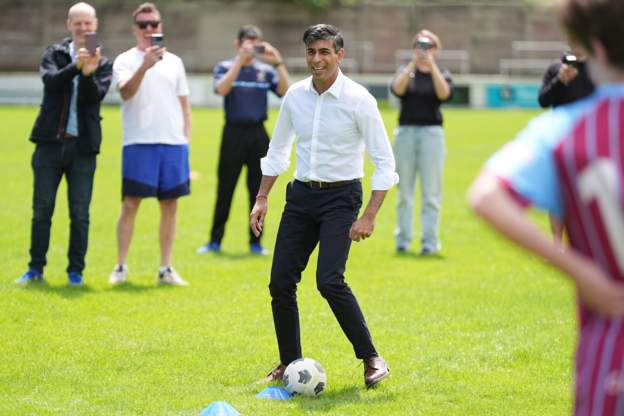
On Bank Holiday Monday he was pictured attempting to play football in Chesham (a LibDem seat). He appeared to be useless at that too.
The Election is also in the middle of the first week of Wimbledon. That’s a lot of interest not focused on the Election. Perhaps there is an agenda there. No one is interested, whoever wins things will go on much the same.
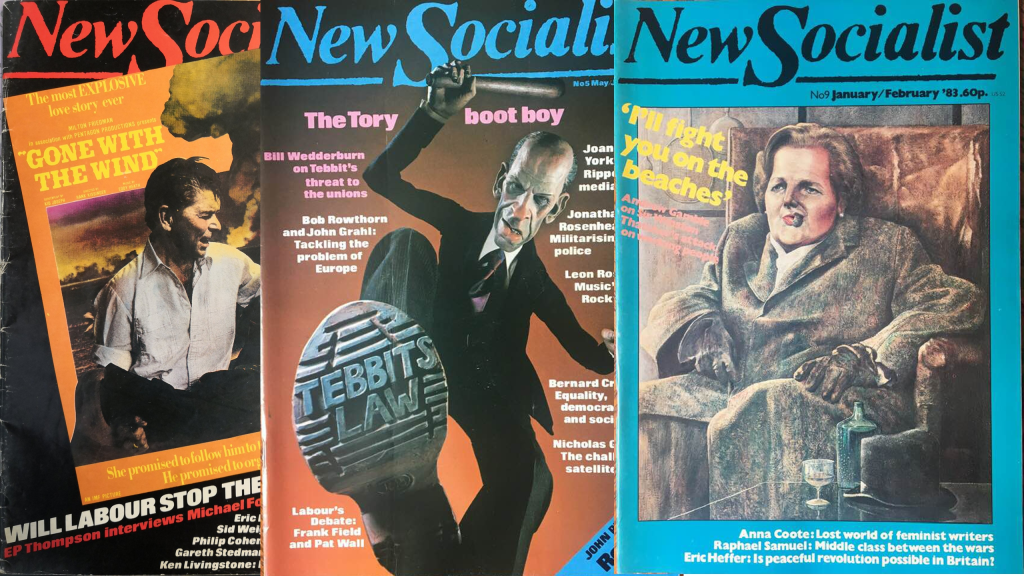
Colm Murphy. The forgotten rival of Marxism Today: The British Labour Party’s New Socialist and the business of political culture in the late Twentieth Century
This paper explores the world of the 1980s left in the UK and argues that political historians should integrate ‘business history’ questions to situate and evaluate sites for political debate. No history of the 1980s is complete without reference to the Communist Party’s glamorous Marxism Today. However, scholars have overlooked one of its significant market competitors. In 1981, the Labour Party founded its own intellectual magazine, the New Socialist. Initially, it was highly successful, recording healthy circulation figures and attracting iconoclastic pieces by leading socialists. Its early commercial success shows that it has been unjustly neglected since. Yet unfavourable political winds and internal editorial divisions fatally overlapped with ruinous business decisions in a worsening financial environment. This precipitated the collapse of New Socialist in the later 1980s—just as its Eurocommunist rival declared the arrival of the ‘New Times’ and wrote itself into history books. Closer attention to business contexts thus returns New Socialist to histories of the left and provides a better map of its ideological debates during a transformative decade. It also situates the travails of the 1980s left within social and cultural trends over the twentieth century.