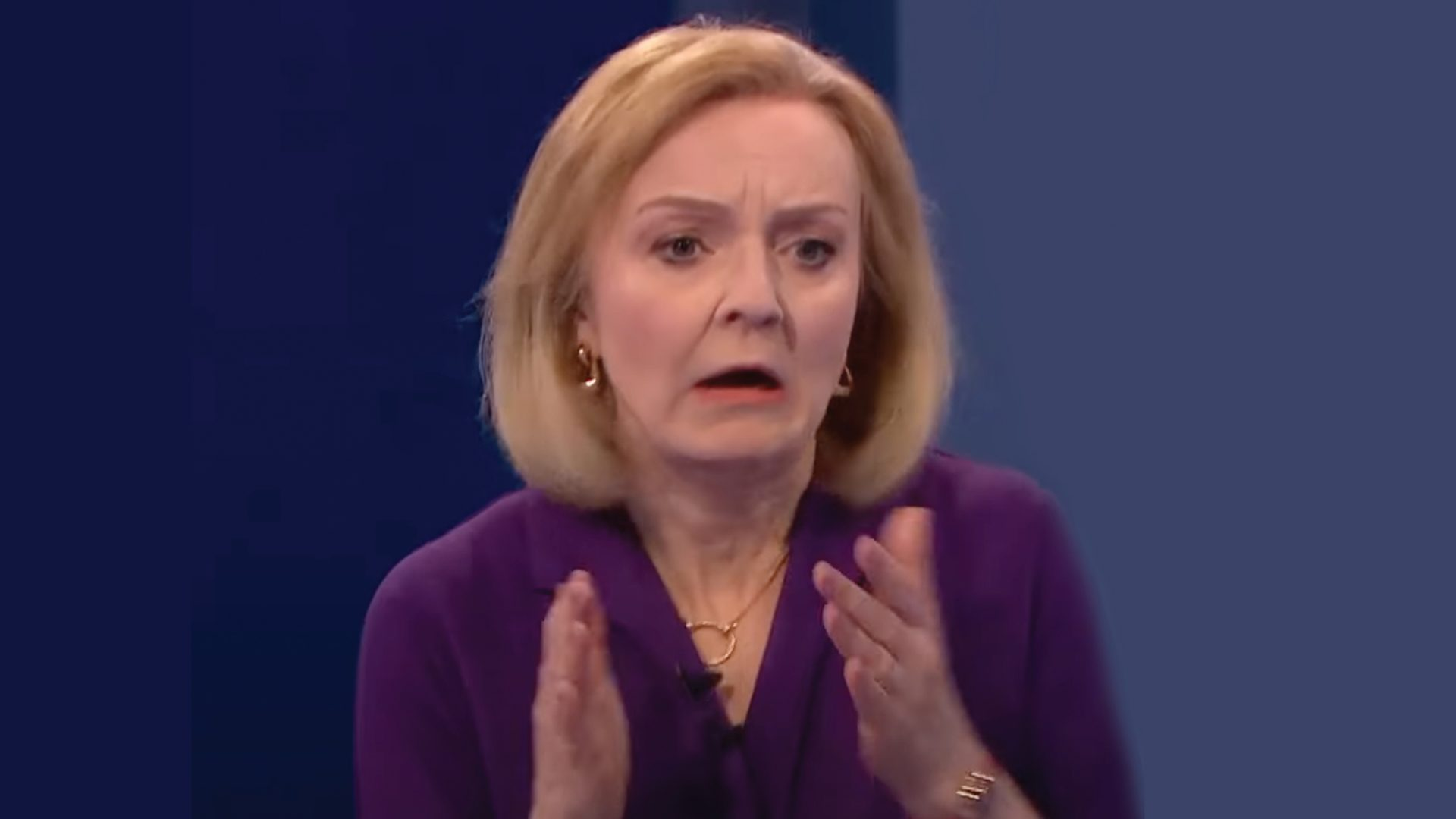
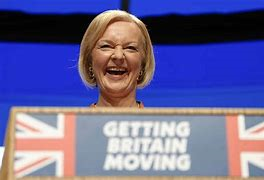
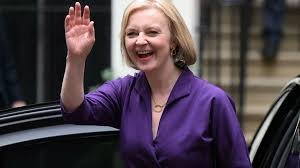
Liz Truss’s memoir, Ten Years, contains a false quote claiming that the Rothschilds control the world banking system. It is one of the most common anti-semitic lines and the Board of Deputies has rightly called it out.
Truss has apologised and claimed it was a genuine error. If there are any future editions,which seems unlikely,the passage will be removed.
The reality is however that Truss’s book is full of conspiracy theories about institutions that are,according to her, trying to stop her political advance. The US publisher of the book mainly promotes conspiracy story volumes.
Somehow Rishi Sunak has still failed to bar her from standing as a Tory candidate at the election..
In July 1890 Engels was travelling around Norway. The focus was meant to be on geology but as often good beer was never far from his thoughts. He wrote on 22nd July 1890 of his search for good draught beer
We sampled the beer conscientiously right up to 71 degrees of latitude. It was good, but no so good as the German stuff and invariably bottled. Only in Trondheim could one actually get draught beer. We shall probably carry out a reconnaissance today to see whether there is a beer hall in Bergen where draught ale may be had
The distinction between amateurs (gentlemen) and professionals (players) in cricket was abolished 60 years ago. Yet class and cricket are not so easily divorced.
The gentlemen tended to be batters while the players were often fast bowlers.
The Men’s County Cricket Season started with two rounds of matches using the Kookaburra cricket ball. Used in Australia its widely thought to be more helpful to batters than bowlers. Hence games saw several early season centuries and one triple century. All but one of the games was drawn.
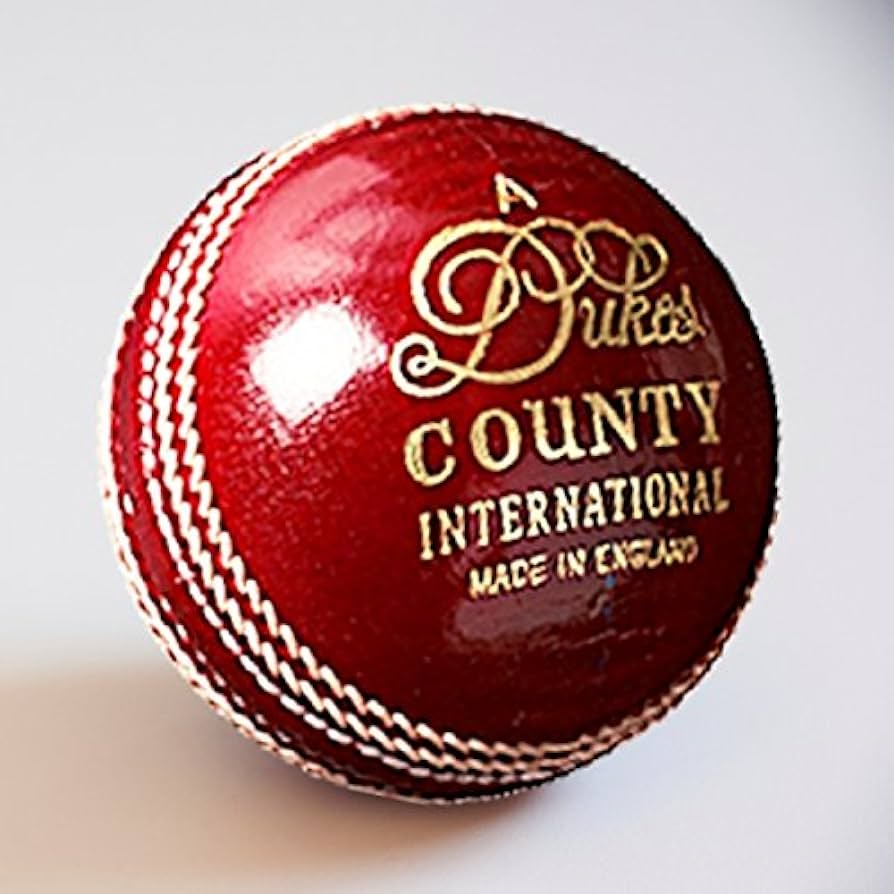
The County game has now reverted to using the Dukes ball which promotes seam and swing bowling and hence is more helpful to faster bowlers.
The person in charge of men’s cricket in England Rob Key is keen on the Kookaburra ball. Then again in his playing career he was a batter…
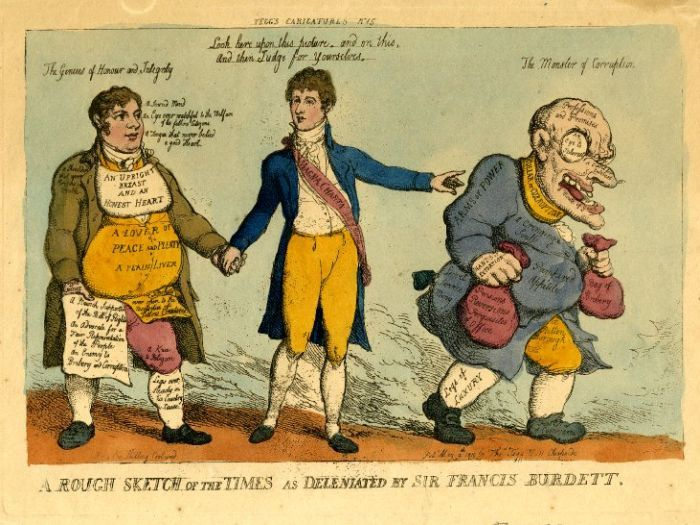
Sunak. The spectre of ‘Old Corruption’ haunts the Tories
Rishi Sunak was investigated by the Standards Commissioner over an alleged failure to report an interest in a Budget measure in 2023.
The measure made it more attractive for parents to hire a childminder via an agency. Sunak’s wife Akshata Murty had links with one, Koru Kids, and might have potentially benefited from it.
Of course Sunak is the richest MP in the Commons and Murty’s wealth comes from her father not Koru Kids so any financial benefit would be to them, small change.
The investigation seems to have set a template for Sunak’s Government. In the last few weeks two Tory MPs William Wragg and Mark Menzies have lost the whip because of allegations of at best improper behaviour. Both are standing down at the next Election which is a sign that it will be in the next few months. There should be further investigations in what they had been up to, but nothing in recent Parliamentary experience suggests these will come to much. Sub-Postmasters could be forgiven for feeling very angry
18 MPs currently sit in the Commons as independents. A few are Labour, mainly political disagreements. The Tories have invariably been involved in doubtful activities, proven or unproven. One Andrew Bridgen has been permamently expelled from the Tory Party
The issue is one of transparency and probity so clearly also missing from the Governments of Johnson and Truss (and indeed as it turned out Cameron).
It harks back to the pre-1832 politics before the Great Reform Act when Government contracts and financial dealings and positions of authority were based not on merit and suitability but on who people were and who they knew. It was a politics of sinecures and favours. Hence on a very restricted franchise the activities of MPs received little scrutiny. Part of the effort to grapple with that was the publication of Hansard.
Labour should not have the same issue except its continuing pursuit of the idea of public-private partnerships and courting of lobbyists opens it up to the possibility of the same thing happening unless considerably enhanced scrutiny of such matters is put in place
Jonathan Agnew who has been the BBC’s cricket correspondent for some decades is stepping down from the role at the end of the 2024 home season. He will continue to present Test Match Special.
He has given a brief interview to the Sunday Times which has started another culture war.
I’ve known Agnew, Aggers, slightly for some years. Clearly our world views do not coincide but like Brian Johnston, also a TMS man, he has a genuine interest in people,why they do what they do and so on. In other words a basic humanity not always a characteristic of those in public life in 2024.
Agnew is now 64 and reasonably finds the relentless demands of being cricket correspondent a bit much. Not least because the demands are much greater than they were. 30 years ago the domestic cricket season ended in September. There was usually an England overseas tour around Christmas and that was it for cricket coverage until April.
Not now.There is televised cricket being played somewhere in the world most days through the year.
Agnew doesnt like the IPL preferring Test cricket. I’m partly with him but the IPL and franchise cricket is a big part of the future. It is huge of course in India,getting the biggest audiences for any sport anywhere.And its designed to be watched on smartphones and tablets. Indeed if the ECB could manage to harness the interest of South Asian communities in the UK to cricket based around the IPL English cricket would be in a better place.
Agnew is also far too dismissive of women’s cricket, again something that is becoming a big part of the game. He dislikes the term Men’s Ashes but as Raf Nicholson and Hypocaust have pointed out on X the Women’s Ashes have a lot more history than he thinks.
He dislikes the term batters which is also (The Times) annoying a certain kind of suit wearer in the City of London who see it as analogous to replacing chairman with chair. Actually batter just fits in well with other terms like bowler and fielder which have always been gender neutral.
Anyway I’m sure Aggers will survive the mini-culture war, suitably admonished. We can reflect that there are some well known cricket commentators with arguably rather worse prejudices about which they are not even vaguely apologetic. Aggers admits he might be a bit of a dinosaur.
I’ll enjoy listening to him again when the English Test summer finally starts. On July 10th….
Liz Truss: Who was to blame (according to Liz Truss)
Liz Truss’s book about her 49 days as PM is now out.
If, as it appears, it’s an attempt by Truss to relaunch here career as a stand-up comedian, she needs to work on her delivery because it really is the way you tell them.
The book does allow us to update the list of people and institutions that Truss says are to blame for everything going wrong:
Headline inflation has reduced from 3.4% to 3.2%. That figure is a bit less than the expected drop and it remains to be seen if the Bank of England’s target figure of 2% will be reached.
It means of course that prices are still going up and given inflation over the past couple of years, the cost of food, energy and housing is hugely more than it was. Wages, not so much, hence there remains a cost of living crisis.
According to Rishi Sunak, inflation is coming down because the Tories have a plan and the plan is working.
This is interesting in several ways. Firstly because there didn’t seem to be a plan when inflation headed above 10% for key items. Secondly because the Tories both as a party and philosophically do not believe in economic plans. Their focus is on the market and the market adjusting around issues of supply and demand. Of course they allow for some degree of regulation and an economic framework but still at the core of that are market forces.
By contrast Labour, even right-wing Labour, has stood for a planned economy where the operation of the market is tempered to make sure that there is some benefit for the many as well as the few. Gordon Brown’s term for this was ‘no return to boom and bust’ until 2008 reminded him and everyone else that trying to tame the tiger of capitalism by skinning it claw by claw is a strategy that is very unlikely to work.
Does Starmer Labour have an economic plan? According to Rachel Reevs MAIS ecture to City suits it does. It involves yet more austerity (except for spending on wars) together with some form of intervention to make sure that industry takes more into account than just the bottom line of profit.
The below is work in progress. As a General Election is due in the UK in 2024 the left is discussing what approaches might be taken that would maximise a left presence and impact. Standing independent candidates is one possibility, exerting pressure on mainstream candidates by campaigns on key issues is another.
What can be said is that there is a history to the question. Between 1920 and 1956 most left activity in terms of elections (not all certainly) was focused on the Communist Party. It had a record of standing candidates and was occasionally successful in electing MPs. After 1956, as the Party split, a new independent left, the new left, was faced with the challenge of how to operate in the Parliamentary arena and whether that was in any case the best or most appropriate place to be anyway. Over more than four decades E P Thompson played a key role both in terms of activism and his history writing- the two being linked.
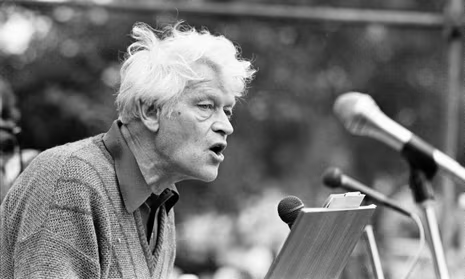
EP Thompson and General Election
EP Thompson never stood as a candidate in a General Election, and his voting record is unknown, although following the publication of the first part of his MI5 file recently it is possible that we might find a clue to this in the National Archives. One might suspect Communist and then, mostly, Labour after 1956. However as an historian and activist he certainly had a perspective on General Elections and on occasion intervened in them.
He backed an Independent Left candidate, Lawrence Daly, a miners union official in Fife in the 1959 Election, who he had worked with closely in the post-1956 new left, although he saw more broadly that there was some difference between Labour and Tory positions. His 1959 Essay on Psephology underlines that point.
Thompson was clear that a Tory victory would make things worse for working people in a variety of ways, but he also looked much wider in respect of its impact in terms of Britain’s defence and foreign policies.
Thompson also focused on how Elections take place and how attempts are made to manipulate public opinion in them just as they were, in much cruder ways, pre-1832 when Old Corruption and rotten Electoral Boroughs existed.
He argues in the Poverty of Theory that while a Cobbettian Old Corruption is clearly long past, it had by the 1960s been replaced by The Thing which sought in less direct ways to manipulate society and the opinions and views in it.
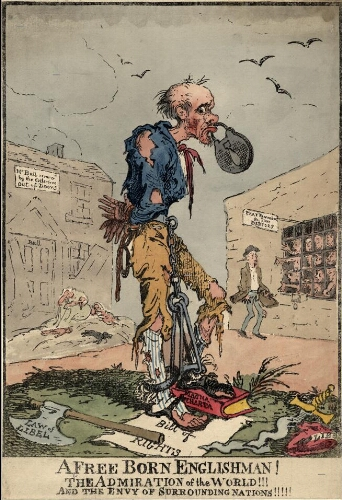
This was hardly a conspiratorial view of things since just as Thompson had detailed in The Making of the English Working Class how people rallied and organised against Old Corruption from below, and the Freeborn Englishman asserted himself and his civil rights. Thompson and others addressed a similar agenda in modern times.
In 1983 he wrote a substantial pamphlet for Merlin during the Election campaign of that year titled ‘The Defence of Britain’ which focused largely on the issue of the parties attitudes to British nuclear weapons, but also made some wider historical points.
His general drift was that the things that had exercised voters over time at General Elections should and were likely to influence them still: ‘we are not well fitted by our history to be the kind of people who just lie down & give up the ghost’ (p75).
He suggested that a symbol for a left approach to a General Election should be George Cruikshank’s Freeborn Englishman who found himself in 1820 with a padlock through his mouth (p85).
Thompson saw a perpetual battle for liberties which he situated in the Norman Yoke, the invasion of the Norman French in 1066 and the struggle ever since then to maintain a democratic framework in the law and in politics.
Writing in A Psessay on Ephology (New Reasoner 1959) Thompson argued that ‘we may have done away with rotten boroughs, but the rotten candidates and the rotten policies remain’.
But balanced against this as he noted in Peculiarities of the English, a response to Perry Anderson’s perspective that the left was stronger elsewhere in Europe than in Britain, of ‘certain strengths and humane traditions in British life which Other Countries, including those whose airports are superb, whose Marxism is mature, and whose salesmanship is high powered, do not always display’.
Writing in State of the Nation, Thompson trod a fine line between the threat to democracy and liberty and the possibility of defending it, and few moments placed that struggle into a sharper focus than General Elections.
At the next Election Thompson wrote a diary for the London Review of Books (published 7th May 1987). It was probably his last published thought on a British General Election (he died in 1993).
He wrote then of the 1945 Election, held almost 80 years ago this May:
One is not supposed to say anything good about British things these days, and writing all this down makes me feel old. I have to say that I find the NHS to be both decent and humanely socialist, but I dare say it won’t last much longer. Every tree we planted in those almost-democratic years is coming under the axe.
‘I’m a member of the Labour Party … that’s just like being a member of the human race. You accept it without enthusiasm’. 1962