Articles

A tweaked Wetherspoons as an alternative to neo-liberal big pub chains? (Part 1)

In Uncategorized on March 22, 2024 by kmflett

Beyond Wetherspoons

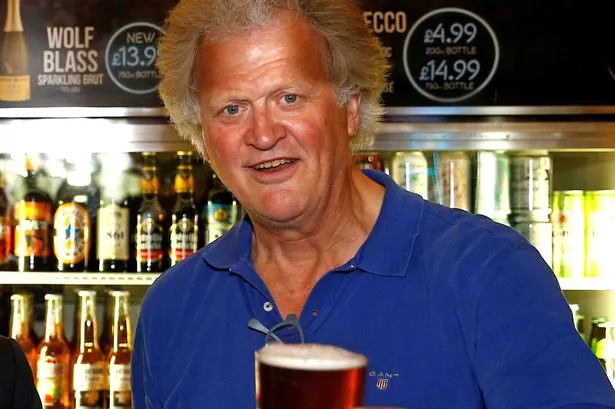
Tim Martin, the public face of Wetherspoons, was given a knighthood in the NewYear Honours list. Officially this was for his services to the hospitality industry. Reports however suggested that hard right Tory Minister Kim Badenoch was keen for Martin to get a gong for his pro-Brexit activities. Martin has indeed been a very vocal supporter of Brexit and appeared on public platforms with Nigel Farage and Boris Johnson to promote it.

What’s more, he flooded his pubs with pro-Brexit information on beermats and in the Wetherspoons News magazine. It might be noted, however, that unlike Johnson and Farage, Martin does not have a racist perspective on immigration. After all, he needs people to work in his 800 pubs!

There is nothing to suggest that most drinkers in Wetherspoons paid any attention to Martin’s Brexit views and indeed such interventions have a long history in British brewing and pubs. The brewers who also historically owned most pubs were known as the Beerage because of their links to the Tory Party. Before the rise of Labour, which was equivocal on drink, the Tories’ main opponents were the Liberals, who were temperance supporters.

Even when I first started drinking beer in the 1970s it was obvious that entering most pubs and drinking a pint of beer would mean a few of your pennies heading towards the Tory Party. This did not make me – or I suspect most others – decide to vote Tory, in fact quite the reverse.

This is an important point because perhaps uniquely amongst pub and brewery owners, Martin is the focus of opprobrium. Some of this is entirely justified. In an industry that is weak on union organisation, Wetherspoons does not recognise a union.

Part of the criticism of Martin however is because of his pro-Brexit views, usually from hardline supporters of a neoliberal EU. Indeed, there is an app called Never Spoons which allows users to find an alternative to Wetherspoons in their local area.

This assumes that other pubs and pub chains are better than Wetherspoons when it comes to political outlook and staff conditions. There are individual bars that do an excellent job, but the pub chains owned by global brewers such as Carlsberg, Marstons and Heineken are not noted for their progressive views and politics.

Global brewers don’t tend to have a specific view on British politics. They simply want Governments of whatever political flavour to promote conditions that help them make profit. Others such as Greene King and Fullers, although both now owned outside of the UK, have until recently supported the Tory Party.

Once we can get over what might be called Wetherspoons exceptionalism, we can begin to look at why the Tim Martin model has been successful and what those of us who prefer different models of running pubs might want to do about it.

Media reaction to Martin’s Knighthood was surprisingly positive in some surprising quarters. The Guardian’s economics correspondent praised not Martin but the pubs, as did several letter writers to the paper.

Wetherspoons started out in North London in the late 1970s. Andrew Marler opened a pub in Muswell Hill, notable in particular for selling real ales from regional brewers rarely seen in the capital.

Tim Martin was then a young lawyer living in the area and fed up with the poor state of pubs in the area. It was one thing I had in common with Sir Tim, as I was then also living in Muswell Hill and found myself drinking in Marler’s Bar. Marler faded from the picture and Martin started what became the Wetherspoons pub chain initially by opening lots of pubs in North London, before it became clear that the model would work nationally

It may be surprising in 2024 but the left in North London 40-plus years ago regarded Wetherspoons as unequivocal good news. Martin’s pubs did not host political meetings, although Paul Foot once spoke on his book Red Shelley at the Rochester Castle in Stoke Newington – still a Wetherspoons pub and an entry in the 2024 Good Beer Guide.

The reason why left-wingers frequented Wetherspoons was because while it sold alcohol, it also had coffee, all day food, no television or music blaring out and clean toilets. One might think this was standard for a pub – but it wasn’t then, or now. This combination meant that Martin’s pubs attracted a far wider mix of customers based on gender, ethnicity and age than many of their competitors.

Of course one can idealise this. Wetherspoons now has around 800 pubs and some will inevitably have groups of loud and lairy men making them rather less than welcoming to all.

Nevertheless, the Wetherspoons model was sufficiently different to be a success. As it currently stands it is a model, not in most cases of great pubs, but reasonable ones where you know what you will find. As an American journalist touring the UK noted, they will always be open, the heating will be on in winter, tables will be clean and the lack of TV and music means you can engage in
conversation, about the joys of Brexit or anything else.

This is our point of departure into an alternative or post-Wetherspoons world of pubs without Sir Tim Martin. In his recent book on the history of Working Men’s Clubs, Pete Brown finds himself in the White Swan pub, Highbury Corner, North London. It’s a Wetherspoons, and Brown writes that in many ways it could be a club, as he sits observing customers enjoying an afternoon beer or coffee and a chat about life. He’s there because upstairs is the HQ of the Club and Institute Union, the body that runs Working Men’s Clubs.

Brown remarks that Wetherspoons has some similarities to a club. He’s thinking not of the Victorian men-only period but more recent decades, when the clubs have been open to all and provided cheap beer, entertainment, company and warmth to working-class people. Some pubs used to do that too but they continue to close, and great as the beer in many craft bars may be, this is not what they aim to provide.

Of course Wetherspoons doesn’t have games or entertainment, but when you look at some of the well known community-run pubs such as the Bevy in Brighton, or the Antwerp Arms in Tottenham, it can be seen how the Sir Tim Martin model, removed from a commercial pub chain focus and developed as similar to a modern club but with a pub status, could be a way beyond the big pub chains.

It could also be a way of reinvigorating community life where decades of neoliberalism have stripped the soul out of so many places.

This post first appeared on the Culture Matters site @CulturesMatter
Articles

England football shirts, inventing traditions & culture wars

In Uncategorized on March 22, 2024 by kmflett

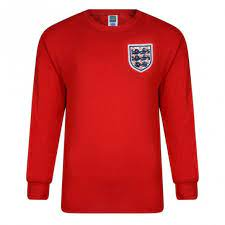
I’m not an expert on England football shirts, but the current culture war over whether the 2024 England kit should feature a tweaked St George’s flag caused me to investigate. The fact that Farage, Starmer and Sunak all think its bad suggested very high degree of culture war humbug

The BBC article at this link provides a degree of enlightenment

https://www.bbc.co.uk/news/uk-68632034#:~:text=Ed%20Cowburn%2C%20who%20designs%20football,graphic%20element%2C%22%20he%20said.

Its reported that the St Georges flag did not feature on kits until the early 2000s and it did not feature at all in 2022. The core emblem is the Three Lions. You may recall a song.

Gareth Southgate’s view is in ‘I don’t know if the debate is about the St George Flag needing to be on the England shirt because it hasn’t always been,” said Southgate’

Its a reminder of the work of Eric Hobsbawm and Terence Ranger that all traditions are invented.

As much to the point while Starmer did suggest the shirts should be cheaper-all sports shirts are something of a profit focused rip-off- the reality that Nike pays the people who produce them far too little is missed. This should really be the centre of any debate about the shirts but, Culture War it is. It gives GBNews something to rant about

Articles

Are Beards Electable Update: the case of Vaughan Gething

In Uncategorized on March 22, 2024 by kmflett

Are Beards Electable Update: the case of Vaughan Gething

Image in politics is important, whether we like it or not, hence the rather silly recent discussion about whether Keir Starmer is carrying too much weight.

Beards are part of this and below is a post relating to Philip Cowley’s interesting perspective on this.

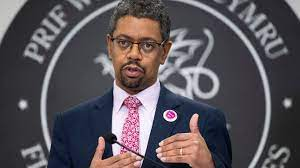
The election by Senedd members of Vaughan Gething as Wales First Minister this week is of current relevance. Mr Gething is the first black leader of any country in Europe and he is also a long time beard wearer.

Not for him the organic ZZ Top approach but a carefully styled and trimmed beard. Does the image suggest his politics and what might it mean for how he approaches the role of First Minister?

Are Beards Electable?

Philip Cowley has written for the House on the question of whether or not beards are electable

https://www.politicshome.com/thehouse/article/professor-see-now-beards-a-turnoff-voters

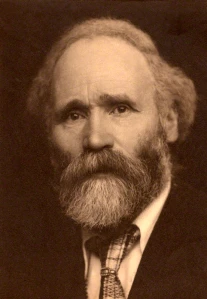
It’s a subject destined to get a response from the organiser of the Beard Liberation Front (myself)

The hook for the piece seems to be the growing number of Tory MPs- traditionally post-1945- a clean shaven lot (when male)who have grown beards. Presumably the idea was to try and add some much needed gravitas. More recently with an Election looming some have shaved their beards fearing they are a vote loser.

Cowley takes the view that appearance is one aspect of electability- but only one. However he concludes that on election night if a hirsute candidate loses by a few votes they may wish they had shaved their beard.

There is some history here of course.

The Beard Liberation Front famously labelled Tony Blair a clean shaven revisionist (perhaps we were a little kind there) but he had hirsute heavyweights in his Cabinet including Comrades Blunkett, Cook and Dobson.

Frank Dobson was the subject of one of the better known election beard stories when he ran for London Mayor in 2000. The Observer ran a front page story to the effect that Labour had been touting photos of a clean shaven Dobbo to electors to see if they preferred that image. It was suggested that this was an election stunt aimed at the BLF. However later Labour sources (always well informed) told me that in the early 2000s it was regular practice for any Labour candidate with a beard to have it scrutinised for electability In recent times matters have moved on. Surely Prof Cowley has noticed that out of the leaders of the four UK nations two now have beards. Keir Starmer next?

Articles

Beard Liberation Front calls on Owen Jones to grow a socialist beard

In Uncategorized on March 21, 2024 by kmflett

Beard Liberation Front

21st March

The Beard Liberation Front the informal network of beard wearers has welcomed Owen Jones decision to leave the Labour Party.

The campaigners say its a blow against Starmerite clean shaven revisionism

However the BLF has urged Owen Jones to embrace his decision and grow a socialist beard

BLF Organiser Keith Flett said, image is key in modern politics and Owen Jones growing a socialist beard would send a message

Articles

From Queen Caroline 1820/1 to Kate Middleton 2024. Royalty as a radical diversion

In Uncategorized on March 19, 2024 by kmflett

From Queen Caroline to Kate Middleton

The most important story in the world at the moment is Israel’s genocide in Gaza and the mass opposition it has brought on to the streets.

Yet in recent weeks another story has gained traction. Namely the health of Kate Middleton, partner of Prince William, heir to the throne. She had an operation in January and has been recuperating out of the public eye. Conspiracy theories abound about what her health condition is and if occasional photos and videos of her are genuine.

One might venture, who cares, but as a distraction from Gaza it has an impact.

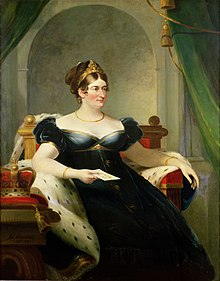
There have been comparable periods in British history. One example is that of Queen Caroline (1768-1821). She was the estranged wife of the man who became George IV on 29th January 1820. She travelled to Britain to lay claim to the title of Queen. George tried to get Parliament to agree a divorce through legislation but failed.

At George’s Coronation in Westminster Abbey on 19th July 1821 Caroline was refused entry. She died a few weeks later.

Just another Royal story one might think.

However in the wake of Peterloo on 16th August 1819 when protesters for the vote were killed and injured by troops, and the repression of working class and radical protest that followed, Queen Caroline gathered considerable popular support.

Radicals such as Cobbett swung behind Caroline managing a campaign in her defence and mounting attacks on the Old Corruption of King George. As E P Thompson noted in the Making of the English Working Class radicals seized with ‘relief’ on the cause as a diversion from the hard work of agitating in the post Peterloo environment.

He argues that it was no longer the ‘revolutionary cap of liberty’ that was hung on the Queen. This had been lost somewhere on the way between Peterloo and Cato St’

He noted that the Caroline campaign displayed every radical vice, an easy target rather than the hard work of organising a post Peterloo movement. Entertaining as the Royal crisis around Kate Middleton is, and a chance to attack the institution of the monarchy, the real work lies in Palestinian solidarity.

https://en.wikipedia.org/wiki/Caroline_of_Brunswick

Articles

Terry Hall b 19.03.59 on the importance of Love Music,Hate Racism

In Uncategorized on March 19, 2024 by kmflett

Terry Hall who died far too young in December 2022 at 63 would have been 65 today

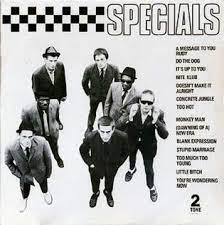
Speaking to the Financial Times in 2021 on the occasion of the 40th anniversary of the release of Ghost Town Terry Hall said that Love Music Hate Racism is not enough just as a slogan ‘You Have to Fight It’, meaning of course racism.

The article went on to note that the Specials concept was ‘black and white musicians, clear, unambiguous politics, defiance’

Still true today in saluting the memory of Terry Hall and continuing that music and politics of defiance

Articles

History repeats itself. Reeves & Lammy follow Blair on Thatcher’s Great Moving Right Show. Not our vision

In Uncategorized on March 19, 2024 by kmflett

Rachel Reeves gave a major policy speech on 19th March in which see argued a Labour Government would promote a decade of renewal as Thatcher did after 1979. Those of who were there at the time don’t recall it quite like that. Thatcher’s renewal was one which benefited the few not the many. Reeves argued rather for an ‘inclusive’ version where growth would benefit the many. That is clearly a desirable objective but Thatcherism is really not the starting point to do it.

Its the same error Blair made after 1997

In an interview with the Financial Times on 22nd December 2023 he touched briefly on British politics past and present. He argued that New Labour ‘did lots of things in the public realm and implemented social change’. This or should not be in doubt. Some positive things were done. The point is that with massive majorities more could have been done and that some of the things that were done- PFI and wars- did not help at all.

Blair also noted that New Labour kept to the ‘basic emphasis of enterprise that Thatcher introduced’.

He went on to support Starmer’s statement that Thatcher had a ‘sense of mission’

Blair and Starmer still do not realise or fully understand what the problem with this is. The late Stuart Hall analysed Thatcher’s Great Moving Right Show- breaking unions, privatisation, victimisation of minorities. It was unfortunately a successful political project.

Blair and New Labour and now Reeves understand that they needed and need a similar project. David Lammy in describing Thatcher as a visionary is on the same page

The issue as Hall later underlined was that they did not fully grasp that their project had to be on the left not just a copy of Thatchers. And they still don’t really get it. Perhaps they don’t actually want to.

Articles

Are Beards Electable?

In Uncategorized on March 18, 2024 by kmflett

Are Beards Electable?

Philip Cowley has written for the House on the question of whether or not beards are electable

https://www.politicshome.com/thehouse/article/professor-see-now-beards-a-turnoff-voters

It’s a subject destined to get a response from the organiser of the Beard Liberation Front (myself)

The hook for the piece seems to be the growing number of Tory MPs- traditionally post-1945- a clean shaven lot (when male)who have grown beards. Presumably the idea was to try and add some much needed gravitas. More recently with an Election looming some have shaved their beards fearing they are a vote loser.

Cowley takes the view that appearance is one aspect of electability- but only one. However he concludes that on election night if a hirsute candidate loses by a few votes they may wish they had shaved their beard.

There is some history here of course.

The Beard Liberation Front famously labelled Tony Blair a clean shaven revisionist (perhaps we were a little kind there) but he had hirsute heavyweights in his Cabinet including Comrades Blunkett, Cook and Dobson.

Frank Dobson was the subject of one of the better known election beard stories when he ran for London Mayor in 2000. The Observer ran a front page story to the effect that Labour had been touting photos of a clean shaven Dobbo to electors to see if they preferred that image. It was suggested that this was an election stunt aimed at the BLF. However later Labour sources (always well informed) told me that in the early 2000s it was regular practice for any Labour candidate with a beard to have it scrutinised for electability

In recent times matters have moved on. Surely Prof Cowley has noticed that out of the leaders of the four UK nations two now have beards. Keir Starmer next?

Articles

Boris Johnson: hedging his bets?

In Uncategorized on March 18, 2024 by kmflett

Boris Johnson: hedging his bets

It has been reported that Boris Johnson may campaign for the Tories in Red Wall seats at the General Election. If this actually happens careful scrutiny will be required on who is paying for him to do so.

The Sunday Times (10th March) reported that Johnson paid a recent visit to Venezuelan President Maduro. The auspices of the visit are obscure. The report says he lectured Maduro on democracy and the need to support Ukraine in which case it must be questioned why the President entertained him in the first place.

It is however the wider issues around the visit that are also of interest. Johnson used a private jet to get to Venezuela. The flight was paid for by Merlyn Advisors (Sunday Times 17th March) a hedge fund who Johnson acts as a consultant for. The firms founder Maarten Petermann accompanied Johnson and was at the meeting with Maduro. The paper says only politics were discussed but hedge funds like Merlyn stand to benefit if Western relations with Venezuela improve.

Merlyn Advisors owns the French football club Lille. Petermann is connected with Johnson hiring Carrie Johnson in his role as a Trustee of Aspinall Foundation, an animal conservation charity according to the report

Johnson was on yet another Caribbean holiday at the villa of Sam Blyth. Blyth is a distant relation of Johnson and guaranteed a loan of £800,000 to him while he was still in Office. For his undeclared role in helping to arrange this BBC DG Richard Sharp had to resign.

Update

The Guardian has reported that Johnson has failed to get approval from the official watchdog that regulates business appointments of former Ministers to avoid conflicts of interest. Johnson has done this before and his old mate Deputy PM gave him a free pass

Articles

21 years on Robin Cook’s resignation speech against war with Iraq (18th March 2003)

In Uncategorized on March 17, 2024 by kmflett

21 years on Robin Cook’s resignation against war with Iraq

The late Robin Cook resigned as Leader of the Commons on 18th March 2003 underlining his opposition to the war in Iraq. Without agreeing to his entire perspective he was clearly right that the war would lead to many deaths and consequences that we are still living with. One wonders if a senior Labour Shadow Minister in 2024 will yet resign over the failure to back an immediate ceasefire in Gaza, as called for by the UN (except the UK and US)

The following is the full text of his speech:

This is the first time for 20 years that I have addressed the House from the Back Benches. I must confess that I had forgotten how much better the view is from here. None of those 20 years were more enjoyable or more rewarding than the past two, in which I have had the immense privilege of serving this House as Leader of the House, which were made all the more enjoyable, Mr. Speaker, by the opportunity of working closely with you.

It was frequently the necessity for me as Leader of the House to talk my way out of accusations that a statement had been preceded by a press interview. On this occasion I can say with complete confidence that no press interview has been given before this statement. I have chosen to address the House first on why I cannot support a war without international agreement or domestic support.

The present Prime Minister is the most successful leader of the Labour party in my lifetime. I hope that he will continue to be the leader of our party, and I hope that he will continue to be successful. I have no sympathy with, and I will give no comfort to, those who want to use this crisis to displace him.

I applaud the heroic efforts that the Prime Minister has made in trying to secure a second resolution. I do not think that anybody could have done better than the Foreign Secretary in working to get support for a second resolution within the Security Council. But the very intensity of those attempts underlines how important it was to succeed. Now that those attempts have failed, we cannot pretend that getting a second resolution was of no importance.

France has been at the receiving end of bucketloads of commentary in recent days. It is not France alone that wants more time for inspections. Germany wants more time for inspections; Russia wants more time for inspections; indeed, at no time have we signed up even the minimum necessary to carry a second resolution. We delude ourselves if we think that the degree of international hostility is all the result of President Chirac. The reality is that Britain is being asked to embark on a war without agreement in any of the international bodies of which we are a leading partner — not NATO, not the European Union and, now, not the Security Council.

To end up in such diplomatic weakness is a serious reverse. Only a year ago, we and the United States were part of a coalition against terrorism that was wider and more diverse than I would ever have imagined possible. History will be astonished at the diplomatic miscalculations that led so quickly to the disintegration of that powerful coalition. The US can afford to go it alone, but Britain is not a superpower. Our interests are best protected not by unilateral action but by multilateral agreement and a world order governed by rules. Yet tonight the international partnerships most important to us are weakened: the European Union is divided; the Security Council is in stalemate. Those are heavy casualties of a war in which a shot has yet to be fired.

I have heard some parallels between military action in these circumstances and the military action that we took in Kosovo. There was no doubt about the multilateral support that we had for the action that we took in Kosovo. It was supported by NATO; it was supported by the European Union; it was supported by every single one of the seven neighbors in the region. France and Germany were our active allies. It is precisely because we have none of that support in this case that it was all the more important to get agreement in the Security Council as the last hope of demonstrating international agreement.

The legal basis for our action in Kosovo was the need to respond to an urgent and compelling humanitarian crisis. Our difficulty in getting support this time is that neither the international community nor the British public is persuaded that there is an urgent and compelling reason for this military action in Iraq.

The threshold for war should always be high. None of us can predict the death toll of civilians from the forthcoming bombardment of Iraq, but the US warning of a bombing campaign that will “shock and awe” makes it likely that casualties will be numbered at least in the thousands. I am confident that British servicemen and women will acquit themselves with professionalism and with courage. I hope that they all come back. I hope that Saddam, even now, will quit Baghdad and avert war, but it is false to argue that only those who support war support our troops. It is entirely legitimate to support our troops while seeking an alternative to the conflict that will put those troops at risk.

Nor is it fair to accuse those of us who want longer for inspections of not having an alternative strategy. For four years as Foreign Secretary I was partly responsible for the western strategy of containment. Over the past decade that strategy destroyed more weapons than in the Gulf war, dismantled Iraq’s nuclear weapons programme and halted Saddam’s medium and long-range missiles programmes. Iraq’s military strength is now less than half its size than at the time of the last Gulf war.

Ironically, it is only because Iraq’s military forces are so weak that we can even contemplate its invasion. Some advocates of conflict claim that Saddam’s forces are so weak, so demoralized and so badly equipped that the war will be over in a few days. We cannot base our military strategy on the assumption that Saddam is weak and at the same time justify pre-emptive action on the claim that he is a threat.

Iraq probably has no weapons of mass destruction in the commonly understood sense of the term—namely a credible device capable of being delivered against a strategic city target. It probably still has biological toxins and battlefield chemical munitions, but it has had them since the 1980s when US companies sold Saddam anthrax agents and the then British Government approved chemical and munitions factories. Why is it now so urgent that we should take military action to disarm a military capacity that has been there for 20 years, and which we helped to create? Why is it necessary to resort to war this week, while Saddam’s ambition to complete his weapons programme is blocked by the presence of UN inspectors?

Only a couple of weeks ago, Hans Blix told the Security Council that the key remaining disarmament tasks could be completed within months. I have heard it said that Iraq has had not months but 12 years in which to complete disarmament, and that our patience is exhausted. Yet it is more than 30 years since resolution 242 called on Israel to withdraw from the occupied territories. We do not express the same impatience with the persistent refusal of Israel to comply. I welcome the strong personal commitment that the Prime Minister has given to middle east peace, but Britain’s positive role in the middle east does not redress the strong sense of injustice throughout the Muslim world at what it sees as one rule for the allies of the US and another rule for the rest.

Nor is our credibility helped by the appearance that our partners in Washington are less interested in disarmament than they are in regime change in Iraq. That explains why any evidence that inspections may be showing progress is greeted in Washington not with satisfaction but with consternation: it reduces the case for war.

What has come to trouble me most over past weeks is the suspicion that if the hanging chads in Florida had gone the other way and Al Gore had been elected, we would not now be about to commit British troops.

The longer that I have served in this place, the greater the respect I have for the good sense and collective wisdom of the British people. On Iraq, I believe that the prevailing mood of the British people is sound. They do not doubt that Saddam is a brutal dictator, but they are not persuaded that he is a clear and present danger to Britain. They want inspections to be given a chance, and they suspect that they are being pushed too quickly into conflict by a US Administration with an agenda of its own. Above all, they are uneasy at Britain going out on a limb on a military adventure without a broader international coalition and against the hostility of many of our traditional allies.

From the start of the present crisis, I have insisted, as Leader of the House, on the right of this place to vote on whether Britain should go to war. It has been a favorite theme of commentators that this House no longer occupies a central role in British politics. Nothing could better demonstrate that they are wrong than for this House to stop the commitment of troops in a war that has neither international agreement nor domestic support. I intend to join those tomorrow night who will vote against military action now. It is for that reason, and for that reason alone, and with a heavy heart, that I resign from the Government. [Applause.]