Articles

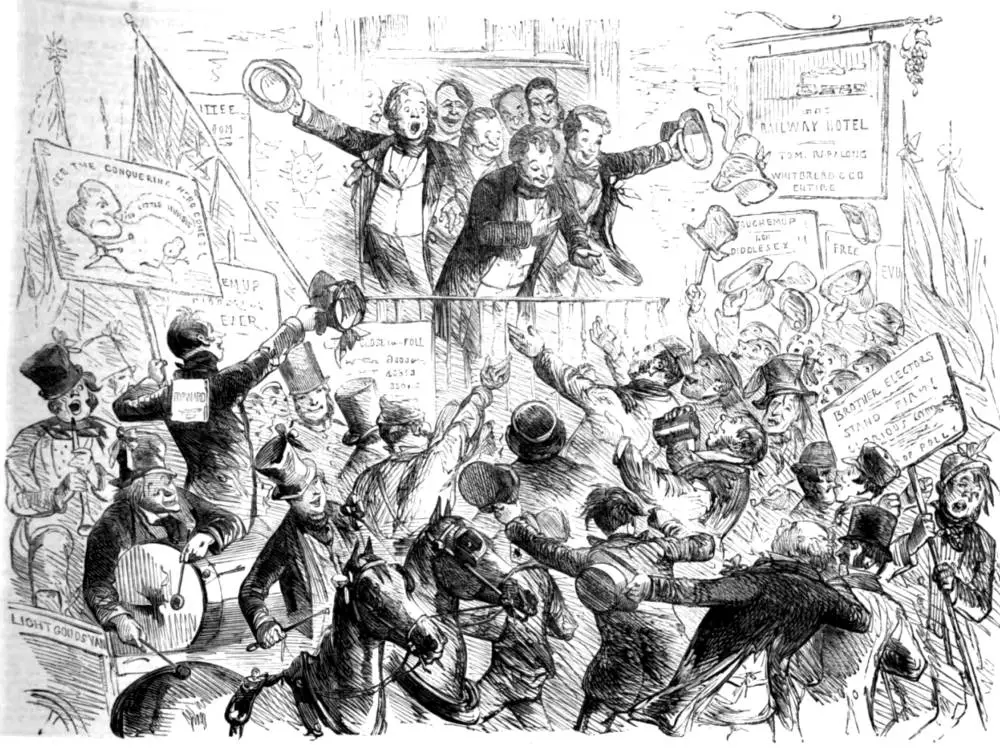
Their Mobs & Our Protests

In Uncategorized on March 15, 2024 by kmflett

Their Mobs & Our Protests

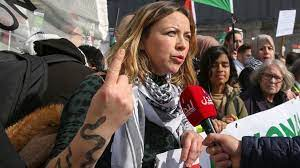
The right-wing media is full of bellicose Tories including the Prime Minister saying that Palestinian protests are ‘aggressive mobs’ that are apparently threatening democracy. Yet more measures are planned to ‘crack down’ on protest, except for ones that the Tories support such as farmers of course

Before she was sacked as Home Secretary Suella Braverman said Palestinian protests were ‘hate marches’ and protesters an ‘intimidating mob’, which is also what the reactionary thinker Edmund Burke said about the French Revolution. She then summoned up far right and fascist groups who duly appeared and attacked police at the Cenotaph on Armistice Day.

Meanwhile crowds of many hundreds of thousands have continued to march peacefully calling for a ceasefire in Gaza in central London.

Historically speaking, not a phrase likely to be found on the lips of Braverman or Sunak, one person’s mob is another person’s crowd

For example protesting outside the house of someone who has transgressed many people’s understanding of what might be termed a ‘moral economy’ is a British tradition stretching back over many centuries. It was not however by any means always politically progressive, so controversy over it is also something not recent. An anti-war crowd was to be found protesting outside President Biden’s private house recently reflecting deep tensions being caused by Gaza in the US.

As the great historian of nineteenth century protest George Rude underlined what reactionaries thought was a mob was in many cases simply a peaceful crowd making reasonable points. If one wants to look for a mob, the activities of the Bullingdon Club are a good place to start.

While George Rude saw in protests, up to and including riots, the work of the crowd, with broadly progressive intentions and outcomes, E.P. Thompson was less happy with this formulation. He suggested that riots could also contain reactionary elements and the crowd involved in the Gordon Riots in 1780 would be an obvious example.

Thompson’s work on food riots points to the reality that the threat of a protest was often more effective than an actual riot. It could cause a reduction in the price of bread or the distribution of hoarded food. When riots did, quite rarely, occur very much the same impact was to be found. Hidden food was seized and distributed at low price.

There were other, more obviously political riots, often associated with the Chartists in the 1840s. The Chartists were an organised political force that most certainly did not support riots. It was rather the wider Chartist crowd that participated in such activities, often after provocation from the authorities.

There has been a lot more research and wider perspectives on the crowd since Thompson and Rude looked at the matter in the 1960s and 1970s. Crowds are viewed from the perspective of safety risk management and from psychology as well as history.

Historical research however can provide useful context by looking at who the individuals involved in mob or crowd protests

This post first appeared in the Morning Star
Articles

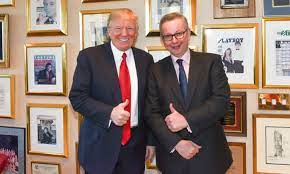
Michael Gove & Lenin

In Uncategorized on March 14, 2024 by kmflett


Michael Gove & Lenin

While I most frequently identify as a heterodox Trotskyist I have no problem with being called a Leninist (Victor Serge tendency). These are points for another post and another time.

Relevant to the moment is that Michael Gove who today pronounced on extremism in Parliament was and perhaps still is a fan of Lenin. I think it most unlikely that Gove’s understanding of Lenin and mine in anyway coincides and I certainly don’t regard him as an extremist in the sense  Gove is currently using the term. Indeed historically so distanced was a Tory Government from Lenin that Britain played a role in the White Armies that tried to overthrow the Russian Revolution after 1917.

So what is the Gove-Lenin connection?

The late Professor Norman Stone (Age) who specialised in modern history and in particular Eastern Europe, wrote a good deal about Lenin, far from all of it critical. An inveterate smoker Stone did however complain that the Sealed Train was the first ever non-smoking one.

Stone taught Dominic Cummings at Oxford and Cummings is also known to be a fan of Lenin. Not of course of his politics but of his leadership and organisational skills. Cummings was an advisor to Michael Gove, who has or had a bust of Lenin in his office

Perhaps Gove should put himself on his own little list

Articles

Michael Gove demonstrates practical example of extremism

In Uncategorized on March 14, 2024 by kmflett

Michael Gove has been speaking about extremism again. He gave a speech on 21st May where he identified those who disagree with his defence of the far right Israeli Government as extremists

He spoke on the Commons on Thursday 14th March 2023 about his little list of extremist organisations. It was all rather vague but he did find time during the day to argue that Frank Hester the businessman who has donated millions to the Tories had apologised for remarks made in 2019 and therefore was not an extremist. One of the remarks appears to have been that the MP for Hackney North Diane Abbott should be shot.

This all seems quite extreme until we grasp that Gove thinks Donald Trump is a perfectly normal politician.

Articles

Allison Pearson(Telegraph) now says her call on X for a military coup was a ‘sort of joke’- Reggie Perrin did the joke much better. The Forces of Anarchy From Communists, Maoists, Trotskyists, neo-Trotskyists, crypto-Trotskyists, union leaders, Communist union leaders to long haired weirdos…

In Uncategorized on March 14, 2024 by kmflett

From the Rise & Fall of Reginald Perrin. Written by David Nobbs

The full list was:

 ‘wreckers of law and order. Communists, Maoists, Trotskyists, neo-Trotskyists, crypto-Trotskyists, union leaders, Communist union leaders, atheists, agnostics, long-haired weirdos, short-haired weirdos, vandals, hooligans, football supporters, namby-pamby probation officers, rapists, papists, papist rapists, foreign surgeons – headshrinkers, who ought to be locked up, Wedgwood Benn, keg bitter, punk rock, glue-sniffers’

The late Leonard Rossiter played Reggie Perrin and in the clip listens with understated sarcasm to the kind of list of the Woke which one might hear in 2025 aired on GB News or indeed on the Twitter account of far right Telegraph columnist who has called for a military coup (23rd July 2025)

Articles

Lee Anderson purged from the Carlton Club

In Uncategorized on March 13, 2024 by kmflett

The Carlton Club is a members only place in central London where membership starts at £1700 a year.Not anyone can be a member though. You have to be a Tory member and your application has to be put forward by two other Tory members.

The Club dates back to 1832 when it was started to sort out Tory organisation after the Tories lost the 1832 Election, the first after the Great Reform Act.

At some point after his Election in 2019 Lee Anderson became a member. On Monday 11th March he defected to ReformUK. I don’t expect there are many who read these posts who don’t already know that the Tories are vicious class warriors. Almost immediately on Anderson’s defection the Carlton Club Chairman Lord Young of Cookham wrote to him demanding that he resign from the Club forthwith. If he fails to do so he will be formally expelled on 26th March

Articles

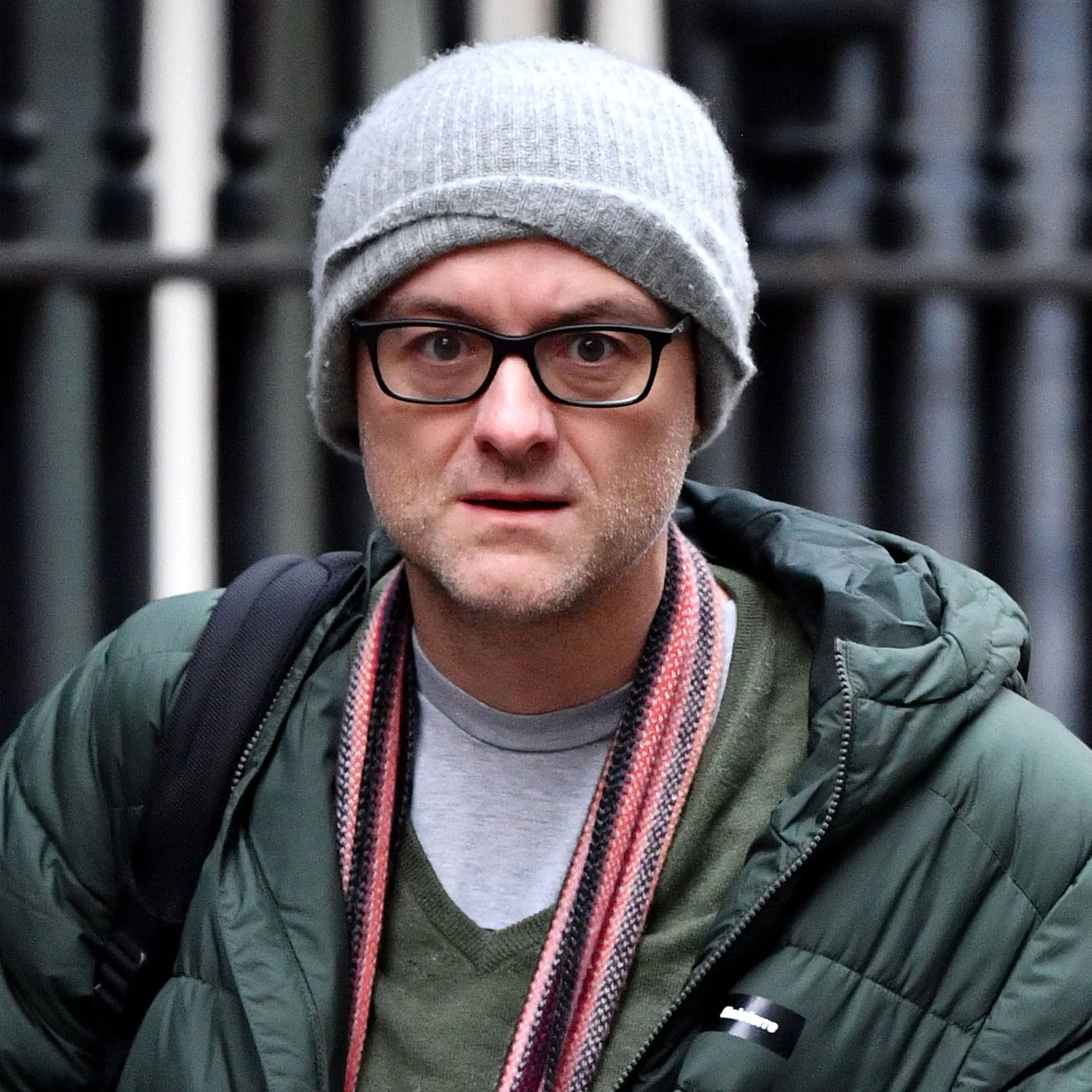
COVID Histories of the Present. Why wasn’t the Cheltenham Festival in 2020 cancelled? ‘Dom says ‘no’

In Uncategorized on March 13, 2024 by kmflett

The Cheltenham Festival is underway again this week, and will be enjoyed by many albeit the price of a pint of Guinness is up to £7.80. Five years ago this week however it went ahead despite concerns that it would lead to the spread of COVID19.

The various inquiries into how the pandemic was dealt with by Governments of the four UK Nations have thrown up interesting and often concerning details. The Welsh inquiry in particular added some useful detail.

Boris Johnson announced a national lockdown on Monday 23rd March. Many thought that this was a week too late and led to more COVID cases. In reality football matches were already being cancelled and a rugby match between Wales and Scotland in Cardiff on 13th March was called off.

Yet Cheltenham went ahead as did, in Wales, Stereophonic gigs on 14th and 15th March.

BBC Report 13th March

At the Inquiry Welsh FM Mark Drakeford has explained why such events were not officially called off. The answer in short was because Dominic Cummings vetoed the plan:

Recalling a Cobra meeting on 12 March, Drakeford says Johnson said “Dom says no” when the prospect of cancelling mass gatherings was discussed.

Calling off mass gatherings was widely regarded by scientific advisers as the hardest intervention to call, especially outdoor ones.

Drakeford says he thought they were an unwelcome distraction for emergency services and worried about the contradiction around public messaging.

The Cheltenham Festival was in its third day while this meeting took place, while Stereophonics played two shows in Cardiff on 14 and 15 March.

“I argued at this Cobra meeting for us to agree that mass gatherings should not go ahead. I argued as strongly as I could,” Drakeford says.

He says Johnson went around the room taking views from anyone who wanted to contribute.

Mr Drakeford says he had a vivid memory of the discussion because having gone around the table, the prime minister summed up against that course of action by saying “Dom says no”.

“I didn’t know who Dom (Dominic Cummings, the PM’s then chief political adviser) was at this point,” Drakeford says.

Articles

Camberwell 13th March 1848. Mobs, Riots & Protests. The complexities of history

In Uncategorized on March 13, 2024 by kmflett

Camberwell 13th March 1848: Mobs, Riots and Protests. The complexities of history

In the Culture Wars peaceful protesters are often described in right-wing media as a mob. Historically there are complexities..

One example is the riot that took place in Camberwell South London on 13 March 1848.


Its start was at a Chartist rally on Kennington Common convened by the radical journalist and novelist GWM Reynolds.


It would be fair to say that the authorities were anxious about what was likely to happen. The army was held in reserve and 3,881 police were mobilised.

At the time the meeting was due to commence-midday- 400-500 people left the Common on a signal which was given by ‘raising a Pole’. Twitter let alone BlueSky and WhatsApp had not yet been invented


It was reported that the crowd took a route involving the ‘most unfrequented byeways’ to avoid the police. When they reached Bowyer Lane in Camberwell they started to attack small shopkeepers ,breaking windows, forcing shutters and carrying off goods. Shops looted in Camberwell included a pawnbrokers, shoemakers, tailors, bakers. The looters were armed with ‘sticks of all descriptions’ and palings.

David Goodway in his book on London Chartism reports that a shoemaker argued that ‘I am a poor man..no maker of laws’. 50 of 60 people passed by but the main crowd smashed his shop front and took 162 pairs of boots worth £35.16s.

The main effort of the looters was reserved for a pawnbroker. Shutters and doors were attacked with hammers and shovels to cries of ‘Hurrah for Liberty’. Watches were thrown out the crowd and the estimated loss was £900 worth of timepieces and rings.

The entire thing lasted an hour and nine arrests were made. However a number of rioters were later identified by locals and 25 people were brought to trial in April 1848. Of these several were black Londoners. Ten were aged twenty or over while there three were just thirteen.

The majority of those arrested had trades. Occupations included labourers, seamen, a fishmonger, brickmaker, printer, tailor and shoemaker.

The Camberwell riot could be seen, and in modern coverage probably would be, as opportunists taking advantage of a Chartist gathering and the significant deployment of police it attracted to loot an unprotected nearby area.

Yet when we note that the key shop looted was a pawnbrokers and the political cries of liberty were raised we can see that such a view would be simplistic. It was largely seen at the time as a Chartist riot and as Goodway notes it contributed quite significantly to the way the authorities and official society reacted to the Chartist rally again on Kennington Common less than a month later on Monday 10 April 1848. That rally was one of the biggest in the Capital in the nineteenth century.

The conclusion is that historically attempts to find some easy division between rioters and protesters is a matter fraught with difficulty.

A fuller account has been posted by Past Tense

Articles

Michael Gove,Extremism & the case of William Blake’s Beast & Whore

In Uncategorized on March 12, 2024 by kmflett

Michael Gove, Extremism & the case of William Blake’s Beast & Whore

Michael Gove has apparently been compiling a little list of people and organisations that he considers to be extremist. There is an episode of the Rise and Fall of Reginald Perrin that could have saved him the trouble.

Gove’s knowledge of British history is doubtful at best and it is worth reflecting that some of the most well-known figures in British history held minority and indeed what many would regard as extreme religious views. William Blake was certainly one.

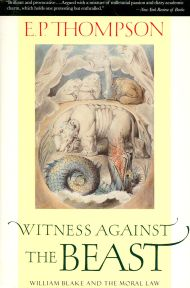
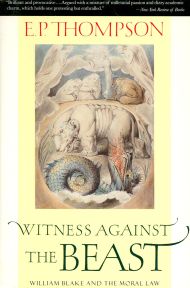
The late historian EP Thompson wrote extensively about Blake and the religious traditions he stood in. There is a review of his Witness Against the Beast from a Blake related website which gives a flavour in overview of what he was looking at:

http://bq.blakearchive.org/28.2.paley

In another age these minority traditions were perhaps better understood. The paperback edition of Thompson’s Making of the English Working Class was published as the 1000th Pelican book in September 1968. To mark the occasion the Guardian published a special supplement to which Thompson himself contributed a piece headlined ‘Beast and Whore’. In Blakeian terms the reference was to Church and State, but one wonders if mentions of Blake or exhibitions of his work could end up on Gove’s list

Articles

Lord Dave Cameron & Jeremy Clarkson model Spring 2024 styles

In Uncategorized on March 12, 2024 by kmflett

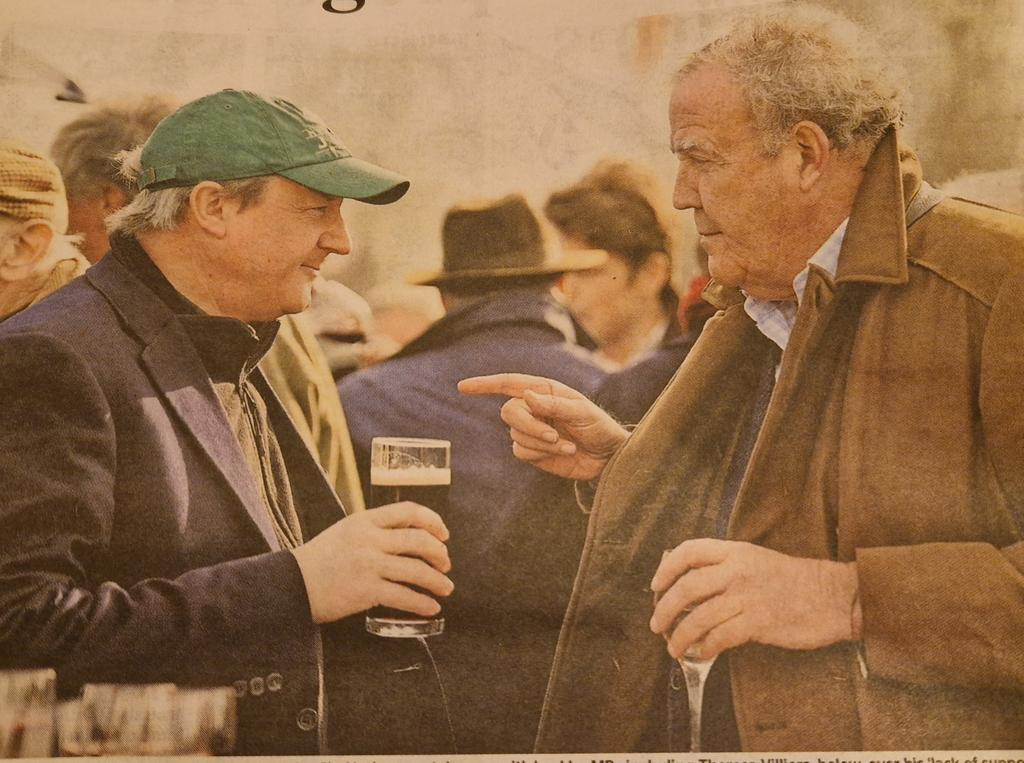
Lord Dave Cameron and Jeremy Clarkson pictured at Twickenham on 9th March (Times 11th March). Both are members of the Chipping Norton set (where they live).

Their guide to Gents styles for Spring 2024 clearly involves on Lord Dave’s part a baseball cap and in both cases layers of warm clothing. Lord Dave is drinking Guinness (who sponsor the rugby) while Jeremy Clarkson who has opened a brewery is obviously clutching a glass of wine, possibly of the fizzy variety.

Articles

Solidarity with Diane Abbott. To the Commons Speaker, the Invisible Woman: the battle for political inclusivity from the 1980s needs to be fought again

In Uncategorized on March 12, 2024 by kmflett

Diane Abbott: Solidarity from North London. The battle for political inclusivity of the 1980s needs to be fought again

When Diane Abbott was elected along with the late Bernie Grant for two adjoining North London Constituencies, my own of Tottenham and Hackney North and Stoke Newington, at the 1987 Election then Labour leader Neil Kinnock welcomed it as a significant advance for Labour’s ability to represent all sections of the electorate.

The apparent decision to deselect Diane Abbott as a Labour candidate by Executive diktat reflects a Party not going forward in its approach to diversity and equality but back to the bad old days when such matters were deliberately consigned to the margins.

Full marks on this occasion to the Guardian for exposing extreme racist remarks and threats to Ms Abbott by a major Tory donor. A Tory Minister, Mel Suit, has said in response that its time to ‘move on’. Rishi Sunak has argued that Hester’s racism was wrong but as he has apologised its ok now

Keir Starmer, so far, has condemned the abuse that Diane Abbott has suffered over decades but done nothing more, reflecting perhaps an unpleasant and sectarian aspect of his political personality. Perhaps though on this occasion he will feel able to show the generosity of solidarityand reinstate her as a Labour candidate.

At Prime Minister’s Questions on Wednesday 13th March, Diane Abbott was at the centre of discussion but despite numerous attempts was not called to speak by the Speaker. Not in 2024 political inclusivity but political invisibility

It suggests more than anything that the battles of the 1980s in terms of inclusive political representation need to be fought again, perhaps as William Morris noted by other people under other names, but it needs doing