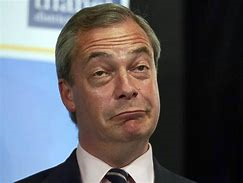
Do the Tories face electoral oblivion or will they morph into a hard right Faragist Party
Rishi Sunak won the Parliamentary vote to give his latest plan to send asylum seekers to Rwanda and it is now in the Lords. Only 11 Tories voted against and they did not include Lee Anderson. He had resigned as Tory Deputy Chair to vote against his own Government but in the end didn’t so because he said Labour MPs were sniggering at him
However the crisis for Sunak is just getting worse. He may be preoccupied with bomb out to help out Netanyahu but a YouGov poll showed the Tories would be reduced to a rump at the forthcoming Election. Sunak is the second unelected PM the Tories have had since 2019 and now some want a third. Hard right Tory MP Simon Clarke has called in the Telegraph for Sunak to go
The crisis in the Tory Party which saw Johnson and Truss depart is intensifying
During the summer 2023 recess the Tories ran a series of weekly campaigns on issues like asylum seekers and crime. All ended up causing at least as many problems for the Tories as they did for the opposition.
The Tories remain at least 20% behind Labour in the polls and are badly split. Nadine Dorries resignation letter to Sunak was partly farcical but partly sharp in pointing to numerous Tory policy failures.
Meanwhile former Home Secretary Suella Braverman on the hard right of the Tories has renewed calls for Britain to withdraw from the European Convention on Human Rights.
In 2005 Geoffrey Wheatcroft wrote a book arguing that the Tory Party had reached the end of its historic existence. As the years since 2010 have unfortunately demonstrated he was wrong. However in a recent Guardian article he has returned to the point, arguably more persuasively.
The Tories as a party representing ruling class interests have been ‘shapeshifters’ pragmatically shifting positions and policies to fit the demands of the moment. So the Tories resisted demands for an extension to the vote with force at Peterloo in 1819 and in Parliament with the 1832 Reform Act. However in 1867 they passed a further Act extending the suffrage.
Likewise they were the party of the landed aristocracy but in 1846/7 repealed the Corn Laws because this was in the interest of the rising industrial manufacturing class. In much more recent times Tory leader Edward Heath took Britain into was is now the EU in the early 1970s. 50 years on the Tories are focused on Brexit and staying out of the EU.
The problem they have is that beyond making money for their mates and sometimes themselves they no longer have a coherent view of what a ruling class politics which can also win elections is. There have been five Tory leaders since 2015 each seemingly more incompetent than the last.
Boris Johnson personifies the crisis. He was not a supporter of Brexit and notoriously only became so not out of some great principle or understanding of ruling class interests but because it served his personal ambition to be Prime Minister.
However I don’t agree with Wheatcroft that it is certain that the Tory Party is finished as an absolute certainty.
There are several factors which might see it survive in some form.
The first is Labour. Despite huge majorities in 1997 and 2001 Blair while tinkering with reforms determined that his real focus was illegal wars. Then in the financial crash of 2008 Gordon Brown decided that the key thing was to save the market economy and in doing so ushered in an era of austerity. Unsurprisingly Labour votes declined significantly and the Tories who had looked finished made a return
Starmer of course has his own variant on this. If the Tories are busy making themselves redundant then perhaps the way forward is to move Labour into that space. His own version of the Great Moving Right Show. So hapless are the Tories at the moment that this strategy might work, if only briefly.
The Tories however might shapeshift again and move themselves further to the right still, around the racist politics of Suella Braverman, Lee Anderson and others. Nigel Farage and the Reform Party while a minority have the capacity perhaps to mobilise votes around such a grouping.
There is scope for a political reconfiguration on the hard right mirroring developments across the rest of Europe. Opposing it rather than joining in the Great Moving Right Show is essential.
There is speculation that after an election defeat Farage could emerge as the leader of a reconstituted hard to far right Tory Party. Perhaps but that would also mean the end of the existing Tory Party with various strands of ruling class strategies within it.
For the left while ousting the Tories electorally is important the real response to this is in workplaces and on the streets. Strikes and protests won’t win Starmer’s support but they can exert real political pressure from the bottom up