Tory Resignations & sackings from Geoffrey Howe to Suella Braverman. The influence of extra-Parliamentary protest & the significance of 13th November
On November 1st 1990 Geoffrey Howe resigned as Chancellor in Thatcher’s Tory Government. On 13th November 1990 he made a quite lengthy resignation speech in the Commons. He launched a wide ranging attack on how Thatcher was running the Government. In political folklore the speech is likened to be being savaged by a dead sheep. Even so the speech provoked a Tory leadership challenge and on 22nd November Thatcher resigned as Prime Minister and John Major took over.
Its easy to see that as a matter of Parliamentary politics but extra Parliamentary politics had a major say. Thatcher had abolished the old system of rates which funded local Councils and replaced it with the Poll Tax. It was widely unpopular and many (myself included) refused to pay. There were protests and demonstrations including a large one in central London on 31st March 1990 that became a minor riot. Howe some might say was pushing at an open door.
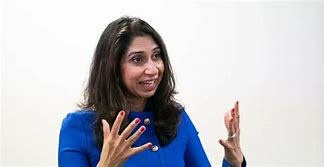
Fast forward 33 years to November 2023 and we find hard right Home Secretary Suella Braverman was sacked by Tory PM Sunak on 13th November. She had spent the previous week attacking the police and trying to get a march calling for a ceasefire in Gaza banned. In the process she provoked a mob of the hard right and fascists to attack the police in Whitehall on 11th November. The peaceful protest march attracted 800,000 people.
Braverman’s response to her sacking which typically appeared on X on 14th November claimed Sunak had broken a pact with her which had ensured he became Tory leader a year ago. It attacked his Premiership in a wide ranging way.
Braverman is a provocative speaker and writer, unlike Howe but the political parallels are there. A Tory Government and leader floundering not just because of internal political disagreements but also because of protests on the streets.