Truss resigned one year ago today. Is a comeback on the cards?
Liz Truss resigned as PM a year ago today, which means as the far right media site GBNews has pointed out, Rishi Sunak who was appointed by Tory MPs can be challenged as leader from next week.
Whether this will happen is as yet unclear. Various hard right Tory factions are proposing nostrums which they think will help the Tories do better after losing two By-Elections on Thursday. John Hayes from the self-styled Common Sense group of Tory MPs thinks migration and public order should be the focus. He is close to far right ranter Suella Braverman. Danny Kruger of the New Conservatives group thinks sex education in schools amongst other points is the way to restore Tory fortunes.
There is however nothing to stop Truss making a comeback(Johnson is not an MP after some dissembling issues). She remains a Tory candidate, since Sunak doesn’t have the authority to stop her, and she has been active promoting her agenda which can be summarised as growing the pie.
After the By-Elections is it really the end for the Tories?
The Tories lost two By-Elections on Thursday with swings to Labour similar to the period before 1997 when Labour won a landslide General Election victory.
The Tories remain around 20% behind Labour in the polls and are badly split.
Suella Braverman on the hard right of the Tories has renewed calls for Britain to withdraw from the European Convention on Human Rights. There is an issue with this however. She is the Home Secretary in a Government that does not at the moment support that.
Sunak has been Prime Minister for almost a year (Truss resigned on 20th October 2022) and can be challenged as leader of the Tory Party. Given how other worldly many Tories are a return of Truss or Johnson might not be entirely off the cards.
In 2005 Geoffrey Wheatcroft wrote a book arguing that the Tory Party had reached the end of its historic existence. As the years since 2010 have unfortunately demonstrated he was wrong. However in a recent Guardian article he has returned to the point, arguably more persuasively.
The Tories as a party representing ruling class interests have been ‘shapeshifters’ pragmatically shifting positions and policies to fit the demands of the moment. So the Tories resisted demands for an extension to the vote with force at Peterloo in 1819 and in Parliament with the 1832 Reform Act. However in 1867 they passed a further Act extending the suffrage.
Likewise they were the party of the landed aristocracy but in 1846/7 repealed the Corn Laws because this was in the interest of the rising industrial manufacturing class. In much more recent times Tory leader Edward Heath took Britain into was is now the EU in the early 1970s. 50 years on the Tories are focused on Brexit and staying out of the EU.
The problem they have is that beyond making money for their mates and sometimes themselves they no longer have a coherent view of what ruling class politics which can also win elections is. There have been five Tory leaders since 2015 each seemingly more incompetent than the last.
Boris Johnson personifies the crisis. He was not a supporter of Brexit and notoriously only became so not out of some great principle or understanding of ruling class interests but because it served his personal ambition to be Prime Minister.
However I don’t agree with Wheatcroft that it is certain that the Tory Party is finished as an absolute certainty.
There are several factors which might see it survive in some form.
The first is Labour. Despite huge majorities in 1997 and 2001 Blair while tinkering with reforms determined that his real focus was illegal wars. Then in the financial crash of 2008 Gordon Brown decided that the key thing was to save the market economy and in doing so ushered in an era of austerity. Unsurprisingly Labour votes declined significantly and the Tories who had looked finished made a return
Starmer of course has his own variant on this. If the Tories are busy making themselves redundant then perhaps the way forward is to move Labour into that space. His own version of the Great Moving Right Show. So hapless are the Tories at the moment that this strategy might work, if only briefly. As with Macron in France Labour might be voted in because few want the alternative but also not that many are enthused by Starmer and whatever policies he currently has.
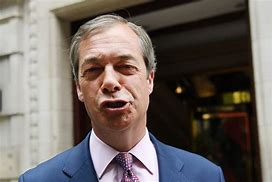
The Tories however might shapeshift again and move themselves further to the right still, around the racist politics of Suella Braverman, Lee Anderson and others. Nigel Farage and the Reform Party while a minority have the capacity perhaps to mobilise votes around such a grouping. When one looks at Governments across Europe and beyond there is clearly a trend here too.
In Tamworth parties of the far to fascist right- Reform UK, Britain First and UKIP got 9% of the vote
While the Tories political direction is not yet fully clear the Manchester conference suggested some pointers. Sunak stood alone fighting a self-declared war in defence of motorists and opening a pot holes hotline. The right is split between the New Conservatives Culture War promoters and Trussites. It’s a reflection of the state of the Tory Party that Truss’s fringe speech at the Conference was packed out. It contained the usual range of ideas not actually rooted in reality but significantly in the front row was to be found perpetual political grifter Nigel Farage. Truss was introduced by an operative from GBNews.
Somewhere in there is scope for a political reconfiguration on the hard right mirroring developments across the rest of Europe. Opposing it rather than joining in the Great Moving Right Show is essential.
There is speculation that after an election defeat Farage could emerge as the leader of a reconstituted hard to far right Tory Party. Perhaps but that would also mean the end of the existing Tory Party with various strands of ruling class strategies within it. Tamworth is an historic victory of Labour but also a warning about where Tories in defeat might go if not stopped.
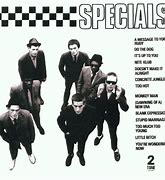
Memoir of the release of the Specials first album 19th October 1979. Rumours of an anti-racist band in Worcester
Its 45 years since the release of the Specials first LP and its fair to say that it came out of a culture but also helped to create that culture.
From September 1978 until June 1979 I was living in Worcester and Birmingham studying for a PGCE a post-graduate teaching qualification. I duly qualified as a sociology teacher but in the meantime in May 1979 Mrs Thatcher had been elected and the demand for such subjects became limited, or cancelled as would be said in 2024.
While in Worcester and Birmingham I became aware of a band called the Specials. They came from Coventry but played gigs across the West Midlands. They had a hit with a single Gangsters as the Specials aka.
The small group of Anti-Nazi League and Rock Against Racism supporters in Worcester of which I was one wondered who they were. We gathered they were anti-racists but in the pre-interweb days information on the band was scant.
They clearly came out of the culture RAR had created- we are black, we are white we are dynamite- but they had also been an important part of the growth of that culture.
The first record underlined the point, but it’s a reminder about the informal, grassroots West Midlands culture it came out of.
Carlsberg Marstons have signed a 10 year deal to supply the Stonegate pub company. Stonegate is the UK’s largest pub co with 4,500 pubs although it is trying to off load some of its non-branded estate.
Carlsberg Marstons will now supply keg and cask to Stonegate, which suggests at best that it will be mainly if not entirely their products to be found in Stonegate pubs.
The positive side of the story is that 100 jobs will be created in a unionised employer.
The downside is a reminder that market capitalism is relentless. The Beer Orders under Thatcher were designed to limit the pub estates of larger breweries and hence promote competition and choice in pubs. That is where pub companies come from.
Now of course Carlsberg Marstons don’t actually own Stonegate, and legally cant. But it will be their products you’ll find on the bar, including no doubt a guest beer where there is one..
In September 1874 Engels was on holiday in Jersey while Marx was taking a spring water cure in Karlsbad.
Writing to Adolph Sorge on 17th September 1874 Engels noted:
the respectability of travellers to Jersey seems to decline each year, an observation, incidentally which we also made in Ramsgate, where no one complained about it more bitterly than the wretched barber who cut our hair so short last April.
Engels signed the letter ‘General’ his well known military pseudonym. Aside from barbers and haircuts the comment was probably about the rise in railways and cheaper travel for plebeians.
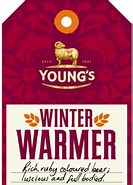
The 2023 version of Young’s Winter Warmer is released on 27th October with a launch at two Young’s pubs, Leadenhall in the City of London and Richmond. It will presumably be available in Young’s somewhat reduced pub estate.
Where it is brewed remains remarkably difficult to establish, beyond it not of course being its original home of Wandsworth. When Youngs ceased brewing, it moved to Bedford and was brewed by Charles Wells who in turn were swallowed up by what is now Marstons-Carlsberg. They sold the brewery and Youngs now seems to be brewed at Ringwood which MC have also put up for sale.
Winter Warmer has at least survived another year and it is a great London tradition albeit as Young’s note in the 2023 publicity one they invented in 1971.
The beer style itself is much older and I remember drinking Winter Warmer on gravity from a wooden cask on the bar at the Spreadeagle in Camden Town in the 1970s. In those long ago times the idea that the beer might be cooled was not a feature,and no doubt it wasnt always in the best condition.
However at 5% Winter Warmer was the second strongest beer then regularly available in London (the strongest was Fullers ESB at 5.5%-invented 1955 btw) and so one didn’t complain.
Will the 2023 Winter Warmer stand up to earlier versions? Once I track it down I’ll update this post
Nineteenth Century radicals promoted really useful knowledge as opposed to the useful, or really useless, knowledge promoted by Governments. Really useful knowledge looked at how society really worked, for example on the relaton between labour and capital, where profits came from, and how much wealth workers produced.
October 20th marks the anniversary of Liz Truss’s 44 day Premiership and today’s inflation figures remind us not only that a cost of living crisis is still very much with this.
Headline inflation which the Tories say should be falling is stuck at 6.7%. The reason for this is not wage rises but an increase in petrol prices which given events are likely to continue to rise further.
Food inflation is at 12%. Media coverage notes that prices are falling in the supermarket. That is really useless knowledge. In fact prices are not going up quite as much. Anyone who has got a 12% pay rise recently may be content…
Spectator is right on Steve Bell’s sacking: the future of political cartooning is at stake
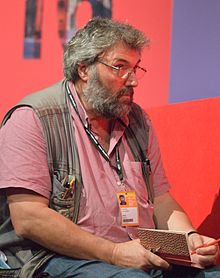
I don’t have much in common with the right-wing Spectator magazine or its Editor Fraser Nelson. I think we once reached a concurrence on the importance of beards (he doesn’t have one). That doesn’t mean to say though that I don’t have a look at what it publishes from time to time.
Nelson has published a piece on the decision of the Guardian to sack cartoonist Steve Bell.
Its useful in the sense that it makes it clear why the Guardian, or someone employed by the paper, misrepresented the cartoon that led to Bell’s sacking.
It also makes two wider points. Firstly that in the age of social media, pile ons by often (but not always) reactionary groups often lead to risk adverse policies being adopted by papers. How this can be dealt with remains an open question, although in this case sacking Bell was wrong the answer.
Nelson also makes the point that Bell’s sacking places the whole art of political cartooning at risk. The tradition is often acerbic and may offend to make sharply political points. Its part of a democratic political culture now under threat
Braverman says Palestinian protest was an ‘intimidating mob’, also what Edmund Burke said about the French Revolution
Suella Braverman has been on X again parading her ignorant but always robustly made views.
On this occasion echoing what reactionary thinker Edmund Burke said about the French Revolution she has determined that those who marched in support of Palestine in London were an ‘intimidating mob’. She continues over several posts with some thoughts on the history of the Middle East. Suffice to say you will wish you were better informed if you read them.
Historically speaking, not a phrase likely to be found on Braverman’s lips, one person’s mob is another person’s crowd
For example protesting outside the house of someone who has transgressed many people’s understanding of what might be termed a ‘moral economy’ is a British tradition stretching back over many centuries. It was not however by any means always politically progressive, so controversy over it is also something not recent.
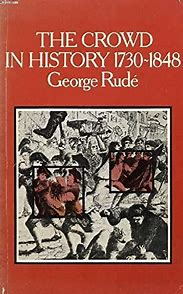
The use of the term mob to characterise popular protest dates back at least to Edmund Burke’s view of the French Revolution. As the great historian of nineteenth century protest George Rude underlined what reactionaries thought was a mob was in many cases simply a peaceful crowd making reasonable points. If one wants to look for a mob, the activities of the Bullingdon Club are a good place to start.
While George Rude saw in a protest up to a riot the work of the crowd, and broadly progressive intentions and outcomes, E.P. Thompson was less happy with this formulation. He suggested that riots could also contain reactionary elements and the crowd involved in the Gordon Riots would be an obvious example.
I would take Thompson’s side in that debate (if only just) but underline the point above that while we may accept that there may be reactionary elements in crowds which can get involved in riots this doesn’t alter the fact that they happen and need to be understood
E.P. Thompson’s work on food riots points to the reality that the threat of a riot was often more effective than an actual riot. It could cause a reduction in the price of bread or the distribution of hoarded food. When riots did occur very much the same impact was to be found. Hidden food was seized and distributed at low price.
There were other, more obviously political riots, often associated with the Chartists. The Chartists were an organised political force that most certainly did not support riots. It was rather the wider Chartist crowd that participated in such activities, often after provocation from the authorities.
There has been a lot more research and wider perspectives on the crowd since Thompson and Rude looked at the matter in the 1960s and 1970s. Crowds are looked at from the perspective of safety risk management and from psychology as well as history.
Historical research however can provide useful context by looking at who the individuals were involved in mob or crowd protests, what their intention was, how this turned out and what the reaction of authority was. Perhaps needless to say such research is limited because often the only people who can be identified are those who are arrested and any who make public statements about their activities.
Of course the democratic crowd will usually make it clear what it’s about so a lack of clarity may suggest a mob with less clear intent. The Palestinian protest in London made it perfectly clear what it was about even if Braverman didn’t like it. That’s democratic politics, something else Braverman doesn’t like
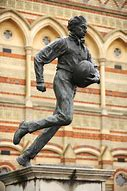
Tony Collins will look at the origins of the William Webb Ellis trophy currently being played for in the Rugby World Cup in France, and the class struggles behind its origins