Test Match Special continues to 2028: still a beacon of public service broadcasting
It was announced this week that the ECB have agreed that Test Match Special will retain right to cover domestic cricket until 2028
In a changing world with many commercial pressures TMS remains a beacon of public service broadcasting. Long may it remain so.
Below are some edited thoughts I wrote on TMS’s 60th anniversary in 2017 which explain at a bit greater length my thoughts.
Despite obviously being ancient I have not been listening since 1957. However my listening back pages do extend nearly that long.
My late father, a Scottish communist, was a keen cricket fan- the game is full of the unlikely- and a regular listener to TMS. I have memories from the mid-1960s particularly of listening on a portable radio during summer holidays.
The specificity is important. Until relatively recent years there wasn’t that much international cricket played during an English summer and so TMS broadcasts themselves were special. To be listening at 11am on the first morning of a Test was an occasion with much of interest expected. Much actually as it was on Friday 16th June 2023 for the first morning of the first Ashes Test of the summer.
I went on to become, amongst other things, a research historian so I’m careful about using memory, without other sources. I do of course recall John Arlott, partly because of his distinct voice, but also because he seemed to represent a distinctive small ‘l’ liberal approach to cricket, which I felt fitted better than more ‘Establishment’ based views.
The sadly departed Trevor Bailey, Brian Johnston and Fred Trueman also stick in the memory, as do, a little more recently CMJ and Tony Cozier.
In more recent times the number of TMS broadcasts has multiplied and, thankfully, the team now encompasses female as well as male commentators. The point being that TMS has moved with the times, it’s not stuck in a nostalgic past, though cricket has much to be nostalgic about.
TMS of course has a certain quirkiness to it and Beard Liberation Front comments have been an occasional feature for a good while. I was privileged on at least one occasion to speak to the late Bill Frindall a recipient of several BLF Awards.
Of course the BLF stuff is light hearted, but TMS mixes the less serious with the more so very well and the current presiding officer, Jonathan Agnew, is a master at this. His nemesis Geoffrey Boycott provided a counterweight, but the world and TMS has rightly moved on from that particular dialectic
In 2023 it can seem that 5 day cricket is an anachronism and a programme that broadcasts it for 5 days as much so. No doubt there is a view one might find at New Broadcasting House.
That is perhaps why it’s important to underline what TMS has brought to broadcasting and to the national culture more broadly. The chance to consider, reflect, laugh and sometimes feel sad over a period, rather than just the mood of the moment that is a not an unimportant aspect of how life now is with breaking news and so on. TMS suggests however that there is more to life.
Titchener: the past weighs like a nightmare on the brain of the living
Rob Titchener, rapist and attempted murderer, is back in the Archers. Apparently the official view is that he may be a changed man.
The Ambridge Socialist is a firm believer that people can change for the better, but when it comes to Tory Titchener, a rider to hounds and master of dodgy farming practices this is at best problematic.
Titchener now sounds like he is a candidate for the vicar at St Stephens. Another look in five years will allow time to judge that. Unfortunately we are probably going to hear more from him in the meantime, assuming he manages to survive Friday’s episode of the Archers.
In the meantime does anyone aside from Daily Telegraph Editorial writers and GBNews presenters think he has a point
Just say NO to the Macho Men of Borsetshire: Tom & Lee
After Tom and Lee’s visit to see Titchener and his brother Miles, where Lee whacked Titchener he has been charged with assault. He has accepted a community resolution order rather than a Court appearance but this depends on whether Titchener agrees, which he says does.
There is one person missing from this conversation: Helen. She is the person who suffered at the hands of Titchener and should be guiding what happens now (see lead). The Macho Men need to stand down
Home Farm crisis. Tectonic plates shift
Justin continues to work with Stella and has now successfully undermined Brian and in effect increased his authority with Borchester Land. If Home Farm has kept the contract but Damara Capital through Stella now has its person in effective control. A shifting of the tectonic plates in ruling class Ambridge seems to be underway.
Freddie Walks Out
For understandable reasons Freddie has quit his job at Lower Loxley and for equally understandable reasons has turned down a managerial position at Casey’s meat factory. Whether he can build a career as a DJ is another matter although it might be an interesting story turn..
Wage Stagnation, the Cost of Living & the Napoleonic Wars
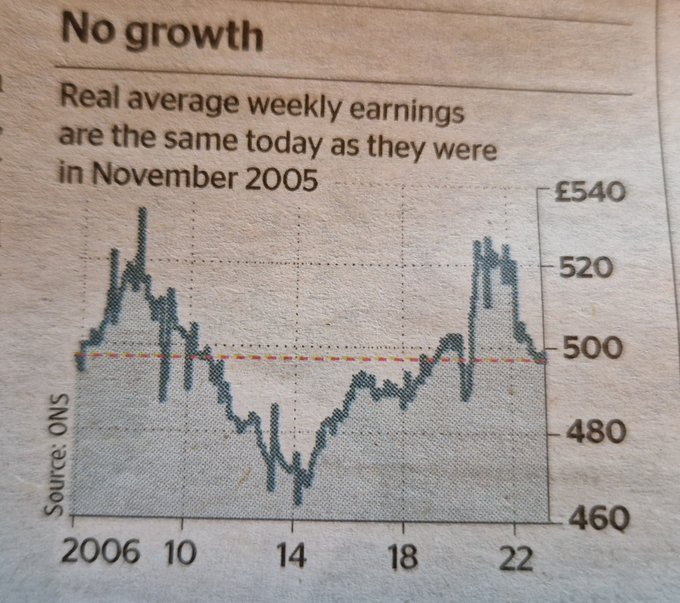
Figures from the ONS suggest that over the last twenty years wages have stagnated for the longest period since the Napoleonic Wars.
The Wars ran from 1803-1815 and the period after up to the Great Exhibition in 1851 have been the subject of considerable historical debate. Right wing economic historians argued that wages and the standard of living improved during this period. E P Thompson, in one of the less satisfactory parts of the Making of the English Working Class argued that far from all wages increased and that their wider issues, for example the intensity of the exploitation of labour, which simple statistics can’t effectively measure.
Average weekly pay is now no higher than it was in 2005. The ONS figures suggest that with inflation at 10% (food inflation is far higher) it wont be until the start of 2025 that real wages start to rise.
As with E P Thompson there is a wider conversation that needs to be had. Even where workers are winning wage rises through union action few exceed 10%. Meanwhile profit levels and the pay of bosses are not, in general, declining but increasing.
Its not just real term wage cuts that provoke anger but the knowledge that we are definitely not all in it together.
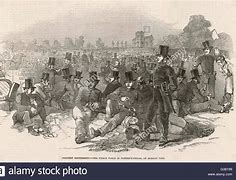
Rob Sewell’s new history of Chartism, rightly argues that while most historical studies have seen the Chartist rally for the vote on Kennington Common on Monday 10th April as a failure, the events of 12th June were more significant but usually meriting little more than a footnote.
As Sewell rightly notes the Chartist challenge of June 1848 was more serious than that of April and regarded as such by the authorities. The reason was because the Chartist agitation was not only geographically widespread but also on a broader basis.
At least in terms of London the State tried to mobilise the same forces that had been used in April, although considerable resistance was met from special constables.
The Chartists had seen April 10th as a failure in the sense that the plan to march to Parliament and present the petition was frustrated. A reorganisation had taken place during May, although without arguably, a total degree of clarity.
The motor for renewed agitation was the conviction of the Irish radical Mitchell towards the end of May. He was found guilty under the repressive Crown and Treason Felony Act and sentenced to 14 years transportation, initially to Bermuda and subsequently to Australia.
The verdict provoked nightly demonstrations in London from the end of May, which brought together Chartists and Irish Confederates. The numbers involved were sometimes considerable with reports of 80-90,000 marching in central London.
In Bradford the Chartists and Confederates engaged with the military and control of the city was in dispute for several days in early June. As The Times noted ‘if fighting with pluck and courage could make a revolution, then the Bradford Chartists ought to have succeeded’
A London rally was planned for Bishop Bonner’s Fields in East London on Monday 12th June. Feargus O’Connor was elsewhere in the country promoting the Chartist Land Plan on the day. It was very much a plan of the Chartist left who wanted to complete the work of April 10th.
What exactly completion meant is open to question. As expected the Commons had rejected the petition for the vote and ideas of appealing to the Queen were seen as futile. Perhaps some kind of plan for a rising was in place.
Certainly the Government took precautions on this basis while trying to avoid the alarm of April. All meetings were banned and the Chartists were clearly told that the East London meeting would be illegal.
The Chartist organiser on the day was McDouall who was certainly present on Bishop Bonner’s Fields. Considerable numbers of Chartists gathered in the environs, and the police presence only asserted itself after this had happened to avoid a confrontation for the space.
Even so no actual meeting took place. As the Northern Star (17th June 1848) reported a thunderstorm cleared the police from the field by which time most Chartists had also dispersed.
As with April 10th it was not the end of Chartist attempts at change in 1848 and the picture of what took place around the country is far from complete.
As a Times Editorial (2nd June 1848) noted of Chartism ‘the snake has been scotched not killed’
National Beard Week, Hirsute Personality 2023 vote
Beard Liberation Front
June 17th
Contact Keith Flett 07803 167266
The Beard Liberation Front, the informal network of beard wearers, has said that with Beard Week set to bristle off to a start on 19th June the vote is now open for the Hirsute Personality of the Year
The shortlist comprises well known beard wearers, focusing not just on their place in the public eye but the gravitas and impact their beard added to their public image and appearance.
Unlike the Beard of the Year in December, those on the short-list didn’t need to have a full-time beard. Rather they needed to have been in the public eye while hirsute. Neither is the contest about who has the ‘best’ beard.
The winner of the on-line poll which opened on 17th June is announced at the beginning of Beard Week 2023 on June 19th. Other Awards that feature during the week, designed to promote a positive image of beards, are the Beard Friendly Sandwich of the Year, Hirsute Broadcaster of the Year and the Beard Friendly Employer of the Year.
BLF Organiser Keith Flett We looked as ever for superb examples of hirsuteness in the public eye which also add gravitas. It means a beard plus presence equalling a maximum hirsute public impact
National Beard Week. Hirsute Personality 2023 vote
Marx Speech to a People’s Paper dinner 14th April 1856. History is the judge
The so-called revolutions of 1848 were but poor incidents — small fractures and fissures in the dry crust of European society. However, they denounced the abyss. Beneath the apparently solid surface, they betrayed oceans of liquid matter, only needing expansion to rend into fragments continents of hard rock. Noisily and confusedly they proclaimed the emancipation of the Proletarian, i.e. the secret of the 19th century, and of the revolution of that century.
That social revolution, it is true, was no novelty invented in 1848. Steam, electricity, and the self-acting mule were revolutionists of a rather more dangerous character than even citizens Barbés, Raspail and Blanqui. But, although the atmosphere in which we live, weighs upon every one with a 20,000 lb. force, do you feel it? No more than European society before 1848 felt the revolutionary atmosphere enveloping and pressing it from all sides. There is one great fact, characteristic of this our 19th century, a fact which no party dares deny.
On the one hand, there have started into life industrial and scientific forces, which no epoch of the former human history had ever suspected. On the other hand, there exist symptoms of decay, far surpassing the horrors recorded of the latter times of the Roman Empire. In our days, everything seems pregnant with its contrary: Machinery, gifted with the wonderful power of shortening and fructifying human labour, we behold starving and overworking it; The newfangled sources of wealth, by some strange weird spell, are turned into sources of want; The victories of art seem bought by the loss of character.
At the same pace that mankind masters nature, man seems to become enslaved to other men or to his own infamy. Even the pure light of science seems unable to shine but on the dark background of ignorance. All our invention and progress seem to result in endowing material forces with intellectual life, and in stultifying human life into a material force.
This antagonism between modern industry and science on the one hand, modern misery and dissolution on the other hand; this antagonism between the productive powers and the social relations of our epoch is a fact, palpable, overwhelming, and not to be controverted. Some parties may wail over it; others may wish to get rid of modern arts, in order to get rid of modern conflicts. Or they may imagine that so signal a progress in industry wants to be completed by as signal a regress in politics. On our part, we do not mistake the shape of the shrewd spirit that continues to mark all these contradictions. We know that to work well the newfangled forces of society, they only want to be mastered by newfangled men — and such are the working men. They are as much the invention of modern time as machinery itself.
In the signs that bewilder the middle class, the aristocracy and the poor prophets of regression, we do recognise our brave friend, Robin Goodfellow, [1] the old mole that can work in the earth so fast, that worthy pioneer — the Revolution. The English working men are the firstborn sons of modern industry. They will then, certainly, not be the last in aiding the social revolution produced by that industry, a revolution, which means the emancipation of their own class all over the world, which is as universal as capital-rule and wages-slavery. I know the heroic struggles the English working class have gone through since the middle of the last century — struggles less glorious, because they are shrouded in obscurity, and burked by the middleclass historian. To revenge the misdeeds of the ruling class, there existed in the middle ages, in Germany, a secret tribunal, called the “Vehmgericht.” [2] If a red cross was seen marked on a house, people knew that its owner was doomed by the “Vehm.” All the houses of Europe are now marked with the mysterious red cross.
History is the judge — its executioner, the proletarian.
Endnotes
Background On April 14 1856, Marx was invited as an official representative of the revolutionary refugees in London to a banquet commemorating the fourth anniversary of the Chartist People’s Paper. He used the occassion to demonstrate the internationalist solidarity that united the proletarian revolutionaries, among whom he had established himself as the outstanding leader, with the revolutionary wing of the Chartist movement, and show that in contrast to the French and German petty-bourgeois democrats, who were merely flirting with the Chartist leaders, the German communists were true allies of the Chartists, sharing with them the aim of achieving the rule of the working class in all countries (for more on this, see Marx’s letter to Engels of April 16, 1856). In his address (he was the first speaker) Marx concentrated on the historic role of the proletariat. The banquet was also addressed by another representative of the German communists, Wilhelm Pieper. The other speakers were mostly Chartists (James Finlen, Ernest Jones and others).
Marx did not intend to publish his speech. It was, however, included in the newspaper report under the heading: “Fourth Anniversary Banquet of The People’s Paper.” The following text preceded the speech:
“On Monday last at the Bell Hotel, Strand, Ernest Jones entertained the compositors of The People’s Paper and the other gentlemen connected with its office, at a supper, which was joined by a large number of the leading Democrats of England, France and Germany now in London. The entertainment was of the choicest description, and reflected the greatest credit on the enterprising proprietor of the Hotel, Mr. Hunter; the choicest viands and condiments of the season being supplied in profusion. The tables were well filled with a numerous company of both sexes, Ernest Jones occupying the chair, and Mr. Fowley, manager of The People’s Paper office, the vice-chair. The banquet commenced at seven, and at nine o’clock the cloth was cleared, when a series of sentiments was given from the chair.
“The Chairman then proposed the toast: ‘The proletarians of Europe’, which was responded to by Dr. Marx as follows:”
1. A character in Shakespeare’s A Midsummer Night’s Dream.
2. The Vehmgericht, derived from Vehme (judgment, punishment) and Gericht (court), was a secret tribunal which exercised great power in Westphalia from the end of the twelfth to the middle of the sixteenth century.
Titchener: the past weighs like a nightmare on the brain of the living
Rob Titchener, rapist and attempted murderer, is back in the Archers. Apparently the official view is that he may be a changed man (Sunday Times 11th June).
The Ambridge Socialist is a firm believer that people can change for the better, but when it comes to Tory Titchener, a rider to hounds and master of dodgy farming practices this is at best problematic.
Titchener now sounds like he is a candidate for the vicar at St Stephens. Another look in five years will allow time to judge that. Unfortunately we are probably going to hear more from him in the meantime, assuming he manages to survive Friday’s episode of the Archers.
In the meantime does anyone aside from Daily Telegraph Editorial writers and GBNews presenters think he has a point
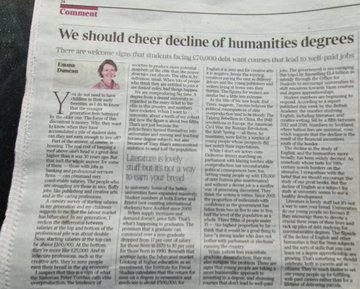
I have several degrees but my first is in Humanities. According to Emma Duncan (Times 16th June 2023) there are too many Humanities degree holders and not enough jobs for them. She is forgetting of course the multi-million pounds arts and entertainments industries, although according to her these are not well paid enough (this may well be true particularly where non-unionised).
Unsurprisingly Sunak and the Tories agree and are now looking Gradgrind like to grade degrees on a metric that will determine how much ‘value’ they add
Duncan and Sunak seems curiously( and probably deliberatley) ignorant of the point that while the subject of your degree has significance it is the process of learning and education that counts as much. Hence when I got a job after graduating in the late 1970s it was with Post Office Telecoms. They took the view that managers could put their hand to most things with the benefit of a degree. In due course, based on in-house training and experience, I became an executive engineer a technical role entirely unrelated to the subject of my degree.
Further while the job could always be better paid it currently pays well above the average wage.
Duncan argues that a new book by Peter Turchin demonstrates that the revolutions of 1848 and 1917 (for example) were caused by the reality that there were too many young people and not enough jobs. While this is an interesting theory it probably requires some further research.
Duncan goes on to suggest that there are just too many graduates nowadays and students should confine themselves to doing vocational degrees which lead to specific jobs (not in the humanities).
In my view education is a good thing itself and a liberal education- which is what Duncan is arguing against- is mark of a decent society. But then this is in the Murdoch Times so what would you expect?
The Beard Liberation Front, the informal network of beard wearers, has said that Moeen Ali, the current Beard of the Year, is crucial to England’s chances in the first Ashes Test against Australia
The campaigners say that the Australians have folk memories of Mike Brearley’s full organic beard on the 1979/80 Ashes tour and live in fear of hirsute England players.
Even at this stage Moeen needs to be wary of Australian dirty tricks similar to the ones the CIA tried in the 1960s to try and get rid of Fidel Castro’s beard. In particular the BLF says Moeen should avoid any cigars (potential to singe the beard) and make sure that his cricket kit is not tampered with to introduce any anti-facial hair preparations
BLF organiser Keith Flett said, the Ashes is sport at its most competitive and the Aussies fear the beard
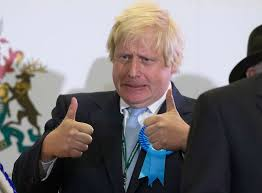
From The Guardian to Dawn Butler MP, those who called out Johnson as a liar
Well before today’s Privileges Committee report many will have realised that Boris Johnson was and is a liar. However not so many were prepared to say so on the public record
On 22nd July 2021 Labour MP Dawn Butler called Boris Johnson a liar. She was booted from the House of Commons for the day but it was a badge of honour. Labour MPs didn’t exactly seem to be rushing to her support in some cases but Angela Rayner did so on Twitter.
The issue of Johnson’s lack of a relationship with the truth has a long history.
Indeed when he bid successfully to become London Mayor in 2008 the Guardian ran a series of articles correctly pointing out that he was unfit for Office.
Polly Toynbee described him as a ‘jester, serial liar and self-absorbed sociopath’ (Guardian 17th July 2007)
Given that Johnson’s relationship with reality was known its time for those who decided that he would make a good Prime Minister in December 2019 to reflect on why they made that choice and what the result was.