Articles

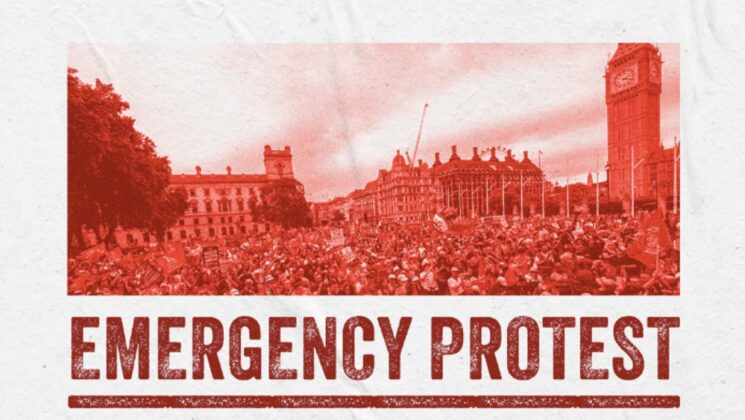
The Tories & trade union law. Back to the 1870s? Protest May 22nd 6pm Parliament Square

In Uncategorized on May 19, 2023 by kmflett

The Tories & trade union law. Back to the 1870s? Protest 22nd May

When she was still a contender for the Tory leadership in July 2022 Liz Truss threatened to further restrict the activities of trade unions, an enduring obsession of the Thatcherite right.

The detail was inevitably lacking but Truss wanted ‘minimum service levels’ where public sector workers have balloted for a legal strike. The implications of this were and are deeply concerning even if probably not fully thought through now they have been adopted by Truss’s successor Sunak.

RMT leader Mick Lynch writing in the Daily Mirror argued that the Tories want to go back to 1871 the date of the Act that legalised trade unions. Then TUC General Secretary Frances O’Grady warned of a fundamental attack on the right to organise and an assault on democracy as understood across Europe. New GS Paul Nowak has underlined the point.

The Tories can be forced to think again but not without significant campaigning pressure to defend existing trade union rights.

It’s worth looking at what the changes were to trade union law in the years after the formation of the TUC in 1868 to understand a little of the detail of what the Tories plans might mean

In the mid-1860s there were a series of small scale inter-union disputes in Sheffield that however got media attention. A Royal Commission was set up in 1867 to look at the issue of unions. One craft union leader Robert Applegarth was a member. The majority of the Commission saw no reason to change matters- that is unions had no legal status. There were some in the labour movement who backed that. They preferred that the Government and the law kept entirely out of union affairs. In the 1870s with a relatively small State machine this was a possibility.

However it was the Minority of the Commission that won the day when the matter was debated in the Commons. The result was the 1871 Trade Union Act.

For the first time trade unions were recognised as existing in law. That meant for example that union funds now had legal protection against anyone seeking to make off with them- a not unknown issue. Other provisions had wider importance. Union activity including strikes could not be regarded as ‘restraint of trade’ meaning neither employers or scabs could pursue unions for damages.

Further union organisation could not be regarded as a conspiracy, a point going back to the Tolpuddle Martyrs 35 years before.

The 1871 Act was a key part of putting unions and union members on a legal footing but there was more to do.

The Conspiracy and Protection of Property Act 1875 addressed a further key issues in particular it made picketing in disputes legal. The Employers and Workmen Act also of 1875 made all disputes between employers and employees civil matters.

Previously under the Master and Servant Acts workers who left employment before the end of their contract could be pursued by the boss and fined or jailed. Thousands were even in the 1860s when the law was relaxed. This was a major step forward for ordinary workers.

Sunak’s proposals potentially look to transgress the principles of both the 1871 and 1875 Acts. If a worker who had voted to strike was told to work under a ‘minimum service’ law it’s proposed the Union would be found guilty if they refused. And if they did refuse the demand of their employer to work despite have legally voted not to would they then end up in a 2020s version of the Master and Servant Act, fined or jailed because they refused to do what the boss said.

Concerning times indeed and as Mick Lynch and others have said warranting the most robust of responses.

The TUC has called a protest on Monday 22nd May,6pm Parliament Square as the Tory Bill returns to Parliament

Articles

Grass Wars

In Uncategorized on May 19, 2023 by kmflett

This post is not about Keir Starmer’s plan to ban the smell of cannabis from reaching his apparently sensitive nostrils but something much more serious.

The Chelsea Flower Show is underway from May 22nd and ahead of the opening Grass Wars have broken out leading to an Editorial in The Times (18th May)

At issue is the subject of rewilding, long discussed and implemented in Ambridge but controversial elsewhere.

In particular Alan Titchmarsh,who is a senior figure in the Royal Horticultural Society which organises Chelsea, is concerned that rewilding is not proper gardening.

Titchmarsh is of the view that the 2022 winning garden at Chelsea which focused on rewilding was not actually gardening.

The point is that while rewilding in a large area can be beneficial in a domestic garden is just leads to an unruly mess. What is required is pruning and cutting and mowing.That is gardening interventions.

On the other hand (not mentioned by the Times) it is No Mow May, a campaign designed to persaude people not to cut their lawns to allow plants and flowers to grow to the benefit of bees, insects and birds (and possibly hedgehogs)

So which side are you on in the Chelsea Grass Wars Culture War?

Articles

The Coronation: a profit & loss balance sheet

In Uncategorized on May 19, 2023 by kmflett

This post appeared in the Morning Star. Following a seminar paper I gave at the Institute of Historical Research on May 15th this is one of a series that looks at the Coronation, its history,politics and impact on the present

The Coronation: a profit & loss balance sheet

Its been reported that the Coronation, which it might be remembered, has no formal purpose, cost £250million. King Charles is thought to have personal wealth of £1.8 billion, but did not contribute. Rather with the cost of living crisis in mind it was public money that was spent.

In return there was a ceremony of largely made up or reinvented traditions which at times looked more like a Monty Python sketch. Total TV viewing across all platforms were less than 20 million. The Queen’s funeral and jubilee in 2022 both got more viewers, as did her 1953 Coronation, when they were only 2.5 million TV sets.

Of course 20 million is still a substantial number although the UK population is around 67 million meaning the majority were for one reason or another otherwise engaged.

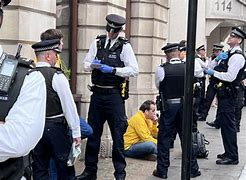
The crowds in London despite the traditional Coronation rain appeared substantial, although I haven’t seen a figure. Certainly the day passed off without incident except of course some bungling authoritarians in the police managed to arrest some anti-monarchy protesters for no particular reason. The police have spent the days since in a sorry, not sorry routine which might serve to remind the various politicians who have stated that the Met Police are not fit for purpose to do something about it.

Was the Coronation good for business? It will take a while to get reports on hospitality trading but even on the Bank Holiday Monday shops were reducing significant amounts of unsold Coronation items. The weathervane of such matters, the Wetherspoons pub chain reported that Saturday trading was quieter than usual.

The Coronation can be seen as a set of supposedly ancient rituals and traditions designed to underwrite the legitimacy of the current State- another Tory Culture War. The Archbishop of Canterbury Justin Welby was central to this. He was behind the idea of King Charles being anointed with a special oil behind a screen specially constructed for the purpose.

Unfortunately for the Tories just a few days later Welby was to be found in the Lords arguing against the Government’s Immigration Bill broadly on the grounds that it was not based on Christian principles. This led a series of Tory Ministers to attack Welby and claim that it was not the job of an Archbishop to speak out on moral issues. They seem to have forgotten that the Tories are the Party of Church and King. Indeed the mother of the magistrate who sent the yeomanry in at Peterloo, Hulton, had a horse named just that.

A few days later in what can only be seen as a godspeed moment it was revealed that Welby had been fined for speeding. Given that the offence took place in the autumn an operation to undermine his moral probity just a few days after the Coronation appeared to be in hand.

Meanwhile the arrest of protesters issue has also become more problematic. One of those arrested was Alice Thompson who was handcuffed and held for thirteen hours because she happened to be in the vicinity of Just Stop Oil protesters. She was however not a protester but someone described as a ‘Royal superfan’. The claim by the Head of the Metropolitan Police Mark Rowley that policing and arrests on the day of the Coronation was intelligence led can be seen for the lie that it was.

In short since the market judges everything in society the Coronation was a rather underwhelming performance.

If the pomp and circumstance of a Coronation was meant to distract from a cost of living crisis, it failed

Articles

London Fields Brewery to relaunch as Saint Monday. A reminder of the tradition

In Uncategorized on May 18, 2023 by kmflett

The beer writer Will Hawkes has posted on twitter some too rare good news about brewing and beer.

The small pubs group Graceland have acquired London Fields Brewery in Hackney from Carlsberg and plan to run it as a brewery and taproom known as Saint Monday.

Given the excellent beer pedigree of the group’s pubs as such as the Kings Arms E2 and the Axe N16 this is good news

But what is the name about?

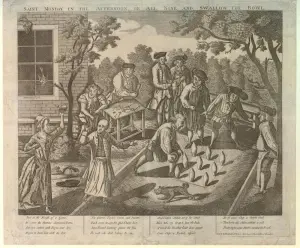
Until the 1871 Bank Holidays Act there was what was known as Saint Monday

The daily routines of working life are well-known and they date back to the imposition of industrial disciplines on what had been previously an agricultural workforce during the nineteenth century.

Labour was required to work machines and if it wasn’t available money was being lost.

There was a battle over hours and time (there still is of course) and artisanal and craft working practices were only slowly given up.

EP Thompson in the Making of the English Working Class records employers complaints about the working practices of weavers. They did not work on Sundays, or Mondays (Saint Monday) or often on Tuesdays either. Towards the end of the week and on to Saturday they worked ferociously hard.

Saint Monday was a day of leisure to rest and to drink.

Thompson speculates in his essay Time Work Discipline that bursts of hard work followed by periods of idleness and drinking, while not what employers want, may well conform to a much more natural working pattern than the daily grind of economic reality most now experience.

Articles

National Conservatism: Culture Wars, Class War & Racism

In Uncategorized on May 18, 2023 by kmflett

National Conservatism: Culture Wars, Class War & Racism

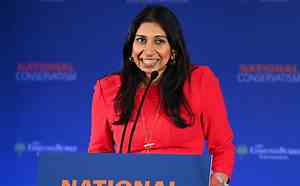
The National Conservatism Conference held this week in London was a gathering of hard to far right Tories. Sponsored by the US based Edmund Burke Foundation- which organises similar events elsewhere in the world- its heard from Suella Braverman, Jacob Rees Mogg, Michael Gove, Orban cheerleader and ex-revolutionary Communist Frank Furedi and Islamophobe Douglas Murray.

According to Melanie Philips (also a speaker) in the Times (16th May) it was nothing to do with fascism. Then again she’s not known affectionately as Mad Mel for nothing.

The Spectator recently ran an article speculating on how many would have collaborated with the Nazis if they had invaded Britain. Many at this conference are the modern day equivalent. Not fascists but they could co-exist with fascism.

Partly the Conference is about promoting Tory Culture Wars often oddly. Danny Kruger who is apparently a Tory MP attacked the dystopian John Lennon. Miriam Cates, also allegedly a Tory MP managed to fit in anti-Semitism and the Great Replacement theory. She is a Red Wall MP so her future, not in Parliament, is assured.

The Conference was also about who will lead the Tories after the Election. If Sunak wins, he will. Few at this conference think he will so it was about positioning of the right to lead- which was what Suella Braverman’s speech was all about.

The Conference is also about promoting racism because it’s a gathering of hard right Tories, so why wouldn’t they.

However underneath all this there is an undercurrent of a more significant debate, (not that the racism isn’t significant for those on the receiving end of it) which Andrew Gamble has written about in the New Statesman. Which is the way ahead for British capitalism?

Bashing workers and the less well-off obviously. But how far should tax cuts go? How small should the State be? What level of ‘legal migration’ is required to keep profits going? There is not agreement on the Tory right about these matters which makes it unfortunate at best that Labour is not promoting a robust and radical alternative.

That in part is why this conference has got so much coverage

Is it last orders for the Tory Party? Katy Balls in the Guardian (26th May)

https://www.theguardian.com/commentisfree/2023/may/25/party-skip-fire-tory-mps-had-it-team-johnson

In the 100 years since the first Labour Government took office in January 1924 Labour has been in Government for just 37 years.The Tories have been a very successful election winning party. Yet in 1997 they were reduced to165 seats (Labour 418. LibDems 46). With 10% of Tory MPs standing down at the next election another defeat of this scale may beckon. So also may 1992 when Labour lost under Kinnock. Can Labour aspire to replace the Tories as the natural party of Government? What does that mean and why did Blair fail to do it after 1997? There are questions of whether the Tories remain the representatives of capital or whether Labour is now positioning itself in this space, at least in part

Analysis and work in progress

Articles

Coronation arrests:’intelligence’ Do the Met Police ever wish they were better informed?

In Uncategorized on May 18, 2023 by kmflett

Coronation arrests: ‘Intelligence’. Do the Met Police ever wish they were better informed

On the day of the Coronation the Met Police arrested a number of protesters including several groups it has since, sort of, apologised too.

However it was clearly the source of a Mail on Sunday front page about how plans of protesters to disrupt the Coronation had been foiled. The Met’s media officer used to work for the Mail…

The Met claims it had intelligence on the matter. Clearly there are specialist units involved with countering genuine terrorist attacks that do have a good knowledge. More generally though a force which seems constantly surprised by the numbers of racists, misogynists, racists, rapists and murderers in its ranks doesn’t seem high on intelligence.

According to Sir Mark Rowley who heads the Met there was a ‘criminal network’ of protesters at work on Saturday (Times 10th May) he goes on to repeat the lie that rape alarms, handed out to vulnerable people in Westminster overnight by police approved wardens were going to be used to disrupt horses. In addition he claims there were plans to vandalise monuments and also repeats the lie that people had ‘possible lock on devices’

A Select Committee of MPs took evidence on the matter on 17th May. A senior officer the aptly named Matt Twist claimed the police had ‘intel’ that serious disruption to the Coronation was planned and that there had been no political interference beyond the obvious point that it should go off without interruption.

This could not explain and Twist did not explain why Met Police sponsored people handing out rape alarms overnight were arrested or how they came to arrest not a protester but a Royal superfan.

In short perhaps its time the Met owned up to wishing it was better informed.

Articles

Ascension Day: May 29th. The one religious festival Cromwell did not ban(for a reason..)

In Uncategorized on May 18, 2023 by kmflett

Ascension Day: May 29th– The one religious festival Cromwell did not ban

In the Christian Calendar Ascension Day takes place 40 days after Easter, in 2025 May 29th.

Christ is believed to have ascended to heaven and positive things happen as a result. The Archbishop of Canterbury’s twitter timeline has more on this.

From the 1640s to the Restoration of the monarchy in 1660 religious festivals generally were banned, particularly Christmas. Puritans believed that marking religious matters should be done every day and not the subject of ungodly celebration.

Yet according to Ronald Hutton (Stations of the Sun) Ascension Day largely survived the period of Parliamentary rule and associated drinking and feasting also took place. There was of course a pragmatic reason. What was being marked was most definitely not Christ’s ascension to heaven. Rather it was the annual marking of the boundaries of local parishes. This was an important matter in asserting property rights and as E P Thompson noted where villagers could graze animals on common land.

The levellers and diggers were for property being held in common. Cromwell, himself from a farming background was not.

Articles

An Economic NATO: the contradictions of Liz Truss

In Uncategorized on May 17, 2023 by kmflett

Liz Truss a leader and perhaps the leader of the Tory Revolutionary Party, whose mission is to disrupt capitalism and see what happens, is in Taiwan.

She has made a speech but is reportedly there for five days so this is really a holiday at the expense of the Taiwanese Government. Boris Johnson may be jealous, supposing that Taiwan is on his list of desirable locations.

In the speech Truss repeated her call for an Economic NATO. This of course is part of Truss’s general warmongering agenda but there is a wider context whether she appreciates it, or more likely doesnt.

NATO was formed after the Second World War and, as Keir Starmer often reminds us, Labour Foreign Secretary Ernie Bevin played a key role. Bevin was a cold war warrior but the logic of NATO is too little noted. It got the US on board to pay a good deal towards the defence of Europe (against Russia, also part of Europe) but in return the US got military bases in the UK and elsewhere in Europe.

Hence the socialist slogan neither Washington or Moscow.

In recent times the US, certainly Trump and now Biden, are looking for Europe to pay for its own defence. Biden is more interested in warmongering with China, particularly if a never ending war in Ukraine can keep Russia occupied. The US has persauded Germany to pay a good deal towards this and Britain is already by far the biggest European spender on military aid to Ukraine.

The EU has been actively talking about a ‘war economy’. Of course post-Brexit Britain is not part of that except in practice its leading it.

So an Economic NATO in effect already exists although not quite on the 1948 model as Europe is shouldering a good deal more of the cost. Armanents and the warfare state are central to modern capitalism.

Meanwhile Truss is posting pictures on Insta from Taiwan.

Articles

New Statesman Top 50 Most Powerful on British left underplays Beard Power

In Uncategorized on May 17, 2023 by kmflett

Beard Liberation Front

17th May

The New Statesman has published a list of what is claims are the Top 50 most powerful people on the British left. It is paywalled but suffice to say that Rachel Reeves is No.1 and Keir Starmer No.2

The good thing about it is the gender balance which might not have been the case in the past.

It must also be allowed that the New Statesman’s definition of ‘left’ is arguable. Is the Archbishop of Canterbury really a figure of the left for example and Tony Blair will always be a controversial choice.

However if we take it that the list represents at least a version of a Broad Church, of the kind currently out of fashion with the Labour leader one might expect at least most on it to sign up to campaigns to oppose, for example, racism and Tory Old Corruption.

There is however one area of particular concern to the Beard Liberation Front,which is that there are far too many clean shaven white men in suits on the list.

BLF researchers have identified only seven people on the list who might be classified as full time beard wearers:

Morgan MacSweeney

Humza Yousaf

James O’Brien

Jeremy Corbyn

Gary Lineker

Roger Hallam

Matthew Doyle

BLF Organiser Keith Flett said, the New Statesman list has only partly recognised the diversity of the modern left and has significantly underplayed the impact of Beard Power

Articles

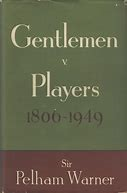
Class & Cricket: 60 years since the abolition of Gentlemen v Players

In Uncategorized on May 17, 2023 by kmflett

Class & Cricket: 60 years since the abolition of Gentlemen v Players

Limited overs or knock-out cricket in the UK is 60 years old this month. The Gillette Cup saw its first ever match played at the beginning of May 1963. The game was between Lancashire and Leicestershire and ended up lasting two days thanks to rain.

It was the sponsorship of Gillette that finally ended the distinction between the paid professional player and the supposedly unpaid amateur although divisions continued in various ways. In the wake of the abolition the cricketers trade union the PCA began for the first time to exert some genuine influence from the later 1960s.

The distinction seen by spectators prior to 1963 was that the professional cricketer, dressed in sober cricket clothes and the amateur, usually idiosyncratically dressed, entered the field of play via separate gates.

The divisions went much wider than that. The professional and the amateur used separate dressing rooms, and took their meals separately as well. Quite often the only time the professional and amateur cricketer, batting together on the field, would meet would be actually on that field.

At Lords and the Oval divisions went further. There were two dressing rooms for professionals. One for the more senior- and better paid- players and one for the rest.

The situation in the twentieth century up to 1945 continued in much the same way. The great England cricketer found that in order to become England captain he had to switch from professional to amateur status.  However social and economic trends were playing their part and the supply of amateur players was in decline by 1939.

After the end of the Second World War the game reluctantly dragged itself into new century, although in the first post-war season of 1946 all but one of the 17 County captains was an amateur. The great Yorkshire batsman Len Hutton, a professional, was appointed England captain in 1952.

As late as 1957/8 an MCC sub-committee concluded that amateurs had a valuable role in the game but the winds of change were blowing through cricket driven by declining attendance at County games.

In 1960 an MCC committee was chaired by Colonel Rait-Kerr and by December 1961 it had taken the decision to offer sponsorship to Gillette.

Gillette appointed Alan Campbell Johnson to negotiate with MCC Assistant Secretary Jim Dunbar

In November 1962 the Advisory County Cricket Committee accepted £6.5k from Gillette to sponsor one day cricket & abolished amateur status. The Times recorded that ‘cricket breaks with the past’.

The last Gentleman v Players game was held at Lords in 1962. The Gentlemen were captained by Ted Dexter, who stood as a Tory Parliamentary candidate in Cardiff. The Players were led by Fred Trueman, a former Yorkshire miner, also thought to be on the right of politics.

While Gillette had been sponsoring UK sport since the early 1950s, the move into such a high profile game as cricket, with its background of ruling class patronage required careful management.

The sponsorship was styled as a First Class Counties Knock-Out competition which was to be played for the Gillette Cup. Sponsorship for each game was limited to a Man of the Match Award of £50, a gold medal and a tie.

At this stage the commercialism was kept very much in the background.

The Gillette Cup marked the further rise of professional sport and the beginning of significant commercial sponsorship which is now a significant feature across sport.

In cricket terms the one-day game proved a huge crowd puller leading to the range of limited overs matches that are now a feature of the modern game.

Socialist History Seminar Monday 22nd May 5.30pm. Duncan Stone on Deconstructing the Gentleman Amateur: