Clocks have gone forward or back in Britain to mark summer or winter time for around a century. There are debates about how much daylight is lost or gained as a result and the impact of this and these continue.
Behind that however lies an industrial obsession with time and the market capitalist idea that time is money.
A common theme of the clocks going forward for summer is that those who are not working overnight will get one less hour in bed. The subtext there is perhaps whether an hour lost is necessarily such a bad idea.
After all from the 1880s the labour movement campaigned for the 8 hour working day, which is also meant 8 hours for recreation and 8 hours for rest.
EP Thompson’s Time, Work Discipline which appeared in Past and Present in 1967, remains a foundation text.
To give a brief flavour, he writes of ‘Smilesian snippets about humble men who by rising early and diligence, made good’. He continues that as workers secured reductions in working hours moralists became concerned that ‘manual workers after concluding their work were left with several hours in the day to be spent nearly as they please’.
So that one hour lost means that pub opening time is one hour nearer on a Sunday.
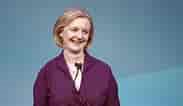
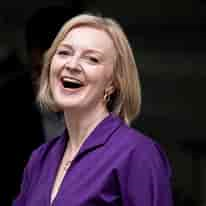
Liz Truss who was Prime Minister for 49 days last year but resigned after crashing the economy as relaunched her career as an after dinner speaker.
Truss didn’t seem to be in the top rank of orators during her PM days but Theresa May is earning good money as a speaker. Johnson of course has accrued millions making speeches but he at least is entertaining even if what he says is drivel at best.
Her Bio on Chartwell Speakers (extract and link below) does suggest that Truss still has the high level of political delusion she had while at No.10. It will be interesting to see if she gets bookings and from whom.
After leading the nation in mourning Her Late Majesty, Liz set about implementing her Plan for Growth, including a raft of tax cuts to kick-start economic growth, deregulation and reforms to boost productivity. However, she faced huge resistance from those who wanted to maintain the status quo and reached the conclusion that she could not deliver the mandate on which she had been elected and therefore stepped down.
She continues to serve as a Member of Parliament, drawing on her experience in government to contribute to national and international politics.
Liz Truss’s Honours List & William Cobbett’s Old Corruption
Liz Truss, who was Prime Minister for 49 days in the autumn of 2022, has drawn up a resignation honours list. It is much briefer than Johnson’s resignation list and was slipped out at the same time as New Year’s Honours to avoid scrutiny
Even so, and not unexpectedly, the names on the original list (nine months ago) reveal a high level of cronyism.
Before the 1832 Reform Act which started the long process of establishing the Parliamentary Democracy we know today, there existed what William Cobbett referred to as Old Corruption or ‘The Thing’.
In this pre-democratic political world advancement and honours were handed out not on the basis of merit but rather to reward someone for favours done.
The original names on Truss’s list appeared to fall very much within this framework:
Mark Littlewood, Head of the Institute of Economic Affairs, which provided the ideological basis for Truss’s efforts to crash the economy last autumn. The two have known each other since Oxford University days. His name was vetoed by the House of Lords Committee that checks if honours are appropriate
Matthew Elliott, CEO of Vote Leave, he founded the Taxpayers Alliance and worked for Truss before she became PM
Jon Moynihan, a prominent Brexiteer who gave £20,000 to Truss’s campaign to become Tory leader and PM
A few other hangers on and sycophants got lesser honours. Typically for the graceless Truss the one thing worthy of an honour from her brief reign of terror, the lettuce, got nothing
Truss thinks the above should sit in the House of Lords, and Sunak has eventually agreed, one good reason to hasten its abolition
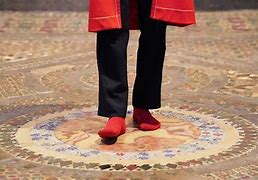
Westminster Abbey’s Mosaic Coronation floor. Another reinvented Royal tradition
The 700 year old Cosmati Pavement in Westminster Abbey made of rare marbles,gemstones and glass was commissioned by Henry 111 in 1268. It marks the exact spot where the coronations of Kings and Queens has taken place.
As often with Royal traditions there is a slight problem. The Pavement was covered by a carpet in the 1870s and only revealed again quite recently. The last coronation it can have featured in was that of Queen Victoria in June 1838.
It will however be used for the coronation of King Charles in May and after that for a limited period members of the public will be allowed to stand on it in their socks. £15 a time, socks extra. A new tradition has been born.
King Charles visit to organic Bordeaux vineyard stopped by a General Strike
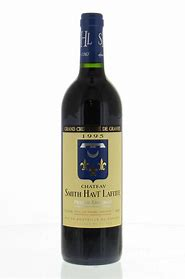
King Charles & Queen Camilla have postponed their visit to France due to mounting protests against President Macron’s attempt to force through changes to the State pension age. There was a General Strike on Thursday and another is planned for Tuesday when the King was due to visit Chateau Smith Haute Lafitte an organic Bordeaux vineyard.
Visits by the monarch to France are of course traditional but so also are General Strikes. Oliver Besancenot of the New Anti-Capitalist Party noted that the plan had been to greet King Charles with a ‘good old general strike’ (Times 22nd March). Mathieu Obry organiser of the French transport union in Bordeaux said there would be ‘big demonstrations and big blockades’.
King Charles and Queen Camilla will no longer be there to admire this French tradition. Whether Macron has to scrap his pension changes remains in the balance with protesters on the front foot
William Morris b 24 March 1834 on the aim of the rich to limit the right to protest
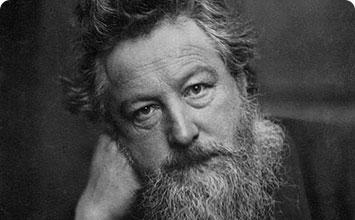
William Morris, the great socialist and beard wearer was born on 24th March 1834.
Morris and the late nineteenth century socialist movement had to fight for the democratic right to protest, just as the left does now in the face of new Government attempts to curtail or ban it. He recognised that the rich always aimed to restrict the right to protest which could challenge their wealth and rule:
William Morris remarked on the impatience of ’the more luxurious part of society’ to ’clear the streets of costermongers, organs, processions, and lecturers of all kinds, and make them a sort of decent prison corridors, with people just trudging to and from their work’….
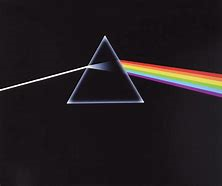
Dark Side of the Moon at 50. Deflected radicalism?
It is 50 years since the release of Pink Floyd’s record Dark Side of the Moon in the UK on 24th March 1973 (1st March in the US)
It is the fourth best-selling UK record of all time and spent 972 weeks on the US Billboard charts from 1973.
Recorded between May 1972 and January 1973 at the Abbey Rd studios in London it is estimated to have sold 45 million copies.
The record has various themes including, topically for today, financial greed [Money] and the passage of time [Time] as well providing an unusual, even for the early 1970s,class perspective on the world with the song Us and Them originally written for the film Zabriskie Point.
However as the title indicated the key motif of the record was mental illness and madness, relating to the ill health of the band former member the late Syd Barrett.
The idea for a record with this theme came from band member Roger Waters and it raised issues which were uncomfortable now as then.
Of course the somewhat overblown nature of the record, its packaging and subsequent re-releases can be legitimately criticised. It was this trend in music that did much to spark the ‘one-chord wonders’ of punk rock less than five years later. Mark Blake’s new book on the cover designers Hipgnosis throws interesting light on this.
Certainly the Clash’s phrase ‘turning rebellion into money’ applied. The enormous success of the record allowed band members to do things like buy country houses and invest in classic motor car collections. At the same time money was used to provide an income for Barrett, too ill to work, and to fund the film Monty Python and the Holy Grail, a satirical attack on religion as well as being a wry commentary on some elements of the left.
There remains criticism of the record’s political message quite probably focused by Roger Waters affiliation’s with the left in the current day. Waters has been a supporter of the Occupy movement and a critic of the policies of the Israeli Government.
Writing in the Independent on Sunday in 2013 John Rentoul, a biographer of Tony Blair, was particularly critical of the record.
Rentoul noted with concern that shortly after the Dark Side of the Moon was released the National Union of Mineworkers began a ‘work to rule’ although strictly speaking these events were not related.
Rentoul found the lyrics ‘bitter, introspective’ and was particularly critical of Money for its ‘populist sentiment’ which these days would be seen as anti-banker.
More plausibly perhaps Rentoul argued that the record was part of prog [progressive] rock which had a flavour of being vaguely left-wing something that the young Tony Blair- a Pink Floyd fan- was to pick up on in the later New Labour years.
As Rentoul pointed out 1973 is now far closer to the end of the Second World War in 1945 than it is to the present day. The record was part of a change towards a more modern Britain where rock stars became celebrities and people of considerable wealth and made an impact in national life.
What the impact was is less clear. While the record’s focus on mental illness remains radical it is arguable that the influence was more into the mildly left-wing sentiments of those that went on to be the foot soldiers of New Labour. Meanwhile punk had the more radical political impact with its two and three minute blasts at existing society.
King Charles set for banquet at Palace of Versailles as French strikers recall 1789
King Charles and Queen Camilla are set to pay an official visit to France as the country is gripped by mass protests at President Macron’s attempt to push through an increase in the State pension age.
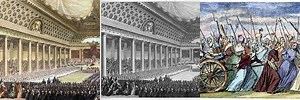
Part of the King’s itinerary is a banquet at the Palace of Versailles with Macron. The Palace was at the centre of the French Revolution in 1789, a symbol of Royal excess.
Given that the first King Charles met an unfortunate end in Whitehall on 30th January 1649 one think the third King Charles would want to avoid any historical parallels.
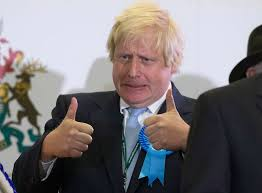
COVID & Boris Johnson March 2020: ‘a feeling of British exceptionalism in Downing St’
The quote comes from Labour MP Jon Ashworth in an interesting Guardian piece(March 2021) on Downing St and COVID four years ago. It revealed that the virus was widespread at the centre of Government in Whitehall as Boris Johnson havered over lockdown measures:
On Monday 16th March Johnson suggested people avoid pubs and theatres (I’d been in a London pub on Sunday 15th March- the Cock Tavern in Hackney and didn’t go into one again until July-the same pub as it happens). On 20th March he ordered them to close and on Monday 23rd March he announced the first lockdown.
Yet it was all too late. COVID was already widespread in the community-certainly in London. As the Guardian article notes numbers may have had it but getting a test was virtually impossible.
However many, myself included, started to act before Johnson. I cancelled a socialist history seminar at the Institute of Historical Research on 16th March (the building was open) and also a London union officers committee meeting in central London I was due to chair the previous week. In both cases there was a sense that getting people together in small rooms was not a great idea.
It was still happening in Downing St though.
On Friday 12th March I attended the annual Bernie Grant Memorial meeting in Tottenham. It was packed with hundreds of people and I felt uneasy. I’m not aware though of a significant COVID spike related to it, thankfully. At this stage the precautions stage was at elbow bumps rather than handshakes. Social distancing and masks were a way off.
Probably the thing that really brought home how far Johnson was behind much of public sentiment was the start of the cancellation of Premiership football matches.
The game between Spurs and Manchester United on Sunday 15th March was much anticipated. It was cancelled at short notice. As often business (which is what Premiership football mostly is)was in front of Johnson.
He stuck to his Podsnappery, ‘Not English’ line that COVID restrictions were for *other* countries for another week. As a result many more got ill, died and suffered long term illness than might have been the case.
Marx who died 140 years ago on 14th March often wrote about banking and financial crisis which he saw as systemic to a market capitalist system. He would have recognised events of the last few weeks
Silicon Valley Bank became insolvent in mid-March, due to customers withdrawing money. It then declared bankruptcy. Its much smaller UK operation was bought by HSBC for £1. The crisis developed from here. Some other medium scale US banks had to be shored and Credit Suisse after a £45bn loan from the Swiss Government ended up being taken over by UBS.
The crisis relates to significant interest rate rises aimed at controlling inflation. That means that bank assets have dropped in value. The issue is current financial models factor in low interest rate.
The Financial Times (18th March) described the SVB and Credit Suisse events a ‘week of madness’ and noted that ‘the question on everybody’s minds is what will break next’.
The Bank of England has now raised interest rates again to 4.25% in effort to control inflation. Its clearly not working as inflation has gone up to over 10% with grocery price inflation above 16%. The reason for the rises clearly can’t be below inflation wage rises (as both Tory and Labour fundamentalists are prone to claim). Rather it is of course the impact of Ukraine and higher vegetable (and beer) prices.
The interest rate rise may not control inflation but it will put banks under more pressure.
The economic crisis is a cost of living crisis for many but certainly not for the wealthiest MP, Rishi Sunak
Before the 2008 financial crash Gordon Brown declared that his policies were moving beyond boom and bust. The only way to do that effectively however is to move beyond market capitalism.