Those who follow the ebbs and flows of the ‘future of English cricket’ saga will be familiar with Kevin Pietersen’s oft repeated view that County cricket will be replaced by franchises. One might almost think he has some personal interest..
A more serious angle on the matter has appeared in the Financial Times(27th August). It notes that the IPL which is by far the most well supported and financially sound cricket tournament in the world is planning to expand its operations to South Africa (where two 20 over competitions have already failed) and to the UAE. One IPL franchise the Knight Riders will field a team in a T20 tournament there and in this year’s Caribbean Premier League. The Mumbai Indians another IPL side are also looking for global franchises.
The FT notes that the plan is to have franchise cricket played somewhere in the world year round with small gaps for International short form and Test matches. The attraction for players, particularly those well into their careers to play exclusively in financially lucrative T20 games is clear. New Zealand’s Trent Boult has just retired from international cricket to do just that.
Meanwhile the ECB has just signed a new contract with Sky to screen and fund its T20 variant The Hundred to 2028. Will it be able to withstand the lure of expanding IPL franchises? We shall see…
Boris Johnson, Kettles & explaining how the dialectic works
Politicians making references to kettles are quite rare. Tony Benn did note that he took his own kettle when visiting Moscow, being a committed tea drinker.
Boris Johnson managed a reference in a rare UK public appearance today however. The oaf who remains Prime Minister but has been holidaying and partying for the last two months popped up to say that if people spent £20 on a new kettle they could save money on energy bills. It was disgusting and demeaning.
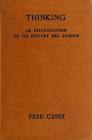
Even so kettles can serve a positive political purpose. Fred Casey, (1876-1956) a socialist writer and speaker and follower of the philosopher Joseph Dietzgen used the example of a kettle to explain the dlalectic
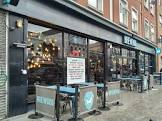
There is no question that without Government intervention small independent bars will struggle with costs and both CAMRA and SIBA have already made the point. However Brewdog while hardly in the global big beer stakes is not a small indy either. The pubs involved are presumably loss making and Watt claims staff have been redeployed.
I’m only familiar with two of the venues Dalston and Old St but on that basis the energy cost claim although clearly an issue is probably not the decisive one. Location is the likely main issue.
Brewdog have closed two North-East London bars in recent times. The first was at Angel Islington or rather it wasn’t. It was on Essex Rd, whereas well frequented bars in the area are to be found on the parallel Upper St. The second was on Homerton High St in Hackney. The location here looked better but the reality is that as with the Dalston bar Brewdog struggles with Hackney. There are numbers of other well known craft pubs in the area that serve better beer ranges at keener prices.
Brewdog Dalston was opened after a prolonged legal battle with residents and has a smallish ground floor bar and a substantial basement. Its about as near Stoke Newington as Brewdog might dare to go and opposite the indy craft bar, the Red Hand. At one point it focused on selling vegan food (now abandoned I think)to attract custom. Vegans there are a plenty in Dalston but not too many who want vegan chain bar food
Brewdog Old St is not really in Old St but at the back of a development that stretches some way back from the road. In short you might not find it unless you were looking for it. Its modern and spacious and originally opened as a Brewdog no/lo alcohol bar. That failed (no doubt Covid closures didn’t help) and the reality is that it’s a minute away from the well known craft beer pub the Old Fountain.
Where Eric Hobsbawm & E P Thompson spent summer holidays
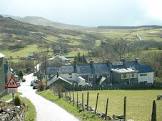
The socialist historians Eric Hobsbawm and E P Thompson both owned cottages in a fairly remote part of North Wales near Snowdonia, the Croesor Valley. This is a practice much frowned on by many people that live there all the time, although of course the point is invariably made that it does boost the local economy (while making it more difficult for others to get homes to live in full time).
In her recent book Meet Me in Buenos Aires (2019)Marlene Hobsbawm gives some more detail about the summer holiday experience of both her partner Eric Hobsbawm and Dorothy and E P Thompson.
‘We usually went up to Wales during holidays, half-terms and all of August. We were always surrounded by friends.. in fact the whole area should have been called Cambridge in the Hills… Historians Edward Thompson and his wife Dorothy Thompson and family were neighbours in a farmhouse over the hill. They had been many visitors (often historians from the USA) and people liked to say one could hear more typewriters clicking than birds chirping in our valley.
A way of life I suspect that given the pressures of modern academic life is now largely past. The pressures of e-mail and smartphones would surely defeat the desire for academic isolation.
Update
Thanks to those who have reminded me that Hobsbawm’s Interesting Times has a section on North Wales holidays. Richard Evens biography, Eric Hobsbawm: A Life in History, also has several pages. He notes that on occasion the Hobsbawms would venture to Portmeiron for beach and sea. Marx and Engels were keen on seaside holidays- Margate and Eastbourne respectively. Whether this was what motivated the Hobsbawms is unclear.
There is little information on the Thompsons. There are likely to be references in his correspondence but unfortunately its locked up at the Bodelian for some years hence.
26 years since the death of Prince Diana. The People’s Princess & the British tradition of anti-monarchism.
It’s the twenty-sixth anniversary of the death of Princess Diana on 31st August. Anyone much under 40 will know of the event through reading recent history and media coverage is much lower key than the twenty-fifth anniversary in 2022. This may also reflect the continuing disquiet over the role of a number of senior Royals.
At the time Diana was dubbed the ‘People’s Princess’. Alastair Campbell is in his diary for the period attributes the phrase directly to Blair himself. Certainly the newly elected Labour Government made much of the changing times.
Tony Benn’s diary for the period makes interesting reading. He noted on 31st August that he had refused interview requests because ‘there is nothing whatsoever to be said’. The following day he notes that the Guardian had 14 pages on Diana’s death.
However a few days later he noted the mood had changed as the Royal Family were seen to be reluctant to mark the death of Diana. He wrote on 4th September ‘People are angry with the Royal Family. Blair is trying to cash in on it..’ After the funeral he wrote ‘Tony Blair has come out of it very well because he is supposed to have told the Palace how to handle it’.
There were other views on the left, and indeed beyond. W H Smith refused to carry the Diana edition of Private Eye, far from a publication of the left, but very much anti-monarchist.
There is a sense however in which England was the original world leader in anti-Royalist sentiment. On 30th January 1649 King Charles 1st lost his head and a period of Parliamentary Government, the Commonwealth under Oliver Cromwell was established.
Official British society still struggles to come to terms with his period, as can easily be seen by a visit to the churches which Parliamentary forces visited, which often contain little or no reference to the period.
The monarchy was restored in 1660 but the ‘Glorious Revolution’ in 1688 laid the basis for the system still in place today, a constitutional monarchy, where the King or Queen has a role but policy is determined not by ‘God’ via the monarch but by Parliament. At least officially
Raymond Williams (b 31st August 1921) Why protest is essential in the age of mass media
Raymond Williams who died in 1988 would have been 103 today.
A Welsh Marxist and leading writer on literature and language, he was a key figure in the first new left from 1960.
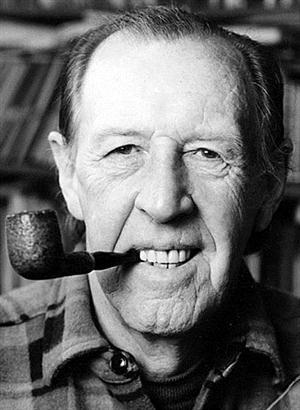
I remember him as a softly spoken, pipe smoker. I recall disputing with the Guardian on his death that they were not taking his significance seriously enough, but in the intervening 36 years, that significance has continued to grow.
Of the key figures of that old new left in March 1968 EP Thompson was lecturing on William Blake in America. Raymond Williams however was on the anti-Vietnam War protest in Grosvenor Square and wrote about his reasons why in The Listener, 25th April 1968.
Robin Blackburn in a New Left Review piece on Williams death (NLR 1/168, Raymond Williams and the Politics of a New Left) quoted the Listener article as follows:
‘Today in a score of countries, the protest march has become a regular part of political activity. In the past in Britain, as at Peterloo and in the marches of the Chartists, there was a style of demonstration that pre-dated liberal democracy, the march of men without votes representing that majority who were excluded from political decision, and a march through the streets with banners because this was still the quickest and most visible means of communication. Today the means of communication are much more developed. . . . Yet parliamentary democracy has become increasingly formal under the pressure of consensus. . . . Moreover the theory of representative democracy, with all its strengths and limitations, is being itself surpassed in practice by the pressures of modern organized capitalism to channel decisions to many non-elected bodies. And a key role in this replacement of representative democracy is being played by the modern communications system, which is not, and does not pretend to be, democratic at all, except in purely negative ways. When the German students, after the shooting of Rudi Dutschke, demonstrated against a press monopoly, they were taking into the streets, and for their own good reasons, what had been for many years a central part of New Left theory: that in any large and complicated society, the communications system in newspapers, broadcasting and television is a major political institution—in its supply of necessary information, in its capacity to select, emphasize or exclude, and in its power to influence and campaign. But this institution . . . is permanently up for auction to rich men, to the new communications combines, who then claim by simple purchase this immense political power. . . . Parliament itself has conceded many decisive areas of power, in economic planning and in communications, to wholly undemocratic institutions which it is in no way prepared to fight. The measure of the failure of the social democratic parties in Western Europe is that by compromising on just those issues, they’ve excluded themselves from any serious consideration as the means to democracy and socialism. It is in the gap left by that failure that the new movements are being formed. . . . It is necessary to say soberly and quietly that the decay and corruption of the political system, and the intolerable violence now actually directed against the poor of the world, will go on being fought by all effective means.’
I’ve shaken hands with Boris Johnson. Do I want to kiss him?
I’ve shaken hands with Boris Johnson. It was in August 2011 when he appeared, belatedly on Tottenham High Rd (he was then London Mayor) after the areas most recent riot (so far). I shook hands with him in an official capacity as the then President of Haringey TUC.
I had no desire to kiss him and since I have a beard I’m sure the feeling was mutual.
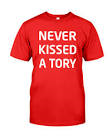
The issue arises because the usual Culture Wars suspects have finally found out that T-Shirts (and indeed badges) saying ‘never kissed a Tory’exist. They’ve been around for decades but never credit Culture Wars fans with paying attention unless it suits them.
Apparently the slogan is divisive, and they’d know because they spend their entire time trying to divide.
Have I ever kissed a Tory? I doubt it but I cant be completely sure because sexuality is more complex than that, even if the ‘never kissed a Tory’ slogan makes a good agitational point
The Beard Liberation Front, the informal network of beard wearers, has responded to the social media furore around people wearing ‘never kissed a Tory’ T-Shirts.
The campaigners say that the prejudice against the hirsute often means that people with beards are thought to have food and other detritus lodged in them and are generally deemed to be un-kissworthy. This prejudice has no significant basis in reality. Beards are soft and silky when kissed.
The BLF one of whose founding principles is that people should be able to dress and appear as they want has no plans to dictate on who beard wearers should or should not kiss. However it says kissing a Tory may lead to unpleasant ideological complications and great care should be taken in such situations
BLF Organiser Keith Flett said, I once shook hands with Boris Johnson, and while sexuality is a complex thing, I have never had a desire to kiss him.
TUC calls for more Bank Holidays. The anniversary of Cable St(4th October) is autumn favourite
The TUC has called for four more Bank Holidays, noting that the August Bank Holiday is the last until Christmas and that Britain is at the bottom of the European League for public holidays:
The first priority is to decide an autumn date. The right want Trafalgar Day but there are possibilities:
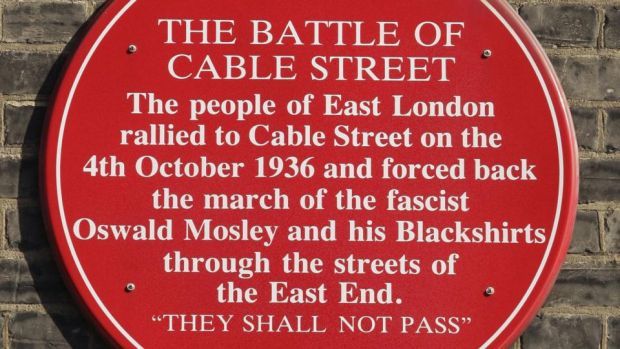
4th October 1936 Battle of Cable St
4th November 1839 Chartist Rising Newport
22nd November 1990 Thatcher’s resignation
28th November 1820 Birth of Manchester businessman Engels
There is a poll at this link to facilitate democratic discussion..
Today is the last public holiday until Xmas. Forget Liz Truss's talk of 'lazy workers, the UK has the fewest holidays in Europe. @The_TUC has called for more. When should the autumn one be?
The poll showed that while the Newport Chartist Rising and Thatcher’s resignation had support as potential dates for an autumn public holiday, the anniversary of Cable St, when Mosley’s fascists were stopped from marching through London’s East End by popular protest had most support.
It will need a campaign but its date well worth marking with a public holiday perhaps particularly given the resurgence of the far right and fascists around the world.
In 2022 when it comes to energy prices debate focuses on whether they can be controlled and if so how. After all in a market economy, the market rules. Labour by contrast has traditionally favoured a social market economy where intervention determined a fair price and prevented excess profit.
Before the early nineteenth century a different system often applied. The staple food of many was bread meaning that the price and quality of a loaf was an essential part of daily life. If quality dipped or the price went to high protest was the likely outcome.
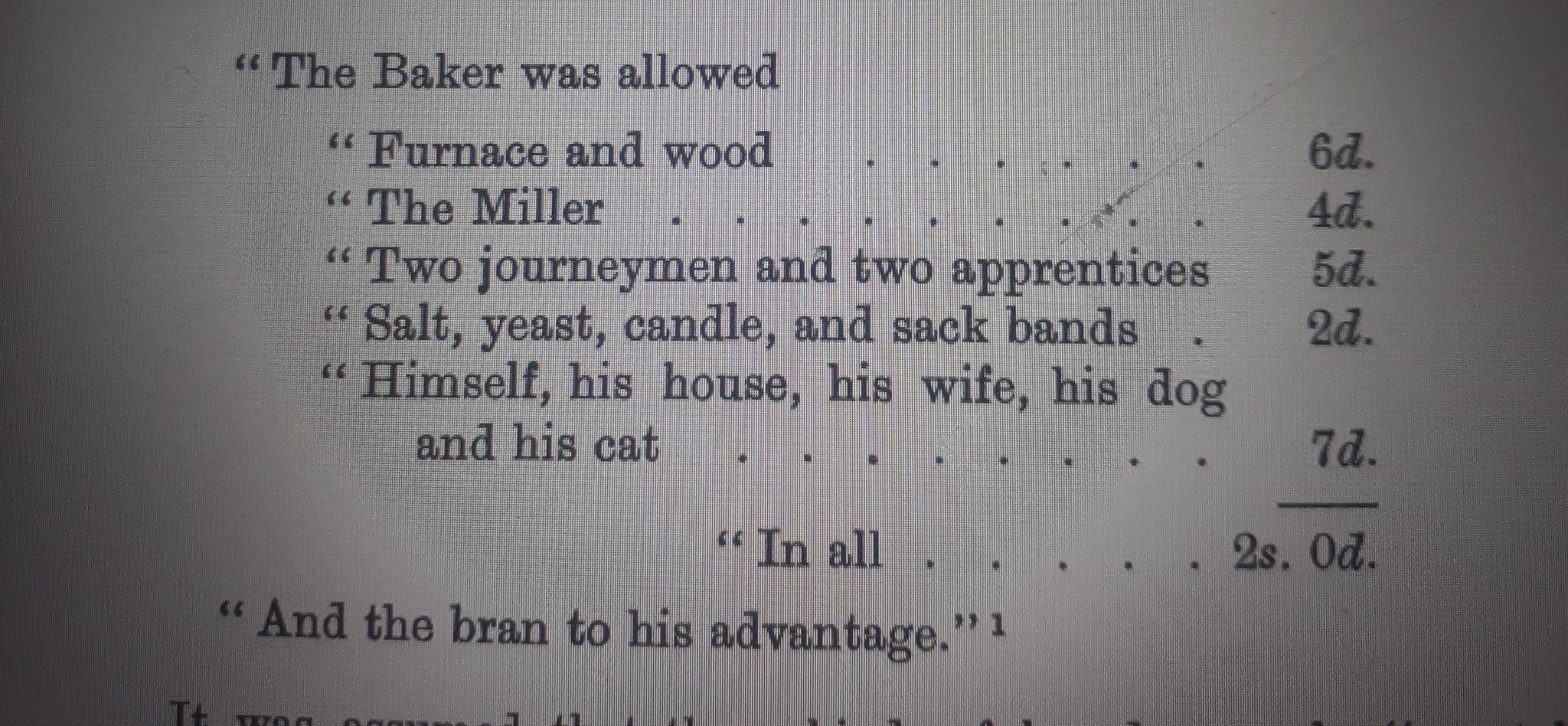
This was often regulated by an Assize of Bread which sat to determine what a fair price for bread of a certain quality should be and how much the miller and the baker should get in return for producing it. This was what the socialist historian E P Thompson termed a moral economy.
It could not control the price paid for wheat in the first place but it could control profiteering by the miller and the baker. They were allowed a fair profit to cover their business and personal expenses.
Needless to say far from all millers and bakers were happy with the system and attempted to circumvent it by reducing the quality of bread produced or combining to control the market. The moral economy was not a complete solution but it was a focus for popular pressure