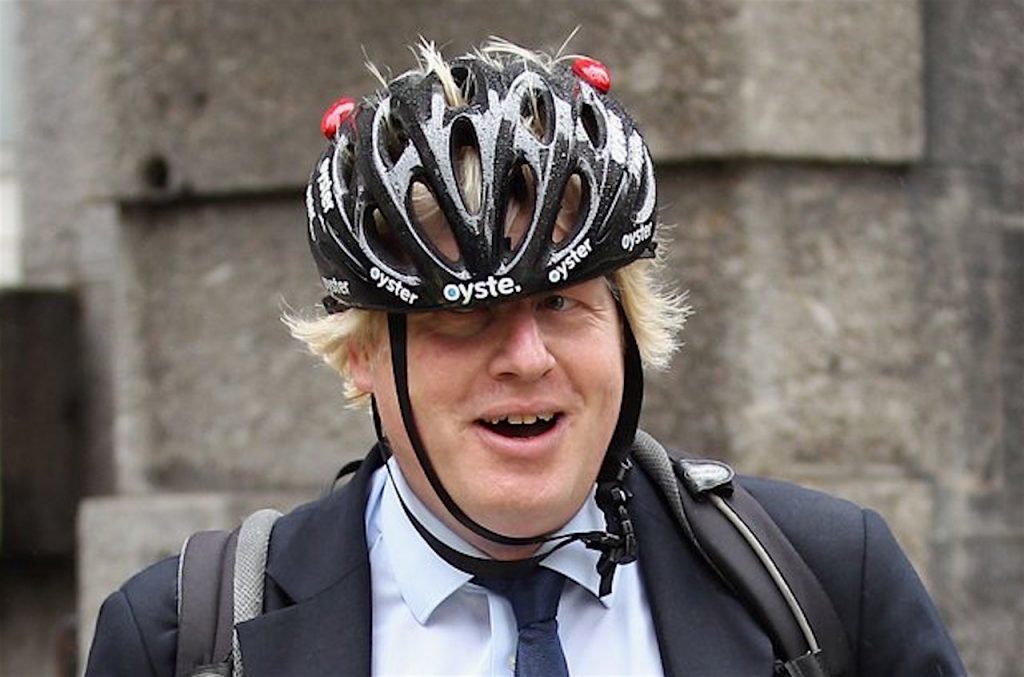
Is it sexual harassment to make fun of someone who is bald?
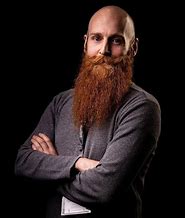
The Beard Liberation Front, the informal network of beard wearers has reacted to a media story that a worker has won a claim of sexual harassment after his employer made fun of for being bald.
The report appeared in the Daily Star (13th May) not the most reliable of sources and a successful case does not set a precedent.
The BLF says that a particular hair style, or lack of one, just as a beard style might suggest a particular sexuality and therefore see potential discrimination. However the wider point is that no one should be discriminated against because of the way they dress and appear. The law is generally weak on this at best in the UK.
BLF organiser Keith Flett said, we have in the past run Baldies and Beardies Electoral Alliances because both groups face similar discrimination. United action can beat the bigots
On the 29th November 1979 at 8-00pm I found myself, a 23 year old socialist, in the small upstairs room of the Ship pub on Tottenham High Rd attending a pre-conference meeting of the local SWP branch. The main speaker was Steve Jeffries, then a leading member, who wanted a change in the structure of the Party.
At more than 40 years distance I can only recall the old detail. I do recall Jeffries throwing his hands in the air at one point and exclaiming ‘so the line flips again’
However the current Undercover Policing Inquiry has tabled a full report written by a police spy who was also present. This is likely to be ‘Colin Clark’ HN80 whose lengthy statement to the inquiry notes problems in the Haringey branch
There was a list of 14 people who attended. Its redacted now but then it was sent to Special Branch who had the habit of opening files on the individuals on such lists. I’d rather like to know what is in mine.
Lord Lebedev will not be on Beard of Summer 2022 shortlist
The Beard Liberation Front, the informal network of beard wearers, has confirmed that Lord Lebedev will not feature in the Beard of Summer 2022 shortlist, in June.
The Beard of Summer the second of four quarterly contests that lead to the coveted Beard of the Year in December.
Lebedev has appeared in Beard Polls on occasion over the last decade. He was on the Beard of the Year shortlist in 2011 and a contender for Beard of Spring in 2018. In neither case did he attract many votes.
The campaigners say that Lebedev is not banned from future contests. However while he maintains a magnificent beard a key criteria of the quarterly contests is that beard wearers must be promoting a positive image of the hirsute. Recent controversial events suggest Lebedev could struggle to meet that criteria in the view of a significant number as Boris Johnson failed to publish significant papers relating to Lebebev today.
BLF Organiser Keith Flett said, Beard Liberation Front polls are about beards and not judgements on people’s character or politics. That said they are designed to promote a positive image of the hirsute in the public eye. At the moment at least some may judge that Lord Lebedev is bringing the hirsute into disrepute.
Memoriial to Narendra Makanji: a ‘Battle of Wood Greener’
Narendra Makanji died unexpectedly on the 4th April 2019, far too young.
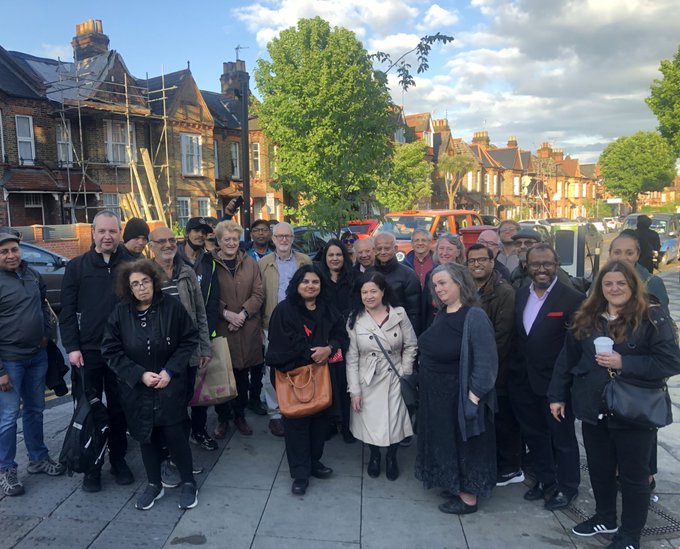
I was pleased to that on Wednesday in Wood Green a memorial was unveiled with a crowd including Sharon Grant and Jeremy Corbyn. While the Tories bang on about taking down statues they don’t do anything about putting them up.
With his passing one of those who was present at the Battle of Wood Green on 23rd April 1977 left us.
The story of that day is below
Without doubt it was a formative political experience for Narendra (as for myself and many others). He went on to be a long-standing Haringey Labour Councillor, a committed anti-racist and one of those who was central to forming the Labour Party Black Sections.
Latterly he had been closely identified with the Bernie Grant Centre in Tottenham.
As I noted on social media he was a socialist with Hinterland. Of course he was a supporter of Jeremy Corbyn, the spokesperson for those who opposed the National Front in Wood Green in 1977, but his tweets to myself covered things like cricket (he was a keen supporter as I am) and the Archers.
3 years ago we lost a giant of the labour movement, someone who had sustained activity on the left over five decades. I’m sure there will be formal obituaries but in due course Narendra deserves his place in the Dictionary of National Biography (DNB) and the Dictionary of Labour Biography (DLB).
The cost of living crisis 1840s-2020s. More British history Boris Johnson ignores
Britain is not at war with Russia or anyone else, although there is a war with dreadful impacts going on in Ukraine. Boris Johnson’s war is performative playing to a crowd of right-wing Tory MPs and newspapers, and which unfortunately Labour also has a supporting role in.
There is however a war going on in this country and it is the Tories class war against ordinary people. Covid has been left to run unchecked, the NHS starved of the resources it needs, energy prices and general inflation rising well above wages, and little or nothing done to address the climate emergency.
Although every crisis has its specifics, capitalism is a system based on crisis, on boom and slump and the cost of living has been a significant issue for the left and working people since the development of industrial capitalism in the late eighteenth century.
Two of the most well-known refrains of the first half of the nineteenth century were for the repeal of the Corn Laws which had the effect of making bread more expensive and the traditional song ‘The Roast Beef of Old England’ sung to reflect the view that roast beef was the right of the ‘freeborn Englishman’ but in reality few could afford to eat it.
Calls to scrap the corn laws were part of Peterloo in 1819 underlining that in the popular mind calls for political democracy were allied to demands for a decent standard of living. The laws were eventually repealed in the 1840s after a campaign by led by the Anti Corn Law League, run by bourgeois liberals.
As Marx noted the reality of the repeal was that industrialists would reduce wages- as bread cost less- and make more profits. Hence a successful struggle on the political front also had to be waged industrially in the workplace, with the development of organised labour in unions to push for better pay and shorter hours.
In 2022 many might question how sensible and ethical it is to make having roast beef as a key demand for maintaining living standards is. But there are now practical alternatives to eat. In the 1830s and 1840s only better paid workers- when they were better paid which was often seasonal- could afford to regularly eat meat of any kind. Urban workers core diet often consisted of bread, poor quality cheese and beer (of a low strength to replace water). Rural workers might more usually subsist on potatoes.
Poor diet was only one element of the cost of living crisis, at it is now. There was an impact on health and this was often magnified by bad housing conditions. All this meant that the average age of death for workers was very low by modern standards.
This is a 2022 issue as well. Professor of Public Health at UCL Michael Marmott has warned that Government policies are increasing inequality and seeing a decline in the health of the poorest in society.
The Tories plan to turn all this into a Culture War against the poor
What strategies are there to grapple with this? CWU General Secretary Dave Ward has argued that a General Strike might be needed. This was tried by the Chartists in 1842 but while effective did not bring change. Another strategy was pursued as a result, what the historian E P Thompson described as ‘warrening’ capitalism from end to end with defensive structures such as trade unions, trades councils, co-ops and so on. These have worked in the 150 years since they started to develop with the TUC being formed in 1868 but they are at best imperfect. Historically in the fight to for a decent standard of living and health nothing was or should be off the agenda.
An earlier version of this post originally appeared in the Morning Star
The Cost of Living crisis becomes a Tory Culture War
I thank the hon. Gentleman for his intervention, as he makes a great point. Indeed, it is exactly my point, so I invite him personally to come to Ashfield to look at how our food bank works. He will see at first hand that there is not this massive use for food banks in this country. We have generation after generation who cannot cook properly—they cannot cook a meal from scratch—and they cannot budget. The challenge is there. I make that offer to anybody. Opposition Members are sitting there with glazed expressions on their faces, looking at me as though I have landed from a different planet. They should come to Ashfield, next week or the week after, and come to a real food bank that is making a real difference to people’s lives.
Lee Anderson Tory Ashfield, House of Commons 11th May
Lee Anderson MP claimed £222,000 in expenses in 2020/21 – including £4,100 on travel and ‘subsistence’@LiamThorpECHO
Gove tells people to calm down’ on the cost of living crisis, in a fake Scouse accent
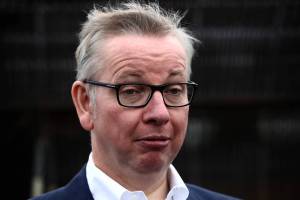
The Levelling Up Minister Michael Gove has appeared on BBC Breakfast (11th May 07.39) to discuss the cost of living crisis. Like the rest of the Cabinet Gove doesn’t think there is a crisis, at least not for the few.
Adopting a fake Scouse accent Gove told people to ‘calm down echoing a Harry Enfield sketch. Its deeply insulting to the people of Liverpool and indeed everyone struggling to pay bills. I doubt Gove cares.
When he was Education Secretary 10 years ago Gove did demand that 5 year olds learnt foreign languages, amongst which he no doubt classes Liverpudlian.
The Queen’s Speech- the State Opening of a new session of Parliament took place today. The Queen was indisposed so it was read in person by Prince Charles. The Royal Crown was conveyed separately to Westminster…
Guardian journalist Owen Jones tweeted that the Speech showed the Government had no ideas beyond holding on to power itself. Given the at best unpleasant ideas that come from members of the Cabinet that may be no bad thing. The speech was notable for not announcing a long Employment Bill and not honouring an earlier proposed ban on foie gras which will ban enthusiast Rees Mogg. What was there was yet another attempt by Priti Patel to criminalise protests which she has been trying to do for a long time.
However there is a serious point in holding on to power itself. With that comes the potential at some point for personal profit and the ability to offer sinecures in terms of contracts and official positions to one’s friends or those one wants for some reason to influence.
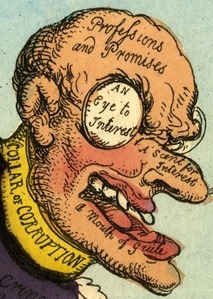
That may all sound somewhat pre-democratic, and it is. It is in fact the politics of Old Corruption that so annoyed William Cobbett in the 1820s and the process of replacing with democratic accountability was started by the 1832 Reform Act.
The current Government is sometimes said to want to return Britain to the 1950s. It wants to go much further back than that- to the pre-1830s. There is one problem. Had the 1832 Act not been passed Britain faced one of the most serious threats of revolution it has seen to date…
Michael Rosen shows why remembering history is important
I’ve written about Michael Rosen’s The Missing before. It’s a book of poetry and short pieces which looks at the history of some of his family members during World War Two. He tracks down the story of his father’s uncle Martin Rozen (1890-1944)through painstaking research. Rozen lived in Vichy France and in 1944 he was with other Jews not born in France but living there, put on a train to Auschwitz and murdered by the Nazis.
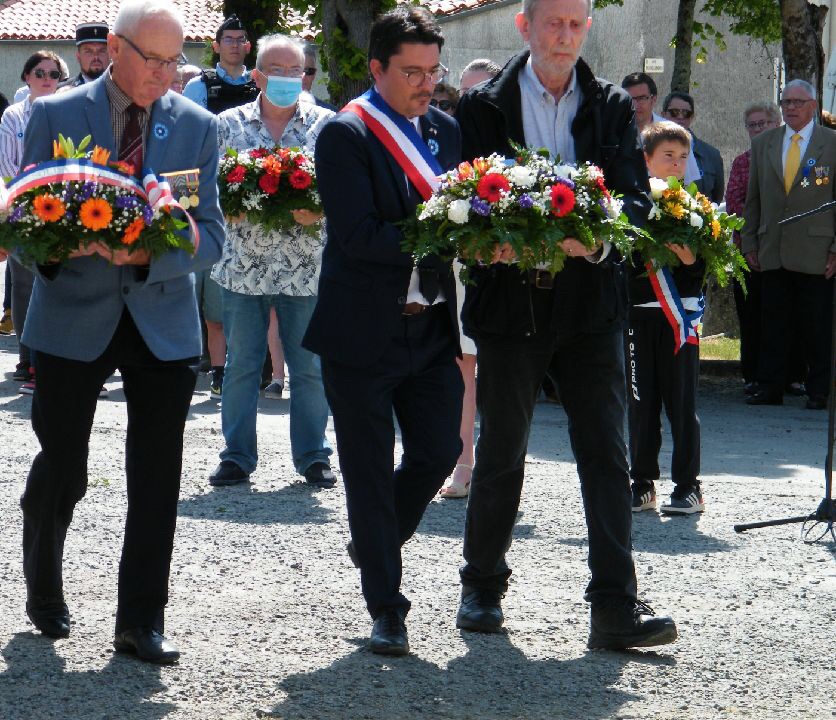
On May 9Michael Rosen travelled to France to see Martin Rozen’s name added to the war memorial in the town where he had lived and wreath’s were laid, organised by the Mayor Philippe Barre.
The Missing which tells a wider story of war and refugees is aimed at a young audience but has a powerful message for all ages.
It is also relevant to the current round of elections in France where a far right to fascist candidate Marine Le Pen lost the Presidential Election to the incumbent Emmanuel Macron, but did so relatively narrowly. The Guardian wrote (Editorial 22nd April) of Le Pen’s candidacy: Her proposal for a referendum on ‘citizenship, immigration and identity’, aimed at instituting a suite of nativist ‘French first’ policies would generate a constitutional crisis’.
This sounds a like an attempt to re-create Vichy France and a challenger for the Presidency Zemmour who went out in the first round spoke openly and positively about Vichy. Zemmour can fourth with 2.5 million votes and is supporting Le Pen in the second round.
The elections for the French Parliament are in June and the possibility of Le Pen winning a significant number of seats is a serious one.
Which is one reason why books like The Missing are important. As Michael Rosen writes, he cannot bring back Martin Rozen but he can make sure he is remembered, and what happened to him and why is also remembered. Yesterday in France was another point in the historical act of remembering what the Nazis did and bringing to new generations why it must never happen again.
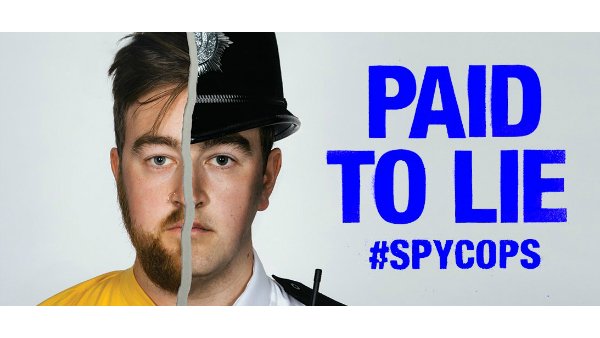
The Undercover Policing Inquiry as resumed in central London a year after the last hearings and will continue until May 20th.
Reviewing previous evidence it’s interesting to note from an historical point of view how much it adds and how much it doesn’t to the recent history of the left in Britain.
For example I knew and would have been in meetings with one Spycop who was active in North London.
Details are in file HN80 which consists of the officer who had the cover name Colin Clark answering a detailed questionnaire at some length. A lot of it consists of Clark pointing out that reports attributed to him were not in fact his.
However he presented as a motor mechanic living in Muswell Hill and was actively involved in a range of left-wing groups including the SWP, Anti Nazi League and the Right to Work Campaign from 1977 to 1982.
He appeared from distant memory not that regularly using the excuse that he was busy working. It seemed, again from memory, a little odd but the left historically has attracted people who come to anti-capitalist politics from many diverse directions, not always the most obvious ones.
My main memory of him was that he had a magnificent beard but his file reveals that even this was just a cover. His file records that he was normally smart, clean shaven and wearing a suit and tie but to become active on the left he dressed down, grew a beard and had longer hair.
What ‘Clark’ did was deplorable and legally doubtful but all the organisations he infilitrated operated openly and legally. Ultimately over 5 years he discovered nothing of any interest at all and makes no claim to have done. He was wasting police time and public money.