Contact: BLF Organiser, Keith Flett on 07803 167266
At 76 Michael Rosen’s beard remains resilient
The Beard Liberation Front, the informal network of beard wearers, has said that on his 76th birthday the author, broadcaster and Arsenal fan Michael Rosen is displaying magnificent hirsute resilience.
After a period of very serious illness Rosen was voted Beard of Summer 2020 and then went on to be declared joint Beard of the Year 2020. He won the title again in 2021 becoming the first person ever to win the coveted title in consecutive years.
The campaigners say that Rosen’s beard has been tweaked, redesigned and remodelled over the years but its current status indicates that at 76 his beard remains fully resilient
BLF Organiser Keith Flett said, a beard can bring real follicle power. We wish Michael Rosen and his beard a very happy birthday.
Labour’s election performance in England has been good in London and patchy elsewhere with some progress on 2018 but arguably not enough.
John Curtice who comments on elections, and often brings an independent perspective beyond Party spin (not one I always agree with btw) has argued that Labour did slightly better under Jeremy Corbyn’s leadership 4 years ago. Perhaps but comparisons are difficult.
However some Labour commentary has blamed ‘long Corbyn’, an argument that people don’t vote Labour because they recall the last Labour leader. There is an obvious problem with this even if we assume its true. Far from everyone disliked Corbyn and those who supported him, a significant number, even if an inconvenient point to some, may well feel that his current treatment by Labour is enough to swerve a Labour vote. In fact people who take that view regularly pop up on my twitter timeline. Its one I understand but it leads to another discussion about alternatives.
Historians are familiar with the concept of ‘long’ and indeed ‘short’. Eric Hobsbawm wrote of the long nineteenth century (to 1914) and the short twentieth century for example.
Politically though its often an excuse. Those who are old may well recall Harold Wilson using the phrase ‘thirteen years of Tory misrule’ at the 1964 Election. There was truth in it but it was still used when he was PM and when he himself might reasonably have been expected to be accountable for events.
Talk of Long Corbyn is a distraction at best. If Labour is serious about winning an Election and I hope it is (Johnson needs to go) it needs to stare reality in the face not play silly games.
Campaigners congratulate Philip Granville on election as Mayor of Hackney. Proof beards are popular with voters
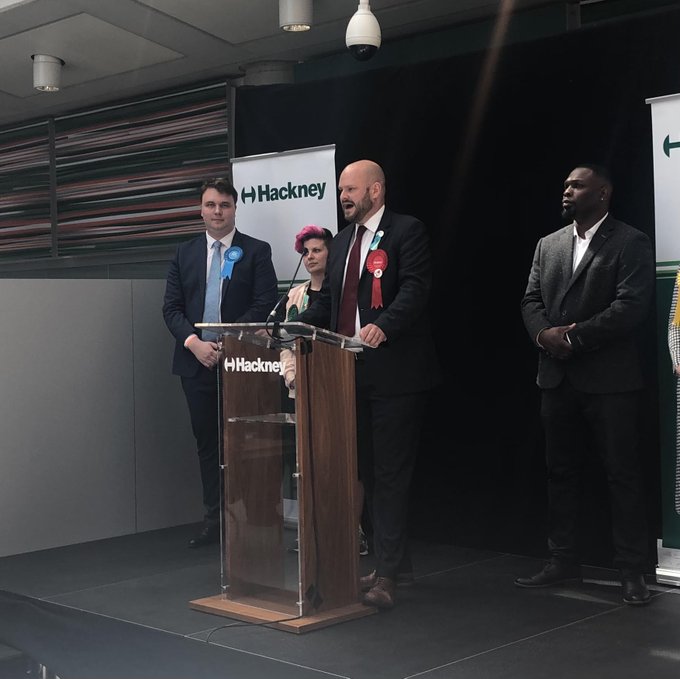
The Beard Liberation Front, the informal network of beard wearers, has congratulated Labour’s Philip Glanville on his re-election as Mayor of Hackney. He beat off a strong Green challenge for the role.
The BLF says that Philip Glanville has been an outstanding ambassador for the hirsute in political life and has undoubtedly brought added gravitas to the Mayoral role.
BLF Organiser Keith Flett said, of course the Mayor has critics, that is democratic politics, but the impact of his beard power remains popular with voters.
10 years since the Jolly Beards promoted positive images of the hirsute
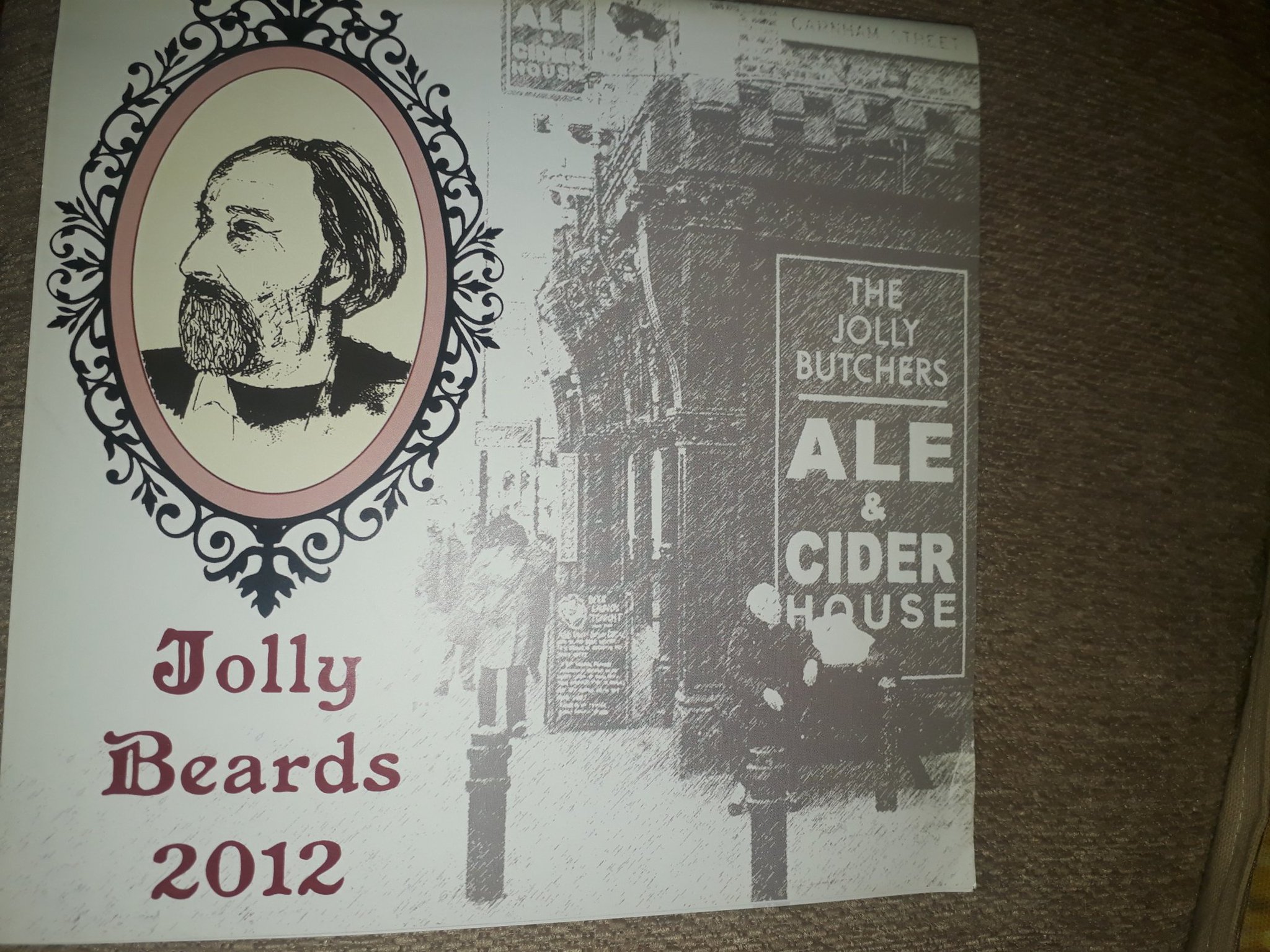
Its 10 years since the production of the Jolly Beards calendar. The work mainly of Lucy Clarke it captured beards in the then Beard Friendly Pub of the Year the Jolly Butchers and did a great deal for better or worse to make the link between craft beer and beards.
The Jolly Butchers still thrives as do the beards featured in the calendar. An edited version of the original launch statement is below:
The Beard Liberation Front, the informal network of beard wearers, has said that an unusual new calendar is now available which features positive images of beards.
The calendar was the idea of BLF organiser Keith Flett and beer entrepreneur and artist Lucy Clarke
It features pictures of brewers, publicans, beer writers and drinkers taken at the Beard Friendly Pub 2011, the Jolly Butchers in Stoke Newington.
The calendar which is a not for profit production retails at £6 to cover production costs and runs until the end of January 2013
The group which campaigns against beardism, irrational prejudice against the hirsute, says the calendar which shows a full diversity of facial hair, reflects how stylish and fun beards have become
BLF Organiser Keith Flett said, we think it is the first calendar ever to specifically celebrate the diversity and style of beards and we hope it will do its bit to promote positive images of the hirsute
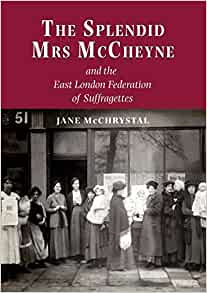
Jane McChrystal writes “The Splendid Mrs McCheyne and the East London Federation of Suffragettes” tells the story of an unsung heroine of ELFS who worked tirelessly in the “back room” supporting brave women such as Nellie Cressall and Annie Barnes, whose names have lived on, in their struggles on behalf of the women, men and children of the East End. Sylvia Pankhurst wrote this about her: ” All the ELFS’ members know Mrs McCheyne, for she was one of our first recruits in East London, and has always been one of our hardest workers, having served on the ELFS Social Committees and in many other ways as well as Joint Honorary Secretary in Bromley”.
I first came across her name in the minutes of ELFS’ committee meetings and was struck by how often she attended and, yet, how infrequently she spoke or was mentioned there. Intrigued, I resolved to find out whatever I could about her. In the course of my investigation, I was fortunate to be put in touch with her relative, Anne Padfield, who was able to tell me all about her origins, family and the life she led after ELFS.
Sylvia Pankhurst left behind a record of her years as the leader of ELFS in her collected papers, which proved an invaluable source of background material for “The Splendid Mrs McCheyne”. My own research into the key political and social changes in the late nineteenth century and first half of the twentieth century provides an historical context for Rosaline’s life and work, while an interview with Anne Padfield gives a fascinating insight into the woman her family knew.
Local Elections: The historical and democratic importance of the vote
Local Elections take place in many areas on 5th May. turn out is likely to be on the low side, it usually has been for such elections even though the Councils elected do make a significant difference to people’s daily lives for better or worse.
I’m far from an obsessive about Parliamentary elections of any kind, participation in democratic elections is important.
It’s important because there far right to fascist candidates in some places that need to be resoundingly defeated and important to, to send a message to Johnson on thing he does care about- getting vote to stay in power locally and ultimately nationally.
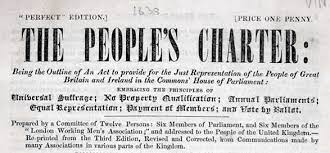
It’s also important because the Chartists fought for the right to vote for men, not finally achieved until 1918 and the Suffragettes did the same for women.
So vote on 5th May where you have the chance. It may not mean much in itself but the fight to win you the vote in the first place means a lot and that means it’s worth exercising it.
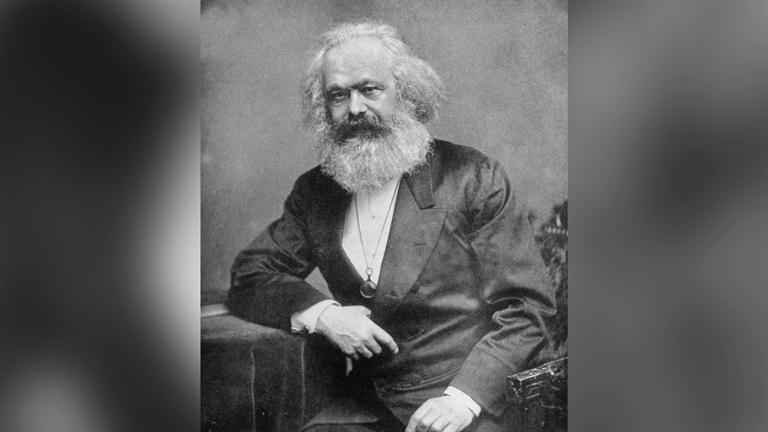
Engels to Marx on his 50th Birthday (5th May 1868)
Engels to Marx 6th May 1868
I congratulate ANYHOW on the half saeculum, from which, incidentally, I am also only a short span away. Indeed, what juvenile enthusiasts we were 25 years ago when we boasted that by this time we would long have been beheaded.
The price of beer is in the news again. The impact of COVID and the war in Ukraine is pushing prices up.
The general points are around increases in the cost of raw materials, production (i.e canning) energy and the impact of Brexit. Of course businesses traditionally make such points as much as I as a trade union officer argue for wage increases.
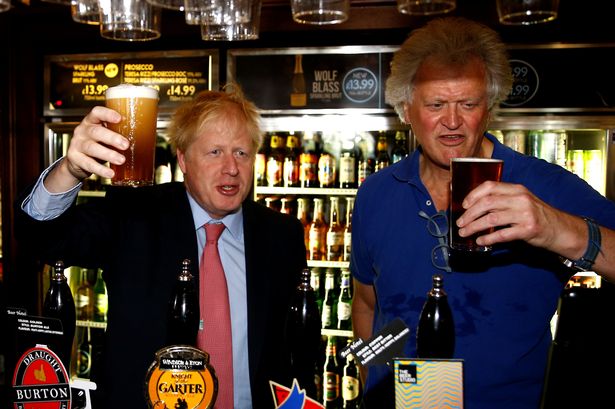
If the price of beer goes up, does it matter however? After all no one has to drink it, and numbers don’t. The reality is that the price of beer forms part of the Retail Price Index so it is an important economic measure. I suspect though this is notoriously difficult to prove, that the price of beer has outstripped wage increases over a lengthy period. One outcrop of that is the success of Wetherspoons where you can find a pint of cask beer for as little as £1.39 a pint in some places.
Historically beer was considered part of the normal diet for many workers involved in heavy industrial or agricultural labour and was one focus for the ‘standard of living’ debate about whether living standards fell or rose as industrialisation proceeded after 1800.
More specifically thanks to a Malt Tax first introduced to fund the country’s wars in the early eighteenth century, the price of brewer produced beer was considered to be high by the first decades of the nineteenth century. It also made the cost of home brewing a traditional practice, prohibitive.
E P Thompson in the Making of the English Working Class reports a letter from a magistrate in 1816 arguing that the Malt Tax would lead to revolution. In fact numbers of unregulated and unlicensed premises circumvented the law. Reality intervened with the 1830 Beershops Act that made the opening of premises specifically to sell beer much easier and much less costly.
Expect the controversy to continue, though Assizes of Ale, Government assistance to brewers and price regulation would all help.
1926 General Strike at 100: some outstanding issues & possibilities
The 1926 General Strike took place from 4-12th May 1926. The miners lock-out which it was meant to be the central act of went on for much longer until the end of November 1926.
The British Worker, the TUC paper during the dispute did not stop publishing until May 17th 1926
It was not the only General Strike in UK history by any means. There was one in 1842 sometimes called condescendingly the ‘plug plot’ and from the 1970s onwards there have been a number of, in effect, one day national strikes on a range of issues. Given the size of the modern workforce numbers involved in these have often been equal to or larger than those who took action in 1926.
It might be questioned whether after 100 years there is much new to say about the General Strike and the general parameters of events over the 9 days are well known enough.
However the detail of what took place during the strike covers a vast range of written and photographic material some of which has only in very recent times being made accessible digitally on the internet.
For example, the MCC issued a call for cricket matches to continue as normal during the strike but one at Lords between Middlesex and Oxford University was cancelled. No doubt the Oxford students were engaged in the, to them, alternative sport of strike breaking.
Local studies have provided more details (but far from all areas are covered) and the miners lock-out remains relatively under researched as does the aftermath of the strike and the impact that it had on unions, politics and labour relations for decades to come.
Arthur Scargill for example became active in the labour movement when memories of 1926 were still relatively fresh in the 1950s and saw the victorious 1972 miner’s strike in the context of the defeat of 1926.
The wider and partly theoretical question about why there has not been an open ended General Strike in Britain since, when such events are far from unknown across the rest of the world, is also one which merits further attention.
When one looks at the detail of the strike it is possible to see many of the tensions that still exist in the labour movement today.
For example the strike meant that newspapers were not published and the only news available was through radio news broadcasts from the BBC. Then as now these reflected official Government views.
The only exception to this was the Daily Mail which published a ‘continental’ edition, printed in Paris.
The Government itself produced an official paper and this was countered by the TUC’s British Worker.
The British Worker was produced from the Daily Herald’s offices in Blackfriars Rd and edited by the Herald’s then editor.
It was still published for some days after the official end of the strike on 13th May and by that stage it had reached an impressive circulation of 700,000 copies.
However distribution across the UK was uneven and poor in Scotland.
Plans were put in place to produce regional editions of the British Worker for two reasons. Firstly to address the matter of coverage. Secondly to allow local reports of strike activities which might otherwise be missed.
The nine days of the Strike were a time of considerable, often ill-founded rumours, often spread by authorities and reactionary elements.
The concern however was that regional strike papers might go beyond the official TUC ‘line’. In addition in some areas, such as Swansea, striking print workers were against the idea.
The strike was called off before these matters of official control, solidarity and so on could be resolved but the same issues would undoubtedly appear again now.
After a long lull strikes, often around pay or real terms pay cuts, are increasingly common despite some remaining legal hurdles. That’s not the same as a General Strike but the mood for co-ordination from below is growing. Don’t imagine a 1926 couldn’t happen again in some form.
Wisden guilty of pogonophobia as it shaves W G Grace’s statistics
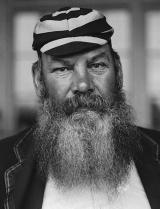
The Beard Liberation Front, the informal network of beard wearers, has said that Wisden, often known as the cricket lovers Bible, is guilty of pogonophobia, irrational dislike of beards.
It has purged W G Grace’s career record.
Grace (1848-1915) is known as one of Gloucester and England’s finest ever cricketers, and one of the country’s best known beard wearers of all times.
The current Editor of Wisden Lawrence Booth has decided that 10 matches that Grace played in were not First Class games. This means that he now has 685 fewer runs, 67 fewer wickets and 2 fewer centuries. It also means that he actually scored his 100th First Class century two weeks later than previously recorded.
Wisden previously changed Grace’s record in 1990 but the then Editor John Woodcock decided to revert the following year out of respect for the cricketer and his beard.
BLF Organiser Keith Flett said, Lawrence Booth has done an excellent job in editing Wisden which remains essential reading. However the decision to shave W G Grace’s career record is pogonophobia pure and simple. It must be reversed in the next edition of Wisden.
*thanks to Hazel Potter, long standing BLF supporter & Gloucester member