Campaigners say President Macron needs to widen appeal by re-growing his 2016 beard
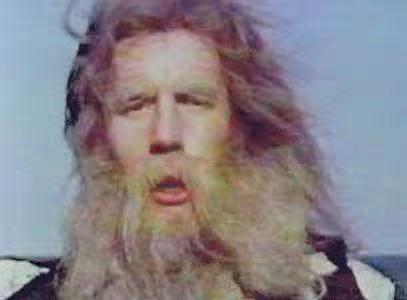
The Beard Liberation Front, the informal network of beard wearers, has urged French Presidential candidate Emmanuel Macron to make an immediate start on re-growing his 2016 beard and to reduce the focus on his hairy chest, following his victory in the French Presidential election on Sunday
Last weekend with shirt unbuttoned Macron displayed his hairy chest in media interviews. The campaigners say that while this may have appeared sexy to some, and a turn off for others, it did nothing for Macron’s gravitas deficit.
A key issue in the campaign was that many less well off voters did not believe that Macron had their interests at heart or the focus to pursue them. A beard can add gravitas and at least give the appearance that the President is taking things seriously.
BLF Organiser Keith Flett said, its obvious that Mr Macron is hirsute but in the generality a beard is more likely to appeal to the disaffected than a hairy chest. It goes without saying that the opposing candidate was and is a supporter of barberism..
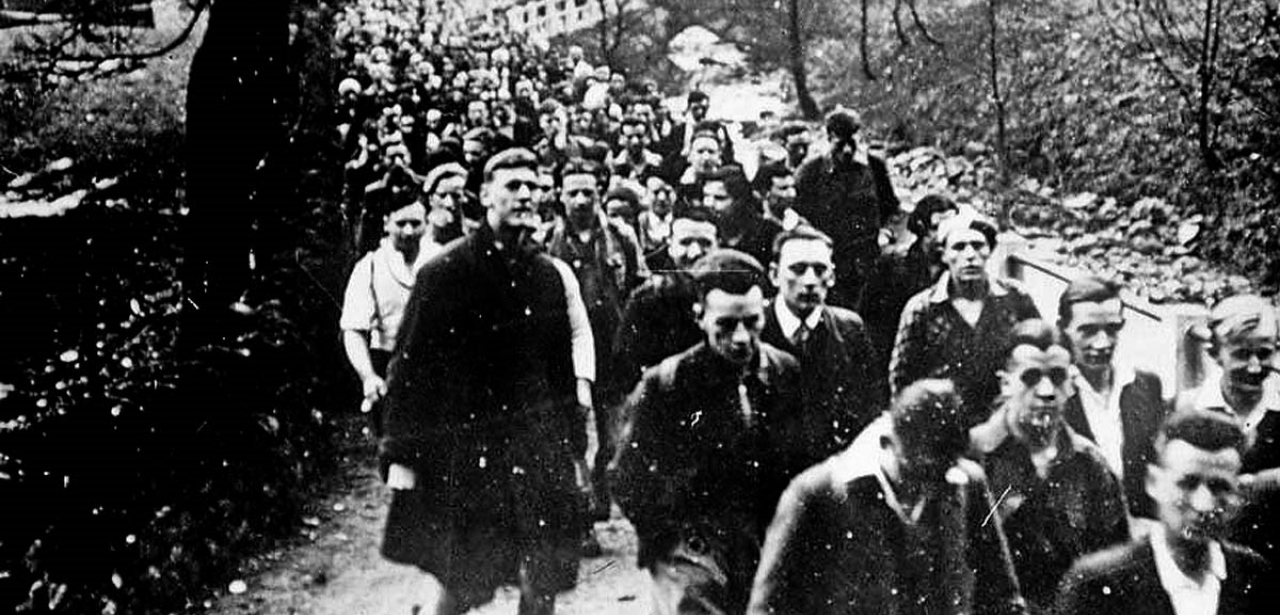
24th April 1932: Kinder Scout mass trespass. Militant action & the right to roam
Despite Parliamentary legislation much land in Britain remains private with no legal access for walkers. Progress has however been made and today is the 90th anniversary of the Kinder Scout Mass Trespass on a grouse moor in the Peak District.
Led by Benny Rothman and others several hundred people asserted their right to roam. They were met with violent opposition from gamekeepers but six included Rothman were still jailed. Even so it set in train further protests where the authorities were more reluctant to intervene.
It was a success for militant action. The Ramblers Association, whose members have long benefited from what took place at Kinder Scout claimed the trespass would efforts to achieve a right to roam 20 years. It didn’t. Sometimes, as modern climate protesters sometimes underline, the only way to challenge and change a law can be to break it.
For socialist historians the politics of the trespass are an interesting if now long past period of left-wing politics. In the late 1920s the Soviet Union adopted a ‘class against class’ policy which saw social democrats as social fascists. The impact in Germany was disastrous (at best). In Britain there was less impact but some was felt in the sporting area where Communists had been part of wider sporting groups. The British Workers Sports Federation saw some football teams as ‘reformist’ and the Ramblers Association was criticised as being too modest in its aims. A particular concern was its dislike of singing on rambles…
Class against Class was dropped in favour of the Popular Front in the mid-1930s but Kinder Scout stands as an example of militant action working even if the politics behind it were very far from ideal.
Stirling makes illegal P&O style sackings at Grey Gables. Workers must occupy to save jobs
The owner of Grey Gables Oliver Sterling has claimed that the explosion at the hotel in early 2020 and the impact of COVID has meant that he has had to take the decision to shut Grey Gables and sell it to a company fronted up by Mr Shah who has recently been staying at the hotel.
Grey Gables will not be sold as a going concern but will now close for at least 12 months and be relaunched as a new upmarket venue and eaterie for Borsetshire.
The Ambridge Socialist understands from reliable sources that Grey Gables has more than 20 staff but Stirling has clearly made no attempt to consult with them or trade unions and has not provided for a statutory 30 day consultation period or filed the appropriate HR1 form detailing the redundancies with the Government.
This is exactly the same behaviour as the rogue employer P&O used recently. It is illegal and Grey Gables workers will have a case for unfair dismissal. Roy Tucker threatened the new owner Adil Shah with Tribunal cases on Thursday
‘Generous’ redundancy payments were mentioned but it’s not clear whether, as with P&O, this will extend beyond the current statutory maximum capped at £17,130 for 20 or more years service. Shah told Roy Tucker that a ‘bonus’ would be paid on top of statutory redundancy, clearly with the aim of heading off legal proceedings
Given that Sterling plans to close Grey Gables by early May and make people redundant the workers now have no choice but to occupy the building to stop closure. Their demands will no doubt need to be democratically discussed and agreed amongst the workforce and with Unite, where they are members.
Some possible demands:
Follow the law and consult with staff and unions on the reasons for closure and alternatives to it
Keep existing staff on while the hotel is refurbished, ready for the re-launch
For those who prefer to leave, offer enhanced redundancy payments from day one of employment (statutory starts at two years) with higher payments for those with limited service and a lift on the cap at 20 years service
Ambridge Socialist Editor Keith Flett said, Oliver Stirling and Adil Shah cannot be allowed to get away with tossing long serving and loyal employees on the scrapheap at short notice and breaking the law in doing so. We think Grey Gables workers should occupy the hotel and seek a way forward that is acceptable to them.
In other news
Alice has told Brian that Chris’s solicitor is looking for the farm to be valued as part of a divorce settlement
Ruari had a birthday party. It went much as expected
Vince has, so far, not funded Freddie’s plans to set up a DJ business
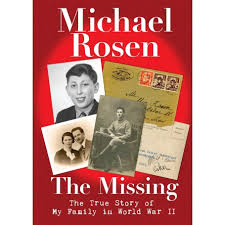
I’ve written about Michael Rosen’s The Missing before. It’s a book of poetry and short pieces which looks at the history of some of his family members during World War Two. He tracks down the story of his father’s uncle Martin Rozen (1890-1944)through painstaking research. Rozen lived in Vichy France and in 1944 he was with other Jews not born in France but living there, put on a train to Auschwitz and murdered by the Nazis.
The book which tells a wider story of war and refugees is aimed at a young audience but has a powerful message for all ages.
It is also relevant to Sunday’s Presidential Election in France where a far right to fascist candidate Marine Le Pen is the challenger to the incumbent Emmanuel Macron. The Guardian wrote (Editorial 22nd April) of Le Pen’s candidacy: Her proposal for a referendum on ‘citizenship, immigration and identity’, aimed at instituting a suite of nativist ‘French first’ policies would generate a constitutional crisis’.
This sounds a like an attempt to re-create Vichy France and a challenger for the Presidency Zemmour who went out in the first round two weeks ago spoke openly and positively about Vichy. Zemmour can fourth with 2.5 million votes and is supporting Le Pen in the second round.
There have been anti-fascist and anti-racist demonstrations against Le Pen but not anywhere near as big as when she ran in 2017. Macron’s policies have not helped but there is also a sense that there is now a generation who simply don’t have an understanding of what fascism meant and could mean again.
Which is one reason why books like The Missing are important. As Michael Rosen writes, he cannot bring back Martin Rozen but he can make sure he is remembered, and what happened to him and why is also remembered.
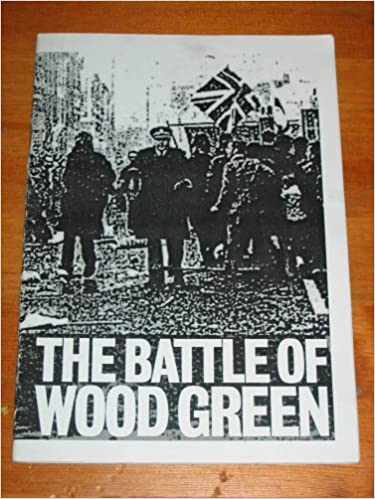
The Battle of Wood Green 23rd April 1977. What took place & why it still matters
The Battle of Lewisham when a National Front march in New Cross was stopped by anti-fascists on 13th August 1977 had been proceeded by the Battle of Wood Green on 23rd April 1977.
Below are extracts from a pamphlet published by Haringey TUC on the 40th anniversary of the event. A rally and festival were held on Ducketts Common to mark the occasion with keynote speakers including Jeremy Corbyn.
The original pamphlet included an introduction by David Renton and a conclusion by Ian Birchall.
The text below focuses on the events of the day itself only.
My thanks to David Renton for providing a copy of the original pamphlet (published 2002) and to Hazel Potter who produced a version which was sold on the 40th anniversary. I have very slightly edited it for readability in 2023. John Robson, quoted below, sadly passed away in early 2020.
On 23 April 1977, a twelve hundred-strong National Front march through Wood Green was opposed by some 3,000 anti-racists, including delegations from Haringey Labour Party, trade unionists, the Indian Workers’ Association, local West Indians, members of Rock Against Racism and the Socialist Workers Party. While Communists and churchmen addressed a rally at one end of Duckett’s Com-mon, a contingent composed of more radical elements in the crowd broke away and subjected the NF column to a barrage of smoke bombs, eggs and rotten fruit. Eighty-one people were arrested, including seventy-four anti-fascists. Such are the bare bones of our history, but they explain lit-tle about what the National Front was, where it came from, and why so many people felt that it should be opposed.
What happened at Turnpike Lane?
Narrative: Keith Flett
The National Front demonstration in Wood Green on Saturday 23rd April 1977 was totemic. The confrontation which took place between fascists and anti-Nazis on that day, together with events at Lewisham on 12th August 1977 led to the foundation of the Anti-Nazi League and the marginalisation of the National Front as a political force.
Wood Green is also remembered as the first of a number of set piece confrontations, but one where the police, who were later, of-ten in huge numbers, to frustrate attempts by Anti-Nazis to stop fas-cist marches, had not yet developed tactics to deal with physical force against fascists. Hence there was a highly effective counter-demonstration at Wood Green which partly broke up the National Front march.
This confrontation did not happen spontaneously, although there were elements of spontaneity about it. It required both detailed organisational planning and extensive political argument and mobilisation before 23rd April.
Beforehand: considerable planning went into building the counter-demonstration both in terms of tactics and support. The Trades Council and Labour Party members both supported physical confrontation, not automatically, but after debate and argument in meetings. There was a planning committee for the anti-fascist mobilisation some of whose members still live in the area. From discussion it seems clear that much of the work of building the protest was a familiar routine to them and, indeed, would be familiar to anyone organising a demonstration today. Leaf-lets were handed out on high streets to members of the public and Turkish and Greek cafes on Green Lanes and West Green Road were leafleted and visited several times to mobilise this section of the community.
Organisationally, testing of red smoke flares tool place on Tottenham Marsh and quantities of flour, eggs and fruit were prepared. Some activists have suggested that the preparation had a degree of gender specifity to it, which would be much less usual in the labour movement 25 years on. For example, women were responsible for flour and eggs, while men did the testing of the smoke flares. However, members of the planning committee recall that the main aim was not to perfect military tactics but simply to get as many people there as possible. It was the mass mobilisation of local people not clever tactics that would defeat the fascists. Indeed, it appears that some of the tactics discussed would not have worked in the first place. One idea was to sabotage the traffic lights at the junction of Green Lanes, Wood Green High Road and Turnpike Lane until it was pointed out that the police were unlikely to stop the fascist march because a traffic signal was stuck at red.
On the morning of the march preparations were made at the house of a local activist. Bags of flour and rotten eggs and tomatoes were assembled ready to be handed to people in the crowd to throw at the fascist marchers.
On the day: attempts were made to smash the windows of NF coaches as they took fascists to the assembly point on Duckett’s Common. Not unusual in itself, this does however highlight an important point about the march and opposition to it. In general, the National Front marchers were not local people and there was a general resentment, summed up in the pages of the Hornsey Journal the following week, that fascists should not be al-lowed to bring their message to an area where it was not wanted and had little local support. However, it would be wrong to suggest that the anti-fascists at Turnpike Lane were entirely drawn from the immediate local area. The National Front march was seen as a challenge across North London. One person who had been on the planning team for the counter-demonstration recalls that, following an anti-racist demonstration in Islington on that Saturday morning, numbers had taken the tube to Turnpike Lane to join the anti-NF protest. One respondent mentions NFers and anti-fascists both directing people at Turnpike Lane tube. Fascists were directing people to Duckett’s Common at Turnpike Lane tube station, but they were out-numbered by anti-fascists directing people to the counter-demonstration.
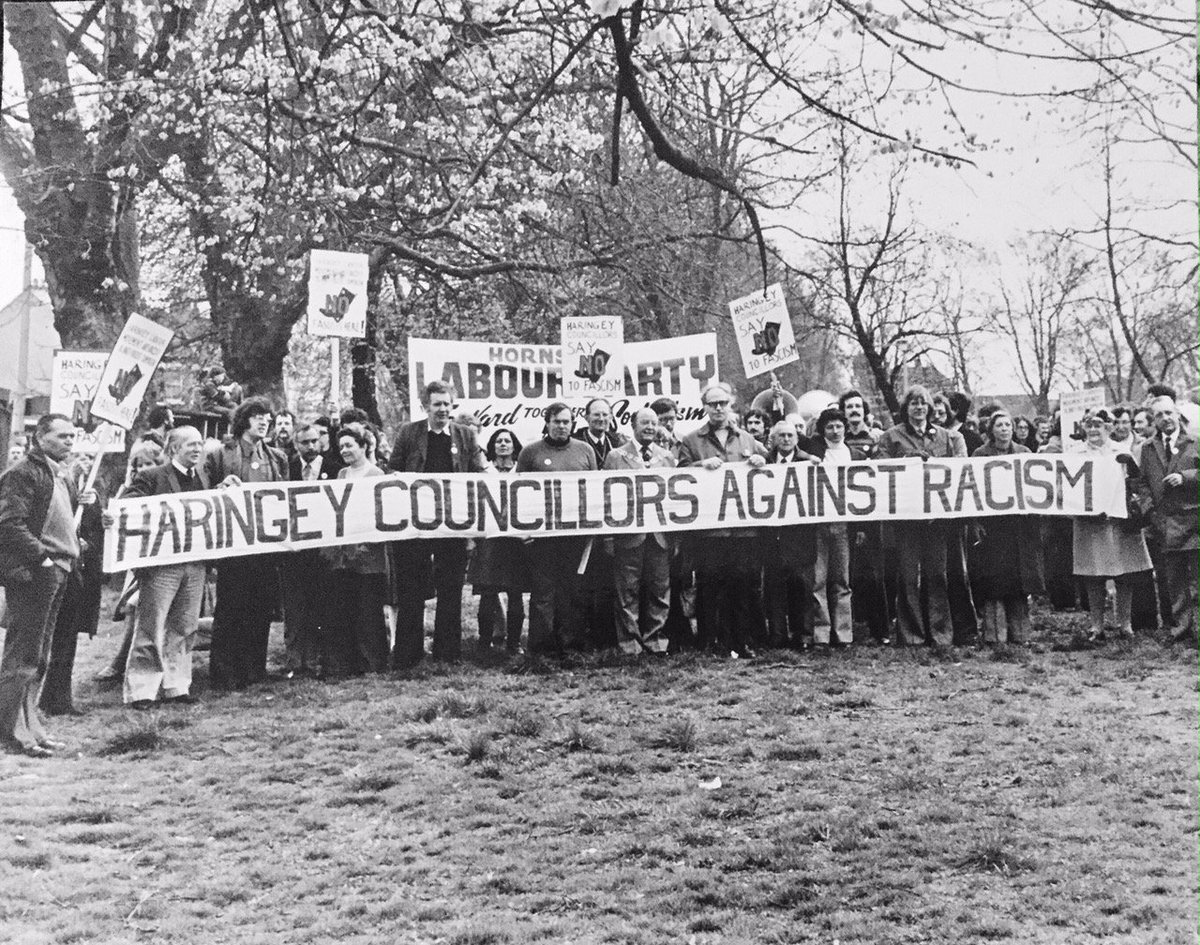
A large number of Haringey Councillors, mostly Labour, but even the odd Tory, appeared on Duckett’s Common with a large banner opposing fascism. A picture of the Councillors and the banner appeared the following week in the local paper The Hornsey Journal, whose front page headline read: “Forty years on, the fear of fascism fouls our streets”. An editorial comment questioned why the police had allowed such a provocative march. One of the Labour Councillors at the time, and an organiser of the counter-demonstration, was Jeremy Corbyn, then a trade union official, now a Labour MP. It was not just Labour Councillors who were there. Discussions with Leyland Grant, the brother of the late Bernie Grant, MP for Tottenham, suggest that local activists from the Workers Revolutionary Party were also present. The WRP at this time was noted for usually not appear-ing on broad based protests, often preferring to call its own. In a sense to even suggest divisions at a local level, between Labour lefts, the far left and others is wrong. Political disagreements there certainly were, but many of the activists knew each other socially and were prepared to work together.
As soon as the NF march moved into Wood Green High Road, counter-demonstrators attacked and the march was split, with some NF supporters scattering. Memories of the use of flour and eggs are very common. As the NF moved into Wood Green High Road they were bombarded with flour, eggs, tomatoes and the shoes from racks outside the front of a shop on the High Road. Whether the shoes were later collected up by the shop owner, or whether they were left there deliberately in sympathy with the march is not known. Carol Sykes recalls carrying some balloons filled with paint or inky water, and some marine flares in a Sainsbury’s carrier bag, she notes “the old brown paper sort, not the plastic ones you get today”, and handing the bag over to someone at the corner of Wood Green High Road and Turnpike Lane. She then joined the main counter-demonstration.
The police then moved in behind the remainder of the march and tried to prevent counter-demonstrators from following. There were running scuffles as the police blocked the way of anti-fascist protesters. The police even stopped people walking along the pavement alongside the march. Remember, this was a busy North London shopping street at the height of Saturday shopping. John Robson recalls that “many of us were caught at the building works for the shopping city, where Boots now is. The police have let through the march, but we were kept from following.”
Robson argues that Tariq Ali led one group [the wrong way] down Alexandra Road back to Turnpike Lane and towards Hornsey and recalls telling him that the quickest way to Wood Green tube station was down Lymington Avenue. Robson says that “I got to the station for the passing of the march, but those who followed Ali never saw the march again as they got hopelessly lost”. Even so an account of the day published in the following week’s New Society does suggest that Tariq Ali did eventually man-age to lead a group of anti-fascists close to the NF meeting point. He is described as speaking “from a traffic-light junction box, with a loud-hailer.”
Some protesters were able, eventually, to follow the remains of the NF march to its destination. There were flights between fascists and anti-fascists in Broomfield Park and in Aldermans Hill, Palmers Green. Some of these may have been mobilised from Enfield and not been at the beginning of the march. A sizable number of anti-fascists did make it to near Arnos School in Wilmer Way where the NF held their rally. Significantly this was in Enfield, then Tory controlled, not Haringey. By this stage it was late afternoon.
Memory
Some people can’t remember anything that happened; others recall being there but that’s it. Nigel Fountain, who some participants recall being there, does not recall it himself, but has suggested a follow up volume on socialist amnesia. Tariq Ali has pointed out that this was a period of several years of such demonstrations and it is difficult if you participated in a number of them to be entirely sure whether you were at a specific event. This does suggest that this pamphlet has a very particular ‘take’ on events. Namely that most of the contributors were local participants, activists and leaders in 1977, and while they may have moved on politically and personally in the intervening 25 years, still either live in the area or have links with it. For them, 23rd April 1977 is not just a piece of political history but of personal history as well.
Sexism
One respondent felt that there was a clear, and sexist, division be-tween men and women on the counter-demo and hoped that we were not producing a hagiography [we’re not!]. Photos of the demo do in-deed suggest that the counter-demonstration was male dominated and this may have reflected the general profile of the left 45 years ago.
Fascists
Although we have not sought to discuss the events of 25th April 1977 with any fascists who were present on the NF march that day, the project has been widely publicised in North London and beyond. We had anticipated that one or two fascists, might at this distance have abandoned their dalliance with Nazism and have been prepared to come forward. However, none have. The only record we have therefore of the NF marchers is the New Society account published the week afterwards. This notes that “A striking feature of the NF supporters on Saturday was the number of teenage boys in the ranks”. Of the assembly of the fascist march on Duckett’s Common the report notes that “Groups of teenage lads wearing red roses on their denim jackets turned out of the Queen’s Head like guests at a skinhead wedding. Greasy-haired rockers with hunched leather shoulders, wore red roses. So did prim middle-aged couples, the wives in tweedy suits”. This last group, it may be suggested, were unprepared for what they were to meet as they turned into Wood Green High Road.
Hidden from History
Some felt that some of the things they did were personally or politically too embarrassing or awkward to appear in print even 45 years on. The Anti-Nazi League, for example, still existed when the pamphlet was originally produced and still had to mobilise regularly against Nazis. This pamphlet is a history of a local demonstration with some wider political implications, not a chapter in the history of the ANL. Such a history will need to be written one day, but not while the job of fighting fascism is on the agenda still.
Hence one activist, who was managing a socialist bookshop at the time, told us that he had been specifically asked not to go because of the danger of arrest and the implications this would have for the running of the bookshop. Others told us that they had been due to attend a delegate meeting of the International Socialists [now SWP] on the day and had been specifically told not to go, but had bunked off the meeting at lunch-time and gone to the demonstration. Another issue, perhaps the most puzzling to arise in the researching of this pamphlet is what route the fascist demonstration took when it left Wood Green tube station. The ‘common sense’ view amongst those that were there was that it continued straight on
Down Green Lanes to the Cock at Palmers Green, took a left turn into Bowes Road and then turned right at the junction with Wilmer Way and the North Circular Road where the venue for the fascist rally was. However, for a variety of reasons – police blocking the way or a focus on the ambush at Turnpike Lane – very few anti-fascists made it past Wood Green tube to ac-company the Nazi march. One that did was Dave Morris, then a North London postman, later known as an anti-McDonalds activist and a member of Haringey Solidarity Group. A photo that he has of the march not only suggests that far more fascists were able to re-group after the Turnpike Lane ambush than previously supposed [certainly several hundred] but that the route was different. It appears that the march continued on past the Cock at the North Circular Road to Palmers Green triangle. Here Enfield Trades Council and some local Communist Party activists rallied in opposition to the fascists. The NF then continued down Powys Lane into Wilmer Way from the north, skirting the edge of Broomfield Park. At least one person who has contacted us has referred to fighting between fascists and anti—fascists in the park itself.
Even less well known is what happened at the fascist rally itself. A report in New Society [28 April 1977] by Gavin Weightman noted that “Two men in khaki anoraks came out of the school, one, a barrister, nursing a bloody nose. They had been allowed into the meeting as observers. Then they were turned on, called ‘commies’, kicked and punched. Some NF members out-side jeered and laughed when they saw blood”. We have obtained some rare testimony from one of the people involved in this incident which is printed below, together with details of a further previously unknown confrontation which took place after the end of the fascist meeting at Turnpike Lane tube.
Perceptions
One of the hardest tasks of the historian is to capture what it was actually like and how people saw things for the period we are covering. That we are looking at an event in relatively recent living memory does not necessarily make things much easier. However, while we may want to draw some political parallels and lessons from the events of 45 years ago, historically some things were different.
Wood Green was one moment in the rise of a fascist movement in 1970s Britain that culminated in 1979 and went into decline for a period thereafter. Yet the presence of fascists in North London had been felt for several years before 1977, they were an uncomfortable and unwanted part of the political landscape. The left of 1977 was much more engaged in fighting fascism than its counterpart 25 years later. Some of this is well captured in Nigel Fountain’s left-wing crime thriller novel Days Like These, published in 1985 which is set in North London and deals with the historic roots of British fascism. In 1977 socialists might well won-der if the people coming towards them in the street, or drinking at a nearby table in a pub were fascists. The threat of attack and confrontation never appeared far off, and did indeed, from time to time, actually happen. The shadow of fascism and fascists was ever present in the mind if not physically.
How the State reacted was different then too. Pictures of Wood Green show police shrinking back in the face of smoke bombs and missiles. They are pictured defending themselves with their helmets. There were no riot shields, visors or any of the semi-military equipment that later protesters were to find. But if the police were taken by surprise by the tactics of anti-fascists at Wood Green, so were the anti-fascists themselves. David Widgery in his book Beating Time estimates that even a year earlier protesters would not have attached the fascist march. That they did was per-haps a semi-surprise to them as well, even though they had planned for it.
The testimony of these who were there, however, suggests that the National Front was now seen as a very serious threat to the left and that the violent tactics employed at Turnpike Lane were not only necessary but would need to be repeated.
How they saw it:
memories and assessments from 23rd April 1977
From Beating Time, David Widgery et al, London 1987
P43: “The NF’s first big demonstration of 1977 was planned for April through a multi-cultural inner city suburb where long-standing Jewish and Irish citizens has been joined by post-war immigrants from the Caribbean, Cyprus, India and Pakistan – Wood Green. A loose alliance of political and ethnic groups including the local Labour and Communist parties united to oppose the Wood Green march. But there was considerable disagreement about tactics, with the leadership of the Labour Party and the Communist Party and the official ethnic bodies concentrating on pressure to get the march banned while they held a separate protest rally. The SWP led the argument for direct confrontation which was not, as a North London SWP organiser recalls, at all easy:
we were quite clearly the best organised. We always had the leaf-lets out first, we knew the terrain and we knew where we were going.
…while the worthies addressed a rather small audience in a local part the Front and their police protectors were faced with much more numerous better organised and determined opposition armed with smoke bombs, flares, bricks, bottles and planned ambushes. At Duckett’s Common where the pre-vious year the anti-NF forces would probably have been content to jeer there was a spontaneous move to block the road and physically attack the Front.
…A batch of dogged student lefties stoically chanting the NF is a Nazi Front were shocked into silence by the sight of a squad of black lads accurately hurling training shoes borrowed from Free-man, Hardy and Willis street display baskets. A smoke bomb bar-rage obliterated the honour guard’s spiked Union Jacks. For a moment the police line weakened and it looked as if they would not pass.”
John Robson, now trade union Chair of the London Underground Trains Council recalled that 45 years ago: “I was unemployed and re-member spending weeks prior to the march going around cafes and clubs in Green Lanes and West Green Road, delivering leaflets and post-ers. We visited hundreds of Greek and Turkish establishments and work-places to drum up support for the anti-Nazi counter-demonstration”.
Daniel Birchall, the son of a political activist, then aged six, recalls of the day that “I was taken off to Alan Watts’ house where everyone had gathered to put flour, tomatoes and eggs into brown paper bags. Some [people] were going to hide in the crowds and pretend to be passers-by rather than join the counter-demonstrations and then launch their attack on the NF from the sidelines. Some of the tomatoes and eggs might even have been rotten”.
Dave Morris, a member of Haringey Solidarity Group notes: “I was on the demo with some other anarchist colleagues. My memories are hazy but I recall being involved with a bit of a fracas in the High Road as police blocked public and protesters from walking down the pavement, alongside the march.
Somehow I got through, seemingly the only one who did at the time. For half an hour I walked alongside the fascist demonstration as it complete-ly dominated the streets, protected by police who cleared away most of the public in general. It was eerie – chilling in fact. After getting increasingly funny looks from cops and marchers despite my innocent whistling and hum-ming and pretending to admire the cracks in the paving stones, I sloped off.
I resolved that I would help mobilise for, and take part in future efforts to physically confront and prevent fascist marches. I had tons of arguments with NF sympathisers where I worked as a postman in the Holloway sorting office. There was at the time a 100-strong NF postal workers branch in the main Islington sorting office, and fascism seemed to be a real and growing threat.
However, going to Lewisham later in the year was a real turning point for me – the fascist march there was successfully attacked and then shep-herded away by cops to the middle of nowhere… then thousands of mainly black local residents, and many of the anti-fascists, tool over the streets in a show of force against the NF and the police that sent out an uncompromising message: ‘fascist activities will be crushed – the streets being to the people’.
The next day at work sympathy for the NF and overt racism seemed to have evaporated somewhat and gradually fell out of favour. Meanwhile postal workers all over London were taking solidarity action with the striking Asian women of Grunwicks, as company mail seemed to be continually getting diverted to New Zealand…”
David Bennie, one of the two anti-fascists mentioned in the New Society report has provided his diary entry for 23rd April 1977: “We walked to Turnpike Lane where the counter-demonstration was assembling in the presence of vast numbers of police. The rally had been banned but the local council yet was being attended by the vice mayor, the local Labour candidate Ted Knight [a fine battling leftist on Lambeth Council] and even a representative of the Tory opposition on Haringey Council. We met up with Steve and watched the Front march form up a hundred yards away, with plenty of verbal exchange between the two sides. It seemed incredible to me that the police could allow such an obviously explosive confrontation to occur.
The march started off and we were aiming to intercept. Soon I had lost Robin but managed to maintain contact with Steve. A little way along Wood Green High Road the march was attacked. Red smoke bombs filled the air and a battle was soon underway. Everything that could be thrown was thrown at the fascists in an attempt to stop the march. Police Horses appeared on the pavement, if shoppers got in the way that was their hard luck. I crossed the road to give myself more freedom of action. I picked up a policeman’s helmet and used it as my first missile of the day. I grabbed a Front flag, intending to throw it at them but others wanted to burn it. If they had man-aged to set it on fire I would have thrown it, the bastards should have been stopped. We didn’t stop the march but it was harassed every inch of the way.
Police horses separated the two groups some distance from the school where the Front was assembling and then a violent hailstorm dispersed the remnants of the counter-demo. We found ourselves walking past the school and I suggested that we try and go inside. The stewards at the ground’s entrance seemed amused at the idea and let us in. At this point Steve said we were crazy and left. There was some dispute at the door about whether to admit us but we finally got in and I heard a couple of minutes of the meeting. “If they’re black, send them back.” The atmosphere was one of rabid anti-intellectualism, clear-ly thought was a sign of weakness. Then somebody said, “they’re commies” and we were recognised as anti-fascists, which I thought was obvious anyway.
The mood was ugly so we made to leave but they weren’t able to re-strain themselves, we were jostled and pushed out. Robin, a yard behind me, received a number of blows and kicks until blood was coming from his nose. Some of this happened outside but police stood around nearby, ignoring it. As we left a guy writing for New Society interviewed us about what had happened.
We caught the tube at Arnos Grove but when it stopped at Turnpike Lane we heard shouts of “everybody off the train”. Soon the whole plat-form echoed to the chant of “The National Front is a Nazi Front, SMASH the National Front”. It seems that a few fascists had attacked a comrade with a bottle. I saw one large guy, barely able to stand, with blood running from his face and understood that two others were hurt. The fascists’ compartment was besieged; we were not prepared to let the train leave until the thugs were arrested for assault. Robin recognised one of them as one of our denouncers in the hall. They stood there, umbrellas in hand, trying to repulse us, with crazed looks on their faces, like bit part players from A Clockwork Orange until the police took them away. It was a marvellous experience of revolutionary solidarity against our most dangerous enemies.
It had been quite a day. I’d never been through a demonstration like it and left it determined that the National Front must be opposed with absolute ruthlessness wherever it dares to appear. Any illusions I may have had about non-violent means of opposing them were destroyed in that school”.
St George’s Day, celebrated on 23rd April, has a very mixed place in British history.
From the time of the crusades until the 17th century, the celebration of St George’s Day was a popular tradition in most periods. The Reformation caused some issues but the day was still marked until in 1645 the Long Parliament banned it. It re-appeared in 1660 with the Restoration.
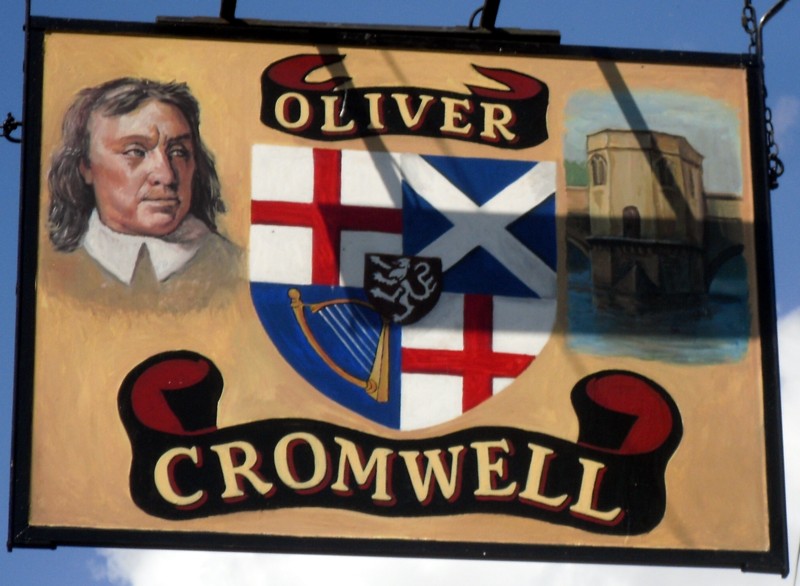
Cromwell obviously was not keen, to put it mildly, on celebrating any Saints Days. Yet he was keen to appropriate the St George’s ‘cross’ flag known to this day as the English flag. The cross or ‘bloody cross’ was held to represent the Crusades and in Cromwell’s usage his imperial adventures (and massacres) in Scotland and Ireland.
It has frequently been suggested that St George’s Day, and other Saints Days should be a national holiday. Irrespective of where you stand on the above, why not? Britain has few public holidays and it’s difficult to see that more would do any harm.
The Battle of Wood Green 45 years on: not just history
Saturday 23rd April marks 45 years to the day since the Battle of Wood Green. On that sunny Saturday afternoon in North London, the fascist National Front assembled over a 1,000 with the aim of marching down one of the busiest shopping streets in the area, Wood Green High Rd, packed with shoppers. Their aim was to stir hatred and create division and most of all to underline that they controlled the streets.
A counter demonstration was organised. A young Haringey Councillor Jeremy Corbyn was the spokesperson and he proved adept at marshalling Councillors from across the political spectrum who had a peaceful protest and those who wanted to stop the fascist march, very much in the tradition of those who had opposed Mosely in the 1930s and early 1960s.
When the Front march turned out of Duckett’s Common, Turnpike Lane and into Wood Green High Rd, anti-fascists attacked it and partly broke it. Some fascists straggled on to a rally in Arnos School in neighbouring Enfield. The anti-fascist attack was organised but in reality what broke the march was ordinary North London shoppers surging forwards and joining in
The National Front in London in 1977 were a serious political force. That came 4th with 119,000 votes in the May 5th Election for the old Greater London Council. They were also a street fighting force, regularly attacking socialists campaigning on high streets and breaking up violently left-wing and trade union meetings.
After 23rd April they never attempted to march again in North London.
I’ve told and written about this event many times both as an active participant in it and as an historian. At 45 years distance it is now history and people like myself can sound rather like the Chartists who survived to be active in the socialist movement in the 1880s, looked on as interesting if tiresome relics of a time now passed.
Except the time has not passed. On Sunday a fascist, Marine Le Pen, very much in the tradition of the old NF, is challenging to become President of France. Fascism- genuine fascist ideas and organisation beyond just right-wing and authoritarian politics, is growing again in numbers of countries.
The Battle of Wood Green is history, but just history..
Guardian columnist Tim Dowling has shaved his beard. Wearing one is a choice..
Regular Guardian columnist Tim Dowling has shaved his beard off (or rather had it shaved at the barbers). Very much in a currently popular Guardian genre of writing about inconsequential matters of an individual’s personal life (see Adrian Chiles) he has written about it
He quotes a (clean shaven) academic Alun Withey who has written interestingly on some aspects of the history of beards and provides a brief resume of past ‘peak beard’ episodes. He also quotes dodgy research from Australian ‘scientists’ on how attractive or otherwise beards are. Such ‘research’ appears to be a thriving industry in Australia.
He does not of course quote the one source that could have provided him with useful guidance and advice on his beard: the Beard Liberation Front. One of its founding principles is that people should be able to dress and appear as they want. Tim Dowling can (and has) shaved his beard. Later he can grow it again, if he wants to. Of course there are people and organisations that seek to regulate and control this. That’s why the BLF exists. To stop the pogonophobes.
Britain is not at war with Russia or anyone else, although there is a war with dreadful impacts going on in Ukraine. Boris Johnson’s war is performative playing to a crowd of right-wing Tory MPs and newspapers, and which unfortunately Labour also has a supporting role in.
There is however a war going on in this country and it is the Tories class war against ordinary people. Covid has been left to run unchecked, the NHS starved of the resources it needs, energy prices and general inflation rising well above wages, and little or nothing done to address the climate emergency.
Although every crisis has its specifics, capitalism is a system based on crisis, on boom and slump and the cost of living has been a significant issue for the left and working people since the development of industrial capitalism in the late eighteenth century.
Two of the most well known refrains of the first half of the nineteenth century were for the repeal of the Corn Laws which had the effect of making bread more expensive and the traditional song ‘The Roast Beef of Old England’ sung to reflect the view that roast beef was the right of the ‘freeborn Englishman’ but in reality few could afford to eat it.
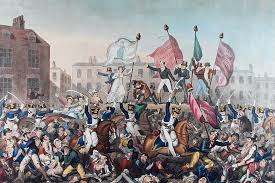
Calls to scrap the corn laws were part of Peterloo in 1819 underlining that in the popular mind calls for political democracy were allied to demands for a decent standard of living. The laws were eventually repealed in the 1840s after a campaign by led by the Anti Corn Law League, run by bourgeois liberals.
As Marx noted the reality of the repeal was that industrialists would reduce wages- as bread cost less- and make more profits. Hence a successful struggle on the political front also had to be waged industrially in the workplace, with the development of organised labour in unions to push for better pay and shorter hours.
In 2022 many might question how sensible and ethical it is to make having roast beef as a key demand for maintaining living standards is. But there are now practical alternatives to eat. In the 1830s and 1840s only better paid workers- when they were better paid which was often seasonal- could afford to regularly eat meat of any kind. Urban workers core diet often consisted of bread, poor quality cheese and beer (of a low strength to replace water). Rural workers might more usually subsist on potatoes.
Poor diet was only one element of the cost of living crisis, at it is now. There was an impact on health and this was often magnified by bad housing conditions. All this meant that the average age of death for workers was very low by modern standards.
This is a 2022 issue as well. Professor of Public Health at UCL Michael Marmott has warned that Government policies are increasing inequality and seeing a decline in the health of the poorest in society.
What strategies are there to grapple with this? CWU General Secretary Dave Ward has argued that a General Strike might be needed. This was tried by the Chartists in 1842 but while effective did not bring change. Another strategy was pursued as a result, what the historian E P Thompson described as ‘warrening’ capitalism from end to end with defensive structures such as trade unions, trades councils, co-ops and so on. These have worked in the 150 years since they started to develop with the TUC being formed in 1868 but they are at best imperfect. Historically in the fight to for a decent standard of living and health nothing was or should be off the agenda.
Johnson has headed to India to meet, again, fellow far right politician Modi. Modi is a far more serious (and deadly) politician than Johnson but I doubt that will get a mention. Nor I suspect will Modi’s reluctance to back the NATO view on Ukraine be too much discussed (tho Johnson will no doubt say it was).
One key reason for Johnson’s visit (Financial Times 19th April) is to get Modi to lift tariffs on the import of Scottish whisky. India is the biggest whisky market in the world but most is produced in the sub-continent (the little that finds its way to the UK is very drinkable..)
The FT reports that if Johnson can get Modi to drop tariffs Chivas(for example) plans to double exports. There is a 150% tariff on Scotch whisky currently but even so India is the second largest Scotch export market.
Chivas is owned by Ricard the French maker of Pernod so any deal will be good news for Macron too, tho don’t expect Johnson to mention that or the Tories what he is actually doing in India.
The FT also reports that a number of Indian States are teetotal. The whisky trade is aimed at a section of the Indian middle class. One doubts any of that has crossed Johnson’s mind.