Articles

Happy 88th birthday Ken Loach. Still a socialist beyond Labour’s Broad Church

In Uncategorized on August 15, 2021 by kmflett

Ken Loach & Labour as a ‘Broad Church’

Ken Loach the veteran film director, socialist and activist is 88 years. He remains all those things despite being despatched by Labour from its Broad Church in 2021.

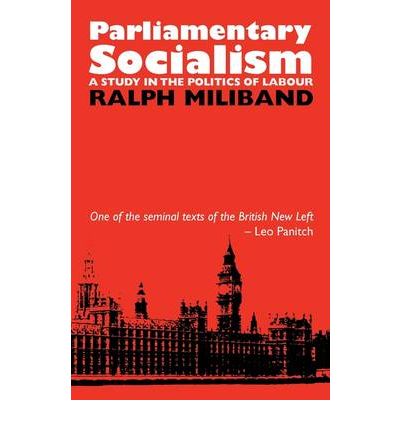
The late Ralph Miliband wrote one of the best books about the history of the Labour Party, Parliamentary Socialism,1961, albeit of course it doesn’t cover the last 60 years.

Miliband, the father of David and Ed, opens the book by making the statement that as a democratic socialist party Labour had always been amongst the most dogmatic. Not about socialism but about the use of Parliamentary as opposed to extra-Parliamentary forms of struggle.

His view at that time was that Labour under Hugh Gaitskell was not a vehicle for socialist advance and the leadership of the rather more ‘left-wing’ Harold Wilson did nothing to change his mind.

He did however keep the matter under review and sometimes returned to the subject, for example in the Socialist Register 1983:

https://www.marxists.org/archive/miliband/1983/xx/advance.htm

Here he saw the rise of the Bennite left as a sign that maybe Labour could be claimed for socialism. Significantly perhaps it appeared in the year that a, then young, Jeremy Corbyn first became an MP.

Tom Watson before he stepped down as an MP described an effort to abolish his then Deputy Leader position as going against the idea of Labour as a ‘broad church’. Harold Wilson was probably right that Labour owes more to Methodism than Marx but as Miliband noted the ‘broad’ part of the description is harder to justify historically.

Pious references to the Labour Party being a ‘broad church’ which has always incorporated many different strands of thought fail to take account of a crucial fact, namely that the ‘broad church’ of Labour only functioned effectively in the past because one side – the Right and Centre – determined the nature of the services that were to be held, and excluded or threatened with exclusion any clergy too deviant in its dissent.

Socialists can certainly still be active, with difficulty, in the Labour Party and have been. Managing to control it as an institution and grapple with its Parliamentary focus is much harder.

A recent episode in Labour as a Broad Church saw veteran film maker Ken Loach expelled because he continued to support others who had been expelled by the current right-wing leadership.

Some don’t like at best some of the things Loach has said over the years. While I’ve never been part of exactly the same left variant as him, and clearly would have disagreements about all kinds of things, I don’t think anything he has said or did warrants excommunication. Far from it when others in the Labour Party, sometimes elected officers, continue to make racist or transphobic remarks without sanction.

They of course are no threat to a right-wing ascendancy in Labour. Perhaps his explusion underlined how insecure the leadership thinks its grip on things is. Perhaps. As likely it’s just another reminder that Ralph Miliband 60 years ago was right. Labour’s broad church is not that broad.

Articles

Joe Root has remarkable batting stats since he came out with a full beard

In Uncategorized on August 14, 2021 by kmflett

Beard Liberation Front

15th August

Contact: BLF Organiser Keith Flett 07803 167266

Joe Root has remarkable batting stats since he came out with a full beard

The Beard Liberation Front, the informal network of beard wearers, has said that England cricket captain Joe Root’s 180 not out at Lords in the Second Test against India is but the latest in a series of impressive scores since he came out with a full beard.

Root has attempted facial hair off and on in recent years but in 2021 his beard has finally flourished and it has clearly had a positive impact on his batting.

His century at Lords was the fifth in 2021 the highest number for an England captain in a calendar year.

The campaigners say that Root’s beard has given him an advantage over bowlers allowing the follicles to ride air currents created as the ball is bowled and allowing him to score more easily.

BLF Organiser Keith Flett said, Joe Root has beard power

Articles

Late 1873: Marx takes the air & waters in Harrogate

In Uncategorized on August 14, 2021 by kmflett

Late 1873: Marx takes the air & waters in Harrogate for 3 weeks

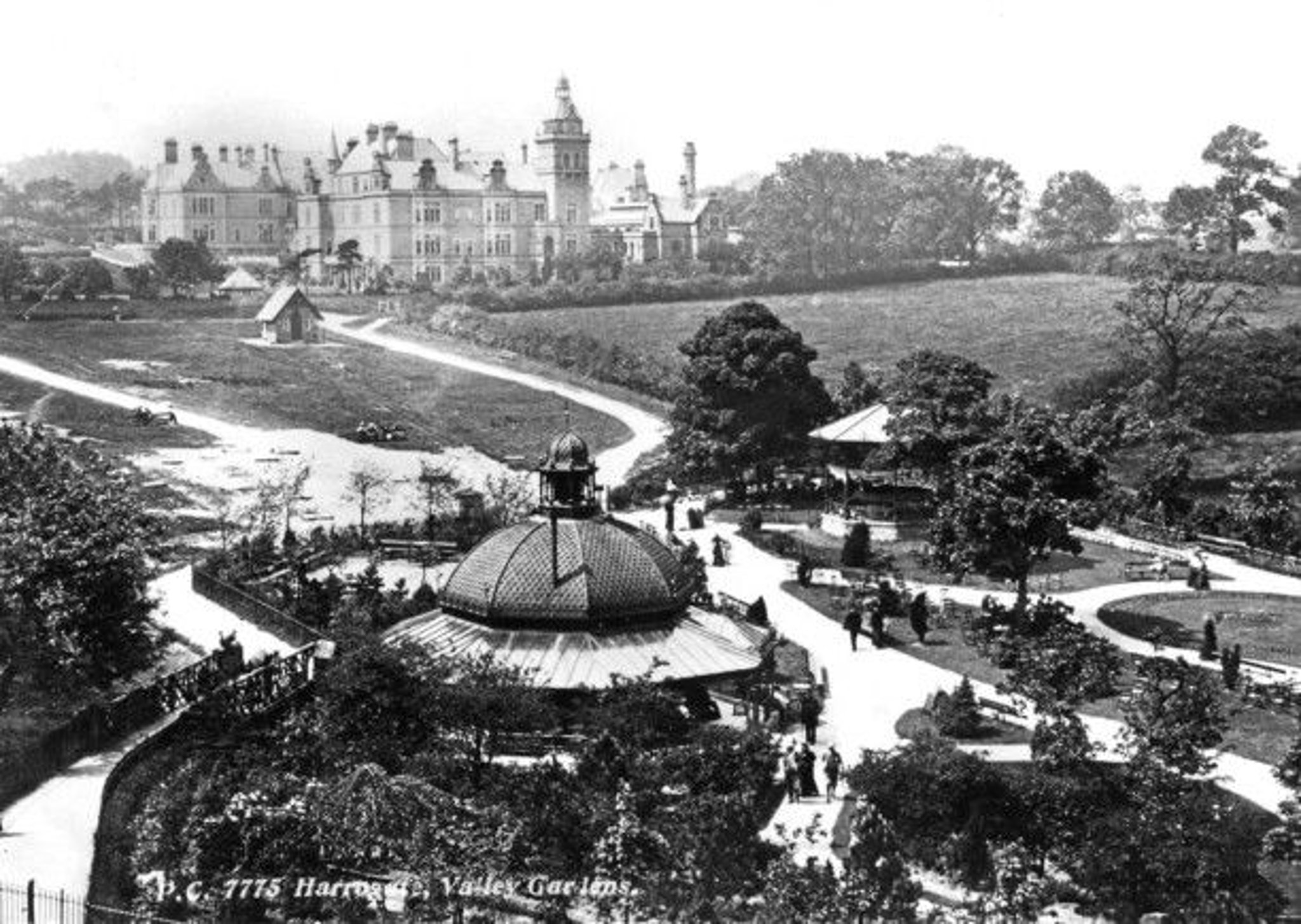
Marx in later life was plagued by health issues and often took health cures. In late 1873 he stayed at the Old Swan Hotel in Harrogate (still open) for three weeks. Both Marx and Engels were frequent visitors to the English seaside and one wonders if their tourist guide to the best locations to take the air and go for walks is the missing fourth volume of Capital dealing with culture and class

 what an extraordinarily beneficial effect the air here and the peaceful life have had on me (I have done absolutely no work whatsoever) (Marx to Engels 7th December 1873)

My youngest daughter3 and myself have for three weeks stayed at Harrogate736 whither our medical adviserb had sent us. The quiet life, breezy air, mineral waters and pleasant walks of the place have gone far to restore the health of the two patients. (Marx to Thomas Allsopp 23rd December 1873)

Articles

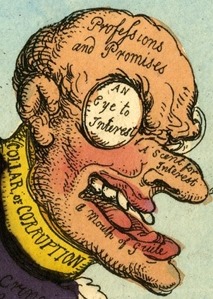
‘Call Me Dave’ Cameron, Regrating & Cobbetian ‘Old Corruption’

In Uncategorized on August 14, 2021 by kmflett

David Cameron, Regrater Lex Greensill & Cobbetian ‘Old Corruption. Update

Regrater or Forestaller was the term used- particularly by radicals-in the eighteenth century to describe what has more recently been known as the middleman.

That is someone who inserts themselves between a supplier and a buyer and makes themselves a profit out of it.

That is essentially what the story of Greensill, the global financing company that has gone bust threatening thousands of jobs including 5.000 in the UK steel industry, is about.

It is a complex story, some parts of it as yet remain unclear. The media have focused on David Cameron who was PM when Greensill got Government business and then went on to work for the Company. Culture Minister and statue obsessive Oliver Dowden defended Cameron as a ‘man of integrity’. As a Sunday Times Editorial (28th March) noted Cameron doesn’t actually have a reputation to lose.

Greensill was from an Australian farming family that went bust after a bad harvest. He came to the UK and got employment at Morgan Stanley. Here he met Jeremy Heywood, a civil servant, who was on secondment in the private sector.

Heywood returned to Government as Head of the Civil Service in the Cameron-Clegg Government. He died in 2018.

In Government Heywood seems to have promoted Greensill to Cameron.

As the Sunday Times story indicated Greensill’s business was about supply chain finance. He would act between the supplier and the buyer and aim to speed up payments for a fee.

Only one scheme actually happened.

This allegedly was about addressing the issue of chemists receiving late payment from the NHS for prescriptions they dealt with.

Here we find the core of the issue and it was about austerity.

If there was an issue of late payment it should have been sorted out by the Government and the NHS. Greensill was entirely unnecessary to the matter. Indeed under the previous Labour administration a plan had been agreed to address it. It was not implemented.

This was the age of austerity and Cameron-Clegg wanted a Small State and public sector. Hence anything that could and should have been done by the Government that could be passed to the private sector was.

As the report underlined the scheme was not much used because the commission charged by the banks that were making payments to the chemists came to more than any loss they might have made through late payment.

The BBC have reported that Cameron has told a Treasury Committee on 13th May that:

he had felt the firm’s proposals would help small businesses access cash during an economic crisis, and were “absolutely in the public interest”.

This statement does not accord with reality. One wonders if Cameron actually knows that or is simply lost in a world of self-justification?

It is any way the world of William Cobbett’s Old Corruption before 1832 in 2021. Cameron made a lot of money out of this. Not specifically out of the NHS contract but as a consultant to Greensill. He told the Committee he was paid considerably more annually than the £150K he had earned as PM. If he had been hired for his specific expertise he might have suggested that the NHS scheme was not only not going to help but would end up adding cost. He was however hired not for his expertise in anything but because of who he was- an ex-PM.

The BBC has now revealed (August 9th) that Cameron is believed to have made around £7.2m doing part-time work for Greensill for two and half years. Cameron has said that he was only one of several advisors and had no role in any decisions. He did however lobby the Goverment over 50 times to provide public funds for Greensill

BBC Report

https://www.bbc.co.uk/news/uk-58149765

and there was more. Another story has appeared revealing that Cameron introduced a company to then Health Secretary Matt Hancock with the aim of getting a Government contract. Again, note, Cameron introduced himself into the process as a middleman, where the Government already has a process for evaluating and letting contracts.

How much Cameron was paid this time is yet to be reported.

https://www.bbc.co.uk/news/business-58146567

Articles

Ten Years ago today I shook hands with Boris Johnson in Tottenham…

In Uncategorized on August 13, 2021 by kmflett

Ten Years Ago today I shook hands with Boris Johnson in Tottenham

I’m not unfamiliar with Labour leaders at least from Tony Blair on, having heard them speak and on occasion met them. Tory leaders are rather different.

However ten years ago on Friday afternoon 12th August 2011 Boris Johnson was in Tottenham. Its not the kind of place he’d usually be seen. Even 10 years on its firmly red rather than red wall.

The occasion of course was the aftermath of the Tottenham riot which had taken place the previous Saturday.

Johnson was the Mayor of London and had graciously decided to cut short a holiday to return to the UK mid-week to see what was happening.

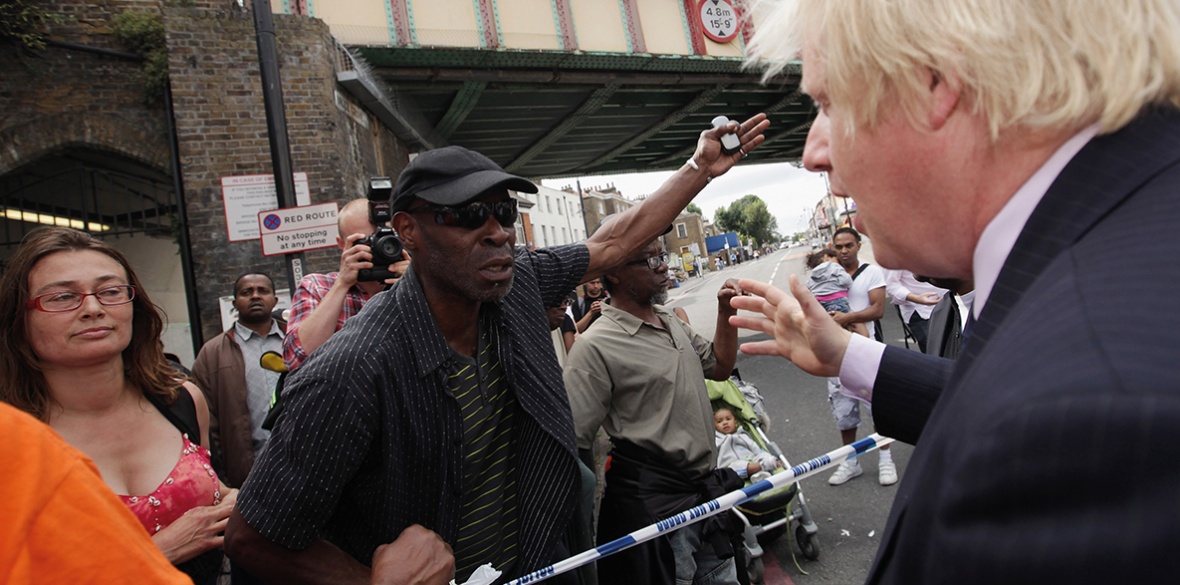
By Friday PM he was in Tottenham. I was then President of Haringey TUC (Ive stepped down since largely due to the weight of other national trade union responsibilities) and had general advance notice of a Mayoral visit.

It was mid-afternoon when Johnson appeared at Bruce Grove station on Tottenham High Rd. There was a small crowd waiting to give him friendly advice.

I was able to shake his hand (I’ve washed my hands many times since) and press him on the need for investment in jobs in the area. He listened politely and moved on.

What happened? As with so many Johnson stunts, absolutely nothing of significance at all.

Some funding did come to the area but 10 years on Tottenham still has amongst the highest levels of unemployment and poverty in England

Articles

The Battle of Lewisham 13th August 1977, some lessons of history

In Uncategorized on August 13, 2021 by kmflett

The Battle of Lewisham 13th August 1977, 47 years on

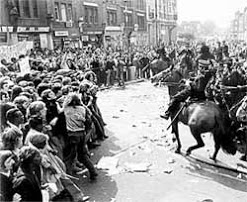
13th August marks the 47th anniversary of the Battle of Lewisham, when the fascist National Front were stopped by anti-fascists from marching in the area of London around New Cross.

The NF’s provocative march came just months after the Battle of Wood Green when the fascists attempt to march had resulted in it being split in two by anti-fascists.

It was part of a strategy of tension by the fascists designed to whip up racist sentiment and show that they controlled the streets.

As events at Lewisham 47 years ago underlined, they did not.

A coach load of anti-fascists left Wood Green tube station in North London on the morning of 13th August 1977 and I was one of them.

Memory is a doubtful thing and I’ve been at many anti-fascist protests over the years so one tends to blur into another.

The only real abiding memory I have of Lewisham is of at one point being in a group that had ended up on the wrong side of police lines. These days we’d probably have been arrested. In 1977 the police loaded us on to a London bus and told the driver to take us back over to the anti-fascist protest.

As often on such occasions there was a division between those who wanted to protest at the fascists and those who wanted to stop them. I would invariably be on the latter side (and still would) but the emphasis on a divided strategy was important.

At the Battle of Wood Green there had likewise been those who wished just to make a peaceful protest against racism and fascism and those who wanted to confront the fascists. The two were successfully combined in the umbrella of a united protest.

The Anti Nazi League was formed from the confrontation with the NF at Lewisham and it was certainly one of the motors for it.

The Observer published a good account of what took place on the day:

https://www.theguardian.com/uk-news/2017/aug/13/battle-of-lewisham-national-front-1977-far-right-london-police

It underlines that the NF chose to march in the area because they had been gathering local support in some quarters. It also points to the use by police of riot shields for the first time and the hardline tactics used against anti-fascists. In part these were likely to have been developed after the earlier Battle of Wood Green on 23rd April 1977.

There is one gap in the report. It notes that 4,000 protesters ‘turned up’. Of course they did not just turn up any more than the NF did. They were organised. Local churches and the Communist Party organised the morning march. The confrontation was certainly rooted in the local community but organised by the left, the Socialist Worker, the Labour Party and anti-racists and community activists

47 years on what took place at Lewisham and what came out of it remain important for the continuing fight against racism and fascism. Physical confrontation of fascist marches to make sure they are stopped is important but that is an occasional part of a much wider strategy, to build active campaigns in each community and workplace to make sure that racism and racist ideas don’t flourish

Articles

Tottenham 10 Years On: Writing a provisional history of the present

In Uncategorized on August 13, 2021 by kmflett

Tottenham Ten Years On: Writing a provisional history of the present

It was 10 years ago on 4th August 2011 that police shot dead Mark Duggan in Tottenham Hale. A gun was not found on him and there is no evidence that he fired one at police. Numerous inquiries and Court proceedings have followed but as so often the matter remains unresolved not least for the family but also for the wider community.

Two days later a local protest march went to the police station in central Tottenham. Such protests remain common, with incidents of racist policing still an issue. Usually the police engage with protesters who peacefully disperse. On that Saturday evening 6th August 2011 the police did not engage but tried to push back the protest. It sparked a riot and that riot sparked others across the country.

At its core was frustration and anger at society where racism is endemic, many struggle to get by and prospects are at best limited for numbers.

It is true that 10 years after some things have changed since the police shooting and the events that followed it. Tottenham became a centre for craft beer and London’s only urban cheesemaker. New multi-storey flats surround my central Tottenham abode, very few affordable for existing inhabitants.

But none of that, as local MP David Lammy has argued is of much use to those – far too many – who have to rely on food banks to get by and whose future job opportunities look difficult at best. Tottenham continues to have several of the Wards with the highest poverty in England and after the last 18 months amongst the highest of numbers who are either jobless or were furloughed.

When Boris Johnson, as the then London mayor, finally returned from a holiday and visited the area on the Friday after the riot, I shook his hand, as president of Haringey Trades Union Council, and pressed him on the need to invest in people and jobs. But a decade on, there is no sign of the now prime minister’s “levelling up” agenda in this area.

The new Spurs stadium on Tottenham High Rd, which is more impressive unfortunately than the performances of the team who play in it, is the outcrop of a related ‘renewal’ project which was developed by an earlier Labour Council post the events of 2010.

The plan was to re-develop the area around Spurs and build new housing in conjunction with developers. That would have involved the displacement of existing local residents. A community and union focused campaign stopped it and a more progressively minded Labour Council was elected. Now some Council housing is again being built and efforts to redevelop the Latin American market at Seven Sisters have finally been dropped, again after a long running community campaign.

Even so as veteran campaigner Stafford Scott wrote in the Guardian the continuing instances of racist policing in the area still have the ability to provoke the condition for another riot.

Riots are unpredictable, despite what the Kaiser Chiefs sang about predicting one, but as I argued at the time there is still a general pissed-offness and anger at a system that delivers for the few but certainly not for the many.

Ten years is too soon for the history books, but there is a provisional history to be written and remembered here. Of how people fought and continue to fight against racist policing and allied to  that with successive broad based campaigns to sustain and develop a local community free of efforts by developers to replace people with profit.

Articles

The Glorious Twelfth: Boris Johnson & grouse shooting four years on

In Uncategorized on August 12, 2021 by kmflett

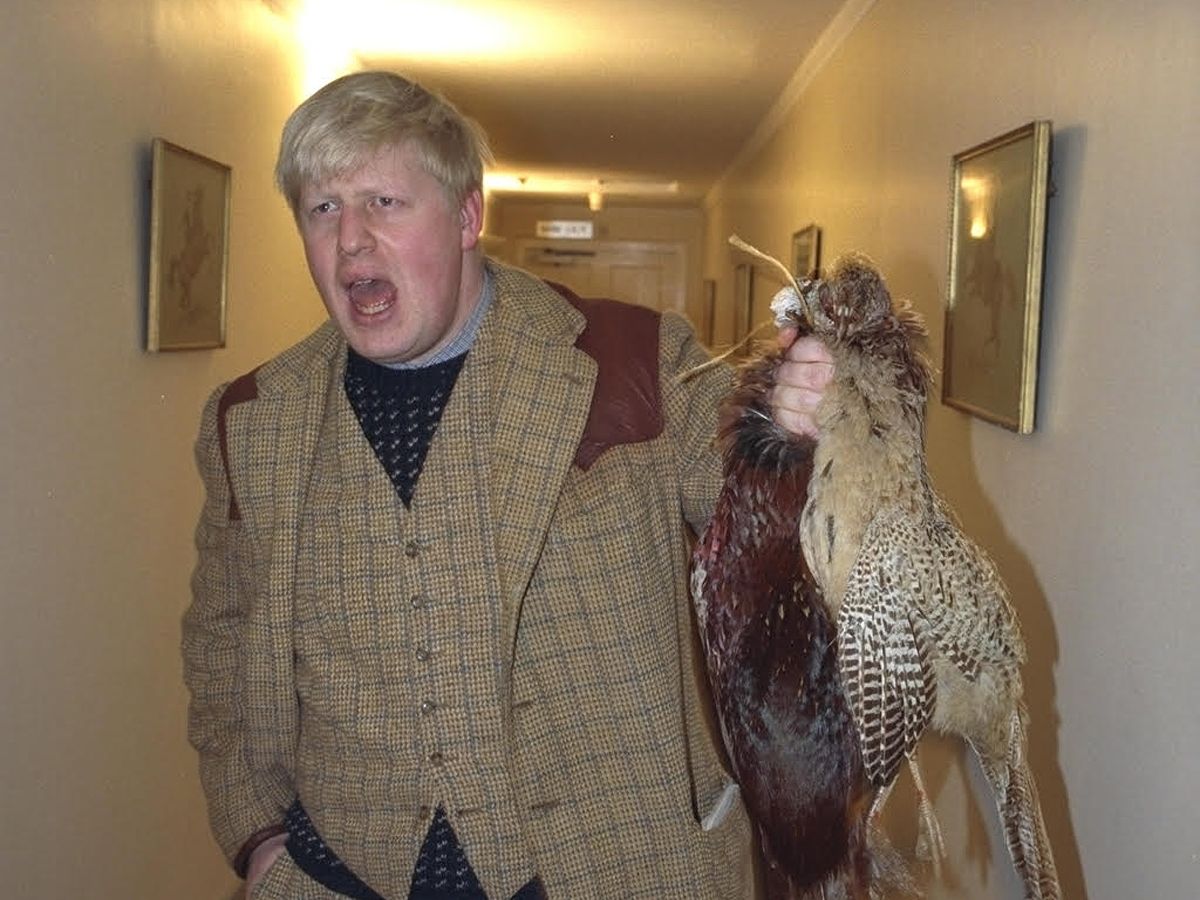
A younger Johnson with pheasants (the shooting season for that bird is not yet open)

The Glorious Twelfth: Boris Johnson & Grouse Shooting a four years on

In 2020 the Government was rightly ridiculed for exempting grouse shooting and other hunting parties from the ‘Rule of Six’ relating to the number of people who could gather in or out doors in England as part of COVID-19 restrictions.

The Morning Star (17th September 2020) revealed that a number of Tory MPs had been recipients of grouse shooting freebies in recent years.

There is a little more to this story of class prejudice.

In September 2015 the London Evening Standard reported that Johnson had been seen travelling southwards on a Newcastle train on 20th September:

https://www.standard.co.uk/news/londoners-diary/londoners-diary-a-tale-of-boris-johnson-and-the-grouse-that-got-away-9762362.html

It had been reported on social media that Johnson had been seen on a Northumberland grouse moor owned by a couple of Tory donors earlier in the day.

Unfortunately it appears the weather was too foggy for grouse shooting and Johnson had to settle for some clay pigeon shooting.

It is somewhat amazing that he didnt manage to shoot himself in the foot in the process

In 2021 a report from the University of Northampton that was actually produced in August 2020 received fresh coverage In the Times and the Telegraph. The drift is that with grouse shooting everyone is in it together (except the grouse obviously) although financially it is of course a case of the few not the many.

It rather summed up Johnson’s Britain

http://nectar.northampton.ac.uk/15039/1/Sustainable_Driven_Grouse_Shooting_Master_050821.pdf

Articles

12th August 1839. Start of the Grand National Holiday against the ‘smooth faced men’

In Uncategorized on August 12, 2021 by kmflett

12th August 1839: Grand National Holiday against the smooth faced men

On 12th August 1839 the Chartists called a Grand National Holiday, a month long general strike to bring down capitalism. It had a good deal of popular support, it did actually happen but ultimately could not be sustained.

A key populariser of the idea was the veteran radical William Benbow 1787-1864. He had toured industrial districts in 1838 and 1839 speaking at meetings.

The Northern Star for 1st June 1839 captured part of a ‘spirited and excellent speech’ he made at a packed meeting at the Stanley Arms Inn in Stockport.

Benbow directed his speech ‘exclusively to the industrious classes and not to those middle-men, those smooth faced..men who had sold the people to the Aristocracy and would sell God himself if he could be personified on earth’.

Clearly Benbow had in mind not just the exploitation of employers but also their appearance.

Appearance was important to the Chartists. Chartist leader Feargus O’Connor often addressed supporters as those wearing fustian jackets and having unshorn chins. Surviving drawings of Benbow suggest he as clean shaven but evidently not smooth faced.

Articles

Archbishop of York is not a ‘baldy’ but ‘follically challenged’

In Uncategorized on August 11, 2021 by kmflett

Beard Liberation Front

11th August

Contact: BLF Organiser Keith Flett 07803 167266

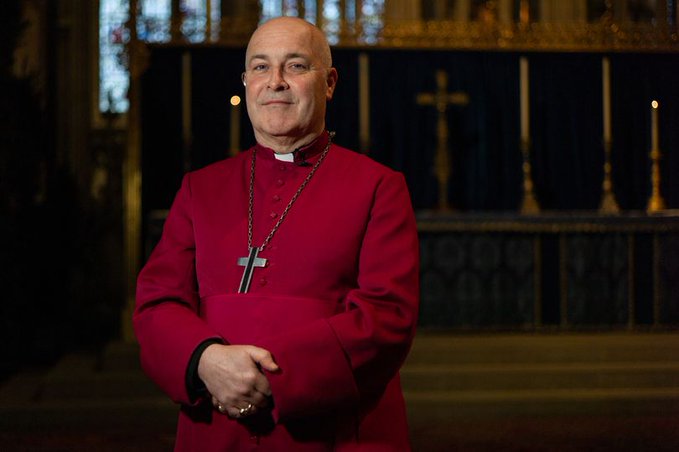
Archbishop of York is not a ‘baldy’ but ‘follically challenged’

The Beard Liberation Front, the informal network of beard wearers, has issued a friendly rebuke to joint Beard of the Year 2020 winner Michael Sheen for describing the Archbishop of York Stephen Cottrell as a ‘baldy’ on twitter. The campaigners say that a more appropriate and neutral term is ‘follically challenged’.

The reason for Michael Sheen’s tweet was a call from the Archbishop for Welsh crowds to sing God Save the Queen before sporting events as well as Hen Wlad Fy Nhadau(Land of My Fathers) the Welsh anthem.

The campaigners say that the Archbishop’s latest outburst may indicate that he is intellectually challenged but that is no reason to call him a ‘baldy’.

BLF organiser Keith Flett said, our view is that if you’ve got hair care and as the Archbishop doesn’t have any he doesn’t seem to either. However there is no reason to use incorrect terminology.