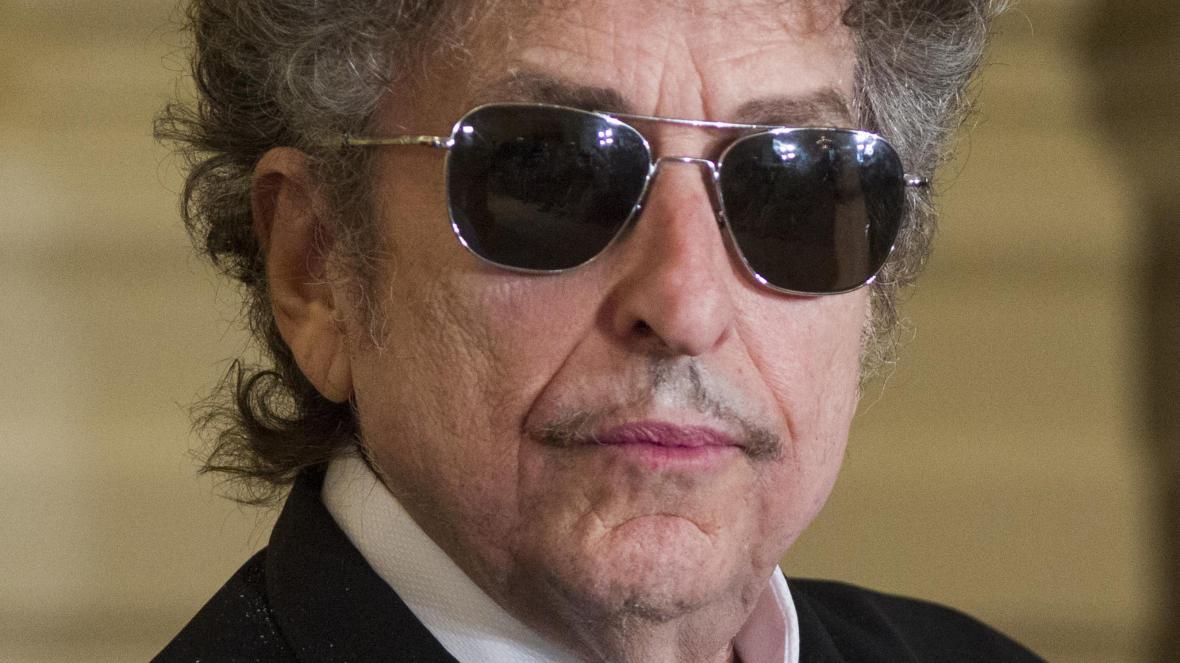
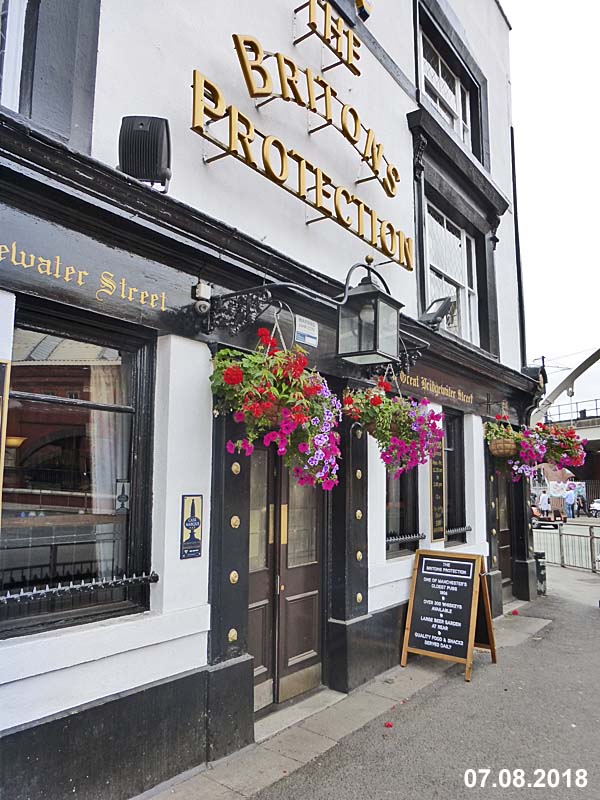
My late father was a fan so I’ve been listening to Bob Dylan since the 1960s. You can’t look back over Dylan’s career without mentioning what many saw and see as his various ‘sell-outs’. A hardcore regarded the signing of a record deal with CBS in 1962 as the start of a slippery slope. His switch to electric guitar- famously at the Manchester Free Trade Hall(now a Radisson hotel) concert in 1966- remains controversial.
However I think Ralph McTell’s 1972 Zimmerman Blues still sums matters up. Dylan moved from a musician who was part of a protest movement that wanted to challenge and change the world as it was to a someone who sang protest songs about it. That’s not the same thing.
There have of course been later sell-outs. He appears to have first started doing TV ads around 2004 and as recently as December 2020 he sold his entire back catalogue to Universal.
That’s not to say that the music doesn’t remain interesting and that his early years are not now an impressive part of social history but as he sang in 2000 ‘I used to care, but things have changed’.
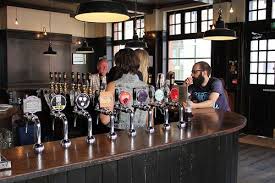
I note another twitter discussion on whether standing at the bar in pubs (currently not possible) is a good or a bad thing.
Jeff Bell, owner of a pub in Rye and well known in the beer and beard trade, is underlining again that table service is better than ordering or standing at the bar. Indeed this is normal across much of Europe.
Others like the experience of standing or sitting at the bar- and while its mainly a male thing that’s not entirely so and is sometimes focused on locals who know each other and the bar staff.
Ive never really been a fan- which is not say you would never have seen me sitting at a bar particularly if the pub is quiet. In general I prefer to sit and read or these days look at what people are saying on twitter about the above at a table.
I do however like checking what is on and ordering at the bar. I have no problem with Apps- I hardly could have as a union officer in the telecoms area-but it just makes the ordering process a bit more formal than I prefer. Pubs really should be about informality.
Of course *other* people sitting at the bar can make ordering there difficult and perhaps off putting and then there is the Wetherspoons random service method where standing not at the bar may get you served quicker than doing so…
Veteran bearded beer writers Pete Brown and Adrian Tierney Jones discussed the issue of pub table service and standing and ordering at the bar on Radio 4s PM on Monday. From 52m here: bbc.co.uk/sounds/play/m0…
I agree with Pete Brown that even if I want to sit at a table-and I usually do-seeing what’s on at the bar and perhaps a social chat with someone can be a good part of being in a pub.
Elsewhere the Morning Advertiser has an article about how parts of the pub trade are very keen to end social distancing and get more customers in so pubs are viable. I dont believe the operator of Yummy pubs whoever they are who claims he is turning away thousands of customers a week unless of course he is running a chain of pubs in ex-telephone boxes. However allowing more people is important, standing at the bar or not, provided the assessment is that it is reasonably safe. So in conclusion…
There are then social solidarity and gender aspects of this debate but the bottom line is that its one that can only be had because pubs are open again as safe spaces. The point there being if you haven’t been vaccinated please get the jab when its offered.,
Starmer’s Primrose Hill restrictions disrespect famous former resident Friedrich Engels
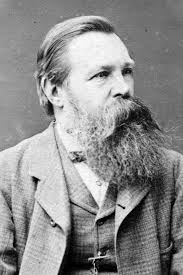
The London Socialist Historians Group, which organises the socialist history seminar at the Institute of Historical Research, has said that Keir Starmer’s reported involvement in efforts to restrict evening access to Primrose Hill park in North London disrespect one of the area’s most famous former residents, Friedrich Engels.
According to reports in the Camden New Journal and the Observer, Starmer, who is the MP for the area, has played a central role in getting the Royal Parks, who are responsible for Primrose Hill, to erect 9 foot high gates to stop evening access.
The move comes after complaints from some local residents and Tory Councillors that young people were causing night-time disturbances. Other local residents have launched a petition demanding that access to the park is maintained for all.
Engels lived opposite the park for many years until his death in August 1895. There is a plaque at 122 Regents Park Rd where he lived. In 1894 he moved to 41 Regent’s Park Rd as he noted ‘closer to the entrance to the Park’.
London Socialist Historians Convenor Dr Keith Flett said, Keir Starmer is not thought to be too well up on labour history but free access to Primrose Hill has a long history, which was enjoyed for many years by Engels who walked across the park to visit Marx in Kentish Town.
While its certainly appropriate to mark the 85th birthday of Bob Dylan it’s surprising that Martin Carthy’s 85th on 21st May has merited little mention. Although he did appear this year in the 21st May birthdays list of The Times.
When in London in late 1962 Dylan met Carthy who introduced him to the original British sources of some of the Appalachian music he was familiar with. Two of Dylan’s best known early songs, Girl From the North Country and Boots of Spanish Leather were reworked versions of Carthy’s arrangement of Scarborough Fair.
There is more detail in one of the best books on Dylan, the late Mike Marqusee’s Wicked Messenger
In a sometimes insular world the intertwining of musical influences is important to keep in mind
The Sunday Times Rich List 2022. Global Big Beerage remains rich
I’ve criticised the rigour of the Sunday Times rich list before not least because the rich don’t often make it easy to understand how much they are really worth, all part of the joys of capitalism.
The 2022 list again covers only the top 250 richest people as opposed to the 1,000 in 2020. No doubt this is due to Rupert Murdoch cost cutting but it probably makes the list more robust. Perhaps the precise ranking can be queried but there can be no doubt that those featured are indeed very seriously wealthy
With 250 names we don’t get to find out how people like Brewdog’s Martin Dickie or Wetherspoon’s Tim Martin have done over the last year. Suffice to say however that they remain rather wealthy.
In fact the 2022 Rich List contains just three members of what might reasonably be called the Big Beerage.
The last year has seen many in the hospitality industry lose their jobs or they have been furloughed. Others have lost their businesses. The Big Beerage by contrast has done rather well.
Charlene De Carvalho-Heineken remains at the top. She is still 10th (was 9th) on the rich list with a wealth of £11,421bn. That is down £592bn on 2021 partly it seems due to the acquisition of a 10% stake in Double Dutch drinks which makes tonics and mixers but also due to withdrawal from Russia. Ms Carvalho-Heineken owns a 23% stake in the brewer with her husband Michel De Carvalho. So, er, cheers still, particularly in this case for the UK craft breweries where Heineken have a stake…
Next at 76(last year 70) are Alejandro Santo Domingo and Lady Charlotte Wellesley. The latter is a descendant of Queen Victoria which may interest Perry Anderson and a certain strand of New Left Review thought. The former however was instrumental in selling SAB Miller to ABInBev. He still has a 1.7% holding. Their overall wealth is valued at £2.4bn similar 2021
Meanwhile the Earl of Iveagh (Ned to you) and the Guinness Family are 173rd on the list (175th in 2021) with a wealth of £1bn up a ‘modest’ £66m on 2021. The ST reported in 2020 that the Guinness family have launched a new crazy-golf venture called bunkers…
The Big Beerage features in small numbers amongst a Rich List comprised of very wealthy people in property, finance, fashion and so on. However at the very top those involved in the drinks trade have clearly had a very good year again Unlike everyone else…
No sympathy for ruling class hooligan Alice. Prosecute her now!
It has been another week of crisis in Ambridge for Alice and a widening circle of people impacted by her actions.
It culminated with Alice being refused service in the village shop (she wanted a bottle of vodka) & then smashing the shop window with a brick. She was interviewed by the ever (not on the ball) Borsetshire police, apologised and that was apparently that. Brian Aldridge has offered to pay for the damage and clear up.
There are complex and intertwining issues of gender and class at work.
The Ambridge Socialist has sympathy with Alice, a new mother unable to cope for a potential range of reasons. We are certainly not of the Priti Patel lock them up tendency. That said if it had been a supporter of the Ambridge Socialist who bricked the village shop over its refusal to stop selling the S*n rather than a member of the Ambridge ruling class, we suspect matters would have gone rather further than a word at the police station.
Indeed according the always authoritative Academic Archers FB page the Ambridge ruling class got a free pass here. The decision whether to prosecute is for the CPS not Inspector Knacker and while they may well take the wishes of victims of a crime into account, criminal damage is often considered a serious enough matter to prosecute come what may.
The story has dominated BBC coverage of Ambridge for a while and there are other issues that deserve attention however.
Ambridge Socialist poll. Alice Aldridge(Carter)has smashed the window of the village shop. What is to be done?
Tories to pay senior farmers to retire. Ambridge will be decimated
The Government has unveiled a scheme to get farmers of a certain age to retire with a payment so that younger farmers more open to modern ideas like GM crops and so on can make their way.
Needless to say the sums proposed were rather larger than redundancy payouts (capped at £15K) and also needless to say the Tories aren’t actually providing any new money just having a rejig. Finally in the obvious points area, rich farmers will get more- potentially up to £100K than less well-off ones with smaller holdings.
The money probably isn’t enough to get farmers to retire without also selling or shutting down the farm but it could surely impact a swathe of Ambridge’s ruling class from David Archer and Brian Aldridge to Justin Elliott.
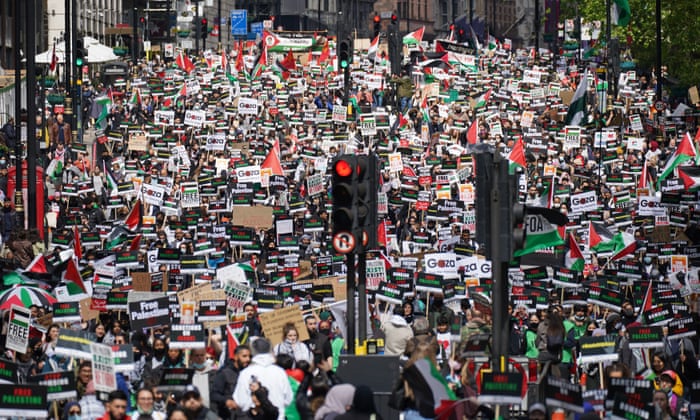
180,000 in London for biggest ever Palestinian solidarity march. But its not just size that matters
180,000 have marched in central London, possibly more, in the biggest ever UK show of solidarity with Palestine. These things are noticed across the world not least because Britain once had the mandate for Palestine.
The BBC don’t seem to have reported it so far but they don’t usually report demonstrations at the weekend (there are exceptions see 23rd March 2019 for a very full report of a People’s Vote march)anymore than the Sunday papers used to.
The Guardian/Observer seems to have relented on that and its on-line editions do have a report.
The size reflects the strength of feeling about Palestine and Gaza and speaks directly to those who claim no one is interested in such things.180,000 on the streets of London is not ‘no one’.
Yet it wasn’t just size. Perhaps because of the moment, with some travel restrictions still in place, there were also demonstrations around England and Wales (and I presume in Scotland and Northern Ireland although I haven’t seen reports).
I was on the one in central Cardiff which BBC Wales did report-suggesting there were 400 present. I’d put it a little higher but it depends on what time you counted the numbers I suspect as people come and go.
Speaking to some of those involved in the organisation its clear that this demonstration represented a public face of a mushrooming solidarity movement across Wales with groups being formed all the time. The protests across England will have been the same- building solidarity with Palestine rooted in local communities and workplaces.
In a short a new movement is being born and while there are some veteran activists still around many are coming into activity for the first time. The situation in Gaza in recent days has been dreadful but from it can still spring hope and organisation for change.
Pubs, police and radicals: a long history of eavesdropping
As pubs across England reopen their doors, we must look to the past to reconsider their futures
After a pandemic-dictated period of closure, pubs have this week reopened indoors in England and Wales. Some – those that sell mainly beer, with little or no food – have been shut since the first lockdown in March 2020. And some will not reopen at all.
The COVID legal requirement in force in England for periods last year, that you could only drink in a pub if you also had an ill-defined “substantial meal”, also brought into relief the extent to which many modern pubs had already been forced to rely heavily on food for their profits, given that tax is a major element of the cost of drinking.
But the debate also highlighted the persistence of older assumptions and manipulations of the contested role the pub plays in society. As the doors reopen, it is worth thinking about what kind of pub we want, in future.
Pubs are sites for informal gatherings; for social, and socially controlled, drinking. But they are also sites in which global breweries (“big beer”) and the PubCos are free to make profits (and avoid taxes on them where they can), even as the tax on beer in the UK – paid for by the ordinary drinker – is the second highest in Europe.
This past year has also heard echoes of the historic temperance-related view that if you eat, you will drink more responsibly. And of the view that pubs where drink, not food, is the focus, attract the ‘lower classes’.
And who knows what such persons get up to, discuss, plan and plot in such places?
One group of people with an interest in that question is the police. For centuries, when the Left met in pubs around the world, the police were also there.
The current SpyCops hearings in London revealed – along with grim details of the police officers who used false identities to befriend, sleep with and have children with left-wing women activists – the extent to which police also infiltrated and spied on the Left by gathering information in pubs. Based on evidence from the Autumn 2020 hearings, Tom Foot of the Camden New Journal surveyed all the pubs in which radicals had met and undercover police officers had also drunk in, observing the minutiae of Left life, making notes, and passing them on to superiors. There were a considerable number of such pubs, a particular favourite being the one that is now Camden Brewdog.
And there is no reason to think the police spies are not still listening in. Which is good news for historians, perhaps, but concerning for those who have may have thought they were having private and personal conversations.
Police intelligence gathering in pubs is a practice with a very long history. The London Corresponding Society (LCS), a federation of radical reading clubs that sympathised with the French Revolution, met in pubs in central London, including the Globe Tavern in the Strand in 1794. When leading LCS members were put on trial for sedition, the government had a full report of events at the Globe, which involved upwards of 500 people sitting down to a dinner on the first floor of the pub, with speeches and toasts. The report came partly from an informer who was present.
The LCS laid down a pattern of radical meeting places that largely persists to this day. Pubs were chosen because they often had a room that could be used at low or no cost and could provide space for relatively private discussions. The alcohol and food consumed is a reminder that such gatherings had a wider convivial purpose – though one, it should be noted, which was more welcoming to men than women radicals of the time.
Much of the discussion and planning for the 1819 Manchester demonstration at Peterloo took place in pubs, too, with politically directed police spies and informants often present, most famously the man known as ‘Oliver the Spy’. The class divide was on clear display, of course – those who owned breweries and ran pubs were rarely in sympathy with democratic sentiments, and many, known as the Beerage, actively supported the Tory party. Some of the yeomanries who charged the crowds on horseback at Peterloo, killing and injuring demonstrators, were publicans who had reputedly encouraged drinking amongst their compatriots beforehand.
Two years later, when the Cato Street conspirators plotted to assassinate the entire British cabinet in revenge for the massacre at Peterloo, both police spies and conspirators drank porter in the same pub, the Horse and Groom off Edgware Road in central London.
The 1830 Beerhouses Act loosened legislative restrictions, allowing for pubs that primarily sold beer, leading to the opening of many new pubs. And again, they often served as meeting places for radicals, including the growing pro-franchise Chartist movement – and thus, to a flowering of sources of information for government agents and freelance informers.
In 1848, after a huge Chartist rally for the vote on Kennington Common, a series of summer meetings were held in pubs in central and south London to plan an armed revolt in central London. The revolt was scheduled for Seven Dials off Oxford Street that August, but failed because the government, having infiltrated their meetings, knew all about it. William Cuffay, the Black leader of London Chartism, was arrested and sentenced to transportation to Australia.
In response, the Chartists developed a counter-strategy. They held large outdoor meetings well away from city centres where the police spies hanging around were much easier to spot.
The strategy was quite effective – but meetings were chilly and damp, compared to the pub. As anyone who has been for an al fresco drink in England at a pub in the last month may reflect, outside meetings are OK, but only up to a point.
The radical and working-class movement continued to meet in pubs, which were cheap and convenient places to gather – both in England and elsewhere. Writing in ‘Red Banners, Books and Beer Mugs: The Mental World of German Social Democrats, 1863-1914’, historian Andrew G Bonnell notes that: “A particularly valuable source of working-class opinion is the collection of police surveillance reports of workers’ pubs in the Hamburg State Archives”.
This past year has also heard echoes of the historic temperance-related view…. that pubs where drink, not food, is the focus, attract the ‘lower classes’
Inside the pub is more comfortable and warmer, but what kind of pubs, ours, or theirs?
In recent times, partly thanks to the efforts of the 170,000 strong Campaign for Real Ale, it has become possible for local communities to take control and run pubs themselves.
A pub under threat – of redevelopment for flats, for example – can legally be declared to be an Asset of Community Value, whilst campaigners see if they can organise a buy-out. In some successful cases, pubs are run as community co-operatives and are genuinely inclusive spaces.
As pubs reopen this week, perhaps this is something to keep in mind over that pint – while planning with others how to stop the Police, Crime, Sentencing and Courts Bill, too.
Tribute paid to Wolves manager Nuno who brought Beard Power to the Premiership
The Beard Liberation Front, the informal network of beard wearers, has paid tribute to the manager of Wolverhampton, Nuno Espirito Santo, who is stepping down after the club’s final game of the season on Sunday.
The campaigners say that Nuno’s beard has been a distinctive presence on the touchline at Wolves matches in recent years. His beard has demonstrated managerial gravitas quite different to the histrionics of some managers. Further while Nuno occasionally engages in judicious pruning of his beard unlike a number of other Premiership managers whose facial hair comes and goes.
BLF Organiser Keith Flett said, we wish Nuno and his beard well for the future. It may be that his Beard Power will feature elsewhere in the Premiership next season.