Articles

The Daily Mail gets it wrong on renaming Cecil Rhodes School & Rhodes Avenue N22

In Uncategorized on August 3, 2020 by kmflett

The Daily Mail gets it wrong on renaming Cecil Rhodes School, & Rhodes Avenue N22
The Black Lives Matter movement has inspired a long overdue effort to ‘decolonise’ street names and take down statues related to Britain’s imperial past.

Of course that doesn’t change material conditions and address issues of equality and discrimination directly. It does however make it clear that part of Britain’s past while it certainly should not be forgotten should not be memorialised either.

A petition and campaign to rename Rhodes Avenue Primary School N22 in Muswell Hill which came out of the Black Lives Matter movement has raised and addressed the issue of whether the school and indeed the road are named after Rhodes or other members of the Rhodes family who owned land in the area in earlier centuries.

Partly the answer is that the name is taken nowadays by many to refer to Cecil Rhodes whatever the original intention.

However the campaign has found interesting information about when the road name dates from. This appears to be 1935. Rhodes died in 1902 so surely by that time he was forgotten and it’s just the family name?

That however would be a mistaken view.

An article in the African Sociological Review (vol 6/1 2002) by Paul Maylam deals with the naming cult related to Rhodes. He argues that it ran for the first six decades of the twentieth century after which the anti-imperialist sentiment we are familiar with nowadays gained support.

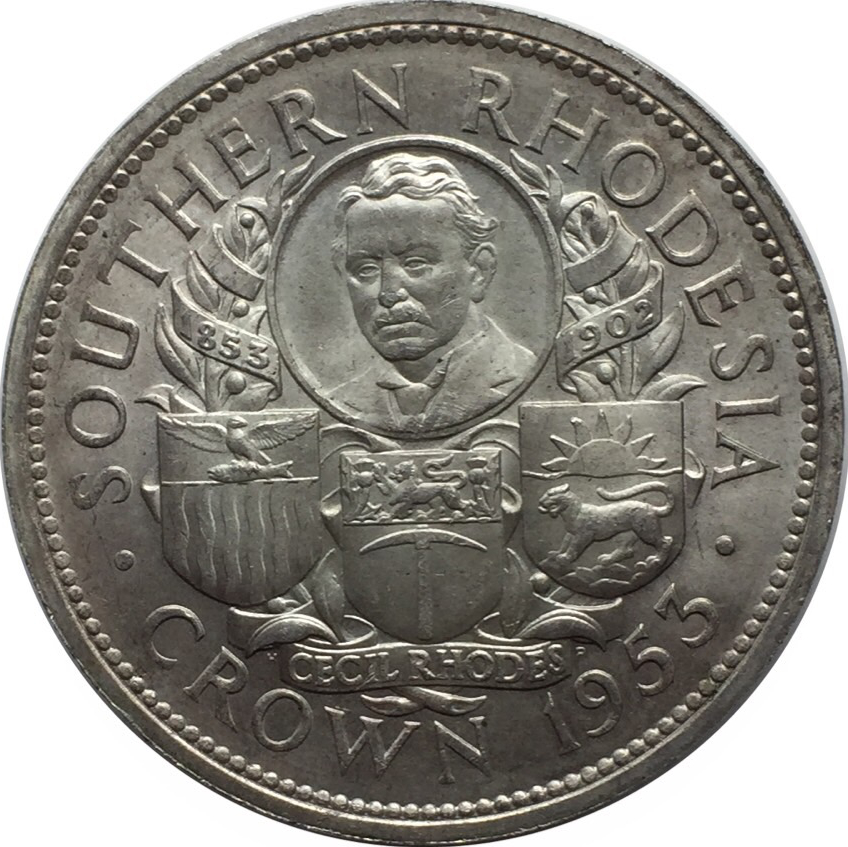
Strikingly on the 100th anniversary of Rhodes birth in 1953 the Queen Mother opened a Centenary Exhibition in Bulawayo and 125,000 silver crowns carrying Rhodes head were struck by the Royal Mint.

It seems clear that the cult of Rhodes and naming things after him was still in full swing in the early 1950s. Indeed there is a block of flats in Camden in the 1940s that still has his name.

The petition to change the name of Rhodes Avenue Primary School (which has the support of local MP Catherine West) is here:

https://www.change.org/p/rhodes-avenue-school-haringey-rename-rhodes-avenue-school

The Daily Mail has published an article (2nd August) which is critical of the effort to rename the school, based on the point that the original name related to a relative of Cecil Rhodes.

The Mail is, like most papers, not very good at history and has managed to ignore the point about the cult of Rhodes naming that existed in Britain for decades and included the period when the school was built.

I attended the original Alexandra Park School which was on the same site in the first half of the 1970s and I don’t think anyone who was interested was in any doubt as to which Rhodes the name referred to.

A detail relating to the name of Rhodes Avenue from the campaign’s update

A map from 1912 shows the first time a road appears alongside the site however it was not named Rhodes Avenue at that time, but Hampton road. The next map, 1935, shows the school built and the road renamed. It looks most likely that the road

and school were named either at the same time or very close in succession. As was the naming of nearby Cecil Road. There are also other imperialist road names close by that we are looking into also.

The neighbouring school (that is now A.P.S) on the same complex as Rhodes Avenue was built in 1959 and called Cecil Rhodes secondary modern.

It seems likely that between 1925-1930, land developers would have known of the Rhodes link and wished to make the most of the imperial connection to Cecil Rhodes. By this time, Cecil Rhodes’ name was very much established and celebrated. Southern Rhodesia was named for him, and he had only recently died. It seems unlikely that a land developer would use the Rhodes name without the awareness of its link to Cecil.
Articles

Should the August Bank Holiday in England & Wales return to the first Monday?

In Uncategorized on August 3, 2020 by kmflett

Should the August Bank Holiday in England & Wales return to the beginning of the month?

The weather forecast for the coming days is better for a British summer but will it be even better at the end of August?

The question is relevant because the August Bank Holiday in Scotland is on 7th August and in England and Wales its three weeks later

Reviewing the date of the holiday is likely to be more popular than trying to change its name to Margaret Thatcher Day, which a small group of Tory MP’s proposed in the House of Commons in 2013.

The August Bank Holiday was set as the first Monday of the month by the 1871 Bank Holidays Act and only changed for an experimental period to the last Monday in 1965. The change was made permanent in 1971 in the Banking and Financial Dealings Act but does not apply to Scotland. It was primarily a result of pressure from the holiday industry who felt that a later holiday would extend the season.

Before legislation in 1938 Bank Holidays were the only official paid holidays available to workers and were seen as a significant advance in working class leisure time.

The August Bank Holiday was the most popular of those agreed by the 1871 Act precisely because it was in summer and the weather was likely to be better for a trip out than the Easter holiday.

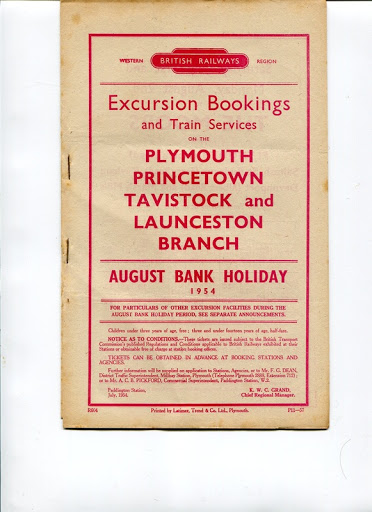
Railway companies ran excursions and extra trains to seaside destinations.

The nature of holidays, although still strongly influenced by school terms, has changed considerably in the last 40 years with short breaks at home and abroad more popular.

However the weather and certainly the available sunlight hours are potentially better earlier in August.

Recent discussion of bank holidays has focused on whether the UK should have more, if May Day should be maintained and if there should be an autumn bank holiday. Yet there is something of an historical case now for moving the August Bank Holiday in England and Wales back to its original early August date.

The nature of work and of holidays has changed considerably since 1971 and I suspect that while the period around the current Bank Holiday remains a popular time to take a break, peak holiday time is in the two weeks after schools break up (in many areas) in late July, in normal years anyway….

Articles

SAGE, COVID-19 & public disorder. You can’t predict a riot

In Uncategorized on August 2, 2020 by kmflett

SAGE,COVID 19 & public disorder. You can’t predict a riot

The media, often out for clickbait headlines, is reporting that the summer of 2020 will see riots over various aspects of the impact of COVID-19.

These stories are based on a SAGE report which is in part authored by Prof. Clifford Stott a social psychologist at Keele.

He has done a fair bit of work on disorder and riot and the SAGE report is below. Some, myself included, are sometimes sceptical about agendas that often run with such reports which manage to merge actual research and findings with interpretations which are actually, as always, personal opinions which can be challenged.

The brief report here (9 pages) seems to me to be in the main a decent summary of public order related matters in relation to COVID-19.

Obviously there is scope for disagreement. Like numbers of SAGE members Prof Stott seems at least professionally keen on temperance.

The report was written on 2nd July and warns of disorder as a result of pubs re-opening in England on July 4th. Of course there have been alcohol related brawls (just as there were when pubs were shut) but widespread disorder there was not. A key part of the pub’s role is to promote social control and order when it comes to drink.

Prof Stott makes a fair summary of protests and is prepared call a fascist a fascist as it were. The comment that ‘harder’ elements who wont co-operate with the police mean protests are sometimes difficult is a Johnsonian perspective though. To be effective protests sometimes need to be ‘difficult’, which is not the same as saying its fine if they are not safe from a COVID perspective.

His suggestions for what might be done to prevent all this are in a sense right but rest on a point that is not likely to happen.

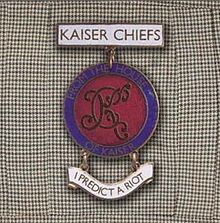
Despite what the Kaiser Chiefs sang you can’t predict a riot.

What turns a protest into disorder or riot (the latter being determined by the police as in that case they have to pay for damage to property- hence the word riot is not in the report…)is not, in nearly every case, any desire amongst protesters but insensitive or inappropriate policing.

Prof Stott understands this and concludes the police should do better.

I’m making no predictions

Keith Flett is the editor of A History of Riots (CSP 2015)

SAGE Report

https://assets.publishing.service.gov.uk/government/uploads/system/uploads/attachment_data/file/904677/S0578_SPI-B_Public_Disorder_and_Public_Health_-_Contemporary_Threats_and_Risks.pdf


Articles

The Ambridge Socialist. Tim Oatey arrested

In Uncategorized on August 2, 2020 by kmflett

The Ambridge Socialist

2nd August

News of the class struggle in Borsetshire

Tim Oatey arrested

Thug and general lowlife Tim Oatey has been arrested. Needless to say this was not at the instigation of Sgt Harrison ‘Knacker’ Burns. The best he managed was to summon up a patrol car so someone else could do the job.

Rather it was Joy Horville who recognising Oatey as the man who had previously fly-tipped rubbish she he had paid him to legally dispose of, kept him waiting when he called again, until the police arrived.

Of course given a wider outbreak of fly tipping in the area one might think Knacker Burns would be investigating what was behind it. While the rubbish issue is a matter for the Council and Environmental Health, general criminal activity is a police matter…

Tony finds his model railway set

Assuming that they haven’t cleared off on holiday the rest of this week’s Archers will surely engage those media commentators who think that the current lockdown Archers really isn’t working. The above fly-tipping incident was a bit of the Thursday episode. Much of the rest of the week consisted of  Tony agonising over whether he should donate a model train set which John used to like to Johnny (who didn’t want it). The alternative was Sgt Burns and Fallon looking after a small child for a few days.

In Other News

Johnny has shaved his head. A sensible move

Following advice from Joy, Johnny has been trying his luck at scratch cards. Yes, it was that bad this week

The Ambridge Socialist poll

Dialogue is set to return to the Archers in September. The Archers Monologues, a feature since late May have had a mixed reception. The Murdoch Times has suggested that listening to Times Radio is better than listening to the Archers. Do you agree?

Articles

Beyond the hyperbole, a note on the social role of the pub

In Uncategorized on August 1, 2020 by kmflett

Beyond the hyperbole, a note on the social role of the pub

With pubs set to re-open inside in Wales on 3rd August, they are now open (in most but not all cases) across the four nations. There remains media hyperbole about thousands rushing to the local and getting drunk. No doubt some do but most who use the pub regularly know its core reason is much more than just selling drink.

In fact drinking in a pub is drinking in a socially controlled and licensed environment. These days its also a socially distanced space

One need only look for example at radical working-class history in the first half of the nineteenth century to see that from the Luddites to the Chartists the pub was a central meeting place. This was perhaps particularly so after the 1830 Beer Houses Act which led to a considerable increase in pubs, perhaps a little like the micro-pubs of today.

The idea of the ‘pub as the hub’ of local community activity has long been one promoted by the Campaign for Real Ale (CAMRA). CAMRA was  founded in 1971 to combat moves by the big corporate brewers to replace traditional cask ales with bland artificially carbonated keg beer. To its credit, it has been one of the most successful consumer campaigns of recent decades and  has also been active in trying to stop pub closures. Recent legislation in England, supported by CAMRA, allowing pubs under threat to be classified as Assets of Community Value (ACV) has helped.

Traditionally many pubs have supported a variety of social activities ranging from pub games through support for local music, theatre and other performing arts, to support for local football clubs and beer festivals. A pub which recognises its important role in the local community and offers well-kept beer at a fair price is far more than just a boozer. It’s a social location and inclusive of community.

Of course that doesn’t describe every pub, there are an infinite variety, the good, the bad, the indifferent. But they have a vital role in society. At the height of the temperance movement in the late nineteenth and early twentieth century temperance pubs and hotels were opened. They didn’t of course sell alcohol (or not much anyway) but with or without drink people are social.

Phil Mellows @philmellows has written a very good piece on the subject in the Morning Star on this.  https://morningstaronline.co.uk/article/c/why-we-should-now-be-more-drink-aware-ever

Unusual times indicate unusual measures. There will be a special poll for the Beard Friendly Pub of the Summer with the winner declared in late September. Details shortly

Articles

100 years of the Communist Party. The Historians Group

In Uncategorized on August 1, 2020 by kmflett

100 years of the Communist Party- The Historians Group

The Editorial Board of Past & Present

This weekend marks the 100th anniversary of the foundation of the Communist Party of Great Britain at the Cannon St Hotel in London.

I am not now and have never been a CP member. In fact I’m a lifelong anti-Stalinist. As the former Daily Worker journalist Peter Fryer, who left the party in 1956, noted at one of the meetings after the CPGB wound itself up in 1991, if the CP had ever got power in Britain I’d quite probably be in jail, if not dead.

My late father Graham, born on Clydebank was a member, and growing up in Muswell Hill in the 1960s and 1970s, obtaining a copy of the Morning Star was not a problem. The area had one of the largest CP memberships in the country.

I always found it a strange mixture of reports of industrial struggles and details of the supposed glorious advance of socialism in Russia.

It’s fair to say I think that the CPGB had some impressive episodes in its history and some very much less than impressive ones, to put it mildly.

Anyway, enough of the preamble. I write history focused columns in the Morning Star these days and have done for 15 years or so. The world changed after 1989 and when the Soviet Union no longer existed to defend, common ground was to be found in that many members of what became the CPB had a much better grasp of Marxism, its theory and practice, than much of the rest of the left. This was a recipe for a degree of peaceful co-existence.

So while I was never a CP member as a socialist historian I was associated with the CP History Group which became in 1991 the Socialist History Society.

A decent summary of the historians history by Willie Thompson is here:

https://www.historyworkshop.org.uk/from-communist-party-historians-group-to-socialist-history-society-1946-2017/

A good number of the publications of the CP History Group after 1956 are now digitised and free on line:

http://banmarchive.org.uk/collections/shs/index_frameset1.htm

As Thompson notes the CP Historians managed to avoid too much direction from King St (the old Covent Garden HQ of the CPGB) because they did mostly pre-C20th English history which didn’t interest Russia much.

That allowed them to be instrumental in founding the journal Past and Present

Eric Hobsbawm’s call after 1956 for the reconstituted group to ‘become historians of the present too’ must be seen in that context. He did indeed follow the point himself although whether interventions like the Forward March of Labour Halted will stand the test of time remains to be seen.

Again as Thompson notes many of the significant works of Marxist history after 1956 were written by former members of the Historians Group. One thinks of E P Thompson, John Saville, Christopher Hill, Rodney Hilton and others, all of whom I knew to one degree or another and all except for Thompson spoke at London Socialist Historians meetings in later life.

One historian I knew well and did some work with was the late Brian Manning who was a student of Christopher Hill and a leading historian of the English Civil War:

https://en.wikipedia.org/wiki/Brian_Manning_(historian)

The London Socialist Historians Group which I continue to convene stands of course to a very modest amount on the shoulders of those who became known as the ‘British Marxist Historians’. One thing we took from the Group in particular was to involve non-academic historians and understand that their contributions are at least as important as those who are officially employed as academics.


Articles

As the County Cricket season starts, spectators disappear again. Cummings at work?

In Uncategorized on August 1, 2020 by kmflett

As the County Cricket season starts, spectators disappear again. Cummings at work?

Johnson refused point blank for a period to allow the return of recreational and indeed County cricket. A series of increasingly bizarre reasons were offered which concluded with a concern about teas in cricket pavilions.

Then he suddenly flip flopped and cricket returned including a game at the Oval where socially distanced spectators were allowed. All appears to have gone smoothly.

Then on 31st July he flip flopped again and spectators were again banned. This can be understood with a rise in COVID infections and certainly indoor spectators at the snooker or larger numbers at Goodwood racing might have been of concern.

Its difficult to see however given the space available at cricket grounds, all outdoor, what the specific issue is

The puzzle is what is really behind Johnson’s flip flops on cricket. My theory, which in keeping with the whole affair appeared fairly illogical in the Morning Star on 3rd July. In summary when it comes to cricket for Cummings, its personal and he’s in charge here.

The refusal of Boris Johnson to allow the return of grassroots cricket is a puzzle. After all Johnson is a cricketer himself, captaining in or playing in the annual Spectator v Lord Althorp game in Northamptonshire every June. However an account of the game played on June 25th 2016 just after the EU Referendum result may provide a clue. According to journalist Harry Mount, Johnson was meant to be at Dominic Cummings house in Islington sorting out his bid to be Tory leader in the light of David Cameron’s resignation. Instead he chose to play cricket and opted out of the contest. That delayed Cummings chance to wreck Britain by a full three years and possibly left him with a dislike of cricket too, the result of which we can now see.


Articles

Wetherspoons Tim Martin misses out on a Peerage

In Uncategorized on July 31, 2020 by kmflett

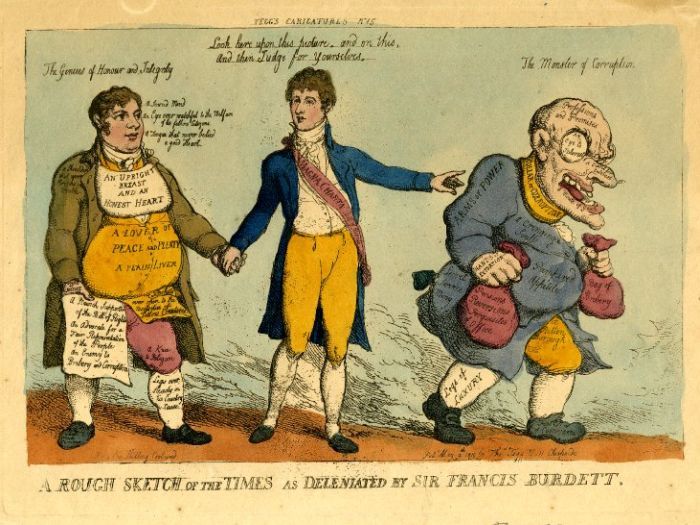
Today’s Honours List, long in the making, has a stench of Johnsonian croneyism about it, or as socialist historians like myself are apt to refer to it, Old Corruption.

Boris Johnson’s Old Corruption Honours List

Some names who had been nominated such as Tom Watson and John Bercow have been rejected and whether that is agreed with or not there is a fairly good idea about why that it is (which you can Google).

More puzzling perhaps is the absence of Chair of Wetherspoons Tim Martin.

Martin has been a leading and vocal supporter of Brexit like most others on the list. When Johnson became Tory Leader in the summer of 2019 there was much talk of Martin’s elevation. There has been less in 2020 but then other matters have rather preoccupied everyone.

With recently proposed changes to Small Brewers Duty Relief which benefits larger Regional breweries over smaller craft ones. perhaps a policy decision has been made that the Tories interest in beer lies with brewers (known as the Beerage) and not Pub Companies which really arose after Mrs Thatcher’s Beer Orders.

Or maybe Martin’s distinctive hairstyle is too much competition for Johnson’s dishevelled style.

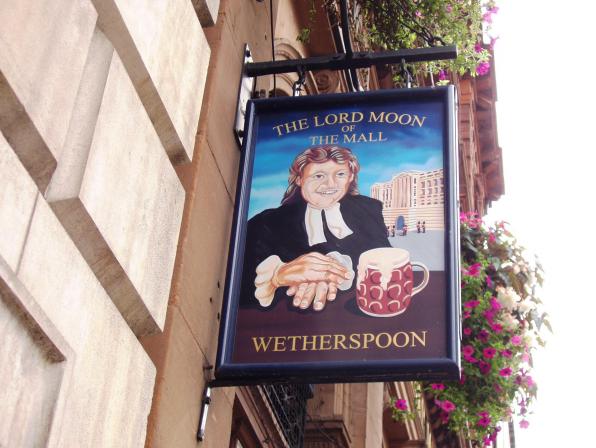
Still Wetherspoons still have a pub in Whitehall called Lord Moon of the Mall with a picture of Tim Martin on the sign..

Articles

Boris Johnson’s Old Corruption Honours List

In Uncategorized on July 31, 2020 by kmflett

Boris Johnson’s 2019 dissolution and political honours list has at length been given the nod and published.

A BBC report is here:

https://www.bbc.co.uk/news/uk-politics-53606083

Some of it is fairly unremarkable. Former Tory Ministers who Johnson purged over Brexit and he is now trying to put back in the tent to construct some kind of post-Brexit class unity.

Others are those like Hoey,Woodcook and Austin who while occasionally claiming to be Labour (as they were actually elected) worked hard to get Johnson elected.

Then there is Claire Fox, formerly of Living Marxism and now the Institute of Ideas, a Cummingsite disrupter and Lebedev owner (at the moment) of the Evening Standard.

Quite why Ian Botham is included is perhaps less clear as he’ll sit as a crossbencher. Or alternatively quite why Tim Martin of Wetherspoons is not there is also a little odd. Both of course were Brexit supporters like most others on the list minus some of the former Tory MPs and a handful of Labour nominations

Overall though its a list of sinecures and placepeople. What William Cobbett and others in the early nineteenth century called ‘Old Corruption’.

This is political rather than financial corruption but the stench of autocracy is strong.

Old Corruption, definition

‘Old Corruption’ consisted of the appointment of an aristocrat, his relatives, or a political ally to an official position with a high income attached. Normally the income attached to this position was extraordinarily high, and manifestly in excess of what a legitimate, non-aristocratic holder of the position would be paid. Hundreds of examples of ‘Old Corruption’ in the early nineteenth century were collected in John Wade’s Black Book, or Corruption Unmasked, originally published in 1816 and in subsequent editions[3]. For example, in 1832 Lord Bathurst, an aristocrat of the time, received £32,700 annually (over £3.5 million in today’s money, at a time when there was no income tax) as the holder of the offices of Clerk of the Crown Court of Chancery, Secretary at War, Commissary of the Affairs of India, Teller of the Exchequer, and from an office entitled Clerk of Dispensations and Faculties. Furthermore, according to Wade, two of Bathurst’s relatives received £6400 per year (over £700,000 today) from three other offices they held. If any of these posts actually required work to fulfil their duties, this was done by clerks who were paid a tiny fraction of what Lord Bathurst received. According to Cobbett, Wade, and other critics of the British aristocracy of the time, there were literally hundreds of similar positions with similarly grandiose titles, enormous incomes, and few duties which were held by aristocrats and fortunate placemen.

William Rubinstein

https://www.in-formality.com/wiki/index.php?title=Old_Corruption_(United_Kingdom)


Articles

William Cuffay (July 1788-July 1870). Black leader of London Chartism in 1848

In Uncategorized on July 31, 2020 by kmflett


On 24th July Medway TUC hosted a Zoom meeting to mark the 150th anniversary of the death of William Cuffay. I was one of the speakers and below are the notes I made for the meeting. They are not of course what I actually said (a recording of the meeting is above) and I will summarise that in due course!

William Cuffay: leader of London Chartism in 1848

William Cuffay was born in Gillingham in the Medway Towns in 1788, the son of a local woman and a former slave from St Kitts who had made his way to Britain by working on a Royal Navy ship. Many of those aboard Navy vessels in the late eighteenth century were black.

Little is known about Cuffay’s time in Medway- though research is being done.

We do know however that by 1819 Cuffay was in London and had learnt the trade of a tailor.

No doubt Cuffay would have been exposed to the radical working-class politics of London in the 1820s and he was certainly involved in the strike called by the Grand National Consolidated Trade Union in 1834.

Cuffay went on to become, by the end of the 1830s, a leader of a group of London Chartist tailors.

In 1840 Cuffay was 52- very old for a Chartist activist at that time- and he became a central and trusted figure in London Chartism.

The best way to understand him is as the key ‘backroom’ organiser of Chartism in the Capital- raising money for jailed Chartists and being appointed to oversee the funds of the Chartist Land Bank.

By 1842 Cuffay had been elected from London to the national Chartist Executive. These positions were fiercely contested, so Cuffay will have had a considerable constituency of support.

Details of Cuffay’s work in this period can be tracked in the Chartist paper, the Northern Star, which is now available in digital format free on-line.

Martin Hoyles book on Cuffay has also revealed that during this period Cuffay was performing as a singer on the London stage.

Although research is still in progress it now seems clear that Cuffay was the organiser of the great Chartist demonstration on Monday 10th April 1848.

Chartists gathered at various points across London and marched south to rally at Kennington Common. The idea was then to proceed back across Blackfriars Bridge to present a giant petition for the vote to Parliament.

It was a strategic mistake- it’s unclear what part Cuffay played in deciding the venue for the rally. Police and soldiers blocked the way back over the River Thames and the national leader of Chartism Feargus O’Connor agreed with the police that the Chartists would not try to march.

Cuffay was understandably very annoyed at this decision and is reported as arguing that the march should go ahead.

We now know that there was hand to hand fighting between Chartists and troops on the south side of Blackfriars Bridge but a heavy April shower caused the attempt to be abandoned.

Later in the year, in August 1848, Cuffay was arrested for his part in an alleged revolutionary conspiracy at Seven Dials, Covent Garden. Arms were found in Cuffay’s house. His precise role in the events is unclear but it is very likely that as the London Chartist leader he was at the very least aware of what was planned.

Tried at the Old Bailey, Cuffay was sentenced to 21 years transportation to Australia.

Arriving in Hobart Tasmania, now over 60, Cuffay could have been forgiven for retiring from political activity. He did not. Instead he was active in a range of radical causes in the earliest years of the Australian labour movement. He was pardoned after 3 years but remained in Australia, dying in 1870.

Modern interest in Cuffay can be traced back to a chapter in Staying Power by the late Peter Fryer which recovered much of the history of black people in Britain.

Cuffay left no diary, autobiography or papers, but research to uncover details of his life and activity is continuing. There has been considerable effort in Australia and in Britain there were plans to erect a blue plaque for Cuffay in the Strand, so far frustrated.

The Times in 1848 referred to Cuffay and the Chartists as ‘the black man and his party’ and we can now see that this was not hyperbole but a recognition that the London organisation of the world’s first working class movement was led by the son of an ex-slave from St Kitts.

Indeed while there was an element of racism about media reports of Cuffay, there was also I suspect an understanding that he was a good deal more militant than the largely middle-class Chartist leadership.

He was in favour of confrontation with the Government to win the vote. He made clear in a speech to the Chartist delegate Assembly gathered in London after April 10th that he didn’t think memorials to the Queen or complaints to the press about how it reported Chartism were worthwhile. Rather political action was needed.

In the issue of the Northern Star (26th October 1848) that covered Cuffay’s trial Fergus O’Connor paid a front-page tribute to Cuffay as a thoroughly honest and decent man who had been trusted with highly responsible roles in the Chartist movement.

O’Connor however implied that Cuffay was no political strategist and thinker and had allowed himself to be drawn into a network of Government spies determined to urge on confrontation so as to be able to arrest them for illegal acts.

Cuffay was no spy and he did have a different strategy to that of O’Connor. Was he naively draw in by agents provocateurs? We cant be sure, but we do know he was a vastly experienced activist who one would think would have been aware of such pitfalls.

Cuffay came from the imperial diaspora to challenge imperialism at its heart in London to find himself exiled to another part of the British Empire in Australia as a reward for his efforts