Revisiting British history: what happened to the working-class?
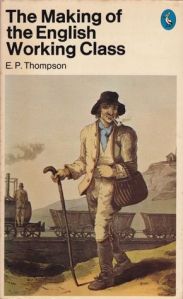
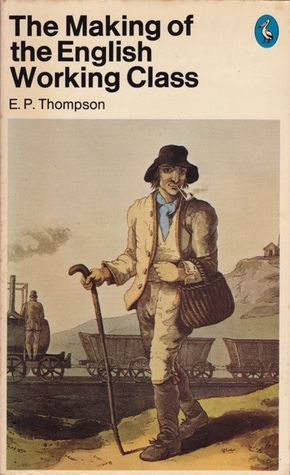
In 1963 E P Thompson published The Making of the English Working Class, it became the 1000th Pelican paperback in 1968 and remains in print.
The book is still frequently referenced and as a socialist historian I would still suggest to anyone that wants to know about the history of the English working class to read it, long as it is.
Yet well over 50 years on historical scholarship and agendas have moved on as has the world itself of course (up to a point).
Thompson was well aware that his book didn’t cover Scotland and Wales and only touched on Ireland in so far as Irish radicals were active in England (which they certainly were). Given the length of the book perhaps it was unavoidable. The book is also weak on gender, though in fairness Thompson was only one historian and often worked in broad historical collaboration with his partner the historian Dorothy Thompson who certainly did do work in this area.
It is also deficient when it comes to race and imperialism. Thompson as a member of the Communist Party and then the New Left after 1956 was hardly unaware or inactive politically on such matters. However one only needs to read Peter Linebaugh and Marcus Rediker’s The Many Headed Hydra about the history of the revolutionary Atlantic to understand how much is missing from the Making. To be fair both Linebaugh and Rediker were students of Thompsons.
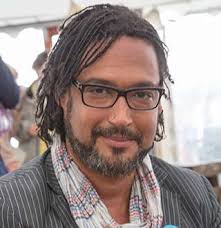
In a piece in the Guardian (24th June) the historian David Edgerton looks at what kind of British history we need in 2020:
https://www.theguardian.com/commentisfree/2020/jun/24/britain-persistent-racism-imperial-history
His key point is perhaps that while it is important to know and understand the too long neglected history of Empire and imperialism there is a specific history of British capitalism that cannot just be blamed on what happened elsewhere.
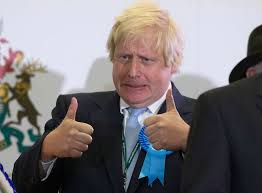
After all the Empire is (nearly all) gone yet Boris Johnson is in Downing St and Priti Patel is Home Secretary.
Edgerton also argues that the aspect of British history that has become least known since the era of Thompson and Eric Hobsbawm and others is that of the British working class.
Here I think I would have some reservations(extract below) As the convenor of the socialist history seminar at the Institute of Historical Research I still get lots of offers of research papers based on one or other aspect of it, so it is definitely still being researched.
Since Peter Fryer’s ground breaking volume Staying Power there is an increased understanding too that the history of the British working class goes wider than the shores of Britain.
I wont provide a reading list of recent research and books here, although there are plenty. Where I would concur with Edgerton is that there is no twenty-first century grand narrative of the history of the British working class of the kind that Thompson provided in 1963.
That means that while historians and socialist activists interested in history may well know about, discuss and argue over new histories of the British working class its not something that makes its way out into a wider discussion either in schools or even, unfortunately, in a good deal of the labour movement.
What is to be done? That requires thought and might well be a useful subject for discussion when socialist history seminars re-start at the Institute of Historical Research (virtually) in the autumn
If we want to look for great silences in our history, empire is hardly the only one. There has been a glaring hole where the history of British capitalism and the British capitalist class should be; in its place are overwrought stories of decline and of imperial finance. The neglect of the British working class is particularly stunning. Giants of (anti-imperialist) postwar history such as EP Thompson and Eric Hobsbawm made this their field, and inspired countless others in a historical endeavour that peaked in the 1970s, but has since decayed even more rapidly than the industrial working class. Around 1900, Britain’s industrial proletariat was one of the three largest in the world, comparable to those of the US and Germany. The British working class alone accounted for roughly 30% of the population of the entire empire outside India, and a far higher proportion of those producing for capitalist markets.