Articles

22 March 1960. House of Commons. Barbara Castle asks if British arms were used in the Sharpeville Massacre

In Uncategorized on March 21, 2020 by kmflett

22nd March 1960 House of Commons. Barbara Castle asks if British arms were used in the Sharpeville Massacre
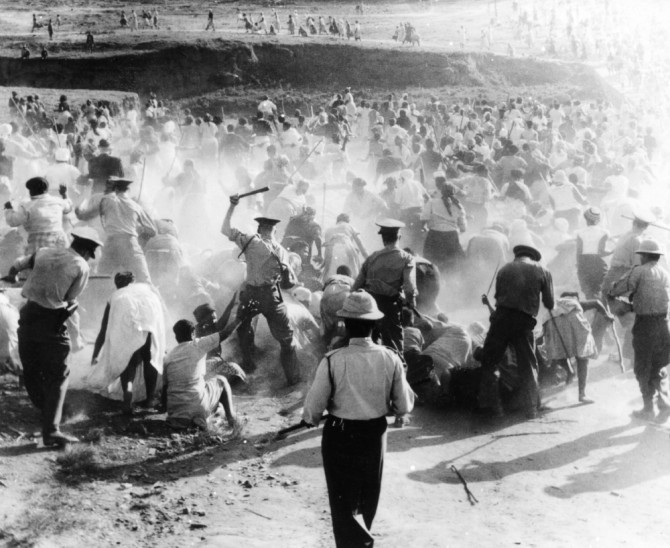
It is 60 years since the Sharpeville Massacre when South African police shot dead 69 black protesters and injured many more:

https://en.wikipedia.org/wiki/Sharpeville_massacre

On 22nd March the Commons briefly debated the matter. One would like to think that the present Tory Government would have a more enlightened attitude than Macmillan’s did on that late March Tuesday but I’m not certain.

The full debate is here:

https://hansard.parliament.uk/commons/1960-03-22/debates/86a4c163-d60c-43cb-b2c1-33258907071e/UnionOfSouthAfrica(Riots)

An exchange, still relevant between Labour MP Barbara Castle and the Minister:

Mrs. Castle

Is it not a fact that some of these atrocious, oppressive acts are being carried out with the help of arms sent from this country? Is not the minimum that the Government can do to show their horror at these atrocities to stop supplying the South African Government with armoured cars and other weapons that enable them to tyrranise over African peoples?

Mr. Alport

It has been the policy of successive Governments, of both political parties, to help other Commonwealth Governments to meet their armament requirements.
Articles

Closed Pubs, Boris Johnson, John Wilkes & the Freeborn Englishman

In Uncategorized on March 21, 2020 by kmflett

Closed Pubs, Boris Johnson, John Wilkes & the Freeborn Englishman

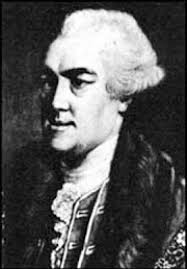
John Wilkes

Boris Johnson has ordered all pubs to close as a measure to try and control COVID-19 better.

In my view as an inveterate pub goer if it saves lives, and it very probably will, it will be worth it, particularly as the incomes of pub workers are, for many, now protected (more is needed for those on zero hours contracts such as a minimum basic income).

Of course civil libertarians (of which broadly I’m one) might say that it is the dream of all authoritarian Governments to try and do something like a closure of pubs. Indeed Foucault argued this has been the case since the Middle Ages.

On the other hand right-wing libertarian Brendan O’Neill claimed that Johnson’s action made Britain look like North Korea (Spectator)-which would still be preferable to any society O’Neill had a say in.

There is a problem though and it’s called Boris Johnson. It is tempting to think that Johnson is a charlatan who doesn’t believe in anything much except himself and that I think it’s true. Except that this means that one of his great heroes is a former Mayor of London, John Wilkes (1727-1795). He undoubtedly fitted the Johnsonian characteristics noted above but his slogan was ‘Wilkes and Liberty’ and it was far from being without substance.

https://en.wikipedia.org/wiki/John_Wilkes

At the St Georges Fields Massacre on 10th May 1768 his followers protesting at the jailing of Wilkes raised the cry of No Liberty, No King. Troops opened fire killing seven and injuring fifteen

E P Thompson noted how Wilkes ideas led to Cobbett’s Freeborn Englishman

The champion defending his individual rights passed imperceptibly into the free-born citizen challenging King and Ministers and claiming rights for which there was no precedent

Johnson had other reasons for lionising Wilkes, he was a member of the Hellfire Club, but his support for the liberties of the Englishman was also key. This was echoed in his comments on 20th March about closing pubs. He had clearly been reluctant to do so and arguably delayed too long.

Fortunately ‘experts’ eventually prevailed.

Articles

Tribute paid to Kenny Rogers, the hirsute face of country music

In Uncategorized on March 21, 2020 by kmflett

Beard Liberation Front

Media Release 21st March

Contact Keith Flett 07803 167266

TRIBUTE PAID TO KENNY ROGERS, THE HIRSUTE FACE OF COUNTRY MUSIC

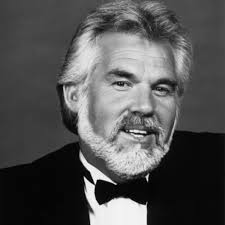
The Beard Liberation Front, the informal network of beard wearers, has paid tribute to US musician Kenny Rogers who has died aged 81.

Kenny Rogers adopted a range of musical styles in his youth but from his 1969 Vietnam War hit, Ruby Don’t Take Your Love to Town, was situated firmly on the crossover between country and popular music.

As such he increasingly became a hirsute face of country music which had been dominated by an all American clean shaven image.

BLF Organiser Keith Flett said, Kenny Rogers music may not have been subversive in the main but his beard certainly was.

Articles

As Soon As This Pub Closes…..

In Uncategorized on March 20, 2020 by kmflett

As Soon As This Pub Closes

Its almost 20 years since Alex Glasgow, probably most commonly associated with When The Boat Comes In died, but a song he wrote for the Alan Plater play Close the Coalhouse Door seems relevant today.

https://en.wikipedia.org/wiki/Alex_Glasgow

Despite being an inveterate pub goer I’m in favour of the Government’s decision to close pubs to try and restrict the spread of COVID-19. Particularly now that the Chancellor has at last had to announce measures to help people who might well have lost their income as a result (more is still required btw). Also because Tim Martin of Wetherspoons seemed, today, very keen to keep them open being a fan of the ‘herd immunity’ approach to the virus.

Even so Alex Glasgow’s message (last line aside) still seems relevant

As Soon As This Pub Closes

I could have done it yesterday if I hadn’t a cold,

But since I’ve put this pint away I’ve never felt so bold.

So as soon as this pub closes, as soon as this pub closes,

As soon as this pub closes, the revolution starts

I’ll shoot the aristocracy and confiscate their brass,

Create a fine democracy that’s truly working class.

As soon as this pub closes, as soon as this pub closes,

As soon as this pub closes, I’ll raise the banner high

I’ll fight the nasty racialists and scrap the colour bar,

And all fascist dictatorships and every commissar.

As soon as this pub closes, as soon as this pub closes,

As soon as this pub closes, I’ll man the barricades

So raise your glasses, everyone, for everything is planned,

And each and every mother’s son will see the Promised Land.

As soon as this pub closes, as soon as this pub closes,

As soon as this pub closes … I think I’m going to be sick

Articles

Spring Equinox: a new season for labour…

In Uncategorized on March 20, 2020 by kmflett

The official start of Spring was 1st March in the UK. The Met Office divides the year into four seasons and so the months of March, April and May are ‘Spring’. To be fair the Met Office do also point out that the start date of astronomical Spring is March 20th, the Equinox.

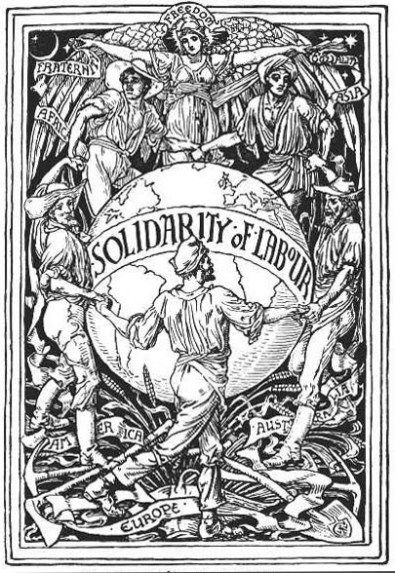
The labour movement festival of May Day which celebrates the new birth of Spring is firmly within that framework, hence all the (Walter Crane inspired) garlands and flowers that go with some of the imagery of the day.

Neither March 1st or March 20th are dates that work for the traditional British Spring however which began during February. The logic of this was that as more daylight appeared fields could be ploughed and crops sown.

Ronald Hutton writes of the date of Spring in Stations of the Sun:

During the Twentieth Century the notional beginning of spring came itself to be moved backwards to the vernal equinox, by a slow process induced by the mass media. This was part of the American system of reckoning seasons from solstices and equinoxes, which works admirably in the climate of most of the USA, but is nonsensical in the rhythm of the British year.

Raph Samuel in his survey of Victorian seasonal labour also notes that the impact of Spring:

The ebb and flow of wayfaring life in nineteenth-century England was strongly influenced by the weather. The months from March to October were the time when travelling people were to be found on the roads, and when they were joined by every class of occasional itinerant.

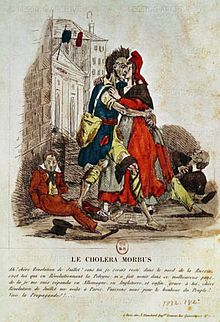
Of course there were years in the nineteenth century when various epidemics from cholera to smallpox and typhus raged when this didnt apply. 2020 may be another of those.

Articles

Epidemics,a lesson from Victorian times: they were no respecter of social class

In Uncategorized on March 20, 2020 by kmflett

This brief extract underlines an important historical point which Boris Johnson may yet come to grasp

Typhus fever, cholera and smallpox were no respecters of persons. Although the diseases usually originated, and ravaged most severely, the very poorest of the labouring classes, they inevitably took their toll of all sections of the people.

JFC Harrison, Early Victorian Britain 1832-1851

John Harrison was a social and socialist historian who worked with E P Thompson. His obituary is below

https://www.theguardian.com/books/2018/feb/05/jfc-harrison-obituary


Articles

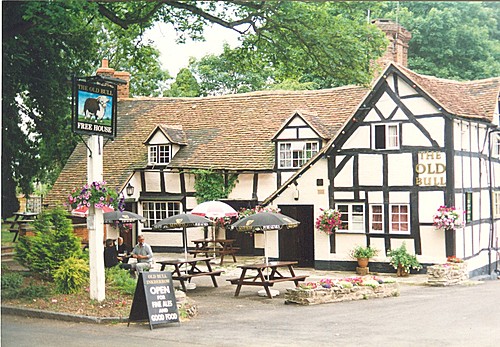
The Ambridge Socialist: Victory! The Bull is staying. Respect to Lynda Snell

In Uncategorized on March 19, 2020 by kmflett

The Ambridge Socialist: Victory! The Bull is staying. Respect to Lynda Snell

Lilian Archer has relented after campaigns by the Ambridge Socialist & the ReBulls and scrapped the change of name to the B @ Ambridge.

She has acknowledged that the change of name had at best divided opinion.That is herself, Kenton and Jolene against everyone else.

It is a great shame that the tragic explosion at Grey Gables that led to Lynda Snell being so badly injured became perhaps the decisive factor in Lilian’s change of mind.

We hope Lynda makes a full recovery.

In the meantime, thanks & well done to all those who signed our petition. Organising & Campaigning can make an impact

Articles

Medical staff, beards & COVID-19. The BMJ on what is proportionate & reasonable

In Uncategorized on March 19, 2020 by kmflett

Staff wearing beards and covid-19: trickier than it looks

As often when it comes to beards a good deal of not particularly helpful comment has appeared in the media around medical staff,beards & COVID-19.

By contrast the post here from the BMJ is a model of grasping what is proportionate and reasonable. Probably not words thought about that much in the media but important in the workplace and important to individuals too

Articles

From Brewdog to Wetherspoons: beer & COVID-19

In Uncategorized on March 19, 2020 by kmflett

I have my criticisms of Brewdog, both with respect to (some of) the beer they produce and also the gap between the image they push and the reality of their business (much like many others in fact).

However I still drink in their bars from time to time and enjoy the experience.

Obviously I’m not doing that currently due to COVID-19.

I was pleased however to see that one response of Brewdog was to start producing hand sanitiser and giving it out free. A publicity stunt of course but in these times actually a worthwhile one.

They have however reportedly laid off workers who are on probation, which is not great.

Contrast this with Wetherspoons. I’m not sure if Tim Martin has backtracked on his earlier enthusiasm for herd immunity. At the time of posting this however his bars remain open and staff have been told that if they come down with COVID-19 no special consideration will be given and they’ll have to use their standard leave allowance while they recover.

Martin has now opined further, which certainly hasnt helped

https://www.theguardian.com/business/2020/mar/20/coronavirus-wetherspoons-boss-says-uk-pubs-will-stay-open-as-long-as-possible?CMP=Share_iOSApp_Other

Still due to earlier Martin related events I rarely frequent Spoons these days.

Martin has however been out done by Brendan O’Neill former writer for the misnamed ‘Living Marxism’ now at Spiked On-Line for idiocy. He believes that Johnson’s actions are akin to what North Korea would do. Actually if that was the case Martin would have been hauled in for today’s comments, and after the briefest of secret trials, shot.

The difference between Brewdog and Wetherspoons does reflect a difference between socially responsible behaviour or not, though both with would do well to recognise trade unions so they could at least be sure that they accurately understand the concerns of those they employ.

Articles

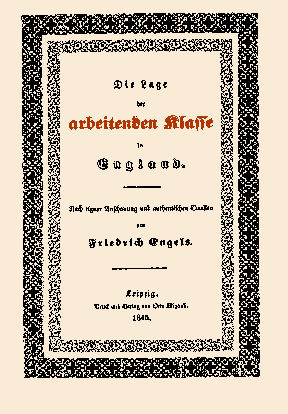
180 years since the publication of Engels, Condition of the Working Class in England (in German)

In Uncategorized on March 19, 2020 by kmflett

180 years since the publication of Engels, Condition of the Working Class in England (in German)

It is one 180 years since the publication of Engels, Condition of the Working Class in England, on 15th March 1845.

Its impact in this country was nil directly as it wasn’t translated into English until 1885 and not published in a UK edition until 1892, although Engels did a deal with the US Publisher to import copies in late 1887, and Commonweal then carried extracts

Engels had spent two years in England, primarily Manchester where of course his family had a company, studying working-class life. He had then returned to write the book in Germany and it was published in Leipzig.

Its indirect influence at the time was significant since the book cemented Engels relationship with Marx and informed their work with the Chartists and others in the later 1840s and beyond.

The 180th anniversary seems particularly apt in present circumstances since the book focuses on the importance of the working class in the capitalist economy and the conditions they lived in. Its something that Keir Starmer and Rachel Reeves might care to familiarise themselves with if they havent already of course..

E.P. Thompson in the Making of the English Working Class (section on exploitation) noted of the book that:

The first proletarians were connected with manufacture, were engendered by it…the factory hands, eldest children of the industrial revolution, have from the beginning to the present day formed the nucleus of the Labour Movement’

He then goes on to qualify that it was rather more complex than that. This too is a challenge of understanding for our times 180 years on.

https://www.marxists.org/archive/marx/works/download/pdf/condition-working-class-england.pdf