Articles

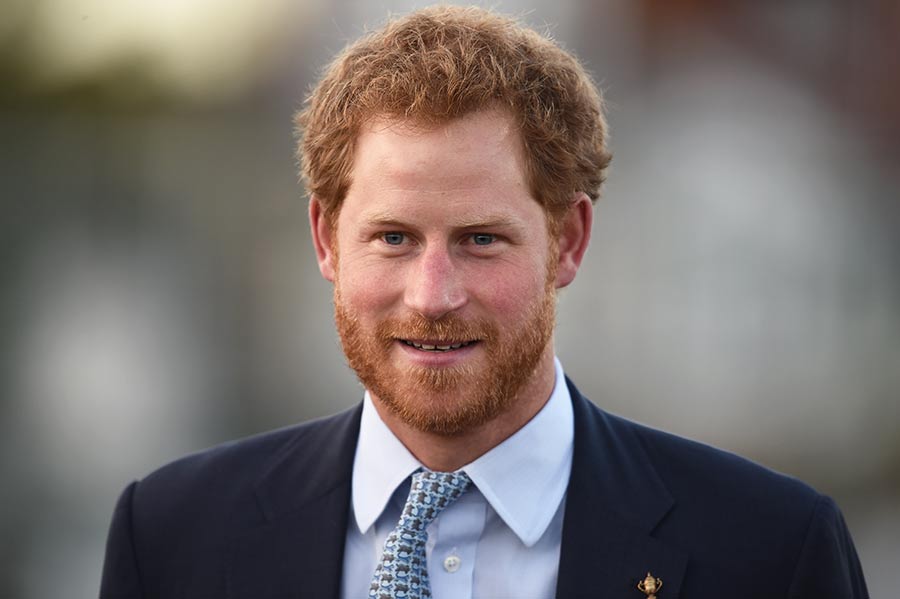
Prince Harry leads poll for My Hairy Valentine, sexiest beard

In Uncategorized on January 30, 2020 by kmflett

Beard Liberation Front

Media Release

30th January

Contact Keith Flett 07803 167266

Prince Harry heads My Hairy Valentine Shortlist

The Beard Liberation Front, the informal network of beard wearers, has said that once again it is running a poll to establish the wearer of the sexiest beard ahead of Valentine’s Day.

The poll is open now and will close at midday on 13th February with the winner announced on Valentine’s Day.

The shortlist ranges across a wide range of beard wearers from Prince Harry to footballer Mo Salah.

BLF Organiser Keith Flett said, when we first started this annual poll the largest response we got was to query if beards were sexy at all. In 2020 no one doubts that, but who has the sexiest Valentine’s beard?

My Hairy Valentine shortlist

Idris Elba

Prince Harry

Tom Jones

Gary Lineker

Mauricio Pochettino

George Clooney

Mo Salah

Justin Trudeau

Chris Woakes

Eric Cantona

What is the criteria for the sexiest Valentine’s Day Beard?

Beauty is in the eye of the beholder & likewise what people find sexy can vary widely

1] A beard from Clint Eastwood stubble to full Brian Blessed organic

2] A stylish deployment of the beard, at least sometimes in the public eye

3] An attractive disposition in relation to the beard (the fulfilment of this criteria is up to the voter)

4] An appealing beard in terms of length, colour, style. Again it’s a matter for the voter

Articles

Brexit, The Beerage & Wetherspoons: not quite what some might think

In Uncategorized on January 29, 2020 by kmflett

Brexit, The Beerage & Wetherspoons: not quite what some might think

Wetherspoons started out in North London in the late 1970s and their former pubs litter the area along with a few that remain open. I was a fan from the start and visited Spoons pubs across the UK over the years. Why? Because such was the mostly dire state of pubs 40 years ago-most selling only old style keg beer- Wetherspoons were often the only place in town to get drinkable beer.

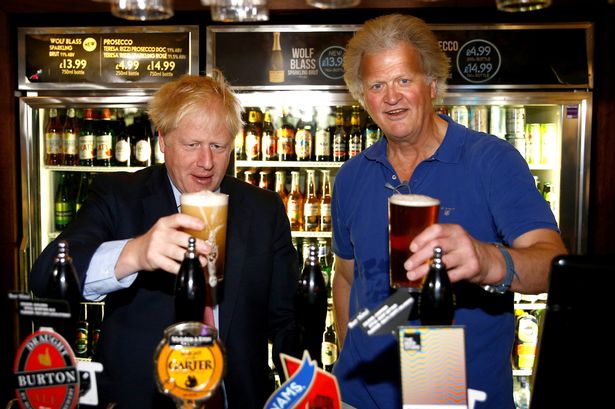
Times move on and I rarely go in now. Of course there is Tim Martin’s Brexit stance and his appearances with Farage and Johnson. In this however he is little different to most other large pub companies and pubcos in supporting the Tories. It used to be called the Beerage.

In fact if you go into a Wetherspoons there is little sign of Brexit. Concerning though it may be to those Remainiacs who don’t go in Spoons they are invariably busy and often have a far more mixed clientele than many other pubs. The attraction of course are the low prices, all day food and, come to that, no music and decent toilets

The reality is however that Tim Martin’s pubs have not moved with the times. They are rarely the only pub in town now. Often there are better micropubs and brewery taps to visit.

As a supporter of the free market I’m sure Mr Martin appreciates the point

Articles

Stuart Hall & New Times: ‘you needed a project on the left’

In Uncategorized on January 28, 2020 by kmflett

The late marxist cultural theorist Stuart Hall was interviewed by the New Statesman in 2012 and in it he touched on the New Times project of Marxism Today.

His understanding of where the New Times project led and what it was intended to be is perhaps relevant for 2020. Not least because the Guardian contributor John Harris has raised the matter again this week:

https://www.theguardian.com/commentisfree/2020/jan/27/labour-party-leadership-keir-starmer-rebecca-long-bailey

I dont agree with Harris’s freestyle commentary but Hall’s corrective to what he thought New Times  was meant to be and should be about remains interesting:

The analysis, and his account of “new times” (the changes in the so-called post-Fordist economy brought about by globalisation), had some influence on the early intellectual outriders of New Labour, but Hall insists that his insights were vulgarised by the Blairites. “There is a tiny kernel of truth in the assertion that [Marxism Today] created Blairism, in the sense that the ‘new times’ stuff was addressing the change of the whole terrain. But what we recommended was that you needed a project on the left of the same breadth and depth as Thatcherism. New Labour understood it as meaning that you needed the same project!”

Articles

Dry January, Temperance & the Left

In Uncategorized on January 28, 2020 by kmflett

Dry January, Temperance & the left
It’s Dry January an annual campaign that suggests people should abstain from alcohol during the month to recover from possible festive excesses and just generally to cut down on drinking.

Its important to understand that what we see in 2020 around campaigns like Dry January is historically the extreme end of the anti-drink movement.

There was a division between temperance campaigners, who thought the issue (with some justification) was heavy consumption of spirits and saw beer drinking as a moderate alternative, and those who promoted total abstinence, no consumption of alcohol at all

The relationship between radical and labour movements and drink was complex from the start.

Pubs were radical meeting places. One need only look at how protesters gathered at Peterloo on 16th August 1819 from all over the north-west, some stopping at ale houses on the way for refreshment (water not generally being safe to drink).

The 1830 Beer Houses Act allowed for the opening of a new layer of pubs that sold beer only (no spirits)and had a mainly working-class clientele.

The Chartist Movement certainly met in pubs but also contained those who regarded, rightly, drunkenness as the enemy of radical organisation. The Chartists had a principle of ‘exclusive dealing’ buying things only from those who backed the Six Points of the Charter for the vote. The August 1839 Grand National Holiday called for abstention from all excisable goods underlining the development of a temperance trend.

Temperance remained an important part of working-class and labour politics in the first decades of the twentieth century. Keir Hardie was a temperance supporter from the early days of the Independent Labour Party in the 1890s. He argued ‘that a man who can take a glass or let it alone is under moral obligation for the sake of the weaker brother who cannot do so, to let it alone.

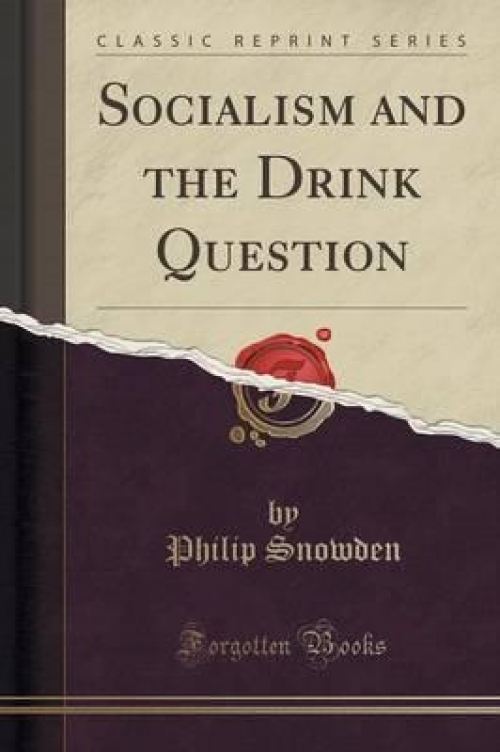
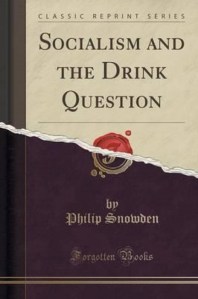
By 1905 a Trade Union & Labour Official Temperance Fellowship had been formed and a majority of the Labour MPs elected in 1906 were abstainers. Philip Snowden, a leading figure in the first Labour Government in 1924 published Socialism and the Drink Question in 1908. There was a problem though. The Tories were the party of brewing, beer and pubs and working mens and socialist clubs sold drink not only because it was what their customers wanted but also because it provided the profit to allow them to continue.

Temperance has remained, in part, an honourable tradition rooted in dislike of giving money to (Tory) drinks manufacturers and a realisation that unsober people rarely get to change the world for the better. Labour leader Jeremy Corbyn for example, is a noted non-drinker

We might also be reminded what the Labour MP Victor Grayson had to say about efforts to promote temperance in law in the House of Commons over a hundred years ago:

In October 1908 the Labour MP Victor Grayson tried to adjourn a Licensing Debate in the Commons so the question of unemployment could be considered. The next day he underlined the point: ‘there are thousands of people dying in the streets while you are trifling with this Bill’.

Many of those who survive on Universal Credit may well think Grayson had a point. Whether they like a drink or not their focus is on keeping a roof over their heads and making sure they have enough money to eat.

Even so Dry January gets plenty of publicity and support. In 2020 it has been notable for brewers coming on board.

The range of low and no alcohol beers has developed in recent times to a situation where to some at least they are a very decent alternative to beer with alcoholic content. The beers, as was traditional with temperance drinks in Victorian times, are fermented. Brewers like Big Drop are known for producing such beers. For those who are driving, unable to drink for health reasons, or simply not wanting to drink alcohol on occasion they allow a visit to the pub and socialising without having to drink overpriced and highly sweetened soft drinks.

I’m don’t do Dry January. One can respect the history of the temperance movement without adhering to it.

Craft brewer Brewdog’s decision to open an alcohol free beer bar at (the rear of)207 Old St on the northern edge of the City of London is an interesting and welcome development.

The bar is on two levels with ample, comfortable seating, working wi-fi and a relatively small-ish bar area with 16 taps of low or no alcohol beer. There are also a couple of hammocks. Take care out there.

I stopped by at 6pm one day in opening week and it was fairly busy though not rammed.

I ordered a pint of Hazy AF (0.5% £5.90). The AF may stand for alcohol free or, being Brewdog, just as likely ‘As F*ck’.

I sat down to drink my alcohol free beer and pondered soberly how to smash capitalism, as you do.

Anyway more mundanely the beer was not particularly hazy, coldish and carbonated and tasted ok. It tasted less great as I got down the glass and it got less cold. It was still perfectly drinkable but not something that made me think, hmm, perhaps another.

Fortunately one of the original London craft beer pubs, the Old Fountain, is immediately over the road. It was busy, as it more or less always is. I had a glass of a Burnt Mill pale that was decent.

Perhaps that makes me a beer flexitarian.

The demand for low to no alcohol beer is rising and it’s not necessarily associated with temperance. Big business was not a factor in the nineteenth century abstinence market either. Yet in 2020 global brewer Heineken have had a big marketing push on their 0.0% beer in the United States.

If not drinking alcohol can be seen as a rebellion, at least by some, then the Clash’s words, ‘turning rebellion into money’ still ring true as well.

This post can be found on-line at Culture Matters

https://www.culturematters.org.uk/index.php/culture/dining/item/3239-dry-january-temperance-and-the-left

Articles

E P Thompson, Englishness & ‘Progressive Patriotism’

In Uncategorized on January 28, 2020 by kmflett

E P Thompson, Englishness & ‘Progressive Patriotism’

In announcing her campaign to be Labour Party leader Rebecca Long Bailey mentioned her support for ‘progressive patriotism’. It is a new concept and when one looks at the detail of it, and particularly at the historical example Long Bailey gave of the US Civil War and British workers support for the North it is both complex and complicated.

Not really one for the Labour doorstep, perhaps more aimed at a right-wing media that while owned by people who rarely if ever pay their full British taxes, perpetually claim that the left is unpatriotic.

There is a way of simplifying the slogan, again not new, and I’ll return to that.

Below I touch on how complex the subject is by looking briefly at the attitude the late socialist historian E P Thompson had to it.

Thompson of course was an internationalist, someone who spent years of his life as a leading figure in European Nuclear Disarmament (END) seeking solidarity with people across Europe and someone who as an academic spent a good deal of time discussing with and meeting fellow historians across the globe.

Yet Thompson while he left the Communist Party in 1956 came up in a tradition that was framed by the British Road to Socialism and was someone who described himself as a Great Bustard. The Bustard is extinct in the UK primarily because it could not fly easily and hence was confined to British soil.

In his open letter to Leszek Kolakowski (1973) Thompson compared himself to the great bustard, grounded and unable to fly with wider intellectual developmements. Rather he saw himself as part of a distinctively English tradition which as he noted had strengths and weaknesses:

But I cannot fly. When you spread your wings and soar into the firmament where Kierkegaard and Husserl, Heidegger, Jaspers and Sartre and the other great eagles soar, I remain on the ground like one of the last of the great bustards, awaiting the extinction of my species on the diminishing soil of an eroding idiom, craning my neck into the air, flapping my paltry wings. [13] All around me my younger feathered cousins are managing mutations; they are turning into little eagles, and whirrr! with a rush of wind they are off to Paris, to Rome, to California. I had thought of trying to join them (I have been practising the words “essence”, “syntagm”, “conjuncture”, “problematic”, “sign”) but my wings grow no bigger. If I were to try I know very well that with my great bulk of romantic moralisms, my short-sighted empirical vision, and my stumpy idiomatic wings, I would fall – plop ! – into the middle of the Channel.

I belong to an emaciated political tradition, encapsulated within a hostile national culture which is itself both smug and resistant to intellectuality and failing in self-confidence; and yet I share the same idiom as that of the culture which is my reluctant host; and I share it not only through the habits of a writer but out of preference. This, if I am honest, is myself, my sensibility. Take Marx and Vico and a few European novelists away, and my most intimate pantheon would be a provincial tea-party: a gathering of the English and the Anglo-Irish. Talk of free-will and determinism, and I think first of Milton. Talk of man’s inhumanity, I think of Swift. Talk of morality and revolution, and my mind is off with Wordsworth’s Solitary. Talk of the problems of self-activity and creative labour in socialist society, and I am in an instant back with William Morris – a great bustard like myself, who has never been allowed into the company of such antiquated (but “reputable”) eagles as Kautsky or Plekhanov, Bernstein or Labriola – although he could, if given the chance, have given them a peck or two about their gizzards.

Well, that is what I am, and it is a ludicrous predicament. It is an excuse for any amount of silence. Holding for too long, and with too few companions, to an unregarded position breeds – as this letter has already shown – symptoms identical to those of egotism. I have become too much aware, in my silence, of the motions of my own mind; too detached from the thought around me into which my own argument can never be inserted; too stubborn in resistance to assimilation.

Unfortunately E.P. Thompson died aged 69 in 1993 so we cannot know what his thoughts on the 2016 Referendum might have been. His criticism of what is now the EU is clear, but his concern at being isolated from wider European culture suggests that he had in mind the pursuit of a European unity of a rather different kind. That of solidarity and socialism. Progressive patriotism or internationalism….. part of a national culture but in opposition to it. Its complicated

.

Articles

London Brewer Daniel Vane beats ‘Beard Bard’ Ben Bellamy by a whisker for Beard of Winter 2020 vote

In Uncategorized on January 28, 2020 by kmflett


Beard Liberation Front

28th January

contact Keith Flett 07803 167266

London Brewer Daniel Vane beats ‘Beard Bard’ Ben Bellamy by a whisker to win Beard of Winter 2020 vote

The Beard Liberation Front, the informal network of beard wearers, has said that London brewer Daniel Vane has beaten ‘Beard Bard’ Ben Bellamy by a whisker in the Beard of Winter 2020 poll

Towards the end of voting the lead changed several times each day but when the poll closed at midday on Monday 27th January Vane was the winner by a whisker.

Daniel Vane brews at the new Exale Brewery in Walthamstow although he has a long brewing pedigree. Ben Bellamy was dubbed a ‘Beard Bard’ on social media early in 2020 by poet Michael Rosen.

Rosen himself tied for third place in the poll with England pace bowler Mark Wood who marked an outstanding return to Test Cricket in the just completed fourth Test between South Africa and England with performances with both ball and bat

BLF Organiser Keith Flett said, of course craft beer and beards has become something of a cliché but in the case of Daniel Vane is beard has clearly matured after years over brewing, possibly influenced by the yeast used in the brewing process


Beard of Winter shortlist

Dominic Sibley, England cricketer

Michael Rosen, author & broadcaster

Guz Khan, comedian & actor

Paul Chowdhry, comedian & actor

Carrick McClean, beard campaigner

Mikel Arteta, football manager

Daniel Vane, brewer

Wayne Rooney, footballer

Prince Harry, ex-Royal

Justin Trudeau, politician

Nuno, football manager

Ben Bellamy, Beard Bard

Mark Wood, England cricketer


Articles

Mr Podsnap, Shaving & Brexit

In Uncategorized on January 27, 2020 by kmflett

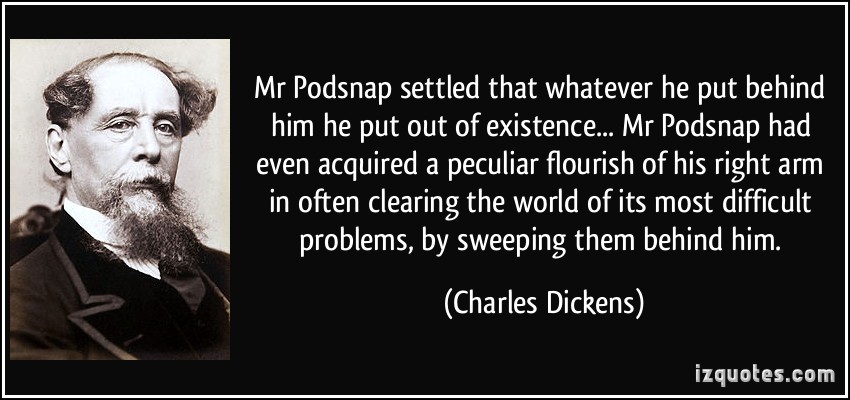
Mr Podsnap who featured in Charles Dickens Our Mutual Friend was surely the archetypal Brexiteer. Dealing in business with the rest of the world but wishing to have no knowledge or other dealing with it.

Dickens, famously hirsute, also confirmed that Brexit Podsnappery was clean shaven in his account of Mr Podsnaps daily routine:

the world got up at eight,
shaved close at a quarter-past, breakfasted at nine, went to the City
at ten, came home at half-past five, and dined at seven.

Articles

Ambridge Socialist,The crisis continues, Sign the REAL petition to Save The Bull here

In Uncategorized on January 27, 2020 by kmflett

The Ambridge Socialist

27th January

Petition to Save The Bull. The crisis continues. Sign the REAL petition to save the pub here

Following the controversial decision to change the name of The Bull and potentially its entire character, on which no regular user was consulted, we have set up a petition to demand the name change be stopped and the community- people who actually drink in The Bull- are consulted fully about any future changes.

The crisis at The Bull continues with the BBC reporting on 27th January that the post-Burns Night breakfast event was also poorly attended. Reference was also made to signing ‘the petition’. We must be clear. There is only one real petition, the one that has so far attracted 450 signatures. Please encourage others to sign. We must Save The Bull

https://www.change.org/p/residents-of-ambridge-and-listeners-to-the-archers-save-the-bull-ambridge?recruiter=45817997&utm_source=share_petition&utm_medium=twitter&utm_campaign=share_petition&recruited_by_id=c320f9e0-7d09-0130-ecdf-00221964dac8


Articles

Tony Benn as Postmaster General in 1964 & the end of the trade unions sherry party

In Uncategorized on January 27, 2020 by kmflett

Tony Benn as Postmaster General in 1964 & the end of the trade unions sherry party

In 2024 there are three trade unions that deal with what are now a separate Post Office and BT. The CWU for rank and file grades and Prospect (BT) or Unite/CMA (PO) for managers and professionals.

I’ve been an active trade unionist in what was then Post Office Telecoms since the late 1970s (started 15th October 1979) and there were certainly more unions then but nowhere near 36. The overall trade union body at that time was COPOU, Council of Post Office Unions, an arrangement that had arisen from the 1919 Whitley proposals.

Joint union discussions with the employer still occur certainly in telecoms.

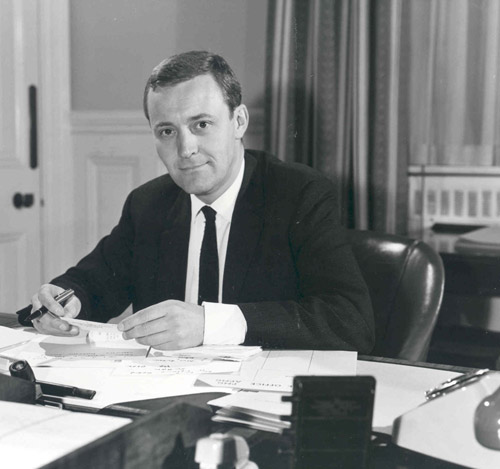
Tony Benn became Postmaster General in October 1964 following Labour’s Election Victory and succeeded the Tory PMG Ernest Marples. He was the individual I was checking Benn’s diary for when I came across the vignette below

Tony Benn diary Tuesday 20th October 1964

….The suggestion that I should follow the usual practice and have a sherry party for the thirty-six unions that deal with the Post Office. I said I would not do this but would, instead, invite them to an all-morning working conference and we would have tea and biscuits at 11….

Articles

Dry January: Lo & No alcohol beers. A brief taste test

In Uncategorized on January 26, 2020 by kmflett

While I’m not doing Dry January and I dont support its underlying temperance principles either (although I do respect them and their history) I am perpetually curious about everything (rather like my cat but with more of a health & safety emphasis) so I have tried some low and no alcohol beers during January.

Earlier in the month I stopped by Brewdog AF at Old St. My brief report is here:

A visit to Brewdog Alcohol Free: turning rebellion into money?

Ive also written a much longer piece on temperance and the left which you can find at the Culture Matters website (@culturesmatter)

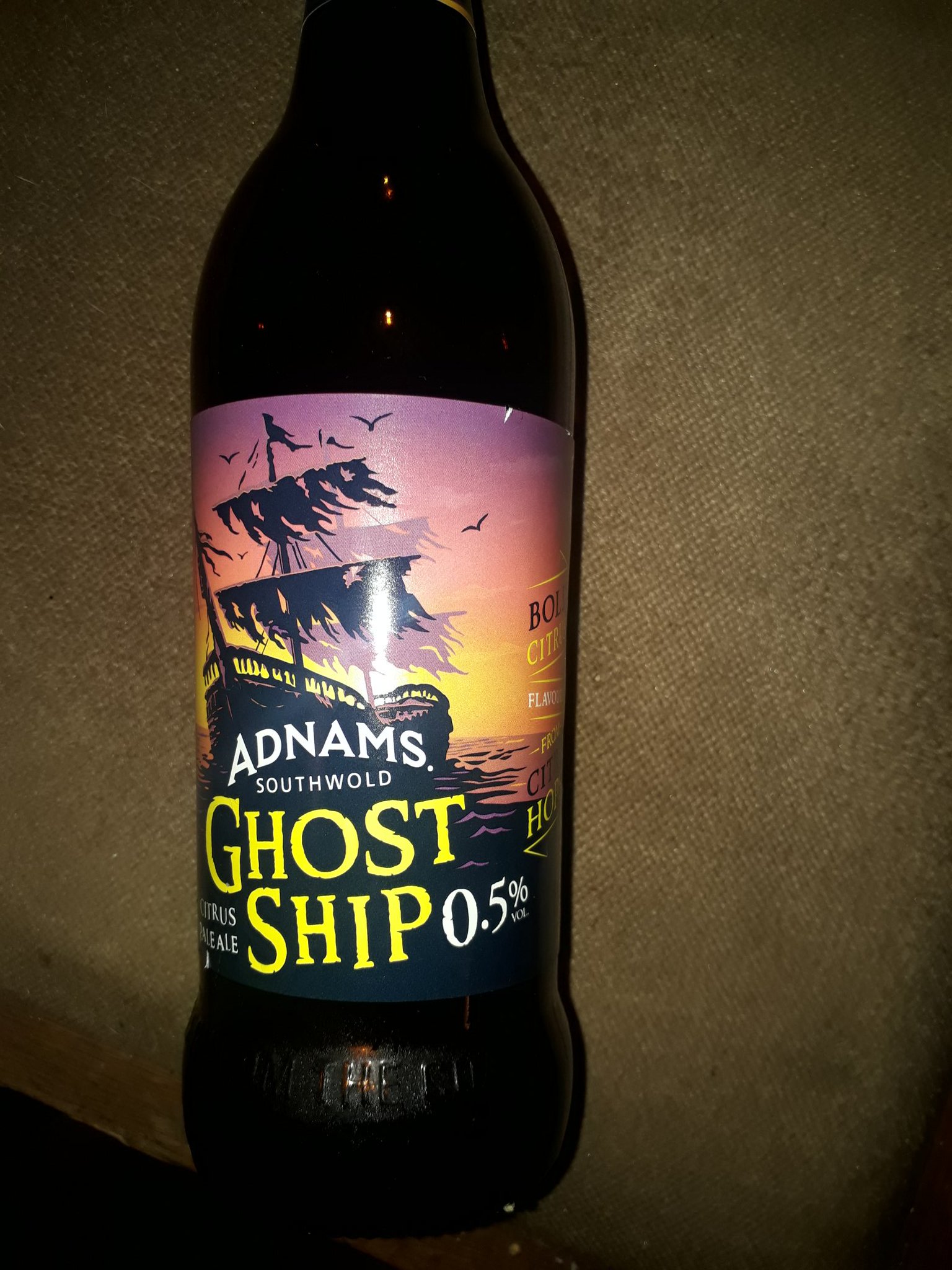
I’m trying a bottle of Adnams Ghost Ship 0.5% as I write this.

I’ve been a fan of Adnams for a very long time and more recently how they’ve kept pace with the beer times as a traditional regional brewer.

Anyway the Ghost Ship experience was much the same as that I found in Brewdog.

The taste was fine, citra hops, as I drank it cold from the fridge. As it got slightly less cold the taste was less great and less beer like. Not unpleasant and not undrinkable but not something that made me think, hmm, I think another one.

Rather I think I’ll have an actual beer next.

There is a much wider issue btw around low alcohol drinks and particularly bars that focus on them. Just as some bars can contain a lot of boring tedious drunks so these places historically have often been labelled as rather glum places even by those who actually dont particularly want a beer. Some of that of course was brewers propaganda (and less heard now brewers themselves look to profit from low alcohol drinks). But somewhere in there is a genuine discussion about why the ‘pub is the hub’ or should be of community life