Articles

Beard Friendly Party Conference 2019: Liberal Democrats may challenge Labour for hirsute accolade

In Uncategorized on September 18, 2019 by kmflett

Beard Liberation Front

press release 18th September

Contact keith flett 07803 167266

Beard Friendly Party Conference 2019: Liberal Democrats may challenge Labour

The Beard Liberation Front, the informal network of beard wearers, has said that with the Party Conference season firmly underway the Liberal Democrats who met in Bournemouth  could challenge Labour for the most ‘Most Beard Friendly Party Conference’ accolade for the first time in 5 years.

The LibDems are the traditional party of beard and sandal wearers but their conference last won the Beard Friendly title in 2014

The BLF has observers watching each of the main conferences, LibDems in Bournemouth, Labour in Brighton and the Tories in Manchester with the winner announced on October 2nd the final day of the Tory conference.

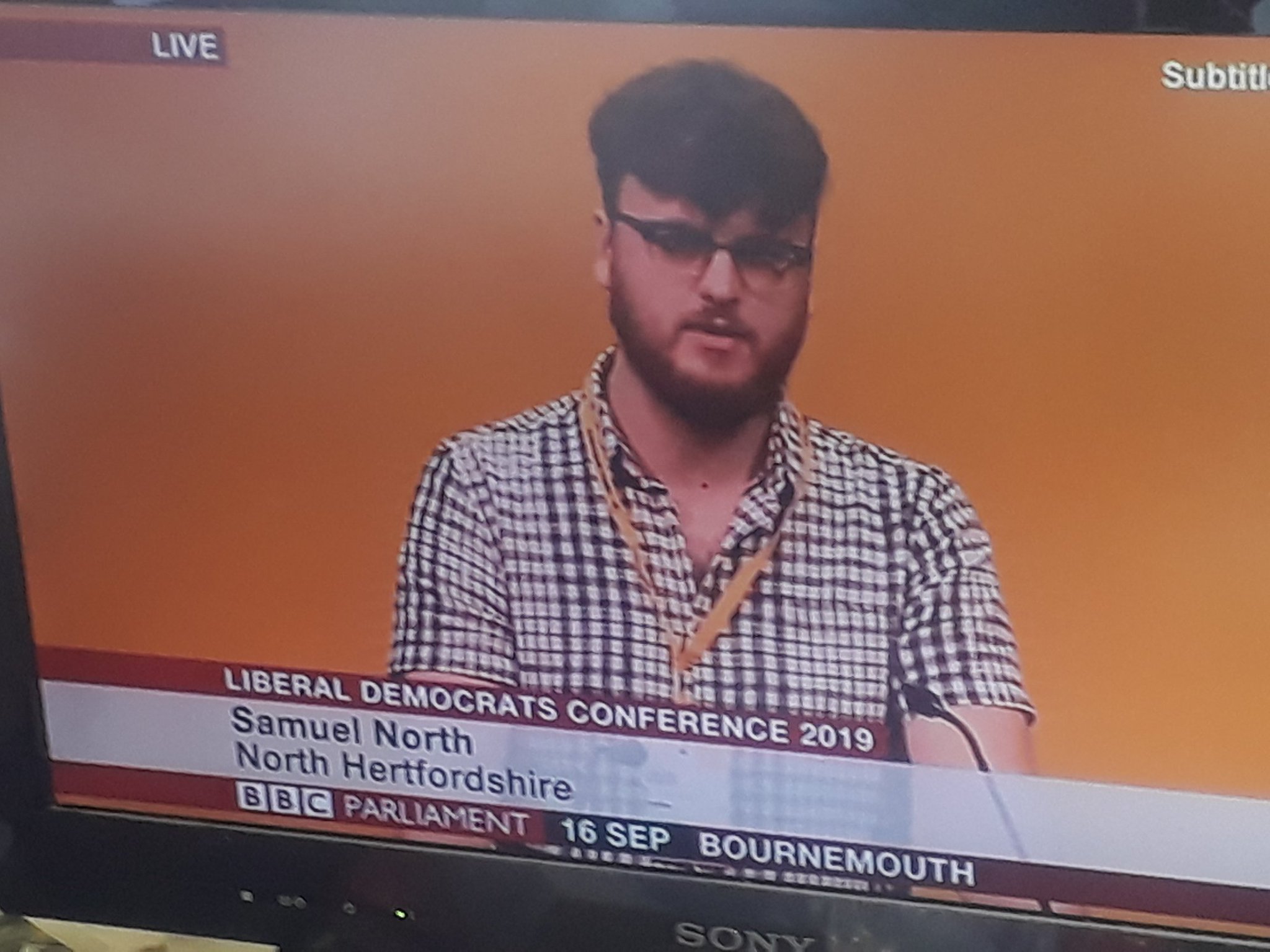
BLF Observers noticed an enhanced beard presence at the Liberal Democrat Conference and some younger speakers with beards. It is the first sign of an uptick in LibDem hirsuteness for 5 years

The title still looks set to be Labour’s to lose again with its first bearded leader since Keir Hardie stood down in 1908, as Jeremy Corbyn marks the 4th anniversary of his election as leader.

There is an on-line poll which closes on 2nd October.

BLF Organiser Keith Flett, to underline this is about the image a party conference displays not the policies that are on offer, such as they are. Its not yet fully clear what is driving the rise in LibDem hirsuteness but it is certainly all to play for in terms of beard levels for Labour in Brighton

Recent winners of the Beard Friendly Party Conference

2013 Liberal Democrats

2014: Liberal Democrats

2015 Labour

2016 Labour

2017 Labour

2018 Labour


Articles

Tony Benn’s 1975 EEC Referendum innovations key to Labour’s 2019 EU plan

In Uncategorized on September 18, 2019 by kmflett

Tony Benn is revered by many on the left and perhaps recalled as a rather too radical figure by centrists and those on the right.

His role as a constitutional innovator is less well remembered.

He campaigned for and was successful in getting the law changed so that he could renounce his inherited title of Lord Stansgate and resume his seat as an MP in 1963

When it came to the 1975 EEC Referendum Benn was responsible for a change in what might be called a constitutional convention, namely that Cabinet’s had collective responsibility for decisions taken and anyone speaking out against would lose their seat at the Cabinet table.

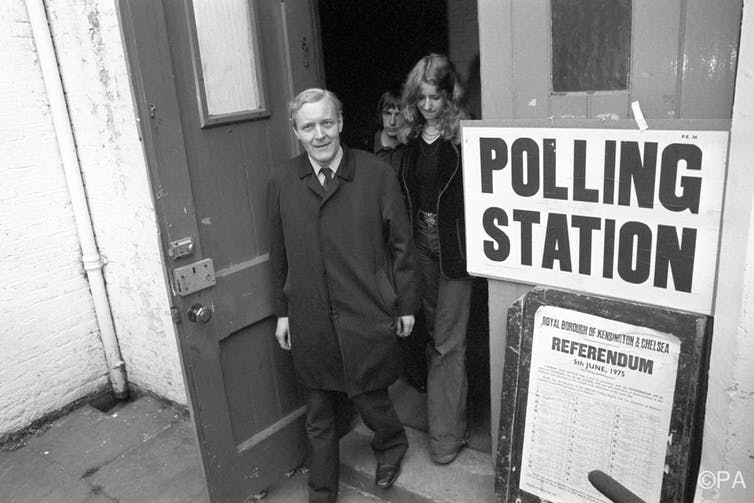
Harold Wilson won the October 1974 Election and renegotiated the terms of British membership of the then EEC. He declared that most of what was required had been achieved. In order to give that decision a democratic mandate he called a Referendum. Wilson declared in favour of remain but Benn had already secured the right of Cabinet Ministers to campaign for either remain or leave.

As it turned out the vote was to remain and decisively so 67% to 32%

In 2019 Jeremy Corbyn has proposed a Referendum where he, as a future PM, would remain neutral. Labour itself might not, depending on conference decisions. However it seems clear that future Cabinet members would be free to campaign for either remain or leave (although I suspect most would be for remain). Benn’s 1975, tweaked for the circumstances of 2019, remains in place

Tony Benn’s Diary

Tuesday 21st January 1975

Cabinet where the entire morning was devoted to the referendum on the European Community following our renegotiated terms.

First Harold said that he thought an agreement among Ministers to differ would be acceptable from the moment of Cabinet decision.  We would need guidelines to ensure that we all behaved in a comradely way..

Thursday 23rd January 1975

I heard Harold make his historic statement in Parliament, that there would be a Referendum on 5th June and that Ministers would be free to speak and to vote- a notable constitutional change. I am intensely proud to have been associated with it

Articles

Socialist historians support the 20th September climate strike: we demand a continuing supply of history

In Uncategorized on September 17, 2019 by kmflett

London Socialist Historians Group

18th September

Contact Dr Keith Flett 07803 167266

Socialist Historians support the 20th September climate strike: we demand a continuing supply of history

The London Socialist Historians Group which organises the socialist history seminar at the Institute of Historical Research at the University of London, Senate House (currently suspended due to the IWGB boycott) has said it fully supports the climate strike on September 20th. The day is expected to see united action on the climate emergency between students and trade unionists with the TUC backing action

The historians say that the bottom line is that unless climate change is addressed the likelihood of human civilisation continuing in its present form is limited. Without that there is no guarantee of a future supply of history for historians to research.

On 20th September the socialist historians says they hope that history will be made in the present day by a huge worldwide protest about the climate emergency

LSHG Convenor Dr Keith Flett said, we are always inclined to support protests by young people. In this case the matter being protested about impacts on every single one of us, but particularly the youth who will have to grapple with the unpleasant realities of climate change if it is not dealt with. They are right to protest. Amongst other things they are seeking to ensure that history continues so that future socialist historians can research it.

Articles

Wetherspoons at 40. The song remains the same as in 1979

In Uncategorized on September 17, 2019 by kmflett

40 years on: the origins of Wetherspoons. The Song Remains the Same

Wetherspoons is much in the news at the moment, not always for the best reasons. The man still in charge, Tim Martin, has become a pro-Brexit campaigner, and has made pre-Brexit price reductions in his pubs. Meanwhile Wetherspoons workers have been suggesting that it might be an idea if they had decent pay and conditions.

Wetherspoons started out 40 years ago in North London and it all looked a bit different then.

At that point it was a model of progressive thinking in the beer world. No music, no gaming machines, all day food, reasonably priced beer and so on. Customers were attracted who might not otherwise have entered a pub.

The very first (not quite) Wetherspoons was Marlers Bar in Muswell Hill. Andrew Marler is still around and has owned pubs in the St Albans area in recent years. However the pub is associated with Tim Martin who took it over and launched a chain of bars, at first in the North London Borough of Haringey almost exclusively

My memory suggests that Marlers was a joint venture between Andrew Marler and Tim Martin. The officially approved version indicates that Marler was the original owner and then sold to Martin. That did not preclude Martin from having an interest previously of course but it is Marler I remember behind the bar.

What of the beer in Marlers? My memory suggests that it was from regional brewers like Wadworths, Greene King and Ruddles that were then hardly available in London. CAMRA sources from the time concur. I thought I also recalled Sam Smiths but I might well be wrong..

A friend who I drank with in Marlers at the time, Mark Baker, recalls ‘it was quite exotic stuff for that part of the world at that time (i.e. wasn’t Ind Coope or Courage!)’

It was certainly the case that Marlers was a shop conversion (more or less unheard of the time). It appears to have been a bookies. Before that the interweb suggests it was a private drinking club for footballers, One source says Spurs, another Arsenal. We can be sure it was not both but the pub is on the Arsenal side of Haringey so it was quite probably them.

The pub has long since ceased to be a Spoons anyway but the story has a, for some, happy ending.

Wetherspoons have returned to Muswell Hill, up the hill, just at the top of the hill itself. The Mossy Well is rather a handsome pub and were you in the area you could do worse than stop by. Possibly best not to mention the name Marler though.

The problem is that while 40 years on Tim Martin is probably now at least as well-known as a Brexiteer as a pub owner, the successful Wetherspoons model of 1979 remains largely unchanged.

It is popular enough but no longer at the cutting edge of progressive developments in beer and bars as it was then.

Perhaps a new, Brexit free, Tim Martin is required to develop a model for 2019

Tim Martin told Desert Island Discs (3rd December 2017) about the early days of Marlers Bar in Muswell Hill & about the expansion of Wetherspoons in North London:

http://www.bbc.co.uk/programmes/p05pnxh7?ns_mchannel=social&ns_campaign=bbc_radio_4&ns_source=twitter&ns_linkname=radio_and_music

Articles

E P Thompson, Prorogation & the Rule of Law

In Uncategorized on September 17, 2019 by kmflett

E P Thompson, Prorogation & the Rule of Law

The left generally are not enthusiasts for the ‘rule of law’ and perhaps particularly some aspects of employment law. Those who fulminate about the importance of judges and the law are often seen as being Tories intent in preserving the practices of an unjust society. Often they are.

Matters inevitably are more complex than this as the current Prorogation of Parliament case underlines. The political right are mostly not too bothered about what constitutional law might say on the sovereignty of Parliament at the moment. Some liberals and some of the left are.

Of all the post-1945 figures to have considered the Rule of Law the one who arguably wrote most powerfully on it was E.P Thompson.

He devoted a concluding section of his book Whigs and Hunters to the matter. In the book Thompson looks at the eighteenth century Black Acts which listed a growing number of often petty offences for which offenders could be hanged. It was the period of the ‘Bloody Penal Code’. In practice matters often did not work quite like this as Jurys refused to convict people.

Thompson recognised that defending the Rule of Law from the left was not a popular thing to do He noted that ‘I stand on a very narrow ledge, watching the tides come up’. [p260]. However he argued that ‘it is not possible to conceive of any complex society without law’ [p260].

Indeed as he knew well from his researches, ‘for as long as it remained possible, the ruled- if they could find a purse and a lawyer-would actually fight for their rights by means of law’ [p261].

This was not just an individual thing but a collective position. Thompson argued that the rhetoric of the plebeian crowd, of the free born Englishman’ was centrally focused on ’inviolable privacy.. habeus corpus…equality before the law’ [p264] In other words a workable system of law was basic to a defence of popular rights.

He recognised of course that the law was ‘devised by men of property as a defence against arbitary power’ [p264] but argued that a system that provided defence against arbitrary use of power by authority was important to working people as well as the bourgeois [p266].

In short Thompson saw ‘a whole inheritance of struggle about law’. The Rule of Law and what it means is important in any complex society but it is also something to be argued about, and struggled over not just dismissed

The Black Acts decreed that many should hang for petty offences. Not that many actually did

Articles

Campaigners praise beard power of Luxembourg Prime Minister

In Uncategorized on September 17, 2019 by kmflett

Beard Liberation Front

17th September

contact: Keith Flett 07803 167266

Campaigners praise beard power of Luxembourg Prime Minister

Image result for luxembourg prime minister

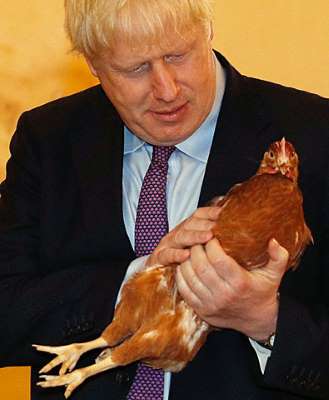
The Beard Liberation Front, the informal network of beard wearers, has praised the Luxembourg Prime Minister, Xavier Bettel, for his beard power in empty podiuming perpetually clean shaven UK Prime Minister Boris Johnson on Monday.

Johnson claimed to be upset at a small number of protesters and declined to join a press conference with Mr Bettel.

The campaigners say that in reality Johnson did not wish to share a platform with someone with a beard

BLF Organiser Keith Flett said, Johnson is not only scared of protesters he is scared of beards as well

Articles

Boris Johnson & Rough Music. The booing continues (now in Luxembourg)

In Uncategorized on September 16, 2019 by kmflett

Boris Johnson & Rough Music. The booing continues (now in Luxembourg)

As I note in my article in the Morning Star (5.8) Boris Johnson’s first few days as Premier were notable for a chorus of protest where ever appears.

https://morningstaronline.co.uk/article/f/boris-johnson-faces-rough-music-a-great-british-tradition

One name for this is Rough Music, a community custom, where transgressors against a generally held moral code were singled out for ridicule. It was by no means a universally progressive tradition, as E P Thompson study into it (Customs in Common) made clear.

A tradition of effigies and sometimes the burning of them fed into the wider area of charivari or rough music a wider form of protest, involving discordant music and general uproar.

According to the social historian Robert Storch in reaction to the 1872 Licensing Act it was almost decided in Exeter to burn an effigy of the Home Secretary but instead there was a chorus of groans. From the 1870s Storch notes shopworkers burnt effigies of employers who refused to join in with early closing times

As late as 1887 an inmate of Chelsea Workhouse was charged with making an effigy of the master as a protest about poor food. The judge in the Police Court, aquitting the inmate, told the master ‘public characters like you don’t mind a little ridicule. It’s the penalty of greatness.

Perhaps Boris Johnson, great or not, will keep that in mind as he finds himself being booed today not in the UK but Luxembourg

Articles

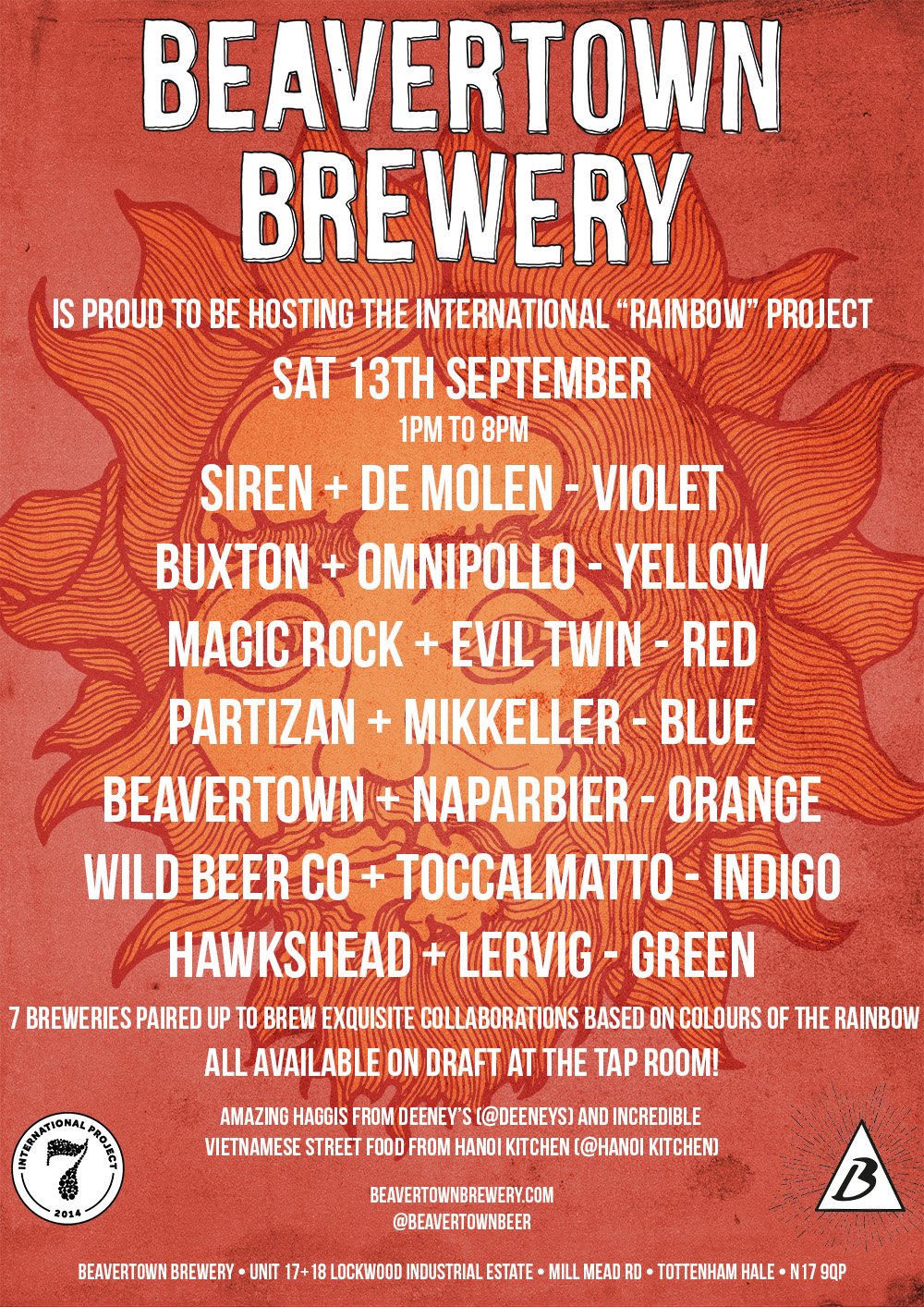
5 years since the Rainbow Project at Beavertown & the launch of Yellow Belly

In Uncategorized on September 16, 2019 by kmflett

It was 5 years on Saturday (13th September 2014) since the launch of that year’s Rainbow Project (the first was in 2013) at Beavertown in Tottenham Hale. One of the beers was (the now defunct) Buxton/Ominipollo Yellow Belly.

A link to the events of the day is below and may bring back some interesting memories.

The project continues now with Left Handed Giant in Bristol and this year’s beers are listed here:

Track Brewing co. x Highland Park Brewery
North Brewing co. x Fieldwork Brewing
Burnt Mill Brewery x Cascade Brewing
Deya Brewing Company x Holy Mountain
Left Handed Giant x Alesong Brewing & Blending
Verdant Brewing Co. x Temescal Brewing
Unity Brewing Co. x Alvarado Street Brewery

Link to 2014

https://www.beavertownbrewery.co.uk/rainbow-project-wrap-up/

Articles

Beard Friendly Party Conference 2019: Liberal Democrats at most hirsute since 2014

In Uncategorized on September 16, 2019 by kmflett

Beard Liberation Front

press release 16th September

Contact keith flett 07803 167266

Beard Friendly Party Conference 2019: Liberal Democrats at most hirsute since 2014

The Beard Liberation Front, the informal network of beard wearers, has said that with the Party Conference season underway as the Liberal Democrats meet in Bournemouth the battle has been well and truly joined again in the poll for the ‘Most Beard Friendly Party Conference’.

The LibDems are the traditional party of beard and sandal wearers but their conference last won the Beard Friendly title in 2014

The BLF has observers watching each of the main conferences, LibDems in Bournemouth, Labour in Brighton and the Tories in Manchester with the winner announced on October 2nd the final day of the Tory conference.

In the three days of the Liberal Democrat conference so far observers have noticed an enhanced beard presence and some younger speakers with beards. It is the first sign of an uptick in LibDem hirsuteness for 5 years

The title still looks set to be Labour’s to lose again with its first bearded leader since Keir Hardie stood down in 1908, as Jeremy Corbyn marks the 4th anniversary of his election as leader.

There is an on-line poll which closes on 2nd October.

BLF Organiser Keith Flett, these are uncertain times politically and it looks like the competition for the Beard Friendly Party Conference is very much in play.

Recent winners of the Beard Friendly Party Conference

2013 Liberal Democrats

2014: Liberal Democrats

2015 Labour

2016 Labour

2017 Labour

2018 Labour


Articles

The Challenge of Big Beer & Big Capital in 2019: what is to be done?

In Uncategorized on September 16, 2019 by kmflett

The challenge of Big Beer & Big Capital in 2019. What is to be done?
Beer writer Roger Protz has noted of the strategy of Big Beer: “First Big Beer buys up a swathe of independent breweries. Now it’s attempting to control the natural ingredients used to make beer. The power of these global behemoths is frightening and has to be vigorously resisted….

Big Beer is on the march, and we risk losing our wealth of choice to merely the illusion of it. Not only are consumers being misled, but these global brewers are changing the very character of the beers they buy and driving genuine independents out of business….

The question of what the strategy of Big Beer and Big Capital is for the 2020s has been sharply focused in recent months. Firstly by Japanese brewer Kirin’s takeover of the Huddersfield craft brewer Magic Rock. Secondly by the sell out of Fuller’s brewery (and with it Dark Star) to Asahi and finally (so far) by Greene King’s sale of its brewery and pub to a Hong Kong based property company

I agree with Protz that one of the aims of Big Beer is to control the market and in doing so to mass market beers which will claim to be ‘craft’ but will be of lower quality and more bland than ‘genuine’ products. That process will usually take time. It is the outcome of a series of decisions that big businesses make about cost savings and efficiencies in order to retain or boost profit levels.

It would be a mistake I suspect however simply to expect a re-run of the 1960s. In that period regional and smaller brewers, often those which had failed to invest or keep pace with changing markets for various reasons (but not always) were swallowed up and closed. Their beers, or at least their best-selling beers, were produced elsewhere in much larger breweries. At the same time the Big Six, Watneys, Whitbreads and the like sought to monopolise not just beer production but beer sales. They did that by growing pub estates and making sure only their products could be obtained in wide geographic areas- Watneys in East Anglia for example.

Richard Boston who wrote on beer for the Guardian during this period noted the case of a drinker who had left an East Anglian pub fed up with the quality of Watneys beers sold only to find that every other pub in the area also sold them and only them.

I don’t think the 2020s will look quite like that. For a start Big Beer is now definitively global. It still has some interest in shutting down a brewery it buys and brewing the beer elsewhere. Where would that be? To an extent it can be contract brewed and at the moment that can be in the rest of Europe as much as the UK (its unclear what impact Brexit will have on that model if any)

It may not have a big interest in owning pubs, unless of course as with the Greene King sale the new owner is actually a property company. What it does have an interest in is making it financially attractive for pubs to carry its products and not those of genuine independents.

Moreover unlike the 1960s its not really about reducing beer ranges and promoting a few big brands. These already exist. The problem is that the profit to made out of them by Big Beer is not as high as it was, while the profit out of the (much smaller) craft beer market is higher.

The Big Beer combination there then could be to reduce the cost of making craft beers they acquire (and in doing so make an inferior product) and to seek to make them as widely available as they can.

That means of course not just pubs but supermarkets, restaurants, cafes. The shape of the beer market looks a bit different in that respect to the 1960s.

A preliminary summary might be (and these are very preliminary thoughts) that the broad trends that Big Beer pursued in the 1960s remain but that the context of the 2020s is somewhat different.

What is missing in the above is the input of an independent campaigning voice for beer drinkers. CAMRA arose out of the impact of Big Beer in the 1960s. Its still around but can it, or others grapple with Big Beer 2020s style

Roger Protz has suggested on social media a summit of CAMRA, SIBA and others to determine proposals to put to Government once there is one that is actually concerned with day to day Government.

But what should be proposed? As ever it is much easier to oppose than argue for a positive way forward.

One idea might be to return to the model of the State-owned brewery in Carlisle that was started during World War One and lasted until the 1970s. Its aim was to set a benchmark for good beer and pubs and of course initially to stop munitions workers from drinking too much.

I have no issue with reasserting that idea but in a world where global beer and capital operate it cant be the entire answer.

Another is to strengthen legislation (which currently operates in England) to allow community bids a first crack at buying a pub under threat of closure. That would make property focused takeovers like that for Greene King less attractive.

More is still required. Perhaps its time to designate a range of regional brewers as producing something unique to the UK and put strict regulations around anyone trying to interfere with it. Much for example as the EU has done (remember them) with Stilton cheese.

Finally, not State ownership but an alternative, perhaps the Government could take a golden share in some leading breweries meaning they could not be sold without a process where the sense of doing so was reviewed.

Of course that depends on the Government….

This post also appears on the Culture Matters website

https://www.culturematters.org.uk/index.php/culture/dining/item/3117-big-beer-and-big-capital-what-is-to-be-done