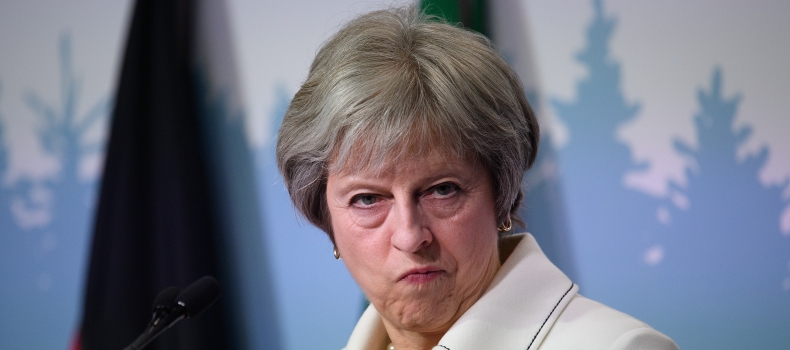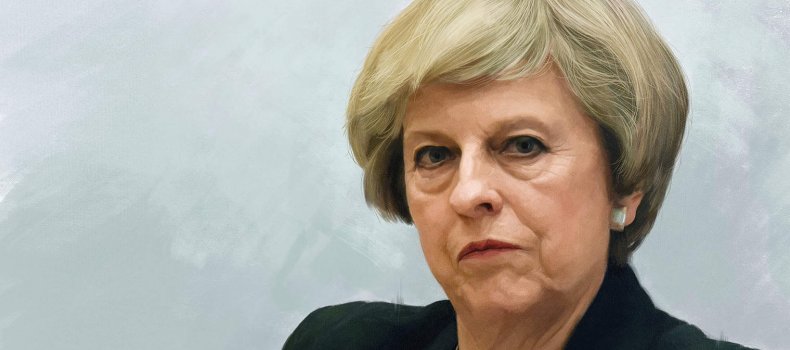
Below is the full text of Theresa May’s ‘nasty party’ speech to the Tory Party Conference in 2002. The Party has got far nastier since then and it makes interesting reading 22 years on (source The Guardian). As she announces she is standing down as an MP its worth keeping in mind that she was responsible for the Hostile Environment policy that led to the Windrush scandal
The Conservative chairwoman’s speech to the party conference in Bournemouth
Mon 7 Oct 2002
Ladies and gentlemen, you’ll notice that there have been some changes to our conference this year.
A new format. A new timetable. A new set.
But most important of all, this conference marks a new approach from a party that is changing.
Shaping solutions rather than just playing politics.
Listening to the people of Britain, who’ve been so badly let down.
Reforming ourselves so that we can reform Britain.
Politics is about public service. Everything we do – in parliament, in our constituencies, here in Bournemouth – should be motivated by one goal. Improving the lives of our fellow citizens.
At its best, politics is a noble calling.
And at their best, politicians – from Churchill to Thatcher – have transformed Britain for the better.
But we have to face a deeply uncomfortable truth. One that has been reinforced by what we have been reading in every newspaper over the last two weeks.
The public are losing faith in politics.
Politicians are seen as untrustworthy and hypocritical. We talk a different language. We live in a different world. We seem to be scoring points, playing games and seeking personal advantage – while home-owners struggle to make ends meet and schoolchildren see years of hard work undermined by the stroke of a bureaucrat’s pen.
Why has the public become so cynical about politics and politicians?
If we’re being honest I think we know the answer. In recent years a number of politicians have behaved disgracefully and then compounded their offences by trying to evade responsibility. We all know who they are.
Let’s face it some of them have stood on this platform.
There are many other reasons why voters have learned to disregard what we have to say, however loudly we say it:
Promising too much and delivering too little.
Spinning and counter spinning.
Pursuing our obsessions instead of fighting for the common good.
Fewer and fewer people are bothering to vote. Why? Because they think that politicians will do exactly what they like.
More people vote for a TV show than a political party. And those who do vote think a man dressed as a monkey is more likely to deliver on his election pledges than any party.
We might laugh that off. But when they start voting for the BNP then it’s time to admit that things have gone badly wrong.
So politicians need to look at themselves. And that, ladies and gentlemen, includes Conservatives.
One of the things that people hate most about modern politics is the almost mindless partisanship that passes for debate. Ya-boo, Punch and Judy, call it what you will, the public is sick of it.
Voters do want the opposition to scrutinise the government and hold it to account.
But voters will only think of the opposition as an alternative government if the opposition acts as governments should – in a reasonable way, judging issues on their merits and people on their records.
This government is certainly making mistakes. Some of them grievous. And we have been determined not to let them get away with it.
They planned to let bureaucrats snoop on peoples’ phone and email conversations. We helped to stop that.
When, thousands of elderly people were threatened with an uncertain future, we persuaded the government to call a halt to the regulations which were closing care homes.
Now the Labour party is intent on turning law-abiding and decent citizens into criminals by banning hunting – and we marched to stop that as well.
But we have to acknowledge that many of the criticisms that we could direct at Labour will cut little ice with the public.
While the parties shout at each other, no one outside the Westminster village pays attention to any of it.
People just switch off.
British politics has indeed sunk into a rut.
But occasionally something momentous happens that reminds us all of why politics matters.
Just over a year ago, on the 11th of September, terrorists killed over 3000 people in New York – many Britons among them. George Bush and Tony Blair deserve the gratitude of everyone for standing up to the forces of evil.
And they deserve our thanks as well for the action they are taking to disarm Saddam Hussein.
I know that many people in the country and indeed many of you here today are deeply worried about the prospect of war. It wouldn’t be natural if we weren’t. And there are those who say that because we are in opposition we should be opposing the government. But as Conservatives we don’t believe in opposition for opposition’s sake. We believe in doing what is right.
When Britain faces down a tyrant, and British servicemen and women face danger, we will support Britain’s prime minister, not undermine his efforts.
But while the prime minister is standing up for our security abroad there is growing insecurity here at home.
How can students and parents plan for the future when they can’t rely on the country’s examination system to deliver fair results?
The certainty of decent care in our old age is being destroyed by a creaking health service and the closure of care homes.
The assurance that we can travel quickly and safely across this crowded island no longer holds.
People’s security in retirement is being eroded as our pension fund system has been undermined.
Crime is rising, and our streets have become more disorderly and frightening places.
In 1997, Tony Blair told us things could only get better, but for too many people – especially the most vulnerable in our society – things have simply got worse.
Last week in Blackpool, Tony Blair told us that he was keenly aware of these problems. And he promised to push through reforms to improve the quality of our lives in all these areas.
An end to monopolies, greater choice, services built round individuals.
I won’t quibble with that. And you wouldn’t expect me to. We have always believed in these things.
But where I differ from the prime minister is that I don’t believe this Labour government can actually deliver those changes.
After all, Tony Blair can’t even persuade Gordon Brown to allow a tiny number of hospitals the freedom to pay staff more and to innovate.
The prime minister may have borrowed some of our rhetoric but his instincts are still wrong.
Given the choice between trusting people or politicians, he trusts politicians. That is the real difference between us.
Our opponents try to portray our belief in smaller government as not caring about those in need.
But this is not, and has never been the case. We reject Labour’s “government knows best” approach, but we certainly don’t subscribe to a philosophy that lets people sink or swim.
We believe that an active government should focus on doing what it can to help people get on with their lives.
This is the true measure of a compassionate government.
And that is why it is imperative that the Conservative party reforms itself – so that we’re in a position to deliver the reforms that most people now accept Britain needs.
What do I mean when I talk about the party changing? Well, one of the ways in which we’re changing is by being proud of the right things.
All around the country, Conservative party members are involved in local communities and neighbourhoods, trying to make life better for others.
I saw this earlier this year when I went to Redditch.
The “Step Out Drop In” charity provides young people who need it with support and encouragement to help them improve their lives.
Many of these young people have no home. Some have been in care. A few are on drugs. But as well as helping with these big issues, it also helps with simple things. It provides them with somewhere to go and wash their clothes and have a bath. And it provides support and training for them before they attend interviews, so that they can find a job and support themselves.
It is a source of hope for many young people in Redditch, and I am proud that two of the charity’s trustees are local Conservative councillors.
There are many more charities like this around the country, run or supported by local Conservatives.
People for whom helping the vulnerable is not a slogan but a way of life.
You are showing that Conservatism is alive and well and is being lived out in people’s lives every day. Every time you help out with your local charity; every time you do something to help your local community; every time you give up your own time or money to help someone else, you are displaying all that is best in Conservatism.
And it’s that sort of Conservative, the natural majority within our party, that I want to see in the driving seat.
But I want to say something else.
I want to thank you for all the work you have done this year. Thank you for the hours you spend working for the party in your local area. Thank you for being our councillors and for being the people who deliver our leaflets.
Thank you for working so hard to see the election of a Conservative government.
But the Conservative party, its principles, its people, have been let down in recent years by the failure of some to represent faithfully the best in Conservatism.
Some Tories have tried to make political capital by demonising minorities instead of showing confidence in all the citizens of our country.
Some Tories have indulged themselves in petty feuding or personal sniping instead of getting behind a leader who is doing an enormous amount to change a party which has suffered two massive landslide defeats.
And throughout this week never forget this fact. Twice we went to the country unchanged, unrepentant, just plain unattractive. And twice we got slaughtered. Soldiering on to the next election without radical, fundamental change is simply not an option.
More than that, we must step up the pace of change.
And there are reasons for real optimism. The Conservative party has made progress this year and has laid the foundation for sustainable progress ahead. The reason is clear. Iain Duncan Smith has had the courage to recognise the seriousness of our problems and the imagination to develop a programme for recovery.
In the past year, true to his commitments during the leadership election, Iain has refocused our party on the things that concern people everyday: better education in our schools, better health care for all, and safer streets.
We have identified today’s problems. We know that things aren’t working as they should. We know we have to do things differently if we are to do things better.
Just think back. In 1979 we were the only party that saw the need to change the attitudes of decades and move the country forward. Today we are in the vanguard of meeting the new challenges that face our country. In 1979 the challenge was reform of the economy. Today the challenge is reform of public services.
And to meet this challenge we’ve been looking abroad, learning from the best examples around the world. And at home, we’ve been listening to teachers, nurses, doctors, police officers.
And their message to us is clear – the best thing we can do is trust them to get on with their jobs.
Over the next few days you will hear how we will do just that. You’ve been asking for policies and this week we’ll deliver.
Today Damian Green will begin to explain how we will set about delivering equal opportunity in our schools, Liam Fox will tell you how we will provide better healthcare, Tim Collins will set out ideas for a better transport system and on Wednesday Oliver Letwin will tell you some of our plans to make our streets safer.
None of them will be about more centralised government or more meddling by politicians. All of them will be about trusting people to get on with their jobs.
And on Wednesday afternoon you won’t just have Oliver Letwin’s speech, you will have, in your hands, a campaign pack for you to take the message of this conference out onto the streets where the real battle is there to be fought. We will give you the campaigning tools to win back supporters on the ground.
And that will give us the clear direction we need to win in next year’s local elections. We already have 7000 councillors but we need more. And we intend to make gains in the elections for the Scottish parliament and the Welsh assembly.
So the direction of policy will be clear. And our plans will be in place for next year’s elections. Yes we’ve made progress.
But let’s not kid ourselves. There’s a way to go before we can return to government.
There’s a lot we need to do in this party of ours. Our base is too narrow and so, occasionally, are our sympathies. You know what some people call us – the nasty party.
I know that’s unfair. You know that’s unfair but it’s the people out there we need to convince – and we can only do that by avoiding behaviour and attitudes that play into the hands of our opponents. No more glib moralising, no more hypocritical finger-wagging.
We need to reach out to all areas of our society.
I want us to be the party that represents the whole of Britain and not merely some mythical place called “Middle England”, but the truth is that as our country has become more diverse, our party has remained the same.
We should not underestimate the extent of this problem. Ask yourselves: how can we truly claim to be the party of Britain, when we don’t truly represent Britain in our party?
Our country is not simply a geographic area. It is the people who live and work in it. It is the people in the inner cities as much as those in the leafy suburbs or rural villages. It’s the people in the north and the south, the east and the west. It’s the face on the street, whatever its colour, whatever its sex, whatever its background.
Are we really giving everyone in our society a fair chance to represent the Conservative party?
As a Tory woman I’m instinctively suspicious of positive discrimination. I’m a passionate believer in meritocracy. But are we in the Conservative party really choosing our candidates on merit? Isn’t it time we were more open-minded about what makes the best candidate?
Our associations cherish their independence, but with independence comes responsibility. When selecting a candidate you aren’t simply choosing someone to represent your association or your area. Your candidate becomes the face of the Conservative party.
So don’t ask yourself whether you would be happy to have a drink with this person on a Sunday morning, ask instead what this person says about us.
At the last general election 38 new Tory MPs were elected. Of that total only one was a woman and none was from an ethnic minority. Is that fair? Is one half of the population entitled to only one place out of 38?
That’s not meritocracy – that’s a travesty and it will never be allowed to happen again.
I’m afraid that candidate selection is just one area in which our party seems to many outside our ranks to be hopelessly stuck in the past. The way we look, the way we talk and the way we think – this may be a party at ease with itself but is it a party at ease with 21st century Britain?
Some people don’t like this kind of talk. They say that it’s defeatist. Unnecessary. They accuse those of us who raise these concerns of disliking the Conservative party.
I believe passionately in the Conservative party. Because I believe passionately that it is the Conservative party that can make Britain a better society.
And it’s precisely because I believe passionately in this party of ours that I am utterly determined to see it survive, prosper and win.
Our party is at its best when it takes Conservative principles and applies them to the modern world. It is at its worst when it tries to recreate a bygone age. We cannot bring back the past. We can work together to make today and tomorrow’s world a better place.
The values and aspirations that motivate the British people are the same values and aspirations that motivate us.
Their priorities are our priorities.
They want better public services first – so do we.
They want to see a society which cares for vulnerable people – so do we.
They want Britain to be better – so do we.
Because we are the party that cares more about where you are going than where you have come from.
We are the party for everyone in Britain who wants to change things for the better. The status quo will not do – it’s leaving too many people behind. That’s why we are committed to change. It’s not for its own sake, it’s change with a purpose – both in our country and in our party.
We know that the changes we are making to our party will not on their own win us the election. But they will give us a right to be heard. And when our case is heard, it beats our opponents’ every time.
Because while they believe in control we believe in freedom.
While they believe in uniformity we believe in choice.
While they trust politicians we trust the people.
And that will always be the difference between us.
History shows us that when the Conservative party is willing to change, the Conservative party is ready to win.
Our forebears never flinched from modernising the Conservative party, so why should we?
We exist today because Conservatives of the past understood the need to innovate, to broaden, to be where the people are. Change was our ally and can be so again.
So if you want to live in a society that cares for its vulnerable as much as its strong; if you want to live in a Britain where people are encouraged to grow; if you want to live in a country where hope and opportunity mean something for all.
Then give us your support.
Play your part.
As we focus on rebuilding the Conservative party into a force that will offer this country a real choice at the next election.
We owe it to ourselves.
We owe it to future generations.
Above all we owe it to Britain.