Articles

Is craft beer in decline? Dont take the views of a market analyst as ‘gospel’

In Uncategorized on April 24, 2019 by kmflett

The Guardian has published a summary of a press release from a market analyst (at Hacker Young) of the brewing sector

https://www.theguardian.com/business/2019/apr/23/british-craft-beer-boom-stalls-as-big-drinks-companies-muscle-in

As a union officer in another sector- telecoms- I note that each sector of business has a small group of (mostly male) analysts who comment on the industry. Their job is to determine ‘sentiment’, that is how well the sector is doing. This determines share prices- where companies are quoted, and indicates investment trends and possibilities.

If you ever wondered how capitalism ‘works’ that is how essentially. Unfortunately the analysts often work on partial and sometimes inaccurate information so what it appears may be as much guesswork and solidly based fact. This is very likely to be the case with the piece on craft beer in the Guardian. In days of old the journalist might have inquired if the details were in fact correct but no doubt pressure to publish and generate click-bait on-line over rode that.

While I can see why a market analyst might argue that the craft beer boom is stalling this merely hints at actual developments. Firstly there are many more breweries than 10 years ago, and more outlets for their beer, despite pub closues. However that does mean to get space on the bar top the beer does need to be well made and distinctive which was not always the case at the start of the craft beer era. Secondly as in the 1960s when the likes of Watneys took over and shut many breweries multinational companies, Big Beer, seeing the relative success of craft are investing in and in some cases buying parts of the sector such as Camden and Fullers. This latter trend is the real threat to those who seek good beer just as it was in the 1960s. CAMRA saw off Big Beer in the 1970s and 1980s. The question now is, can it or a successor organisation do it again.

 

Articles

Important new analysis of the significance of the 1977 Battle of Wood Green in Jacobin

In Uncategorized on April 24, 2019 by kmflett

Luke  Savage writing in Jacobin has published an important new analysis of the significance of the Battle of Wood Green on 23rd April 1977. A link to it is here:

https://jacobinmag.com/2019/04/battle-wood-green-british-fascism-corbyn

Like Luke I think what happened on that April day in North London 42 years ago has a continuing significance and my brief thoughts are here:

Is the Battle of Wood Green on 23rd April 1977 more than history?

Articles

Big Issue debunks the beard, dirt,dogs story

In Uncategorized on April 24, 2019 by kmflett

Beard Liberation Front

24th April

contact Keith Flett 07803 167266

Big Issue debunks the beard, dirt, dogs story

The Beard Liberation Front, the informal network of beard wearers, has thanked the Big Issue magazine for sorting out the facts from the fiction in the recent Mail on Sunday story that men’s beards are dirtier than those of dogs. The story has had global attention but as the Big Issue found it has no basis in fact.

BLF Organiser Keith Flett said, we still get queries about it on a daily basis and indeed on Tuesday qikipedia tweeted and have yet to tweet a correction. The work of opposing pogonophobia goes on

Fact/Fiction: Are hipsters’ beards dirtier than a dog’s fur?

Articles

St George, Karl Marx & Public Holidays

In Uncategorized on April 23, 2019 by kmflett

St George, Karl Marx & Public Holidays


Unlike Billy Bragg I wont be attempting to wrestle St George, what is known of his actual existence or his myth, from the political right in the UK.

Why the right want St George, who wherever he was born, was certainly not English, is perhaps less obvious. He was a military saint and he was a Christian. Plus he has been around as an icon for a long time in English history.

Shakespeare’s Henry V contains the still oft repeated phrase ‘Cry God for Harry, England and St George. As a military and a religious man St George fitted the ideology of the Crusades well

We can agree then that if the reasons for George becoming an English saint, along with being the saint of numbers of other countries, are a little obscure, given the length of time he has been at it he at least has squatting rights to the title.

St George was a soldier in the Roman Army of Emperor Diocletian and was persecuted and killed for refusing to give up his Christian faith.

Given that the Romans had occupied Britain, and that there was some Christianity in the country some kind of connection can be seen.

That said the slaying of the dragon was not a reflection of some ancient English rivalry against Wales but mythic.

Leaving aside an argument about whether the left have not, in the main, been as patriotically English as the right [whether they should have been is another matter] and hence have equal claims to St George, it is also possible to see him as a symbol of the oppressed and poor- which was certainly what the majority of Christians were during the time of the Roman Empire.

I think however that in pursuing that argument the left has the weight of some centuries against it.

In the 1890 preface to the German edition of Marx’s Capital, Engels dealt with the case of Professor Brentano, who had accused Marx of making up a quotation from Gladstone in the book. Engels refers to the Professor as the ‘St George of the German Manufacturers Association’ engaged in slaying the ‘infernal dragon’ of Marx.

In 1941 in the Journal of the History of Ideas we find Goldwin Smith writing an article on Marx and St George. On the face of it the piece is a puzzle as it contains no actual reference to the Saint. The point is of course that St George stands for England, and Smith while finding Marx’s ideas interesting concludes that they weren’t really the thing for the English.

I wish those still trying to reclaim St George from the traditions of the right good luck but I think there is another way in which we could usefully proceed.

There is some evidence that going back to medieval times 23rd April was a feast day as people celebrated St George. Of course the pubs will no doubt be full of people toasting the dragon slayer with beers of that name or similar.

Why not however make St George’s Day a national holiday as Labour has suggested?

As the TUC regularly reminds us Britain has far fewer holidays than elsewhere in Europe and while the rest of the UK wouldn’t want a holiday to mark St George they could have one for David, Patrick and Andrew at the appropriate time.

That way the right can celebrate their version of St George, while the left and everyone else can reflect on the great British traditions of Saints Days, feasts and holidays.

Articles

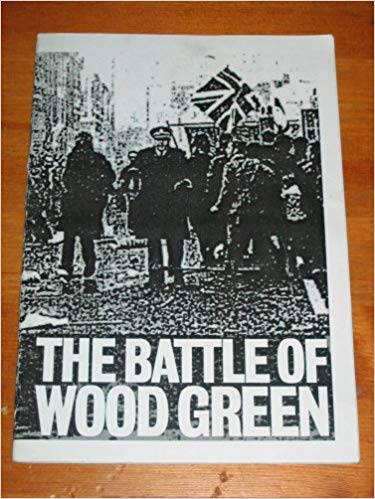
Is the Battle of Wood Green on 23rd April 1977 more than history?

In Uncategorized on April 23, 2019 by kmflett

Is the Battle of Wood Green on 23rd April 1977 more than history?


The Battle of Wood Green took place 42 years ago on 23rd April 1977. Details are here:

https://kmflett.wordpress.com/2017/08/13/the-battle-of-wood-green-23rd-april-1977/

A united anti-fascist mobilisation largely prevented a march by the National Front through a busy North London shopping area on a Saturday afternoon. The current Labour leader Jeremy Corbyn, then a local Councillor played a key role.

Its important in itself of course to remember history and Corbyn makes it clear fairly regularly that he does.

Are there lessons to be taken from that day now?

Each situation needs to be judged and assessed in its own context so it would hardly be right to argue that what happened 42 years ago in North London provides a precise template for efforts to stop fascists today.

The NF were able to put 1200 people on the streets for a march on that Saturday afternoon and they mostly were not the drunk middle-aged football hooligans that often seem to be the core of current fascist mobilisations.

Still the current fascist threat is significant and its not the purpose of this to compare it with the 1970s for relative importance

So what lessons might be learnt from the Battle of Wood Green?

Firstly that a united protest was important, covering a spectrum from those who simply wanted to register a protest to those who were determined one way or another to stop the NF from marching

Secondly that at least an attempt to stop the march was also important. This was, arguably, done simply by force of numbers both of protesters and local shoppers disgusted that the NF were marching.

Thirdly and this is a matter of tactics, the physical confrontation with the NF. This depends on whether there are people prepared to do it, risking injury and arrest, not as some kind of elite squad but as part of the wider protest. It depends on an assessment of the balance of forces and whether it is tactically appropriate. The idea 42 years ago was to send a message to those who might consider marching with the NF that it might be bad for their well-being as it were.

Of course a lot more could be said. One could refer to the classic texts on the united front, to Cable St and indeed to the day exactly 2 years on, 23rd April 1979, when an anti-fascist protester Blair Peach was killed by a blow from a police baton while opposing a National Front meeting in Southall.

Within that however the Battle of Wood Green, 42 years ago today, takes its place.


Articles

Hocktide: turning the world upside down at Easter

In Uncategorized on April 22, 2019 by kmflett

Hocktide: Turning the World Upside Down at Easter

British traditions are varied and confusing and those of Easter are no exception.

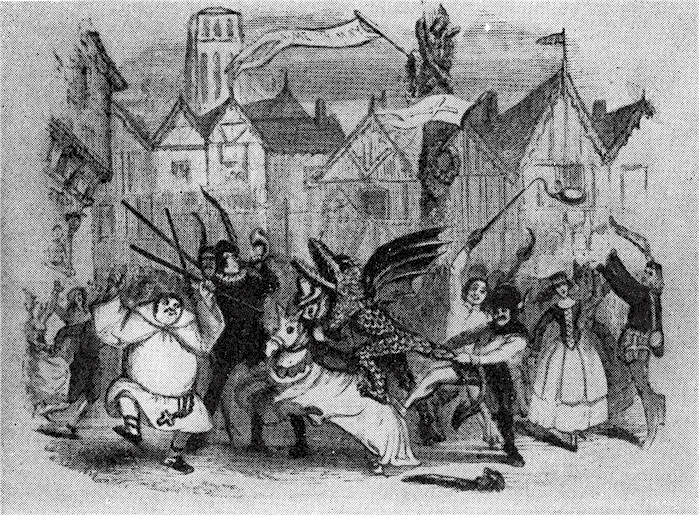
A strand of radicalism is a frequent thread. That is, the existing order of power relations is subverted in some way. The most common form of this is the Lord of Misrule, a character who is the precise reverse of the existing order of monarchs and other leaders. The figure is meant to be one of fun but as often disorder and riot are also present.

Easter has little association with Misrule but there is still a subverting tradition- that of Hocktide. In more recent times (and I’m not sure it existed beyond the early nineteenth century) it took place on Easter Monday or Tuesday. Earlier it was to be found at the end of a much longer Easter festival- two weeks or so after Easter Sunday.

Hocktide involved most commonly groups of women, married or single, kidnapping men and holding them to ransom for money. Originally the money raised went to local Church funds but it appears that later it was used to fund sporting activities.

In a male dominated society it was a rare expression of female power.

Hocktide, like many other religious associated customs was discouraged under the Long Parliament in the 1640s and even more so during the period of Cromwellian Government in the 1650s.

With the Restoration in 1660 it returned and it wouldn’t be surprising to find even today some echoes of the tradition taking place.

http://www.bbc.co.uk/news/uk-england-27214352

Articles

Crisis of post-Wengerism at Arsenal deepens as Highbury Corner roundabout is no more

In Uncategorized on April 21, 2019 by kmflett

On Monday 22nd April the Highbury Corner roundabout, the subject of one of the UK’s longest running roadworks will be no more. Traffic will flow without the need to go round the roundabout.

No doubt its a victory for planning commonsense and includes cycle and bus lanes as it certainly should in 2019.

That said generations of Arsenal fans have gone round the Highbury Corner roundabout, in the old days to get to Highbury and more recently to the Emirates.

The poet, author, broadcaster, beard wearer and lifelong Arsenal fan has written a short story, Maureen, involving a bear and Highbury Corner:

Now Highbury Corner is no more. It surely represents a further decline in the legacy of Wengerism but more importantly poses the question of which way forward both for Arsenal and for those who regularly travel in the area..

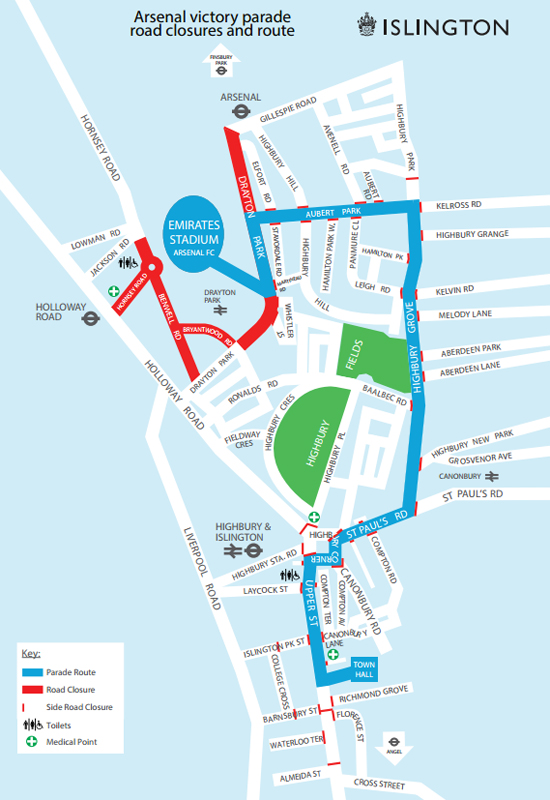
In 2015 when Arsenal won the FA Cup (a lot more recently than Spurs have won anything, Arsenal supporters will certainly note) it was the former manager Arsene Wenger who led the victory parade from the Emirates around the roundabout to Islington Town Hall.

Now it has gone and with it a little bit of Wenger’s legacy

Articles

The Ambridge Socialist: Natasha & Tom D-I-V-O-R-C-E

In Uncategorized on April 21, 2019 by kmflett

The Ambridge Socialist

All the news of the class struggle in Borsetshire

21st April

D-I-V-O-R-C-E

Ever since Saint Shula decided to divorce The Vet, leading to a crisis in her faith, though The Vet is still boring everyone just the same, divorce seems to have become a significant issue in Ambridge. This week its newly weds Natasha and Tom. Natasha is clearly fed up with Tom which is entirely understandable. She can join a lengthy queue of people. Whether she will leave him and file for divorce is not yet clear. However the Daily Express thinks she will so it probably won’t happen

Russ to move out of Lower Loxley

Sensing clearly that his very existence may be at stake (see below) Russell Jones, usually known as Call Me Russ, has signalled his intention to move out of Lower Loxley. Perhaps he is planning a flat share with Natasha…

Is Russ still alive?

Each week we check to see if Call Me Russ has survived another week of living at Lower Loxley with Freddie back in situ:

Week 4: yes

In other news

Freddie still doesn’t have a job

Chris likes Jakob

Articles

Marx in Margate Easter 1866

In Uncategorized on April 20, 2019 by kmflett

Marx in Margate Easter 1866

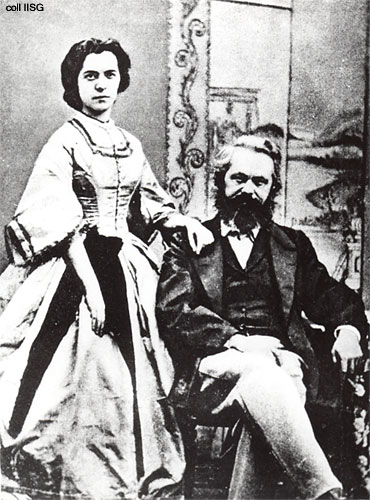
Jenny & Karl Marx, Margate, Easter 1866

Marx spent Easter 1866 In Margate his favourite seaside resort. Easter Sunday was on 1st April 1866 and he had been there for several weeks for health reasons.

He wrote to Engels on 6th April 1866 from 5 Lansell’s Place Margate:

Dear Fred,

I have been greatly restored here, and not the smallest sign of a return of the atrocious carbuncles. The spot where the last and most malignant one was still feels a little tender. Perhaps it healed too quickly and an atom of pus is still lurking beneath the healed skin. However, if that were so, the warm sea bathes and the rough towel that I dry myself with would no doubt have dissipated the foul matter; and indeed in the last two days this vestige of the wound seems to be disappearing altogether. The only drawback is a recurrence here of rheumatic pains in my right shoulder, which is seriously disturbing my sleep. I have now been here for nearly 4 weeks and have lived for my health’s sake alone. It is time to put a stop to that soon.

Articles

Easter Message to the Hirsute: avoid chocolate-beard interface

In Uncategorized on April 20, 2019 by kmflett

Beard Liberation Front

PRESS RELEASE

20th April

Contact Keith Flett 07803 167266

EASTER MESSAGE TO THE HIRSUTE: AVOID CHOCOLATE-BEARD INTERFACE

The Beard Liberation Front, the informal network of beard wearers, has sent Easter greetings to its followers but urged them to beware any chocolate-beard interface on Easter Sunday.

The campaigners say that chocolate in the beard can lead to a sticky mess which can only be satisfactorily removed with collateral damage to beard hairs and follicles.

Particular caution is urged when eating Easter eggs with creme or soft centres.

The BLF says an exception is the Marmite Easter Egg as marmite chocolate in the beard, as yeast is involved, will help to promote growth

BLF Organiser Keith Flett said, Easter is a traditionally a time of new growth and BLF supporters will now be getting in training for the traditional May Day Beard Waggle. In the meantime we urge enjoyment with care for Easter eggs to avoid beard damage

 egg