Articles

Once again on the Gilets Jaunes: crowd or mob

In Uncategorized on February 9, 2019 by kmflett

Once again in the Gilets Jaunes: crowd or mob
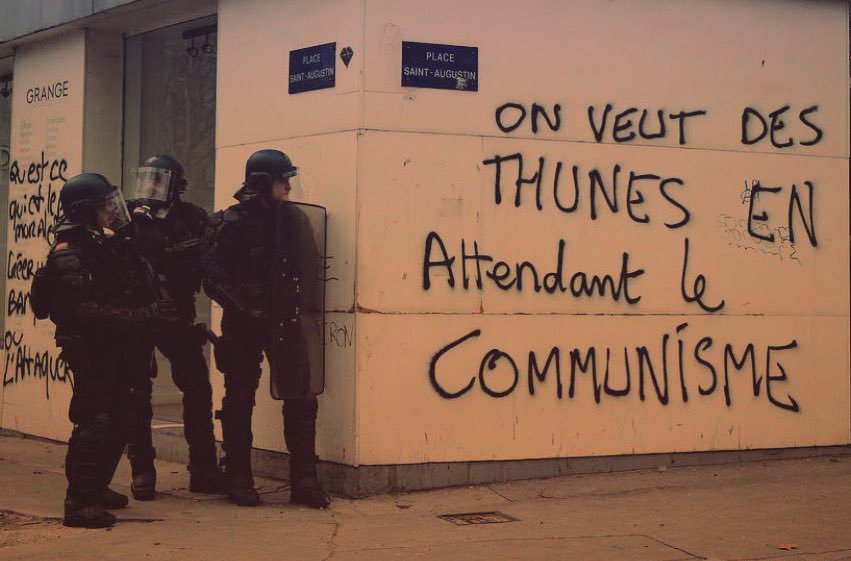
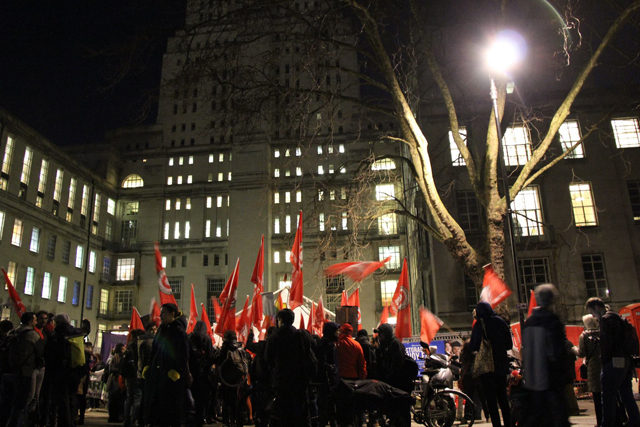
The Observer has carried an interesting analysis by John Lichfield of the Gilets Jaunes. It is well worth a read by there is an issue about the frames of reference that Lichfield uses. He refers to the ‘mob’ and claims that the protest of the Gilets Jaunes are not somehow pre-arranged and choreographed as is often the case with French protest (in his view). Therefore they are exceptional. Even if we allow this, it is not exceptional in the history of crowd protest. Further to say that the timing and tactics of Gilet Jaunes protests are, to paraphrase, unplanned, is simply to indicate that the author is not informed enough who is organising protests and how.

https://www.theguardian.com/world/2019/feb/09/who-really-are-the-gilets-jaunes?CMP=twt_gu

Below is a piece I wrote about this in the Morning Star last month

https://morningstaronline.co.uk/article/f/why-macron-cannot-decide-whether-call-gilets-jaunes-crowd-or-mob

The protests by the French Gilets Jaunes have not gone away as no doubt President Macron hoped they would over the Christmas break.

There were significant numbers out on the first two Saturdays of 2019 although UK media coverage of yellow jackets now focuses more on very small groups of fascists who parade around wearing them. One small group attacking an RMT picket line at Manchester Victoria station, while others clearly identified with far-right and fascist politics have been harassing all and sundry in Parliament Square and tried and failed to attack the People’s Assembly march on 12th January.

The Gilets Jaunes are politically mixed certainly but very much tied up with protests about President Macron’s neo-liberal policies and their impact on the less well-off members of French society.

Before Christmas Macron addressed the issue of the protests sitting at his gold topped desk which rather underlined the point the protesters were making about the gap between rich and poor.

With 2019 upon us the President recently sounded off again about the Gilet Jaunes. According to the Financial Times Macron: ‘called out those who “take the pretext of speaking in the name of the people . . . [but] are only the mouthpieces of a hateful crowd”.

The word he used in French was ‘foule’ which while it seems to translate to ‘crowd’ in the English I’m assured by those who have a much better grasp of French usage than myself was used as an insult by the President.

The usage is important because historically there is a world of difference between using the term ‘mob’ which I suspect is what Macron is on about and describing the same gathering as a crowd.

Edmund Burke commenting on the French Revolution saw only a ‘mob’. Later historians have taken a different view. George Rude, probably the leading historian of crowds, used the term deliberately to cover a broadly progressive gathering of people. E P Thompson was slightly less sure detecting in some crowds, for example the Bristol Riot of 1831, elements of behaviour such as book burning which would have been better attributed to a reactionary mob.

The point is that while a mob is thought to behave irrationally, a crowd is usually understood to have gathered for a purpose.

In eighteenth century England what many in the ruling orders certainly regarded as mobs often came together to protest about the quality or price of bread and demand changes for example. Yet these protests were organised and far from irrational.

However the crowd takes the stage of history when mass democratic politics, trade unions and political parties with individual membership appear. We can date this in Britain to around the time of Peterloo, one reason why the authorities were so concerned about the protesters for the vote who gathered in Manchester on August 16th 1819. They sensed this was a new form of crowd protest, organised and disciplined but struggled to grasp how to relate it. On that occasion it was with violence.

Crowd protests in the twenty-first century usually rely on weight of numbers to make their point peacefully but that doesn’t mean that there is not what the American sociologist Charles Tilly called a repertoire of protest. So while some of the protests of the Gilets Jaunes have featured setting fire to cars that doesn’t make them a ‘mob’. Rather it reflects a variant on peaceful protest where property is targeted but not people.

One thing is for certain. While discussion about Brexit remains focused on Parliament the ‘noises off’ of the crowd remain essential to effect real change.

Articles

Beards of the Six Nations vote opens

In Uncategorized on February 9, 2019 by kmflett

Beard Liberation Front

press release 9th February

Contact Keith Flett    07803 167266

BEARDS OF THE SIX NATIONS VOTE OPENS

The Beard Liberation Front, the informal network of beard wearers, has said that with what is likely to be the most hirsute Six Nations Rugby Championship ever underway, the Beard of the Six Nations poll is underway again.

The campaigners say that the Beard of the Six Nations is not just about beards in the abstract but also crucially about the impact they make on play.

This impact of beards on the field has meant that even noted pogonophobes such as Clive Woodward who argued in 2013 on the BBC that he wouldn’t select players with beards, are now marginal voices.

BLF Organiser Keith Flett said, our panel of beard experts will be reviewing the play in each match but ultimately the best beard will be determined by voters in our annual poll

Beard of Six Nations poll

The poll launches on 9th February as the second group of matches starts.

Names will be added, where appropriate, of the hirsute players not on the original list who have displayed the most impact and gravitas on the field after each week’s matches.

There will be a final poll of leading Six Nations beards from 16th March

Beard of the Six Nations 2019 Initial List (subject to confirmation that those listed have retained their beard & take the field)

Huget (France)

Daly (England)

Aki (Ireland)

Budd (Italy)

Hayward (Italy)

Ferrari (Italy)

Toolis (Scotland)

Atonio (France)

Navidi (Wales)

Strauss (Scotland)

Bhatti  (Scotland)

Bastareaud (France)

Lee (Wales)

Ball (Wales)

Articles

Stoke Newington beer festival 2019: progress in beer

In Uncategorized on February 9, 2019 by kmflett

Stoke Newington Beer Festival 2019: progress in beer

Historians (certainly those on the left) sometimes use the term ‘progress in history’. Donald Trump does not sum that up but it refers to the capacity of humanity in general to advance in terms of technology, grappling with poverty and so on. Some may suggest that climate change will impact here.

Anyway this is about beer not history.

I was at the first session of the 2019 Stoke Newington beer festival in Abney Hall, Church St on Friday night together with my partner Megan. It’s the third year and the third time I’ve been and it continues to impress. The hard slog of organising it produces a relatively small but what might be called a well curated event.

It doesn’t focus on the well-known names of the craft beer world, the Cloudwaters and the Beavertowns. After all they both have London tap rooms. Rather it promotes smaller and to some people less well-known breweries from Bianca Road and Ora to Boutilliers and Box Car. I’m not going to produce tasting notes for the beers I tried (in thirds of a pint) because while that may be interesting to me, I suspect rather less so for the reader.

Rather there is a general point. I think at the first festival in 2017 while some of the beers were interesting to try they weren’t perhaps quite there in terms of quality. That wasn’t the case on Friday. Every single beer I tried was a good example of the style, whether, pale, stout, sour etc.  That’s what I mean by progress in beer. At the Stoke Newington Beer Festival 2019 the beers are not just interesting but also very good to drink too.

The beer finally that has stuck in my mind is the Seven Sisters Brewery/Boutlilliers collaboration, smoked honey chocolate stout. I thought that worked very well as a beer however odd some might think the combination is. That perhaps sums up Stokey Beer 2019. Interesting beers but ones that are good to drink too.


Articles

Wimbledon’s Scott Wagstaff contends for My Hairy Valentine title ahead of FA Cup clash with Millwall

In Uncategorized on February 8, 2019 by kmflett

Beard Liberation Front

Press Release 8th February

Contact Keith Flett 07803 167266

Wimbledon’s Scott Wagstaff contends for My Hairy Valentine title ahead of FA Cup clash with Millwall

The Beard Liberation Front, the informal network of beard wearers, has said that Wimbledon footballer Scott Wagstaff is in contention for the annual My Hairy Valentine, sexiest beard accolade, after a hair-raising performance in the teams FA Cup victory over West Ham

The winner of the annual My Hairy Valentine Award is announced on Valentine’s Day 14th February

The BLF says that contrary to pogonophobic mythology many beards are soft, sexy and deeply mysterious.

Jeremy Corbyn was voted My Hairy Valentine in 2018 while in 2017 Idris Elba shaved the opposition

The BLF says that whether a beard is sexy or not is in the eye of the beholder but the Award is focused on beards in the public eye, whether celebrities, politicians, musicians or sports stars.

BLF Organiser Keith Flett said, we understand that Scott agreed to dye his beard in Wimbledon colours but we not sure if this will help is chances of winning My Hairy Valentine…

The BLF criteria for sexiest beard is listed below

My Hairy Valentine Shortlist

Idris Elba

Prince Harry

Tom Jones

Gary Lineker

Jeremy Corbyn

Ted Cruz

Aron Gunnarrson

Len McCluskey

Scott Wagstaff

Mauricio Pochettino

Piers Morgan

George Clooney

Michael Rosen

Paddy McAloon

What is the criteria for the sexiest Valentine’s Day Beard?

Beauty is in the eye of the beholder & likewise what people find sexy can vary widely

1] A beard from Clint Eastwood stubble to full Brian Blessed organic

2] A stylish deployment of the beard, at least sometimes in the public eye

3] An attractive disposition in relation to the beard (the fulfillment of this criteria is up to the voter)

4] An appealing beard in terms of length, colour, style. Again its a matter for the voter


Articles

London Beer festival year 2019 starts at Stoke Newington

In Uncategorized on February 8, 2019 by kmflett

London beer festival year 2019 starts at Stoke Newington.

Its good to see the Stoke Newington beer festival back for another year, marking the start of the London beer festival year. This year its running on Friday evening and Saturday (2 sessions) so what’s your excuse? In addition fortunately it doesn’t clash with Beavertown’s latest Birthday bash down the road in Tottenham which is next week.

My thoughts on 2018 are below. Details of 2019 are @stokeybeer on twitter


Stokey Beer Festival 2018: beyond ‘big craft beer’

The Stoke Newington Beer Festival 2018 at Abney Hall on Church St was a two day affair unlike just the Saturday last year.

No doubt there was a bit of an impact from the Beavertown sixth birthday party in Tottenham (a couple of miles or so away) on the Saturday.When I turned up on Sunday evening the atmosphere was relaxed. I enjoyed that, Beavertown events are invariably a little frenetic, though I appreciate that the organisers would always like more people within reason. Even so I understand the event did decently over two days.

Its strong point is in show casing breweries, mainly from London and environs, that you probably won’t, in the main see, at larger events. Beers were from Affinity, Brewheadz, Elusive, Hammerton, Little Earth, Solvay Society, Seven Sisters, Unity & others from further away

In a sense this is the future of craft, newer breweries making their way now in the beer world. I enjoyed particularly the darker beers: Hammerton’s Peanut Butter milk stout, Affinity’s ruby mild with coffee and walnut, Little Earth’s dandelion stout and Elusive’s Raspberry Ruin imperial stout. All interesting and very drinkable beers and not the kind of thing you might see that often in a ‘craft’ beer bar.

Let’s hope that the festival continues, it’s doing a valuable and enjoyable job, underlining that away from the big names of craft beer there are lots of smaller breweries producing interesting and drinkable beer


.

Articles

Historians regret decision to hold Hobsbawm book launch at University of London despite boycott

In Uncategorized on February 7, 2019 by kmflett

London Socialist Historians Group

Media Release

7th February

Contact Dr Keith Flett 07803 167266

Historians regret decision to hold Hobsbawm book launch at University of London despite boycott

The London Socialist Historians Group, which has organised the socialist history seminar at the Institute of Historical Research in central London for 25 years, says it regrets the decision by Birkbeck’s Department of History, Classics and Archaeology to proceed with a launch of Richard J Evans new biography of Marxist historian Eric Hobsbawn at the University of London’s Senate House on Thursday evening

Outsourced workers, members of the IWGB, who are in dispute with the University had asked the organisers to move the venue in support of a boycott of Senate House and related central University buildings which is supported by Shadow Chancellor John McDonnell amongst many others.

The socialist history seminar at Senate House is suspended in support of the IWGB boycott

The historians say that they hold Richard J Evans, who has spoken at socialist history seminars at Senate House in the past, in the highest regard and don’t doubt his biography of Eric Hobsbawm officially published on 7th February is both highly competent and very interesting on the historian’s life, work and politics. However they consider the decision not to move the book launch despite reasonable notice to be regrettable

LSHG Convenor Dr Keith Flett said, Eric Hobsbawm was one of the great post-1945 Marxist historians whose work focused on the labouring poor and their struggles against capital. To hold a launch of a biography of his life and work at a location that is the subject of a boycott by outsourced workers is not something any socialist should feel comfortable with.


Articles

Prefab Sprout veteran Paddly McAloon joins My Hairy Valentine poll

In Uncategorized on February 6, 2019 by kmflett

Beard Liberation Front

Press Release 6th February

Contact Keith Flett 07803 167266

Prefab Sprout veteran Paddy McAloon joins My Hairy Valentine poll

The Beard Liberation Front, the informal network of beard wearers, has said that Prefab Sprout veteran Paddy McAloon has joined the My Hairy Valentine poll, after an iconic appearance on BBC Newsnight on Monday night. McAloon was interviewed by clean shaven Stephen Smith

The winner of the annual My Hairy Valentine Award is announced on Valentine’s Day 14th February

The BLF says that contrary to pogonophobic mythology many beards are soft, sexy and deeply mysterious.

Jeremy Corbyn was voted My Hairy Valentine in 2018 while in 2017 Idris Elba shaved the opposition

The BLF says that whether a beard is sexy or not is in the eye of the beholder but the Award is focused on beards in the public eye, whether celebrities, politicians, musicians or sports stars.

BLF Organiser Keith Flett said, Paddy McAloon has an imposing beard. Is it sexy? That is up to voters. The BLF criteria is listed below

My Hairy Valentine Shortlist

Idris Elba

Prince Harry

Tom Jones

Gary Lineker

Jeremy Corbyn

Ted Cruz

Aron Gunnarrson

Len McCluskey

Scott Wagstaff

Mauricio Pochettino

Piers Morgan

George Clooney

Michael Rosen

Paddy McAloon

What is the criteria for the sexiest Valentine’s Day Beard?

Beauty is in the eye of the beholder & likewise what people find sexy can vary widely

1] A beard from Clint Eastwood stubble to full Brian Blessed organic

2] A stylish deployment of the beard, at least sometimes in the public eye

3] An attractive disposition in relation to the beard (the fulfillment of this criteria is up to the voter)

4] An appealing beard in terms of length, colour, style. Again its a matter for the voter


Articles

The Ambridge Socialist Court Report: Brian Aldridge ‘lenient’ sentence to be referred to Attorney General

In Uncategorized on February 5, 2019 by kmflett

Ambridge Socialist

5th February

Brian Aldridge having pleaded guilty to charges of environmental pollution on Tuesday afternoon has been handed a fine of £120,000.

The current law for such a charge in the lower Courts is:

Lower courts: GB£50,000 and/or six months’ imprisonment. Unlimited fine for offences committed after 12 March 2015. Legislation has long been in place to increase the maximum term of imprisonment to 12 months but, as yet, this change has not been brought into force

In reality Aldridge’s fine could and should have been higher given that his actions poisoned the Am and put public health at risk. In addition he could have been a custodial sentence.

The Ambridge Socialist believes that Aldridge’s sentence is too lenient and has referred it to the Attorney General for review.

Ambridge Socialist Editor Keith Flett said, we are determined that justice will prevail in Aldridge’s case and so far, in our view, it has not. The strength of local feeling was reflected in the protest outside the Court although I should add we were not responsible for paint throwing

Articles

Moving the Royal Family out of post-Brexit London? The precedent was set in 1848

In Uncategorized on February 5, 2019 by kmflett


Moving the Royal Family out of post-Brexit London? The precedent was set in 1848

There have been newspaper stories that plans to move the Royal Family out of London in the event of post-Brexit unrest are in place, updating Cold War plans on action required if there was a nuclear war or the Russians invaded.

One presumes that the 1960s bunkers involved in the original plan have been replaced in the 2019 version. The story appeared in two papers not known for their relationship to truthful reporting, the Mail and the Murdoch Times. A summary from the Guardian is here:

https://www.theguardian.com/politics/2019/feb/03/queen-to-be-evacuated-if-brexit-turns-ugly-reports?CMP=share_btn_fb&fbclid=IwAR3-SgL0QQ9ePC7IG3WmY3tP1r3qtiJ13tPu5QKufsBLLXzRpEljAcaAa7E

Mail journalist Andrew Pierce tweeted that the Queen didn’t leave London during the Blitz but there is a difference between external threat and internal disorder.

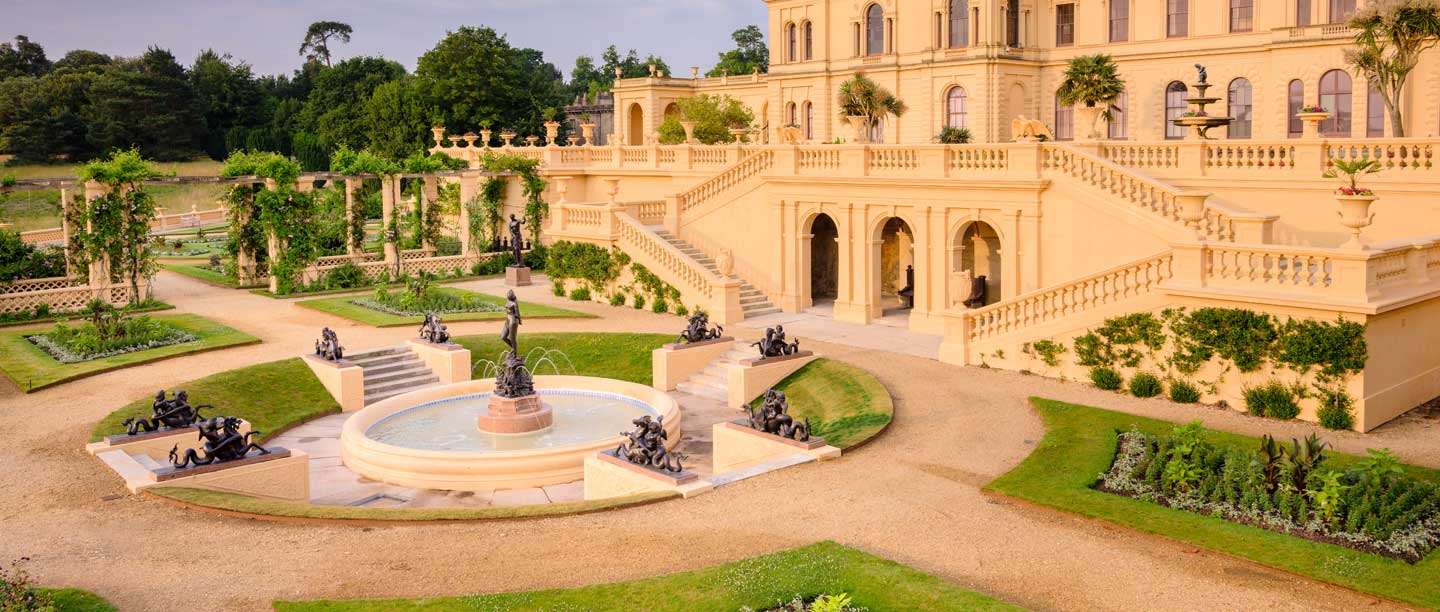
In fact there at least one precedent for the Queen and the immediate Royal Family leaving London. On 8th April 1848 the Queen, Prince Albert, Royal children etc left Buckingham Palace and went by carriage and train from Nine Elms, Vauxhall to Gosport and then by the boat the Fairy Queen to the Isle of Wight. They stayed at Osborne House, which had been redesigned by Albert and the builder Cubitt (who was largely responsible for Buckingham Palace). It was not finished in 1848 but it appears that at least one part was suitable for Royal residents.

The Times Court report published on 10th April covered the Royal journey and it was also noted that the Royal Party were met by cheering workers at Gosport. In the same issue however it is also reported that efforts to get workers to sign up as Special Constables for 10th April in London did not go well because many refused to sign an oath of allegiance to the Queen.

Historians of Chartism have long known that Victoria and her entourage were despatched from London ahead of the Chartist demonstration for the vote on Monday 10th April 1848. Here the issue was not Britain leaving Europe but rather joining it in the year of Revolutions.

Queen Victoria’s personal diaries are now on-line and it is perhaps surprising that she did not return in the days after 10th April as it became that Revolution was not on the immediate agenda. Rather she stayed at Osborne House until May 2nd 1848 indicating perhaps that the Government was more concerned about the Chartist ‘threat’ than previously thought.

That said Victoria was quite a frequent visitor to Osborne House in 1848, perhaps finding it more congenial than Buckingham Palace, as the new building was constructed around her. Possibly because of this not much more than the details of the journey itself are covered in the Times- it was not regarded as an extraordinary event, just as the current Royals being at Sandringham (car crashes notwithstanding) or Windsor is not. The pre-eminent historian of London Chartism David Goodway does however note the concerns of Lord Palmerston that Osborne House was not far enough away for absolute safety and that the Chartists could have crossed the Solent. Given that the Chartist Convention in London in the days before April 10th debated whether or not to send congratulations to Queen Victoria on the birth of her latest child, this would have been an unlikely event.

Osborne House still stands and is open to the public.

Articles

Colin Barker 1939-2019. Marxist activist & theorist of protest & social movements

In Uncategorized on February 4, 2019 by kmflett

Colin Barker 1939-2019 Marxist activist & theorist of protest & social movements

I was saddened to read of the death of Colin Barker the Marxist activist and theorist, someone I’ve known since the 1970s.

Colin Barker was a lifelong revolutionary socialist from the early 1960s in IS then the SWP and finally in RS21. He was also a sociology lecturer at Manchester Met University

No doubt fuller appreciations will be written but I wanted to record here two particular aspects of his work that might otherwise go unremarked (or at least not as remarked as they should be).

I first came across Colin in an academic context when he was part of the Northern Marxist Historians Group. This was a counterpart (and I think forerunner)to the London Socialist Historians Group. I and others made the journey to Manchester for meetings and events. At some point the LSHG took over the work of the NMH, although I cant say we venture north as much as we should (at least not for socialist historical purposes). Others active in the group at the time include the Frows, John Saville and John Charlton and it was a formidable source of interesting research and ideas around socialist history.

Probably this was the reason why I also got involved from 1995 (as a quite regular paper giver, often with my partner Megan Davies) in the Alternative Futures and Popular Protest conference which Colin and others ran as Manchester Met University every Spring from 1995 to 2018. It will run again this year with a new organising team I’m pleased to see:

http://www.movements.manchester.ac.uk/afpp/

Most of the papers we gave were before the interwebs and social media age but I note that for example in 2009 Megan and myself were giving a paper on the Tenacity of Activism.

The conference brought together activists from a wide range of the left, to discuss theories, ideas and practices of activism. I think that Colin felt that while different traditions called things different names often the actual outcomes were strikingly similar and perhaps differences, while genuine and sometimes serious, were not quite as great as sometimes thought.

Of course Colin Barker was also a veteran socialist and trade union activist and the author and editor of numbers of books. I’m sure others will write about this. I just wanted to record here his important contributions to historical and social movement theory and practice.

Colin was one of those people who could inspire thought and get you to have another think about some long held dogma. I’ll always remember him sitting at a table in the foyer of Manchester Met at the start of Alternative Futures conferences saying ‘come into my office’. It was not of course an actual office but his point was that people made things what they were and could change them.

Link to a range of Colin Barker’s shorter writings:

https://www.marxists.org/history/etol/writers/barker-c/index.htm