Articles

Scientists win People’s Vote for Beard of the Year for the first time

In Uncategorized on December 28, 2018 by kmflett

Beard Liberation Front

Media Release 27th December

Contact Keith Flett 07803 16726

Scientists win People’s Vote for Beard of the Year for first time
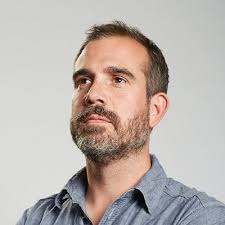
The Beard Liberation Front the informal network of beard wearers, has said that after a record vote for the Beard of the Year 2018 the Electoral College has determined that two scientists are the winners. TV doctor Xand Van Tulleken and cosmologist Peter Coles currently at Maynooth University in Ireland shared the Award.

The campaigners say that both the winners had an enthusiastic voting constituency and taking into account the public impact of their beards it was felt a shared title was appropriate this year.

Moreover the fact that both have a scientific background for the first time reflects the growing reach of beard wearing.

Manchester brewer Al Wall of leading craft brewery Cloudwater was runner up with last year’s winner Jeremy Corbyn third.

The 8 names who entered the Electoral College following the People’s Vote were:

Peter Coles

Xand van Tulleken

Al Wall

Philip Glanville

Jeremy Corbyn

Owen Tudor

Moeen Ali

Raheem Sterling

The BLF say that the shortlist comprised those whose beard had a positive impact in the public eye during the year rather than the style or the length of the beard or the views of the beard wearer.

BLF Organiser Keith Flett said, not only did two scientists share the award for the first time but the runner up Al Wall as a craft brewer, is very much concerned with brewing science as well.

For the first time this year the result was determined by a combination of the public vote and an Electoral College of leading beard wearers and pogonophiles. The public vote counted for 60% while the Electoral College took into account the wider positive public image and impact of poll leaders.

The BLF says that there were concerns about the impact of Bots in the 2017 poll and the Electoral College ensures a more level playing field.

Beard of the Year 2018 Shortlist

Jeremy Corbyn, politician

Peter Coles, scientist

Xand van Tulleken, TV doctor

Prince Harry, Royal personage

Moeen Ali, cricketer

Harry Kane, footballer

Lenny Henry, actor

Philip Ardagh, author

Al Wall, brewer, Cloudwater

Idris Elba, actor

Philip Glanville, Mayor of Hackney

Daniel Vane, brewer, Hale Brewing

Lloyd Russell-Moyle, Labour MP

Owen Tudor, Deputy General Secretary, International Trade Union Confederation

Raheem Sterling, footballer
Articles

Can Jeremy Corbyn retain the Beard of the Year title?

In Uncategorized on December 27, 2018 by kmflett

Beard Liberation Front

Can Jeremy Corbyn retain the Beard of the Year title?

The Beard Liberation Front says that the winners of the 2018 Beard of the Year Award will be officially announced on Friday.

8 candidates who topped a People’s Vote which closed on Christmas Eve, were reviewed by an Electoral College.

Labour leader Jeremy Corbyn won in 2017 for the first time since 2001. However that victory was on the back of his temporary exclusion from the Parliamentary Beard of the Year Award in 2017. The Labour leader returned to win it again for a seventh time this year.

His main opponent in 2017 Prince Harry was on the People’s Vote poll but did not gather enough votes to enter the Electoral College.

BLF Organiser Keith Flett said, its very unusual for someone to retain the Beard of the Year Award two years running but Jeremy Corbyn did make the Electoral College this year..

2017 result

Jeremy Corbyn 57%

Prince Harry 40%

Beard of the Year. Recent poll winners

2017 Jeremy Corbyn (Labour leader)

2016 Tim O’Rourke (Howling Hops brewer)

2015 Bryan Spooner (Weird Beard brewer)

2014 Conchita Wurst (singer)

2013 Gareth Malone (Chorister)

2012 Robin Lustig (Broadcaster)

Articles

Beyond Charles Dickens. Christmas 1848: revolution and the invention of tradition

In Uncategorized on December 27, 2018 by kmflett

Beyond Charles Dickens. Christmas 1848: revolution & the invention of tradition

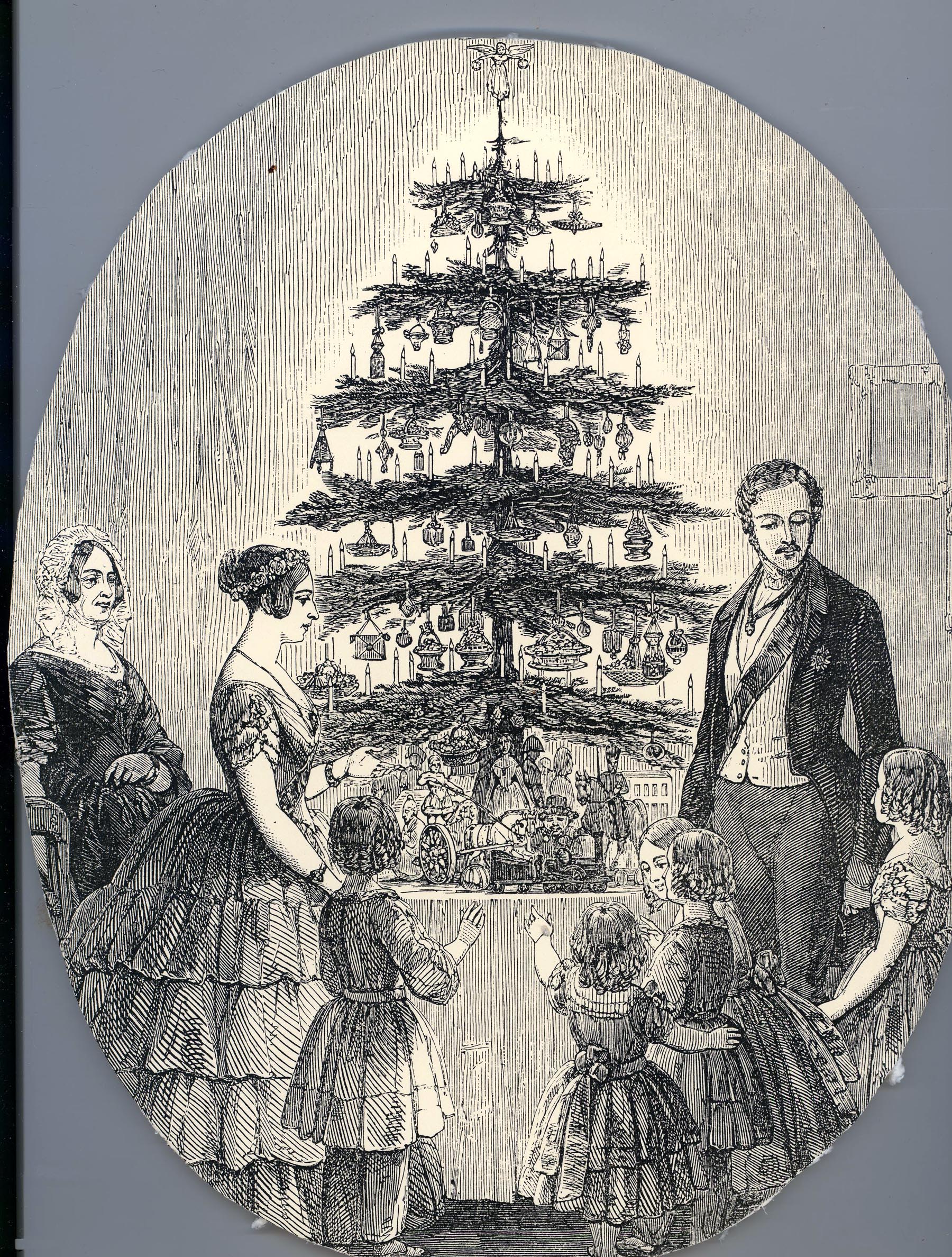
The Royal Family Christmas Day 1848 with trademark Christmas tree

1848 can offer us some interesting pointers to the construction and nature of the modern Christmas

1848 was a year of revolutions throughout Europe. Britain did not of course have a revolution but between April and August 1848 the Government certainly believed it was possible. In April 1848 when the Chartists gathered on Kennington Common, Queen Victoria retreated to the Isle of Wight. Not until an attempt at armed insurrection at Seven Dials in central London in August 1848 was averted by the authorities did the threat of political upheaval recede

It is of particular interest in this context to see how Christmas was marked at the end of 1848.

The festival was only starting to come to its modern prominence at this time- New Year had been the occasion to celebrate. Christmas traditions which we are now familiar with were in the process of being invented.

For example the Christmas cracker containing sweets made its first appearance in 1848. The Christmas tree had already been introduced to the country but its role in the Royal Family’s festivities at Windsor Castle cemented its place in seasonal culture. Prince Albert was widely credited with popularising it.

The Royal Family’s Christmas arrangements were made known to a bourgeois audience by a special seasonal supplement- the first of its kind- to the Illustrated London News.

On the side of the Chartists and of the wider working-class matters looked rather different.

Charles Dickens published the last of a series of special Christmas books in 1848 but it was an earlier volume, The Christmas Carol, that had captured the battle for the popular Victorian Christmas. The employer Scrooge was reluctant to allow his employee Christmas Day itself off, let alone any other time.

For the Chartists Christmas represented the conclusion to what ultimately had been a year of defeat. Key leaders such as Ernest Jones were in jail and trials of Chartists arrested during the year continued during December 1848. That required fund raising to support families and political solidarity. There wasn’t much time left for celebrating Christmas.

Indeed the Chartist Northern Star’s edition after Christmas indicated that if anything the habit of celebrating the New Year more than Christmas was still a popular tradition

The edition for 23rd December 1848 did however in a column titled ‘Christmas Garland’ address the question of the 25th December specifically.

The article focused on the realities of Christmas 1848 for many Chartist families:

And to some- not a few of our readers- this Christmas will be a time of terrible and more than usual suffering, and to all our readers a time of sorrow.

The author had in mind the Chartist prisoners, ‘victims of Whiggery’ who were in the ‘dungeons of the metropolis and York and Lancashire’. It would be a ‘mockery’ the piece says to wish these people a Happy Christmas and New Year.

A broad assumption might well be that the Royal Family and well to do bourgeois were determined to make a big spectacle of Christmas 1848 to underline their success in seeing off Revolution and remind the wider population of who had the power and money in society.

Christmas as it was being invented in 1848 was styled as a celebration of the status quo of wealth and authority, but promoted, too, as something all could participate in.


Articles

Final call for nominations for Beard Friendly Pub of the Year

In Uncategorized on December 26, 2018 by kmflett

Beard Liberation Front

Media Release

26th December

Contact Keith Flett 07803 167266

Final call for nominations for Beard Friendly Pub of the Year

The Beard Liberation Front has said that there is a final call for nominations for the annual Beard Friendly Pub of the Year, the vote for which opens on January 2nd.

BLF Inspectors have been surveying pubs for beard friendliness for the past couple of months (criteria below) and are in the process of finalising the list.

However it is obviously not possible to visit every pub and every location and a final check for any pubs that may have been missed is made.

BLF Organiser Keith Flett said, the criteria for inclusion on the list are below. We are not interested in pubs where someone once saw a person with a beard at the bar. It is rather more serious than that.

The criteria for the Award include:

Beard Friendly Pub: a pub that welcomes the hirsute and often has a significant number of hirsute customers, including but certainly not confined to those with modern styles of beards .

Beard Friendly Ambience: a pub that may have fewer hirsute customers but is welcoming to the hirsute through some bearded bar staff and beard friendly beers, and has a generally relaxed atmosphere for all.

The campaign group says it welcomes diversity in both appearance and drinking. The truly beard friendly pub will have a genuine mix of customers not just a load of old blokes grumbling about life.

The 2018 winner was the Cock Tavern in Hackney

Nominate here by writing in the name of a pub or bar

Articles

What will the Ambridge Boxing Day Hunt discover

In Uncategorized on December 26, 2018 by kmflett

The Ambridge Socialist

The real Borsetshire Echo: over 60 years of class struggle in Ambridge

Boxing Day 2018 CONTACT KEITH FLETT 07803 167266

What will the Ambridge Boxing Day Hunt discover?

The BBC’s annual focus on Lynda Snell’s post-Christmas fripperies is no accident. It is specifically designed to steer attention away from the seasonal event of real importance in Ambridge- the Boxing Day hunt.

For some years the South Borsetshire Hunt was led by patrician Oliver Sterling but this important job in the ruling class structure of the County has now passed to horse lover Shula Archer.

The hounds may discover other things of interest beside the *not a fox* they are of course hunting. They may for example find the whereabouts of the bunting that PC ‘Knacker’ Burns has long since given up on locating. They may also find the remains of at least some of the badgers that David Archer has murdered during the year.

Ambridge Socialist Editor Keith Flett said, we expect a report in the Daily Telegraph later in the week about how the Hunt got on. We are less sure the BBC will cover it. We don’t mind hunting providing Tories are the subject of course.

In Other News

The Ambridge Socialist wishes all readers a Happy New Year. Our next issue will feature our socialist analysis of developments in Ambridge in 2019

@kmflett for updates

Thanks to Hazel Potter for material in an earlier version of this issue

Articles

From the Lord of Misrule to the Feast of Fools: our Christmas traditions & theirs

In Uncategorized on December 26, 2018 by kmflett

From the Lord of Misrule to the Feast of Fools: our Christmas traditions and theirs

If you wander around the twittersphere enough you can find people complaining that Christmas is a (Christian) religious festival and should be celebrated as such. I certainly fully support Christians marking Christmas as they want, though I suspect that the agenda here is to demonise those (many) of us who don’t do this.

Indeed there is a letter in The Guardian (26th December) which looks like it was misdirected from the Daily Telegraph, that asserts, without any evidence, that there is no evidence that the modern Christian Christmas was based on what was originally a Pagan festival.

I’m not an expert in that area but I suspect the statement is doubtful at best. However the piece below underlines that the modern Christmas however celebrated, or not, arose from very different traditions to those supposedly marked officially today.

The modern Christmas, aside from a festival of commercialism and invented Victorian tradition, amounts to Christmas Eve and Christmas Day, Boxing Day, New Year’s Eve and New Year’s Day with perhaps some note paid to Twelfth Night (Epiphany).

The actual religious traditions of Christmas are, as you might expect, some way from those that their supposedly modern-day adherents keep.

For example Advent was not about opening windows on a calendar but four weeks of a restricted diet (a semi-fast) where fish (often rotten) was the main food eaten as roast meat and pies were eschewed. Christmas Eve was a day of particularly strict diet with no meat, cheese or eggs eaten.

This is why Christmas Day and the twelve days that followed were days of feasting (at least for the rich).

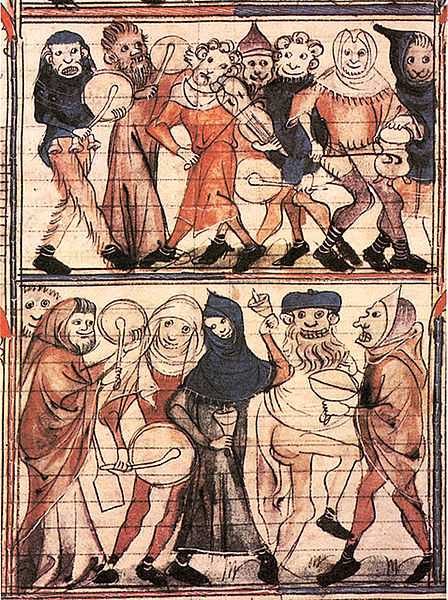
Before Christmas Day a Lord of Misrule (traditionally a peasant or at least someone of lower social standing than the senior clergy, was appointed to oversee the celebrations of which Christmas Day was the first.

Each of the Twelve Days had some festivity but the one that gained the widest purchase beyond Twelfth Night itself was the Feast of Fools, which took place around January 1st.

There is a long religious history to these events, all of which were eventually suppressed, but again I am hardly historically qualified to comment in detail on this.

More in my area of socialist history is the reason for their suppression. They had come to represent notions of the subversion of authority and symbolised however briefly the world turned upside down. In other words beyond the feasting and drinking was a practical demonstration of the modern slogan that ‘another world is possible’.

To understand what this was about it’s probably best to think in the context of Carnival and the Carnivalesque. This was a brief period when people were not what they seemed, might appear in disguise or play unfamiliar roles.

Moreover this was confined not to the clergy but reached out into the wider population. It originated with the Church because of the dominant role in played in early modern society.

There is a lot of detail on this in Ronald Hutton’s Stations of the Sun for those wanting to follow it up further, and a limited amount of original source material in manorial roles, official Church records and so on.


Articles

People’s Vote for the Beard of the Year 2018 see 8 names enter the Beard Electoral College

In Uncategorized on December 25, 2018 by kmflett

Beard Liberation Front

Media Release 25th December

Contact Keith Flett 07803 16726

People’s Vote for the Beard of the Year 2018 sees 8 names enter the Electoral College

The Beard Liberation Front the informal network of beard wearers, has said voting for the Beard of the Year 2018 which closed at 1am on 25th December, in what is the ultimate People’s Vote of the year, has seen the 8 top beard wearers of the year enter the Beard of the Year Electoral College

The College will look at the positive public impact that the beard wearer has had during the year and allocate the remainder of the 40% of the possible votes to allow the winner or winners of Beard of the Year to be named on 28th December

The 8 names set to enter the Electoral College are:

Peter Coles

Xand van Tulleken

Al Wall

Philip Glanville

Jeremy Corbyn

Owen Tudor

Moeen Ali

Raheem Sterling

The BLF say that the shortlist comprises those whose beard has had a positive impact in the public eye during the year rather than the style or the length of the beard or the views of the beard wearer.

BLF Organiser Keith Flett said, we hear a lot about the People’s Vote these days and the Beard of the Year is a great example of the process. The question is clear: which beard wearer has made the most positive impact in public during 2018. Theresa May has no influence over the result (though she is free to vote as an individual) and neither does the EU.

For the first time this year the result will be determined by a combination of the public vote and an Electoral College of leading beard wearers and pogonophiles. The public vote will count for 60% while the Electoral College will take into account the wider positive public image and impact of poll leaders.

The BLF says that there were concerns about the impact of Bots in the 2017 poll and the Electoral College ensures a more level playing field.

Beard of the Year 2018

Jeremy Corbyn, politician

Peter Coles, scientist

Xand van Tulleken, TV doctor

Prince Harry, Royal personage

Moeen Ali, cricketer

Harry Kane, footballer

Lenny Henry, actor

Philip Ardagh, author

Al Wall, brewer, Cloudwater

Idris Elba, actor

Philip Glanville, Mayor of Hackney

Daniel Vane, brewer, Hale Brewing

Lloyd Russell-Moyle, Labour MP

Owen Tudor, Deputy General Secretary, International Trade Union Confederation

Raheem Sterling, footballer
Articles

The Christmas Day riot 1647

In Uncategorized on December 25, 2018 by kmflett

Christmas riots

puritan-christmas-ban

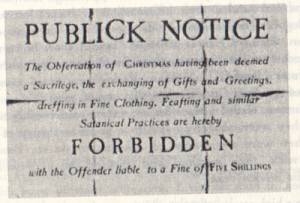
As is (hopefully) fairly well known Cromwell attempted to ban Christmas, a law of June 10th 1647 forbade its celebration. He was not entirely successful but he had his reasons. Christmas was associated with Catholicism, and in effect the ‘old’ ruling orders, while Cromwell represented the Puritan ascendancy that disliked the traditions and ideas of the Catholic church.

The Puritans were also concerned, at an official level and certainly amongst local ‘activists’ that Christmas was a time of dissolute behaviour which they felt was ungodly.

Cromwell was certainly not totally successful in banning Christmas activities, partly because the less well off in society liked to mark the occasion, if and where they could, and also because celebration was associated with the Royalist cause and in the 1650s a symbol of attempts to overthrow the Commonwealth.

Certainly at Christmas 1647 a number of Church Ministers were jailed for attempting to mark the occasion.

Down below Christmas 1647 saw a number of riots in defence of celebrating the day.

Mark Stoyle has written in History Today about some of those that were recorded;

On 25 December 1647, there was further trouble at Bury, while pro-Christmas riots also took place at Norwich and Ipswich. During the course of the Ipswich riot, a protestor named ‘Christmas’ was reported to have been slain – a fatality which could be regarded as richly symbolic, of course, of the way that parliament had ‘killed’ Christmas itself.

In London, a crowd of apprentices assembled at Cornhill on Christmas Day, and there “in despite of authority, they set up Holly and Ivy” on the pinnacles of the public water conduit. When the lord mayor despatched some officers “to pull down these gawds,” the apprentices resisted them, forcing the mayor to rush to the scene with a party of soldiers and to break up the demonstration by force.

The worst disturbances of all took place at Canterbury, where a crowd of protestors first smashed up the shops which had been opened on Christmas Day and then went on to seize control of the entire city.

http://www.historyextra.com/feature/no-christmas-under-cromwell-puritan-assault-christmas-during-1640s-and-1650s

As with the Gordon Riots in London in the 1780s we need to be careful in applying modern labels of ‘reactionary’ or ‘progressive’ to such events. They may well have been Royalist influenced, and hence in the context of the 1640s counter-revolutionary, but once they were in progress they became a force that could challenge the existing order, whoever was in charge of it.

With that caution in mind the pro-Christmas riot remains an interesting thought in the context of the modern commercial Christmas…


Articles

Important Christmas Eve guidelines on genuine Santas

In Uncategorized on December 24, 2018 by kmflett

CAMPAIGN FOR REAL SANTAS

Organised by the Beard Liberation Front

press release 24th December

IMPORTANT CHRISTMAS EVE GUIDELINES ON GENUINE SANTAS

The Campaign for Real Santas, which campaigns for Santas to have genuine organic or knitted beards, has said that Christmas Eve is the peak time for Santas who do not have genuine beards and hence fail the real Santa test.

The Campaign has issued special Xmas Eve guidelines so that if Santa is spotted it is easy to tell if they are genuine or an imposter.

HOW TO SPOT A GENUINE SANTA

1 Tug the beard of the Santa. If it comes away, then the Santa is FAKE

2 Tug the beard of the Santa again. If the Santa swears then they are genuine. If they simply repeat a ‘ho ho ho’ mantra they are FAKE

3 The Campaign for Real Santas says that genuine Santas must have just the right mix of bonhomie and gruffness and a real organic beard, particularly when delivering presents on Xmas Eve

CFRS organiser Keith Flett said, we know that most Santas with absurd false beards are genuinely trying to help and only a fairly small minority are drunk. However it is important to maintain a key part of the Christmas story, namely that Santa has a real beard. We would urge people to check tonight if they do spot Santa.

Real Santa of 2018 poll results

1 Brian Blessed actor

2 Jeremy Corbyn, Labour leader

3 Ricky Tomlinson, actor

4 Philip Ardagh, writer


Articles

Christmas at the wrong end of capitalism: 1843-2018. From Scrooge to Universal Credit

In Uncategorized on December 24, 2018 by kmflett

While the mainstream media chunter and engage in magical thinking about Brexit, for many in the other Britain, far away from the concerns of Westminster- except when Jeremy Corbyn occasionally forces Tory MPs to face what the impact of their own policies has been- it is set to be a miserable Christmas.

The Workhouse has long since been abolished but rough sleeping on the streets continues to rise. Meanwhile the impact of Universal Credit means that even those in work find themselves having to use food banks to live.

This situation has arisen as direct result of Tory and Liberal Democrat policies since 2010 and from 2015 just the Tory Party of Cameron and May. Yet they did not think up the ideas about how to make life miserable for the poor themselves. Rather they have been implemented at times of economic crisis since the nineteenth century.

The 1834 Poor Law Amendment Act, which was the work of economic liberals, now known as neo-liberals, was carried through by a Whig (Liberal) Government. It was strongly opposed at the time. The Workhouse was its symbol but underneath lay a philosophy. That was known as the less eligibility principle. Namely that if you could not earn enough to live on yourself the State would provide a basic subsistence. However that provision would always be less pleasant and tougher than even the hardest job with the longest hours.

Charles Dickens wrote his best-selling book A Christmas Carol for the festive season of 1843 less than 10 years after the introduction of the Workhouse. In the book of course the city financier Scrooge is visited by ghosts and see the error of his ways in how he was treating his clerk Cratchit. That was Dickens desired conclusion and a suitably uplifting tale for Christmas.

His description of Scrooge’s views early in the book however reflect the realities of attitudes in the early Victorian City of London (Scrooge’s office was in Cornhill near to the Bank of England).

Scrooge is visited by ‘two portly gentlemen’ seeking to collect funds for the poor at Christmas. They tell him that ‘many thousands are in want of common necessaries; hundreds of thousands are in want of common comforts’.

Scrooge asks the charity collectors if by some chance the workhouses and prisons are no longer operating. He goes on to make it clear that he will be contributing nothing to the less well off at Christmas:

I don’t make myself merry at Christmas and I can’t afford to make idle people merry. I help to support the establishments I have mentioned (prisons and workhouses): they cost enough: and those who are badly off must go there’.

The 2018 equivalent would perhaps to be to collect for Crisis at Christmas or for a foodbank. Scrooge’s view was that the misfortunes of the poor were entirely their own fault and it is not difficult to spot very similar views amongst Tory MPs when Jeremy Corbyn raises the situation of the those in need in the Commons.

In recent weeks Tory MPs, including the architect of Universal Credit Duncan Smith have been pictured smiling at foodbanks. Clearly for media image purposes they have taken Dickens’s conclusion to a Christmas Carol on board. Namely that at Christmas the harsh words and practices of neo-liberalism are abandoned for a more benevolent approach.

The reality is however that Christmas 2018 will be just as tough for many who are at the wrong end of market capitalism as it was in 1843 when Dickens book appeared.

This post originally appeared in the Morning Star