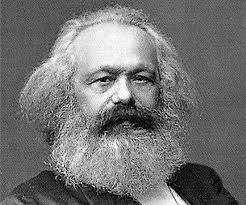
Marx on beards
With this in mind he refrained for the time being from all political activity and withdrew into the seclusion of his home in order to grow a beard, without which no prophet can succeed
Heroes of the Exile 1852 on Kinkel

Marx on beards
With this in mind he refrained for the time being from all political activity and withdrew into the seclusion of his home in order to grow a beard, without which no prophet can succeed
Heroes of the Exile 1852 on Kinkel
Beard Liberation Front
4th May
Media Release contact Keith Flett 07803 167266
Campaigners say re-election of Philip Glanville as Mayor of Hackney shows beards are vote winners
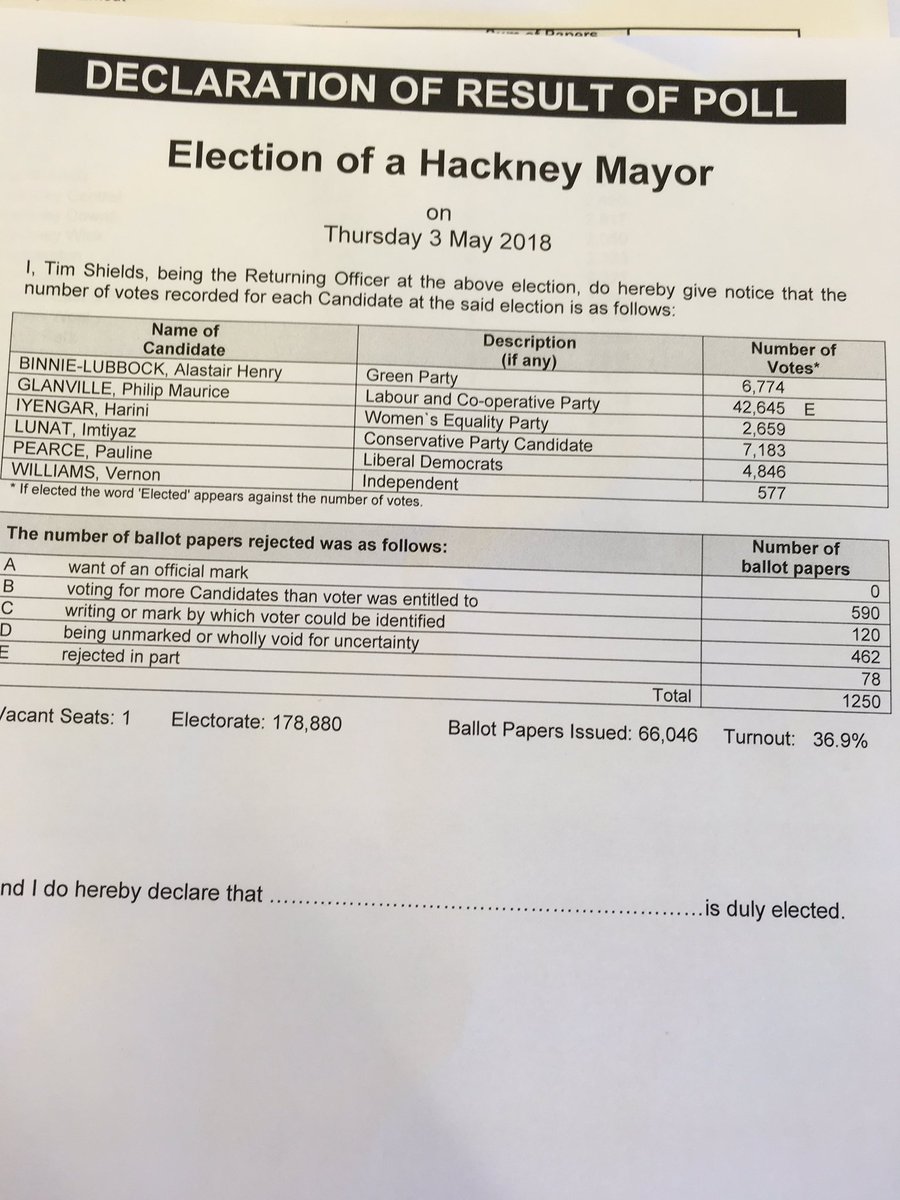
The Beard Liberation Front, the informal network of beard wearers which campaigns against beardism, has hailed the re-election of Philip Glanville as Mayor of Hackney as proof that beards are vote winners.
Mr Glanville, the Labour and Co-Operative candidate won 64.7% of the vote on 3rd May.
The BLF says that obviously Philip Glanville’s record as Mayor and his positive campaigning were key factors in the result but it also underlines that pogonophobia as a way of discrediting candidates for political office is on its way out
BLF organiser Keith Flett said, we congratulate Philip Glanville on his re-election as Mayor of Hackney he presents a really positive image of the hirsute in politics
Beard Liberation Front
4th May
Media Release contact Keith Flett 07803 167266
Campaigners hail best local election results for a Labour leader with a beard since Keir Hardie
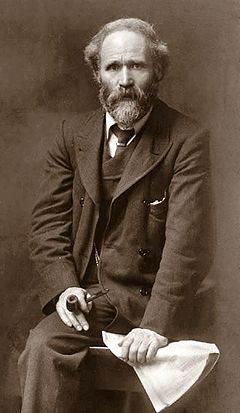
The Beard Liberation Front, the informal network of beard wearers which campaigns against beardism, has hailed Labour’s local election results on 3rd May as the best achieved by a Labour leader with a beard since Keir Hardie over a century ago.
The campaigners say that while local election results are often strictly local the overall pattern underlines that in 2018 having a leader with a beard is no bar to electoral success
BLF organiser Keith Flett said, Jeremy Corbyn’s beard is electorally popular and these results indicate that there are only a few areas of pogonophobic sentiment left around England now
Beard Liberation Front
Press release 3rd May
Contact Keith Flett 07803 167266
REPORTS OF THE DEMISE OF THE LONDON BEARD ARE EXAGGERATED

The Beard Liberation Front, the informal network of beard wearers, has said that a report in City AM that the London beard is ‘dead’ are an exaggeration.
http://www.cityam.com/285181/death-beard-has-trend-facial-hair-finally-reached-its-peak
The report quotes studies that suggest men grow beards to appear more assertive or more attractive to partners but also notes correctly that many grow beards simply because it is easier than shaving and it is now socially acceptable to do.
City AM circulates mainly in the Square Mile of the City of London and the campaigners say that while the beard was once a rarity in the area it has become a commonplace
BLF Organiser Keith Flett said, Ive worked in the City of London for over 30 years and for much of the time it was odds-on that I’d be the only person with a beard to be found in the office. Nowadays if you go into Corporate HQ buildings in the City you’d struggle to find a man not wearing a beard
The campaigners say that the reality is that London is far from reaching peak beard yet. Indeed the big issue facing men in the City this summer is what style of suits goes best with a designer beard.
How the vote was won: 6th May 1867
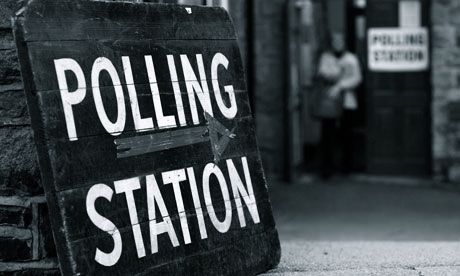
There are local Elections today in England and while turn-out will certainly be much lower than last General Election and local results are quite often local and not related to wider trends, the outcome will still be used as a barometer as to the impact of Theresa May’s various crisis and how popular or not Jeremy Corbyn’s beard is.
Historically we haven’t heard much about successful demonstrations for example, but they do exist and some have been around the vote.
When the Chartists gathered on Kennington Common on April 10th 1848, 170 years ago, to protest for the vote they failed. They were prevented from even marching. The failure of the Chartists on that Spring Monday in South London is well known.
Rather less well publicised is what happened on a subsequent Monday, not quite 20 years later, on 6th May 1867 when many of the same activists, under the auspices of the Reform League, marched to Hyde Park, and did so again for the vote
It was one of the most immediately successful demonstrations in British history to date.
The Reform League was a combination of middle class radicals, former Chartists and working class trade union activists. The May 1867 demonstration was the latest in a series demanding an extension to the franchise.
Both Liberal and Tory Governments had looked at extending the vote to allow more working class voters, but deliberately not enough ever to have a majority influence. Gladstone boasted that his property qualification for the vote would still leave less workers enfranchised than had been before the 1832 Act.
The Government took the decision to ban the League’s proposed rally in Hyde Park and mobilised large numbers of police, special constables and troops to ensure that it did not go ahead.
The League was far from a revolutionary organisation but it determined that it would continue with its plans.
At 6pm on Monday 6th May 1867 a protest of 150,000 people approached Hyde Park led by the Clerkenwell branch of the League with a red flag topped with a cap of liberty on a pole.
There was no confrontation. Faced with the League’s determination, the Government backed down.
The right-wing press was beside itself. The Home Secretary Walpole had to resign.
Meanwhile the impact of the campaign for an extension of the franchise was felt at once. In the Commons the Liberal leader Gladstone announced his discovery that the people wanted reform of the franchise. The actual measure, known as the Second Reform Act, which was passed in short order was far more radical than anything proposed before May 6 1867, extending the franchise by four times more than previously discussed.
Historian Royden Harrison noted of the working-class impact on the demonstration ‘If it was increasingly respectable it was increasingly well organised. If it had abandoned its revolutionary ambitions it had not wholly lost its revolutionary potentialities’.
The trade union leaders of the Reform League- far from the most radical of men- Applegarth, Odger and Howell- knew why the fight was worthwhile.
In 1863 the Manhood Suffrage and Vote by Ballot Association noted that ‘the evils under which we suffer have a common origin, namely an excess of political power in the hands of those holding a higher social position’.
That remains the case even though the fight for the vote for all working men and women was not ultimately won until 1928.
It’s worth noting the balance of the events of those May Days 150 years ago. An important extension to the right to vote was won which extended Parliamentary Democracy. The extension however was won outside Parliament, by extra-Parliamentary means.
Blaming the protesters: from Peterloo 1819 to Gaza 2018
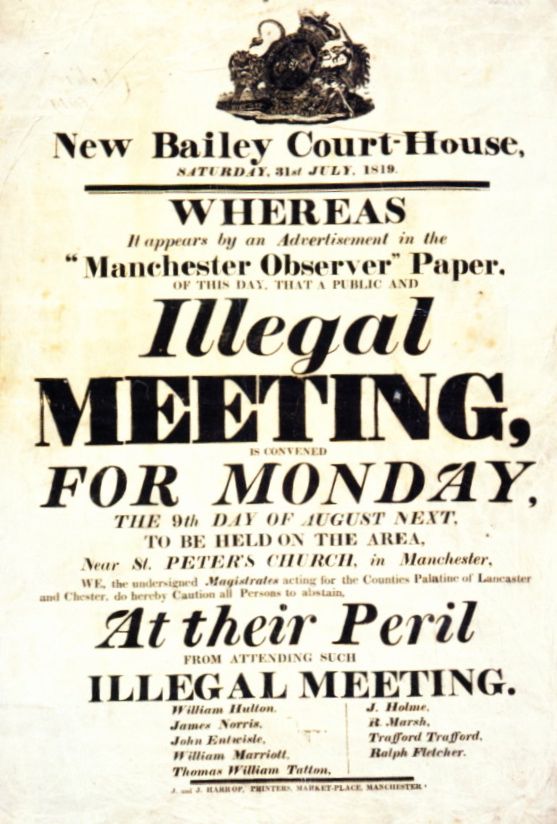
The author and beard wearer Michael Rosen has commented on social media that when it comes to protests when the authorities injure or kill protesters they invariably claim that the protesters are to blame. Certainly that seems to be the official reaction to the continuing deaths and injuries of Palestinian protesters at the Gaza border in 2018.
We should be cautious about historical comparisons because we can’t be sure we are really comparing like with like. Each situation has its own specifity.
Even so Rosen’s general point has validity.
When the Manchester Yeomanry cut down and killed and injured protesters for the vote at Peterloo in central Manchester on 16th August 1819, the authorities blamed this on fleeing protesters.
Still that was a long time ago.
This is what EP Thompson wrote in the Making of the English Working Class about protest and justice at Peterloo:
If the Government was unprepared for the news of Peterloo, no authorities have ever acted so vigorously to make themselves accomplices after the fact. Within a fortnight the congratulations of Sidmouth (Home Secretary KF) and the thanks of the Prince Regent were communicated to the magistrates and the military ‘for their prompt, decisive and efficient measures for the preservation of the public peace’. Demands for a parliamentary enquiry were resolutely rejected. Attorney and Solicitor-Generals were ‘fully satisfied’ as to the legality of the magistrates’ actions. The Lord Chancellor (Eldon) was of the ‘clear opinion’ that the meeting was an ‘overt act of treason’.. State prosecutions were commenced, not against the perpetrators, but against the victims of the day- Hunt, Saxton, Bamford and others- and the first intention of charging them with high treason was only abandoned with reluctance. If the Manchester magistrates initiated the policy of repression, the Government endorsed it with every resource at its disposal.. Hay, the clerical magistrate prominent on the Peterloo bench, was rewarded with the £2,000 living of Rochdale.
Interestingly on the 150th anniversary of Peterloo in 1969 the Sunday Telegraph repeated the point. Even at that distance the reality of the massacre had to be denied.
The Mandrake column (20th July 1969) was headed ‘the massacre that never was’. Reviewing a new book Robert Walmsley’s Peterloo: the case reopened (MUP) it noted ‘most of the day’s comparatively few casualties were caused were caused by a trampling panic amongst the crowd’.
That is a reassuring explanation, and even if not a factual one, a reminder about how to spin unfortunate events in the present day perhaps….
In between Peterloo and the present day there are of course many examples of Government’s blaming protesters for what happens to them and as many examples of officialdom evading any blame itself for what took place.
Some historians, particularly on the right, argue that there is little point in raking over such old questions except as the Telegraph on Peterloo underlines when it suits they do it themselves and in any case they still blame the protesters even today.
An earlier version of this post appears in the Summer 2018 edition of the London Socialist Historians Newsletter
http://londonsocialisthistorians.blogspot.co.uk/
The Ambridge Socialist
65 Years of the class struggle in Ambridge
May Day 2018 issue
Brian Aldridge to face People’s Court on the Village Green
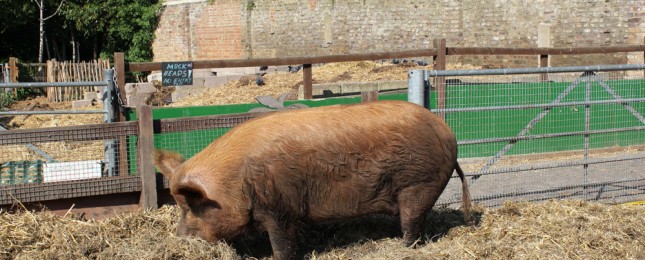
Hackney City Farm
Today Brian Aldridge faces a May Day People’s Court on the Village Green. Aldridge himself refused to attend so his part is played by a local pig.
Long a key element of Ambridge’s ruling class Brian Aldridge is in big trouble.
Decades ago he allowed poisonous waste to be dumped on his land and it in turn has now poisoned the Am. Aldridge has been engaged in an elaborate cover-up. The Home Farm partnership of which he was the boss has turned against him in a bid to save the business.
He agreed to resign as chair of Borsetshire Land
In an Ambridge Socialist reader’s poll on 30th April 70% backed Aldridge being sent to jail.
The charges are:
1] Hooliganism
2] Exploitation of Borsetshire workers and peasants
3] Knowingly concealing the source of the pollution of the River Am and its cause
Ambridge Socialist Editor Keith Flett said, with its usual dilatory approach the Borsetshire Constabulary has done nothing. As a consequence the Ambridge Socialistl hasd convened a People’s Court on the Village Green on May 1st to dispense People’s Justice to Aldridge.
The Possible Sentence
Being thrown in the Am to swim with the fishes
A midnight visit by the Ambridge Rough Music players to Aldridge’s house
Aldridge paraded naked through the village strapped to one of Shula’s horses
The Hidden History of May Day
The first British labour movement May Day demonstrations took place in 1890 (there were two). I wrote in 2016 that it remained unclear who the rank and file activists were who built those occasions for the first time and perhaps in some ways why they did so.
There is more to the hidden tradition of May Day.
Long before the Second International proclaimed 1st May as workers day the Chartists were marking the occasions with a tweak on customary May Day celebrations.
The Chartist Land Plan was a strategy, which worked but in a limited way, of allowing industrial workers fed up with early capitalism to opt out and return to the land.
Several Land Settlements were built and worked but ultimately the plan was declared illegal. The idea of opting out of early capitalism was not encouraged.
The first settlement was at Heronsgate, renamed after the Chartist leader, O’Connorville. Its actually in Rickmansworth (and can be reached at a reasonable walk from the station). The Chartist houses remain although these days they are desirable dwellings.
On May Day 1847 a festival was held at O’Connorville.
A report noted:
A ballot was held to select the first thirty-five settlers, and they arrived on 1st May 1847. It was, according to O’Connor, ‘England’s “May Day” ‘, and a band struck up the tune ‘See the conquering heroes come’. At the official opening on 17th August 1847 O’Connor stood on a platform jubilantly waving a giant cabbage.
May Day was celebrated with dinner, tea and a concert and a ball at the schoolhouse. The local schoolmaster painted a mural facing the entrance to the hall depicting O’Connor’s presentation of the third petition to the House of Commons and farm labourers doing their work above the motto ‘speed the spade’
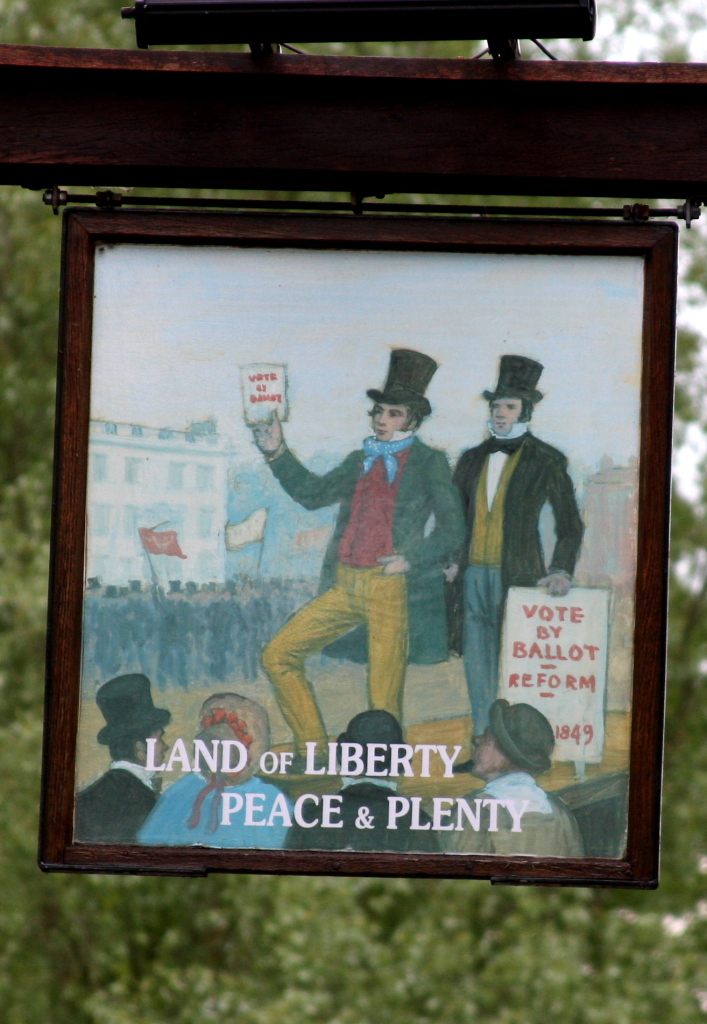
The settlement was and remains opposite a pub, these days called the Land of Liberty, Peace and Plenty. O’Connor warned against visiting in his speech on May Day 1847
There is a beer shop adjoining your land avoid it I beseech you as a pestilence
The CAMRA Award winning pub remains open, an ideal place perhaps to recall the pre-1890 traditions of May Day
Beard Liberation Front
PRESS RELEASE 30th April
Contact Keith Flett 07803 167266
CAMPAIGNERS READY TO REVIVE MAY DAY TRADITION OF BEARD WAGGLING
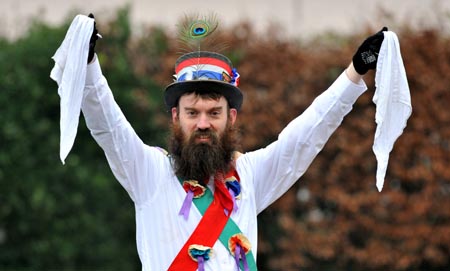
Tom Clare
The Beard Liberation Front, the informal network of beard wearers, has said that as in recent years it is again reviving the ancient May Day tradition of beard waggling on Tuesday.
The beard waggle involves shaking the beard vigorously from side to side and in doing so stimulating air currents that can cause objects to levitate slightly.
The tradition is thought to have gone into decline with the rise of the safety razor in the late nineteenth century but with the increase in beard wearing in recent years it has found a revived popularity
The BLF traditionally asks its supporters on the traditional London May Day march from Clerkenwell Green, to waggle their beards individually or collectively as the mood takes them to celebrate the arrival of Spring and to strike a blow against a clean shaven political culture.
It also encourages beard waggling around the country at May Day related events and on the May Day Bank Holiday next Monday.
BLF Organiser Keith Flett said, although the weather forecast has been mixed, and beard waggling in the rain is a strict ‘no-no’, it looks like Tuesday will be fair enough for people to waggle their beards in celebration of May Day and Spring
A Guide to May Day beard waggling
1] Make sure the beard is in a good aero-dynamic state. If you have not pruned it so far in 2018 now is the time to do so.
2] Make sure the beard is supple but also dry.
3] Inspect the beard for any split ends or damaged hairs that may impede a waggle
4] After following 1-3 practice waggling in short 60 second bursts. Depending on results review 1-3.
5] A beard waggle consists in moving the beard vigorously from side to side where possible in alignment with air currents.
6] After the waggle is complete the beard may be refreshed by a brief immersion in a glass of traditional or craft beer.
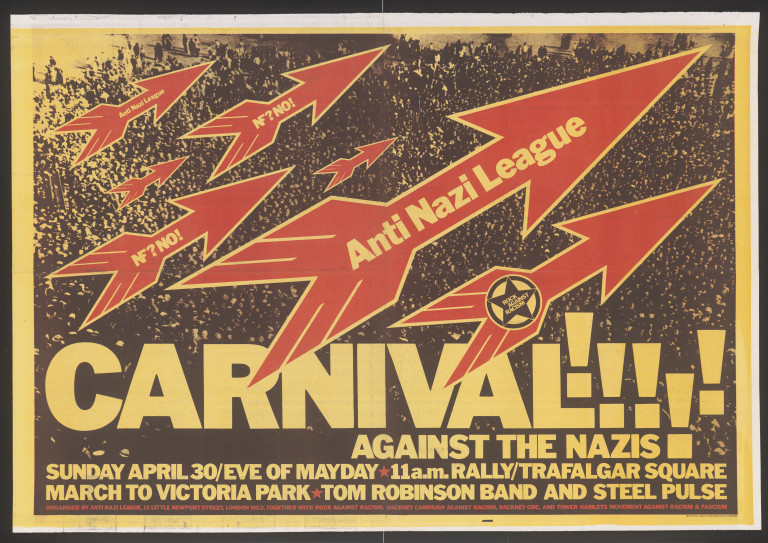
Its 40 years since the Rock Against Racism/Anti-Nazi League Carnival in Victoria Park on 30th April 1978
The paper mache heads of fascist leaders Tyndall and Webster that accompanied the march were designed by Fluck and Law (of Spitting Image). The posters were by the late David King.
80,000 people (myself included) marched six miles from Trafalgar Square to hear speakers (of course) but also X Ray Spex, Steel Pulse, Tom Robinson and the Clash
The Carnival didnt celebrate Saint Monday- 30th April 40 years ago was a Sunday.
Ive written about it elsewhere but for the many now too young to have been there below is a short video of what it was like:
View more by category: Uncategorized (14,246). .


