
___________________________________________________________________________________________________________________
60 years since ‘Ban the Bomb’
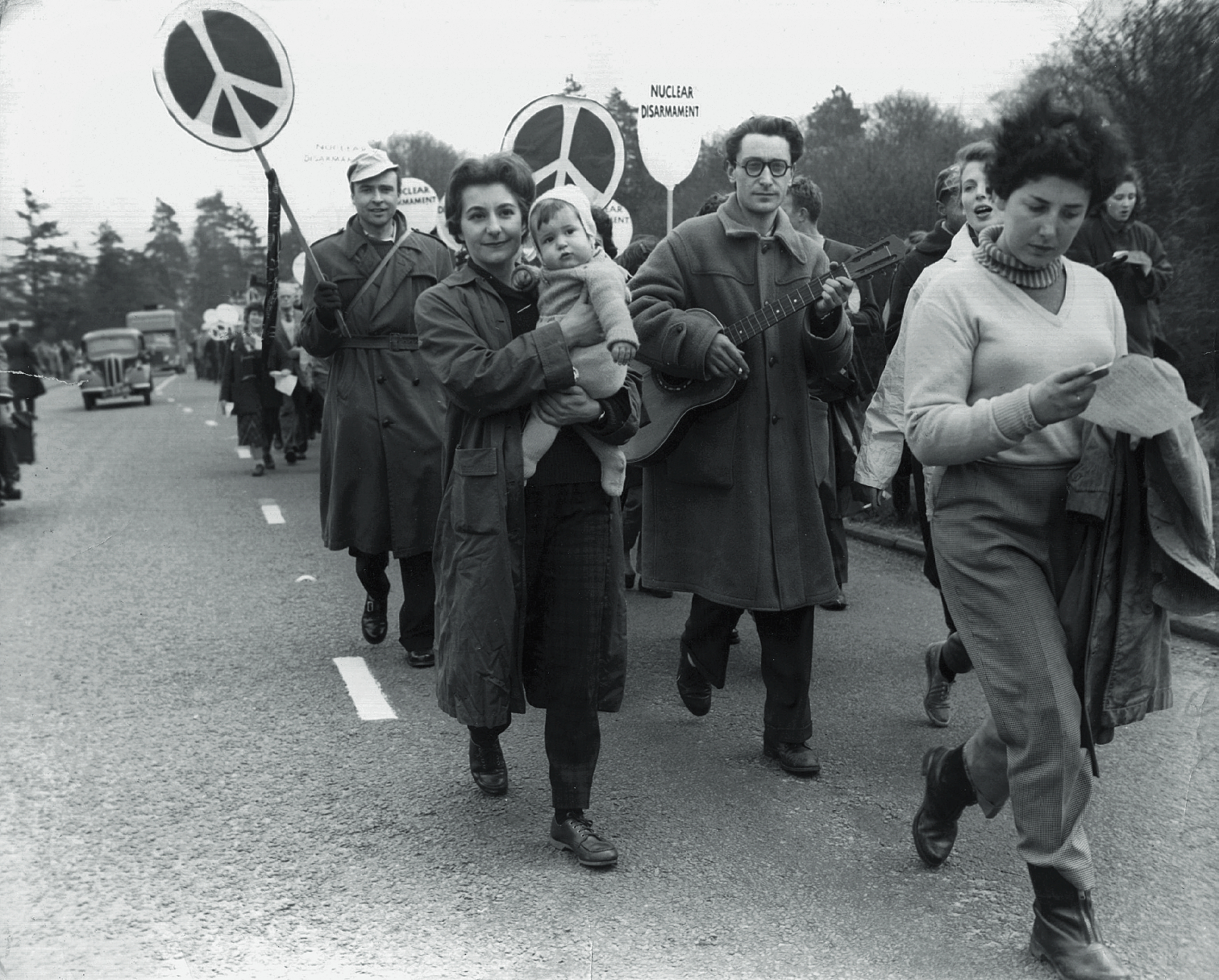
The recent crisis over North Korean nuclear weapons, which many will feel is more of a crisis of having an unpredictable hard right politician called Trump in the White House will be the first time numbers of people have felt that the world and with it their own lives could all end rather quickly in a nuclear war.
For those who are older there have been a number of such episodes since Hiroshima in 1945.
In the early 1950s the US came close to using nuclear weapons in the Korean War, which ended with the division of the country. In the early 1960s the Cuban missile crisis sparked real fear of a nuclear war between the US and Russia. This time the hawk in the White House was a Democrat- Kennedy. Not so long after in 1969 a Republican President, Nixon, was close to using nuclear weapons
The story goes that Nixon, a heavy drinker, ordered a nuclear strike while drunk one evening after North Korea had shot down a US spy-plane. The Generals sat on it until the morning when a hungover Nixon decided not to proceed.
All this serves as a reminder that we are approaching the 60th anniversary of the foundation meeting of CND in February 1958.
Its arrival as a mass campaigning force in British society- still very much with us- did not of course come from nowhere.
The spark for the organisation that led to CND was a series of nuclear tests in 1957.
The recent furore has been around North Korea carrying out nuclear or nuclear related tests when these are not permitted.
In 1957 it was Britain that was testing a nuclear bomb in the South Pacific, and likewise these were not in any way officially sanctioned.
Part of the motivation after the debacle of Suez in 1956 was to put Britain back on a military footing with the US and this indeed was what happened.
The impact on the left was significant.
It was the 1945 Labour Government that had sanctioned the development of British nuclear weapons in the first place and around the nuclear tests a familiar discussion between multilateral and unilateral disarmers took place.
Nye Bevan, the de facto leader of the Labour left in the 1950s, was no fan of nuclear weapons but took the position that while others had them Britain needed them too. Whether or not he would have backed a ‘first use’ policy didn’t seem clear.
Beyond that however there were large numbers who simply wanted to get rid of all nuclear weapons and being in the UK, to start with British ones.
The moves that led to CND started with letters from Bertrand Russell in the Guardian and an article by J. B. Priestley in the New Statesman. Canon Collins, based at St Pauls, was also a key figure.
In other words the ‘great and the good’ of the liberal-left became attracted to the cause. But the foot soldiers were of course the left- many constituency Labour Party members and the wider left.
Peggy Duff a Camden Labour Councillor who had worked for Tribune and went on to become the first General Secretary of CND summed up in her autobiography what the original activists were like.
‘They belonged to no political party. Many of them belonged to no church. They had no politics. Their interest in banning the bomb was mainly ethical. They thought it was wrong. Most of them were young.. they believed that the bomb immediately threatened the future of civilisation, that it had to be banned very quickly or Armageddon would come’.
Trump may mean that a new generation will join those who first opposed the bomb 60 years ago.
A version of this post appeared in the Morning Star 18th September 2017


[…] https://kmflett.wordpress.com/2017/09/19/banning-the-bomb-1957-2017/ […]