
1867: 150 years since the publication of Capital Volume 1
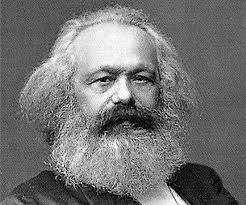
It is 150 years since the publication of Marx’s Capital Volume 1, the only part to appear in his lifetime.
It did not of course appear in English but initially in German and then French so its initial impact on the British labour movement in 1867 was apparently insignificant. Against that we might balance the reality that the impact of its author and his ideas in this period on the same audience was far from negligible.
Capital is of course a book about how capitalism works, or does not actually work. It also contains and indeed the theory is underwritten by a good deal of history, much of it relating to examples from contemporary British working-class activity that Marx reviewed in the British Museum and through his links in particular with the London labour movement.
Most of the discussion on Capital’s 150th anniversary has focused on the economic structure of the book and how valid it remains. The historical framework however remains important.
There is little existing work (that I’m aware of- the literature on Capital is vast and worldwide) that looks at the interplay between Marx’s daily life in the late 1850s and early 1860s, the political situation and the structure of Capital.
Roman Rodolsky’s The Making of Marx’s Capital ponders in detail the structure of Volume 1 and why it was changed but offers little specifically on how the changes related to wider economic and political contexts beyond, importantly, suggesting changes in Marx’s thinking.
More to the area and contexts I’m looking at is Marcello Musto’s chapter on Marx’s life at the time of the Grundrisse in 1857-8. Of course the Grundrisse was the precursor of Capital so Musto’s analysis still has relevance for it although a period of 10 years elapsed between the two.
Musto identifies several factors that influenced Marx’s writing. Illness which certainly persisted in the 1860s often interrupted Marx’s writing as did, perhaps to a lesser extent, the need to make sure that he had enough money to actually live on while writing. Marx wrote regular journalism in the late 1850s and that certainly informed how he both saw and analysed the world.
In a letter to Engels on 15th March 1862 Marx noted that while he was still writing articles for the New York Tribune he didn’t expect this to continue. He had however been unable to work on a Critique of Political Economy as ‘work is often checked, i.e. suspended, for weeks on end by domestic disturbances. Little Jenny is still by no means as well as she should be’
Certainly Marx lived from the mid-1850s to 1864 at the same address 9 Grafton Terrace, Kentish Town then on the periphery of central London..
Not long after this period Marx stopped writing Capital altogether for a period to write Herr Vogt, exposing a long-time opponent. Whether this was a good idea has been debated but it underlines the importance Marx gave to contemporary political matters.
While few if any in the British working-class movement were aware of the detail of Capital in the 1860s, Wages, Prices and Profits which was given as a speech to the First International in 1865, offered an important insight into Marx’s thinking and in particular the points he felt were important to get across to key trade unionists and socialists. It was of course primarily an answer to the arguments of Owenite socialist Weston.
We might argue that it was Marx’s political practice, informed by the research that went into Capital Volume 1, that had the key impact on the British labour movement. But that in itself raises many questions not least what exactly that impact was.
A version of this post is in the Autumn 2017 issue of the London Socialist Historians newsletter
http://londonsocialisthistorians.blogspot.co.uk/2017/10/lshg-newsletter-62-autumn-2017-now.html


Leave a Reply