
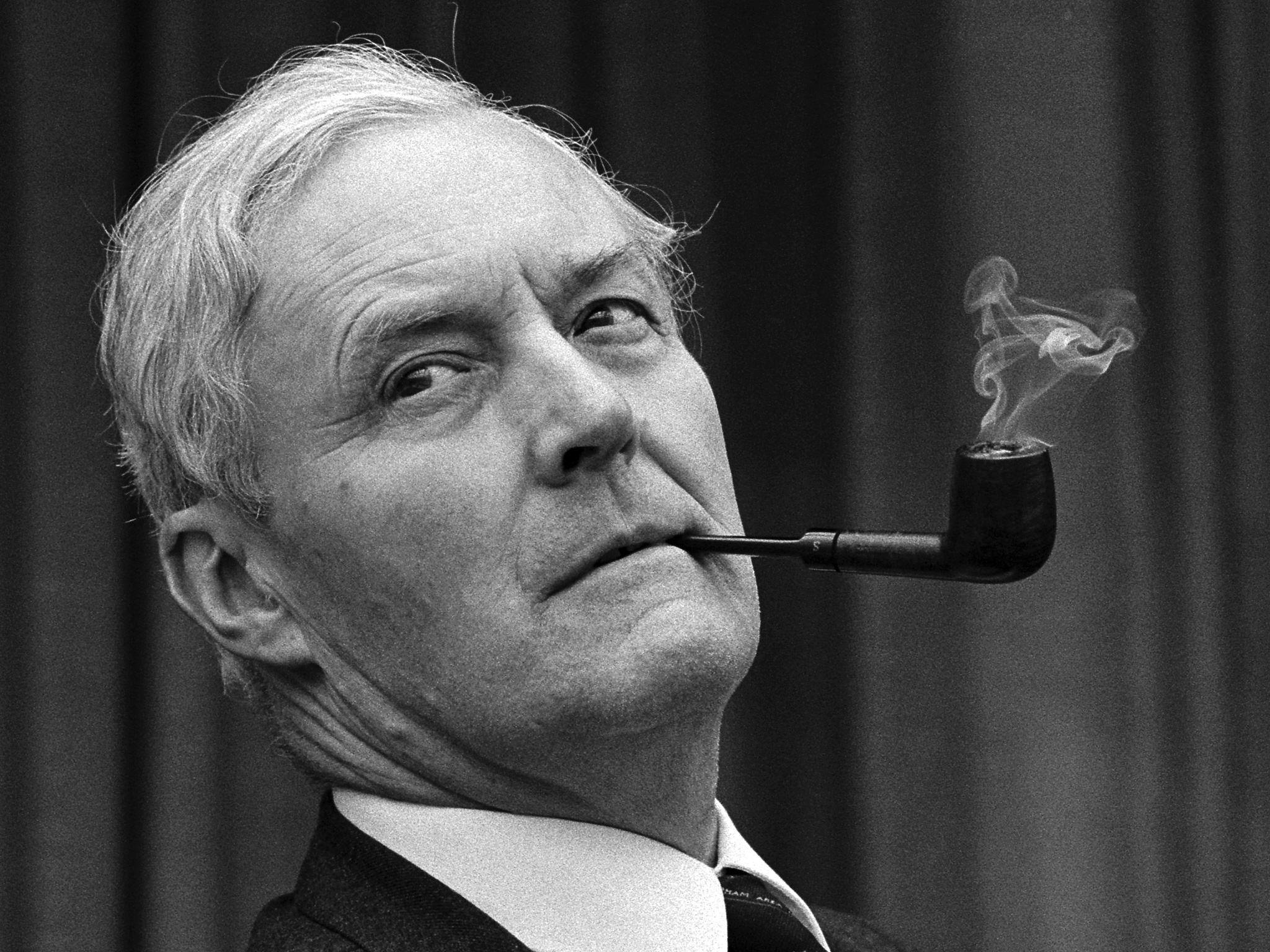
Tony Benn & the creation of Radio One
Radio One is 57 years old at the end of September.
At midnight on August 14th 1967 the Marine Offences Act made broadcasting from a boat off the UK mainland illegal. That meant the end for most of the ‘pirate’ radio stations that had broadcast, primarily off the Essex Coast since 1964, although Radio Caroline continued and was joined for a period by Radio North Sea which was run out of Holland.
Many of the DJs on the pirate ships went on to work for BBC Radio One which was set up as the official alternative including of course John Peel.
The Wilson Labour Government had pushed through the measure- the Minister ultimately responsible being Tony Benn- because of concerns about how the pirate ships operated and also because of issues with interference with communications channels.
Benn was Minister for Technology in August 1967 but had spent much of the time since 1964 as Postal Minister. He hardly had a reputation as a pop music fan but his actions led directly to the creation of Radio One.
In his diary he lays out a future for radio which the Act started to put in place. He noted a dislike of commercial stations and the people who ran them but wanted both to promote both popular music on the BBC and set up a series of local radio stations also run by the BBC.
Benn reports in his diary that the BBC showed no interest in devoting more air time to pop music as this would be ‘pandering to popular tastes’.
Dominic Sandbrook’s suggestion in his book White Heat, a social history of the 1960s, that the BBC was behind the 1967 Act appears mistaken. It was the Post Office and to some extent the Musicians Union, concerned that they and their members gained no direct benefit from records played on the pirates.
The reality is though without the pirate ships pop music culture would not have made the impact it did on 1960s Britain.
There was something of a radical element of shaking up the stifling conservatism of post-1945 British popular culture but the stations were commercial affairs. They were the forerunners of the independent radio stations that operate throughout the UK today and many of the leading DJs were hardly radical themselves. Indeed one, Roger Gale, became a Tory MP. He is currently the member for Herne Bay & Sandwich, having previously joined Radio Caroline as a DJ in 1964.
Benn was well aware that his actions in outlawing the pirate stations would also open the door for legal commercial radio, which he disliked, but with the benefit of hindsight we can see that there was a bigger problem.
The BBC had no model for what a public service popular music radio station would be like. It simply imported DJs and their musical interests from the pirates.
These were very different worlds. Popular music had existed on the old BBC Light Programme in the form of Saturday Club run by the late Brian Matthews. But in the 1960s Matthews was hardly a big name celebrity.
Yet the pirate DJs certainly were. One thinks of Simon Dee, Tony Blackburn, Johnnie Walker and of course Jimmy Saville.
Radio One avoided dwelling on the Saville affair in its 50th celebrations in 2017 but it underlines how difficult it was to transpose the unregulated pirate radio model to a national public broadcaster.
Radio One was a focus for the charts, the music industry and business. Minority music tastes, surely a focus for public service radio, got less of a look-in


It’s \Brian MattHEW and Jimmy SavILE – I hope the Morning Star subs corrected your spellings.
As far as I know Saville was never on a pirate. He built his career on Radio Luxembourg, which preceded the pirates but was always entirely legal, notably with the Teen and Twenty Disc Club (which I think also had a physical existence in Manchester).