
25 years since the 1992 pit closures
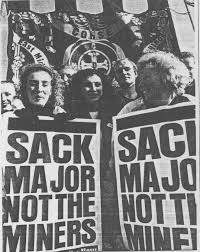
It is 25 years ago this month, on 13th October 1992, since Tory Minister Michael Heseltine proposed the closure of 31 out of the then still working 50 deep coal mines in the UK.
Since then the world has moved on, and other sources of fuel are preferred for electricity generation, but in 1992 the Tories announcement was a significant blow to industry, jobs and the working-class areas where the pits were located.
Tory industrial policy has hardly changed since.
The closure announcement was widely seen as the sequel to the great 1984/5 miner’s strike where Arthur Scargill and the NUM had argued that the Tories wanted mass pit closures. While the strike is often seen as a defeat for the miners, in practice it also warned the Tories off trying to more or less shut down the mining industry for a further 7 years.
The Tory argument was that the mines were uneconomic and it was therefore prudent to close them, taking no real account of the impact of this closure on the wider economic infrastructure and of the future of those employed in the industry.
A massive wave or protest followed, together with several very large demonstrations.
While some on the right of the labour movement had attacked Scargill for ‘premature militancy’ in 1984/5, it now became very difficult to avoid the point that he had been right. He became a national figure again, but this time in a much more broadly positive sense as the man standing out against Tory economic vandalism.
As Tony Benn noted in his diary of the pit closures, they ‘Rehabilitated Arthur Scargill in twenty-four hours as the man who was right. Tremendous sympathy’.
On Friday 16th October the Daily Mirror, not exactly the most enthusiastic supporter of the 84/5 strike, had a front page on the pit closures ‘March With Us’ together with articles by Tony Benn and Paul Foot opposing the closures.
Benn records a large demonstration in his own constituency of Chesterfield on Saturday 17th October together with an announcement by the Prime Minister, by this time John Major not Thatcher, that redundancy payments for miners would be increased.
The first national protest against the pit closures was held on Tuesday afternoon 20th October in Hyde Park. Benn records that it was a ‘massive demonstration’.
That led to a further demonstration on Sunday 25th October which assembled on the Embankment in pouring rain and marched to Hyde Park. An estimated 150,000 turned out. Over the last 20 years we have become quite used to very large marches in London, but this for the time was a huge number.
The protests had their impact. Heseltine announced in the Commons that there would be a moratorium on the closure of 21 out of the 31 pits while their future was further reviewed.
It was a concession forced by protest but eventually closures still went ahead, jobs were lost and areas devastated with results still evident today.
1992 is not yet a year for the history books- generally 30 years is taken as the minimum length for a current event to pass over into history.
However we can perhaps flag some preliminary historical thoughts. As Scargill and the NUM argued fighting job cuts industrially was essential.
But to be really effective the industrial fight needed to be combined with political backing. In 1984/5 Labour was less than wholehearted in its support of the miners and the TUC while raising solidarity did not go further.
In 1992 there was broad political unity on the left to stop pit closures but the industrial moment had passed.
This post appeared in the Morning Star 23rd October 2017


Just one question. Do you think this demo really achieved anything in terms of pit closures? I was 100% behind the miners in 84/85. However, nowhere do you mention that Scargill didn’t ballot his members on strike action. Correct me if I’m wrong on this. Surely this let the Labour Party & the TUC off the hook, because they could argue that he didn’t have a mandate? Outside of the Labour movement Scargill is seen as a clown by many people!
The demo did not stop closures. I make that point in the final paras. Scargill was right on the ballot underlined by its increasing obsession for the Tories with higher & higher ballot limits. Any decent union official will note that a small-ish but organised group of workers can win real concessions tho might not win a ballot. The piece relates to 1992. Whatever you think of Scargill now, for many at the moment in 1992 he was a hero, even for the Daily Mirror
There was a third “mass demonstration” on the Thursday after the Sunday rally , this by Maggies favourite union the UDM . their march was actually on the day after the vote took place and was in fact not a political rally but a drunken piss up . There where reports in the Mansfield CHAD (that i can confirm) paper that several coaches were vandalised and several assaults on Londoners by drunk scabs , just people going about their business , I remember them bragging about their great day out .
I was an NUM branch official in Nottinghamshire at the time , we had little time to organise and we spent hours on the phone in the days leading up to the march reaching out to contacts and supporters groups from 84 old and true friends asking one more time for support . We were to a man amazed at the response .
It still raises hairs on my neck when I think of those sodden thousands under Waterloo Bridge as a whistle blew , the street bands who had been entertaining the crowd fell silent BOOM BOOM BOOM the big drum beat then the brass band started to play and the crowd ROARED , a magic moment .
[…] https://kmflett.wordpress.com/2017/10/25/25-years-since-the-1992-pit-closures-marches/ […]