
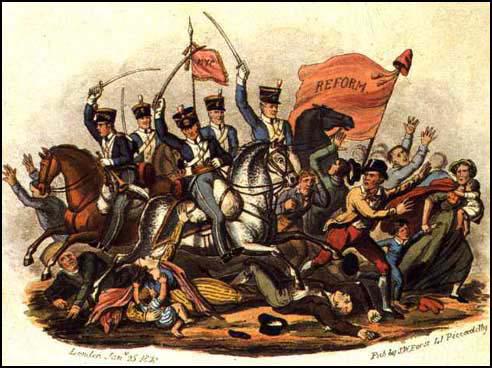
It’s the 200th anniversary of Peterloo in August 2019.
An article in The Guardian (Peterloo was the motor behind the founding of the paper) makes some useful points:
https://www.theguardian.com/news/2018/jan/04/peterloo-massacre-bloody-clash-that-changed-britain
A good deal of attention since the 150th anniversary in 1969 has focused on who the protesters for democracy were in Manchester on that August day, what actually happened and who gave the orders for the Yeomanry (a sort of civil guard on horseback) to ride into the crowd and cut people down.
Rather less attention has been paid to exactly who the Yeomanry were.
EP Thompson in the Times Literary Supplement (15th January 1970) provides sources for a list of who was in the Yeomanry at Peterloo.
Thompson was replying to a letter from Robert Walmsley, whose book on Peterloo he had reviewed (anonymously as was then the fashion in the TLS in December 1969).
A point at issue was whether the Yeomanry consisted of shopkeepers, in effect small businessmen, Thompson notes that the names of 101 members of the Manchester & Salford Yeomanry who were present at Peterloo are listed in Wooler’s British Gazette and Manchester Observer Aug 10 1822 & Henry Hunt’s address to the radical reformers Oct 29 1822. No fewer than 31 of 83 (shopkeepers) were brewers, publicans (twelve) or butchers ‘engaged in some part of the food and drink trades an occupational group long identified with the Volunteers owing to their activity in suppressing food riots’. There were also 2 cheesemongers by the way. The names of the Publicans and the pubs they ran are known. I have still to check on the brewers..
In the Making of the English Working Class (1963 & 1968) EP Thompson quotes a letter from Place to Hobhouse on ‘These Manchester yeomen and magistrates are a greater set of brutes than you form a conception of’..
I know one of these fellows who swears ‘Damn his eyes, seven shillings a week is plenty for them’; and when he goes round to see how much work his weavers have in their looms, he takes a well fed dog with him.. He said some time ago that ‘The sons of bitches had eaten up all the stinging nettles for ten miles around Manchester, and now they had no greens to their broth’. Upon my expressing indignation he said ‘Damn their eyes, what need you care about them? How could I sell you goods so cheap if I cared anything about them’.
Thompson notes that ‘it was the Yeomanry-the Manchester manufacturers, merchants, publicans and shopkeepers on horseback which did more damage than the regulars (Hussars). In the Yeomanry (a middle-class reformer testified) there are..individuals whose political rancour approaches to absolute insanity’


Leave a Reply