
1968: the Year that turned Tony Benn to the left
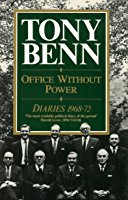
It is the 50th anniversary of the events of 1968, events that shook the world west and east and did a good deal to give rise to many of the ideas and movements, from women’s and gay liberation to a new left politics that were to be key features of the decades that followed.
They certainly for example informed the socialist politics of the current leadership of the Labour Party.
How 1968 is remembered and assessed 50 years on is, as it were, up for grabs.
It is a moment when those who were there will, either want to make sure their contribution makes its way into the historical record, or depending on their position in society now, do everything possible to make sure it doesn’t.
The 20th anniversary in 1988 saw a number of books including David Caute’s The Year of the Barricades and the 30th anniversary in 1998 saw the publication of Tariq Ali and Susan Watkins Marching in the Streets.
More recently Michael Rosen’s memoir So They Call You Pisher! has interesting passages on being a radical student in 1968.
Its likely that the drift of much of the coverage will be how young people were radicalised in 1968 and what happened to them subsequently, whether they stayed radical or not.
Donald Trump will not want to be reminded of the first notable date of the 50th anniversary-the Tet offensive at the end of January 1968. The Democratic American administration was claiming that they were winning the war in Vietnam. The Vietcong’s attack on South Vietnamese forces underlined that on the contrary US imperialism was definitely not on the winning side 50 years go.
Outside of this narrative a little, but just as interesting is what Tony Benn was doing in 1968 and how it affected him.
He was a mainstream Cabinet Minister in Harold Wilson’s Government 50 years ago.
His diary for the period begins with an assessment of 1968, noting that it was the events of that year that started him on his long journey to the left.
Benn’s analysis of 1968 is also interesting because he looks not just at what the left was doing, but also how the right was preparing its counter-attack.
Benn summarises the global impact of 1968 like this:
Internationally, 1968 was the year in which the USA and Europe were in turmoil: protests against the Vietnam War reached a climax, and students were engaged in demonstrations against state bureaucracy, demonstrations which were interpreted as popular disenchantment with politics. But these movements were not confined to the West. In the same year in Czechoslovakia Dubcek launched his experiment in liberalisations..
This is likely to be the way 1968 is seen by many commentators this year.
But there are other aspects to the year which also deserve to be recalled.
Benn notes ‘at the other extreme Milton Friedman was working on his theories of monetarism in Chicago’. By 1970 the Tories at their Selsdon Park conference had embraced his ideas and Labour was not far behind in echoing them. Benn argues that it marked the end of the influence of Keynesian ideas on British Government.
On 20th April 1968 speaking to a meeting of Conservative activists in Birmingham Enoch Powell made his racist ‘rivers of blood’ speech. It might be seen as the beginning of a hard and far right politics that remains with us. In 1968 though London dockers marched to underline that his reactionary views were welcome.
Benn concludes by simply noting that 1968-1972 ‘was the period my own radicalisation took place’ and he began to formulate socialist policies.
This post appeared in the Morning Star 10th January 2018


Leave a Reply