
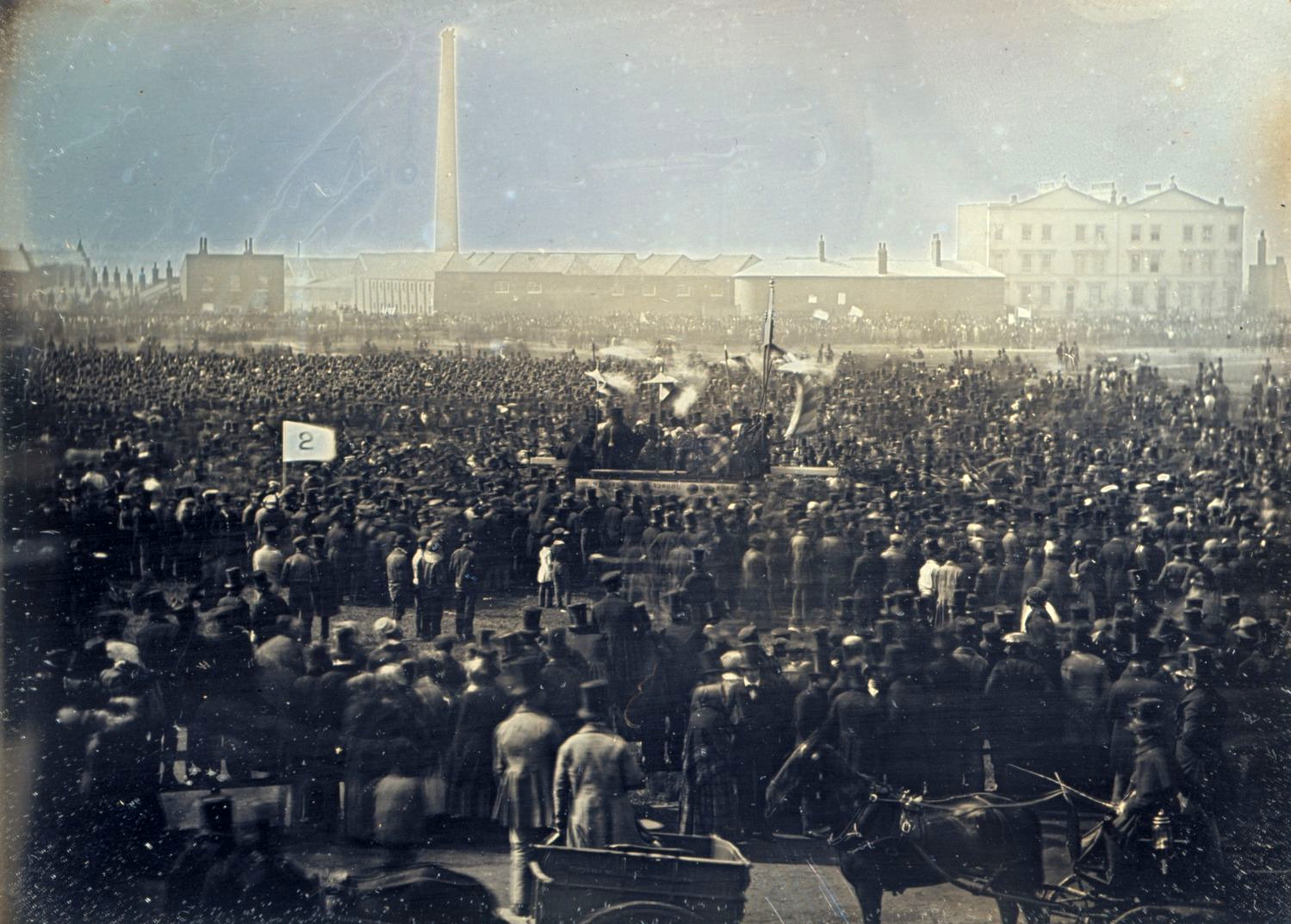
Kennington Common 10th April 1848
The Observer will appear as a tabloid on 21st January following the reformat of the Guardian.
As part of the change the Observer’s Editor John Mulholland has reviewed the history of the paper (14th January) and made the point that the paper supported Chartism:
And what a history. The Observer supported the Chartist movements for political and social reform in the 19th century. It backed the rise of early trade unionism. It sided with the North against the Confederate slave states in the American civil war. It played a vital role in helping to establish Amnesty International and Index on Censorship and became the principal supporter in the British press of Nelson Mandela.
A similar point was made in 2010 in a previous redesign. However is it true?
This is how The Observer reported the Chartist demonstration on 10th April 1848 at Kennington Common:
The metropolis presented on Monday a scene of unusual excitement and alarm. The determination announced by the members of the Chartist National Convention to hold their meeting and procession in defiance of the law and the constituted authorities – the military preparations, almost unparalleled for extent and completeness to put down any insurrectionary attempts.
The weather was exceedingly favourable for the demonstration; no obstruction was offered by the police to the processions which left the Middlesex side of London for Kennington Common; a free thoroughfare was permitted to all who wished to take part in the public meeting; and yet, instead of the 300,000 persons who, we were told would assemble on Kennington Common does not reach 50,000
Observer 16th April 1848.
The report does not read as particularly supportive. However Ive no doubt the Editor wrote in good faith. The Observer certainly did support the extension of the suffrage (vote) and that was the key Chartist demand. Support for the Chartist movement was another matter.


Leave a Reply