
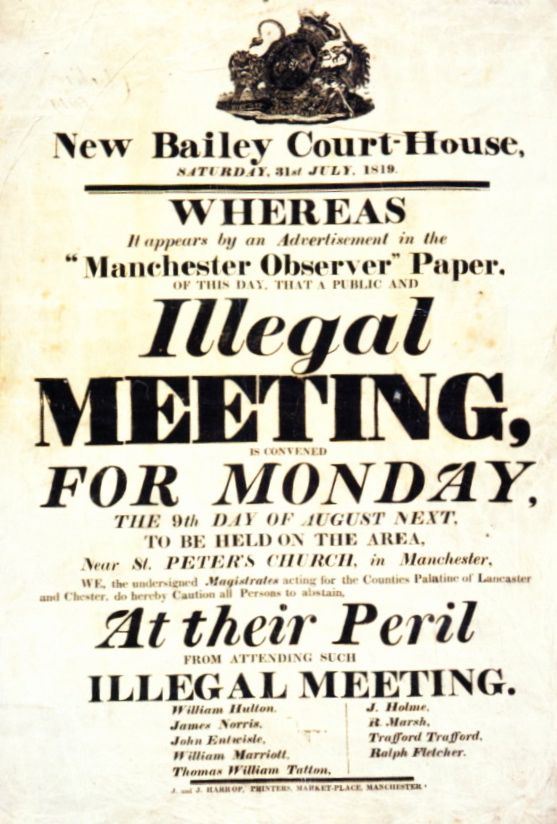
Through his career as an historian (this year is the 25th anniversary of his death) E.P. Thompson pursued those who popped up from time to time with research which tried to show that the authorities were not to blame for the deaths and injuries of protesters for the vote on St Petersfield central Manchester on Monday 16th August 1819.
He set the template in his section on Peterloo in the Making of the English Working Class (1963/68). The important thing is that events at Peterloo can be seen as setting a pattern that has been repeated time and again, whether at Sharpeville, at Bloody Sunday in Derry and very recently in Gaza.
Of course matters are invariably disputed and claims are made that the authorities were provoked or acted reasonably. Thompson’s comments on how the aftermath of Peterloo was handled repay reflection in this respect:
If the Government was unprepared for the news of Peterloo, no authorities have ever acted so vigorously to make themselves accomplices after the fact. Within a fortnight the congratulations of Sidmouth (Home Secretary KF) and the thanks of the Prince Regent were communicated to the magistrates and the military ‘for their prompt, decisive and efficient measures for the preservation of the public peace’. Demands for a parliamentary enquiry were resolutely rejected. Attorney and Solicitor-Generals were ‘fully satisfied’ as to the legality of the magistrates’ actions. The Lord Chancellor (Eldon) was of the ‘clear opinion’ that the meeting was an ‘overt act of treason’.. State prosecutions were commenced, not against the perpetrators, but against the victims of the day- Hunt, Saxton, Bamford and others- and the first intention of charging them with high treason was only abandoned with reluctance. If the Manchester magistrates initiated the policy of repression, the Government endorsed it with every resource at its disposal.. Hay, the clerical magistrate prominent on the Peterloo bench, was rewarded with the £2,000 living of Rochdale.


Leave a Reply