
Remembering 1968: too close for comfort?
The media loves historical anniversaries and it is sometimes not too choosy about which ones.
The 200th birthday of Karl Marx for example has been widely noticed and in some cases positively so in quite surprising places such as the Financial Times.
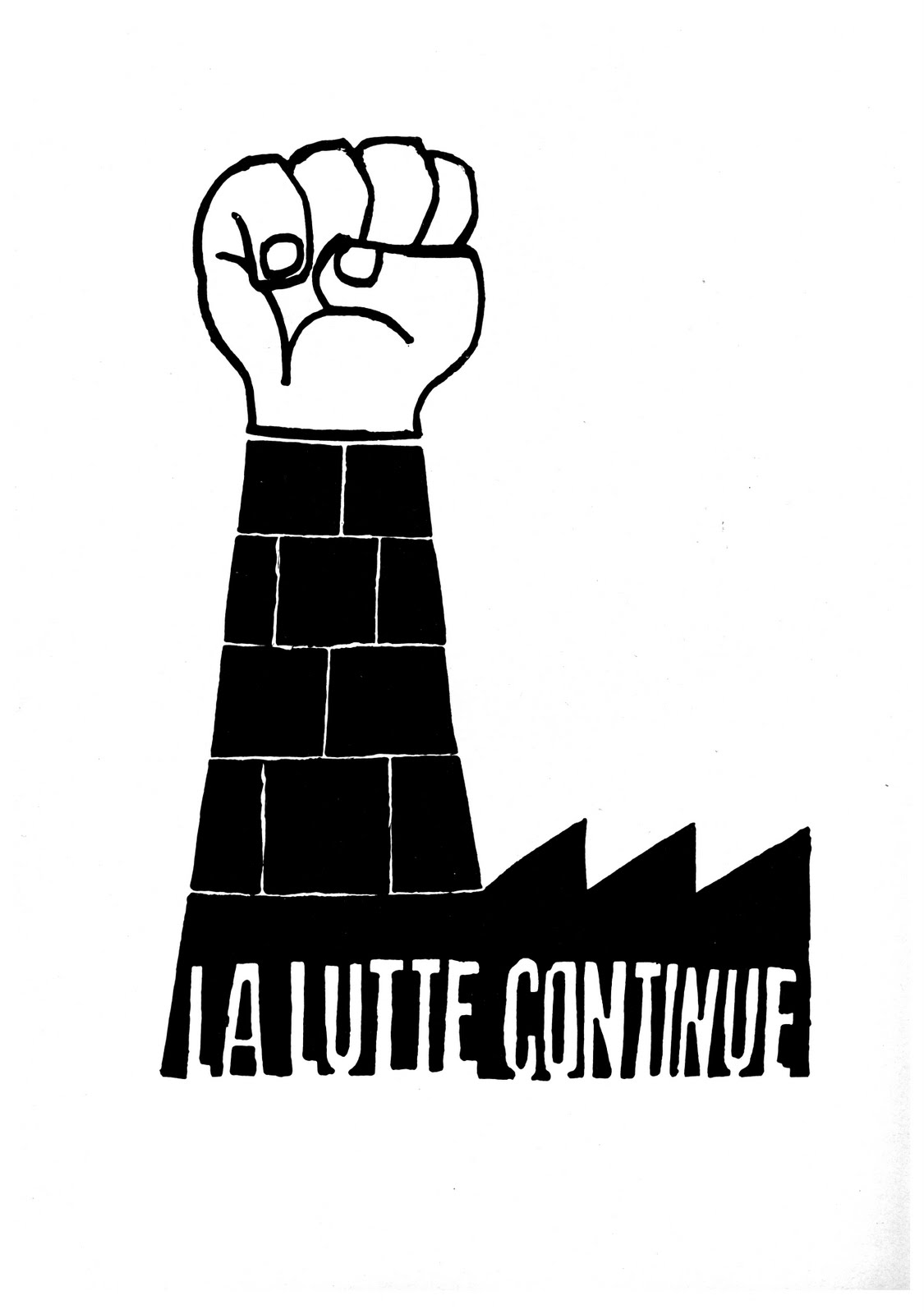
One anniversary however is curiously absent from much notice or celebration: that of 50 years from 1968 and perhaps particularly the events in France in the May of that year.
Students and then workers rose up against the right-wing Government of De Gaulle.
On 10/11th May there was what was termed the ‘night of the barricades’ of mass street protests. On May 20th took place what was until then the biggest General Strike in history, while on May 24th the Paris Stock Exchange was set on fire. By May 29th De Gaulle had disappeared, thought to have fled France, although capitalist order was soon restored thereafter.
One can argue that Britain was an exception to all this. For example on 9th May 1968 local Elections in London saw the Tories romp home as never before or since. Labour was left holding just 3 local Councils and traditional Labour power bases such as Hackney and Islington went blue. Tony Benn’s Diary records Harold Wilson has been adamant that he did not comment on local election results and in any case was not resigning.
Yet the impact of the French events and the Vietnam War was felt in the UK. There were large and militant protests at the US Embassy in Grosvenor Square in central London in March and October 1968 and in late May the Hornsey College of Art occupation signalled that students here were revolting too.
Perhaps as particularly 1968 was more than just a year of revolt but a period of unrest with the Italian Hot Autumn of industrial unrest in 1969 and the two British miners strikes in 1972 and 1974 which ended when Tory Premier Heath called a ‘who governs Britain’ Election in February 1974 and found out that the answer was not himself.
One might argue that the period changed if not ended with the oil crisis in 1973 as oil producing countries restricted supplies to the West.
It was a time of political instability, upheaval and revolt, albeit as in 1848, the world did not end up being changed as many would have hoped.
It can be said that 1968 was the birthplace of much of the modern left, with ideas and movement around women’s liberation and gay liberation for example, coming out of the events of the year.
You can also say, in the case against, that it was a period of sex and drugs and rock’n’roll (for some) which saw the rise of a new middle-class celebrating new individual freedoms that led before long not to socialism but to Mrs Thatcher.
Or, history can be complicated, one can see intertwined aspects of both.
Whatever view is taken 1968 was certainly a fascinating time and something you would think would be marked with major exhibitions and events.
And indeed if you look around the world it is possible to find such things in places such as Australia and America. In Britain however there is very little. The British Library which undoubtedly has lots of resources that would make an interesting 1968 exhibition has just opened a major season on the Voyages of Captain Cook. It is well done and poses interesting questions about colonialism that probably would not have been asked in a pre-1968 world, but on that year itself nothing.
There is a small and not much heralded exhibition of 1968 posters and associated material at the Tate Britain.
David Edgar and John Harris have written pieces in the Guardian and the London Review of Books current issue features Tariq Ali on 1968 and after
Compared however to the 20th anniversary, for example, there really is very little
One does wonder though if 1968 is just a bit too close for comfort for some to want to remember just now. After all numbers who were active in 1968 became in recent times influential persons in the Establishment or have only recently stepped down from being so


The massive gap is the lack of any acknowledgement of the Civil Rights Movement in Ireland and the way in which that in later years inspired a whole new generation of Irish people in Britain which I am documenting see https://lipsticksocialist.wordpress.com/2018/03/23/the-irish-collection-at-the-wcml-a-new-chapter-the-role-of-the-irish-in-britain-representation-group-part-one/