
WG Grace, EP Thompson, time-work discipline & England batting collapses
England did not lose 10 wickets in a session between 1938 and 2016. Today is the 3rd time they have done this in 2 years (24 Tests). Others: v Bangladesh at Mirpur 2016 and v NZ Auckland 2018.
Andrew Samson @AWSStats Test Match Special Scorer
I’ve been watching cricket since the mid-1960s and listening to Test Match Special for as long so news of England batting collapses is not exactly news. The England supporter has become accustomed to them over the years, along with, fortunately, some much better non-collapsing performances.
However the world does not just go on the same. As the tweet from the hirsute TMS scorer Andrew Samson (above) indicates actually in the last couple of years there have been occasions (and Trent Bridge on Sunday was one) when the batting collapses have been accelerated.
We can of course blame short form cricket and fairly obviously that is the headline reason. In the mind of even England cricketers the pace of the game has accelerated so they aim to score more quickly and sometimes collapse more quickly. However as the BBC’s cricket correspondent Jonathan Agnew tweeted if England don’t learn a defensive game their long form Test Match fortunes won’t be brilliant.
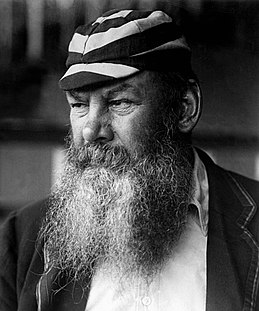
The whole point (or at least it used to be the whole point) of 5-day Test cricket was that it mirrored pre-industrial life. CLR James in his classic book on cricket and life noted that ‘through WG Grace, cricket, the most complete expression of popular life in pre-industrial England, was incorporated into the life of the nation’.
It is the 50th anniversary of the publication (December 1967 Past and Present) of EP Thompson’s essay on Time-Work Discipline which detailed how the rhythms of pre-industrial life, where intensive work was followed by a period of rest (and most often drinking) were changed so that the clock and the measured working day came to dictate the pace of life and how people understood life.
The 90-minute football game which in its modern form exactly coincided with this change was the ideal sporting form for a world governed by the clock rather than by the seasons and the sunset.
Yet Test cricket survived. It was not until the Gillette Cup from 1963 that a nod was made to the reality that many no longer had the flexibility to follow a 5 day Test.
Even so the form still survived and survives still. There is pressure for 4-day Tests and there is no question that the 24/7 society, the internet and social media has speeded up the way many people see the world. It appears to be having an impact in the minds of Test cricketers and it would be surprising if it did not.
Yet there are countervailing forces in society. The trend for fast food (and street food) has been countered by a slow food movement. Why can’t cricket be a key part of a slow sport movement?


Leave a Reply