
Unintendend consequences? The last time centrists split from Labour: a provisional draft from history
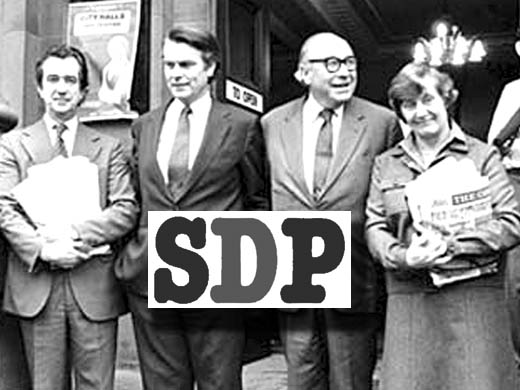
On Monday 26th January 1981 the ‘gang of four’ Roy Jenkins, David Owen, Bill Rodgers and Shirley Williams, then all current or ex- senior Labour MPs made the Limehouse Declaration and formed the Council for Social Democracy.
Ultimately they split from Labour to form the SDP which in due course became what is today the Liberal Democrats. It is worth noting that they were all much more significant and experienced political figures than anyone that is likely to split from Labour today.
It is probably a little too soon to understand what the SDP means and meant historically (& likewise the countervailing trend that stayed in Labour- New Labour) which is a problem for those who might be trying in someway to launch an SDP Mark 2 in 2018. It could be argued that the main impact was not to launch a new ‘centre’ (or what would now be called ‘centrist) party but to boost a new right inside the Labour Party around Blair. Perhaps ultimately that was the, unworked through, real idea.
Self evidently I was never a fan and the SDP had elements in it that were Cold War, anti-Communist, Atlanticists who was I particularly un-fond of. It also had however numbers who might arguably be characterised as Fabians, who believed in equality, and progress and were keen to see these things actually happen in British society.
Tony Benn noted of the supporters of the Council for Social Democracy ‘it was the middle class coming out in support of a break from the Labour Party’.(7th February 1981). He also noted that the ‘BBC is now the voice of Shirley Williams and Roy Jenkins’ underlining that the left’s focus on the media has a long history. There was without doubt sympathy for the SDP in the BBC (some might reflect it was better than its historic tendency to accommodate Tory views) but it was also of course rather newsworthy as the first split in Labour since 1931.
Veteran New Labourite John McTernan argued in a Financial Times piece published on the 35th anniversary of the Limehouse Declaration in 2016 that in the longer run Labour and the Liberals should merge and that was perhaps part of the Blair project. Given the Tories poll ratings in 1997 it should have been comparatively easy to marginalise them as a political force for a generation. That was a road not taken by Blair for whatever reason and it is perhaps questionable if ultimately it would have made Britain a more equal society, particularly after the impact of the 2008 financial crisis.
The history of the SDP suggests that without a change in the electoral system (the LibDems when in Coalition with the Tories held a Referendum on this and lost- I voted in favour) the chances of a breakaway from Labour combining with the rump of the Liberal Democrats and the odd Tory doing more than ending all the participants political careers are not great.
It might well of course scupper the chances of a Labour Government leaving the Tories in power to pursue their Brexit fantasies. As with the SDP in 1981 the consequences of a split from Labour might well turn out to be not the intended but the unintended ones


Roy Jenkins wasn’t an MP at the time of the Limehouse declaration
thanks. Ive amended the wording