
The price and quality of beer: A modern Assize of Ale?
The recent Daily Mirror report about an imported 12% imperial stout on sale at the Craft Beer Co at £22.50 a pint has sparked further debate on the price and quality of beer and the relationship between the two (and a really absurd piece in the Sun which obviously does not need to be read anymore than the rest of the paper).
The South Wales brewer Tiny Rebel have provided a very useful insiders perspective (link Below).
https://www.tinyrebel.co.uk/news/is-beer-too-expensive/
Here, adapted from my regular Culture Matters series is a brief piece on some of the history of efforts to control price and quality in beer:
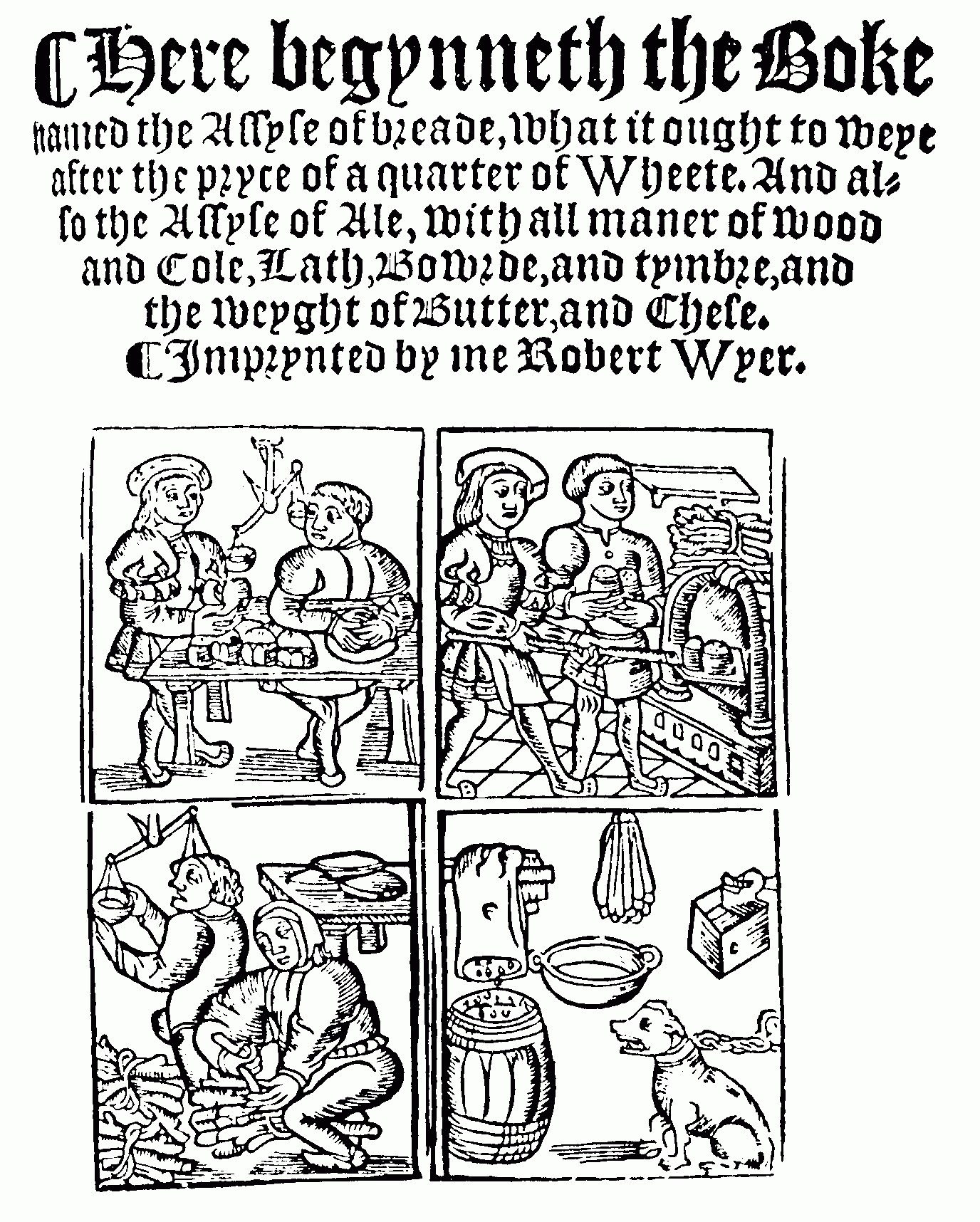
The price and quality of beer has been a significant issue in the history of Britain since Medieval times. Until the beginning of the 1800s the cost of a pint of beer was set by law and governed by an Assize of Ale. The law took account of the price of raw materials such as malted barley and allowed different prices for beers of superior quality. It was enforced by ale tasters or ale conners who had the difficult task of tasting beer from brewers. They checked particularly for beer quality and price.
Brewers who transgressed were subject to fines and ultimately if probably rather rarely to physical punishment. The holding of Assizes of Ale was patchy but the principle was underwritten by the idea of what E.P. Thompson called a moral economy. Beer was a staple of the poor person’s diet in pre-industrial England along with bread, which was also subject to price control by an Assize. Water was not safe to drink and lower strength or table beer was the standard liquid consumption. The beer was expected to be of at the very least drinkable quality and at a price that could be afforded.
In the two hundred years or so since the rise of market capitalism and the decline of the Assize of Ale the price of a pint has continued to be a key issue. The State has occasionally intervened directly but more frequently consumer pressure was the important thing. Beer in the public bar, frequented by working people, was less expensive and working men’s clubs (women were allowed in at weekends as guests) also sold beer cheaply.
After World War One the Government did set up a State brewery in Carlisle with associated pubs that sold beer at a regulated price, quality and strength. It was eventually sold to Theakstons. It was though a successful experiment that might be a template for a time when the untrammelled market does not rule all.
More recently the focus has been very largely on the price of a pint and how this relates to the tax (beer duty) the Government of the day places on it. Campaigns for cheaper beer in recent times have also been mirrored by arguments that this means brewers struggle to turn a profit. Craft brewing may be about craft (& self evidently not all beers make a profit) but if a business doesn’t cover its costs and produce enough to pay employees then it wont be producing beer.
These however were also arguments that were dealt with by the Assize Ale where the concept of a fair or normal profit existed, varied according to the quality of beer and the cost of ingredients.
Would a modern day Assize of Ale work, or is the world now too complex…..
An important perspective on beer prices and tax can be found in this James Beeson article in the Morning Advertiser:
Pressure Drop Brewery note that their 8.5% DIPA Bad for Business is not only expensive because of the cost of ingredients but also because it attracts a higher rate of tax. However as Pressure Drop notes, taxation is not a bad thing. Schools, hospitals and pensions have to be paid for even if we might also hope that large companies paid appropriate taxes as well as beer drinkers


Leave a Reply