
E P Thompson, Peterloo & State violence against protesters
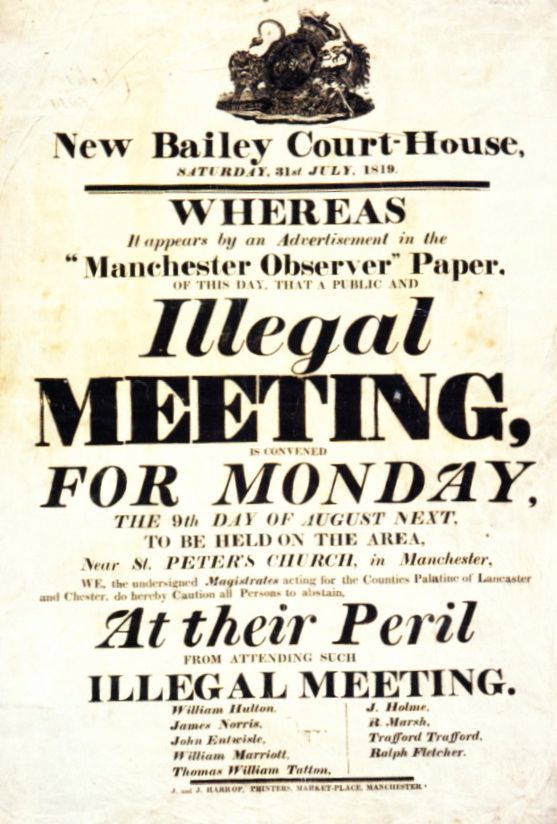
You may missed a Times article by Daniel Finkelstein that argued that while Peterloo was an important event in British history it was not a turning point. Alan Rusbridger wrote to the paper quoting EP Thompson in the Making of the English Working Class (1963/68) to the effect that it was because after that protests were not met by State violence.
A further letter in The Times (25th August) argues that this isn’t right because, for example, troops fired on strikers during the 1842 General Strike in Preston (on 13th August 1842).
In fact Thompson’s remarks were quite specific:
strikers or agricultural labourers might be fair game; but never since Peterloo has authority dared to use equal violence on a peaceful British crowd. Even Bloody Sunday saw a violence which was carefully controlled; the real thing has been reserved for Amritsar or Nicosia.
In reality armed force has been used. Numbers were killed at Newport in November 1839 after the Chartists attempted rising and the same was true (with the same soldiers) at Bossenden Wood in Kent on 31st May 1838 in what is known as the last armed rising on English soil.
Thompson refers specifically to crowds rather than armed risings or strikers and is careful to point out that the record of British imperialism abroad was very different.
He might also have indicated that his point about Peterloo did not apply to Ireland, where as recently as 1971 in Bloody Sunday protesters were shot down by the army.
The letter is here:
Sir, E P Thompson’s assertion, in Alan Rusbridger’s letter (Aug 23), that “Never since Peterloo has authority dared to use equal force against a peaceful British crowd”, isn’t quite right. It happened again, albeit 30 miles north in Preston. On August 13, 1842, a gathering of striking workers was fired on by soldiers. Four were shot dead and others were injured. An impressive sculpture in Lune Street commemorates the tragic event.
Tom Helvin
Garswood, Lancs


Leave a Reply